Safe observation of OB care in internships for high school students medical programs depends on several non-negotiable factors: structured supervision, clearly defined observation roles, age-appropriate preparation, and honest communication between students, parents, and program staff. Obstetrics is one of the most emotionally and clinically intense areas of medicine. It can also be one of the most rewarding to witness, especially for a young person considering a career in women’s health. But the sensitivity of the setting means that safety protocols, boundaries, and maturity all matter more here than in almost any other clinical environment a teenager might encounter.
For parents, the concern is understandable. You are being asked to trust that your child will be placed in a setting involving labor, delivery, and sometimes difficult outcomes, all while being supervised by qualified professionals and protected from situations beyond their readiness. For students, the draw is equally understandable. Seeing how prenatal care works, how providers communicate with patients during vulnerable moments, and how clinical teams coordinate in real time through a medical internship for high school students can clarify career goals in ways that reading about medicine never will. The key is making sure the structure around that exposure is solid. This article lays out what safe OB observation actually looks like for high school students, what to ask before committing to a program, and how to prepare emotionally and practically.
Why OB Observation Interests High School Students in the First Place
Obstetrics and gynecology sit at the intersection of primary care, surgery, and public health. For students interested in medicine, nursing, midwifery, or public health, watching how providers manage prenatal visits, labor, and postpartum care offers a window into clinical decision-making that is both routine and high-stakes. According to the Bureau of Labor Statistics occupational outlook for obstetricians and gynecologists, the field is projected to grow by about 7% through 2032, and the Health Resources and Services Administration reports that roughly half of all U.S. counties have no practicing OB-GYN at all. These workforce realities make the specialty relevant not just for students who want to deliver babies, but for anyone interested in understanding how maternal health systems work and where the gaps are.
Early exposure matters because OB-GYN requires a particular combination of clinical skill, communication ability, and comfort with sensitive topics. Students who have observed prenatal care or witnessed a delivery (even from a respectful distance) tend to write and speak about those experiences with a specificity that generic clinical shadowing does not produce. That said, interest alone is not enough. The setting demands readiness, and both students and parents should evaluate that honestly before signing up.
If your student is already thinking about the OB-GYN career track, IMA’s guide to the high school path toward obstetrics and gynecology covers the full trajectory from early exposure through residency in useful detail.
What Safe OB Observation Actually Looks Like for a Teenager
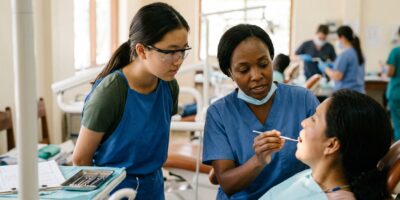
The word “observation” should be taken literally. In a well-structured program, a high school student in an obstetric setting is not performing examinations, not assisting with deliveries, and not making clinical decisions. They are watching, listening, and learning from a supervised position. Here is what that typically involves.
Prenatal and Postpartum Settings
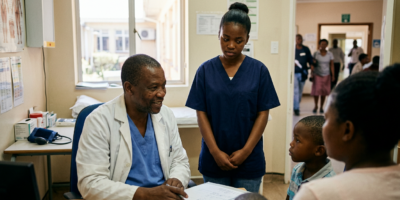
Students may observe routine prenatal check-ups, including how providers measure fundal height, review lab results with patients, and discuss nutrition and birth planning. They may also sit in on postpartum assessments, where clinicians evaluate both the parent and newborn. These settings tend to be calmer and more conversational, which makes them a good starting point for younger observers. Students can pay attention to how providers build trust, explain medical information in accessible language, and manage time in a busy clinic.
Labor and Delivery Observation
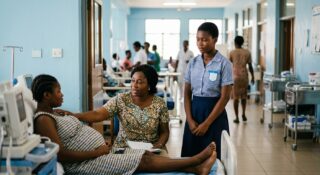
Observing labor and delivery is the part that raises the most questions from parents, and rightly so. In a responsible program, students do not enter a delivery room unless the patient has given explicit consent, the supervising provider has approved the student’s presence, and a program supervisor is present. Even then, students observe from an appropriate distance. They do not touch the patient, handle instruments, or participate in the delivery. If a situation becomes emergent or if the student feels overwhelmed, there should be a clear, pre-established protocol for stepping out without disruption.
Educational and Reflective Components
Safe observation programs do not just place students in clinical rooms and leave it at that. Structured debriefing sessions, either daily or after significant observations, help students process what they have seen. This is especially important in OB settings, where outcomes are not always positive. A student who witnesses a complicated delivery or hears about a difficult diagnosis needs space to ask questions and receive honest, age-appropriate answers from a qualified supervisor.
Supervision, Housing, and Communication: What Parents Should Ask
Parents evaluating any program that places a minor in a clinical setting, particularly an OB setting, should ask direct questions and expect specific answers. Vague reassurances about “experienced staff” or “safe environments” are not enough.
Supervision Ratios and Qualifications
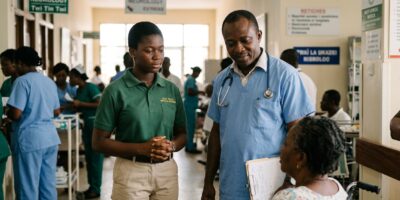
Ask how many students are assigned per supervisor. A responsible program maintains small group sizes, and a licensed healthcare provider should be present during all clinical observation. Ask who that provider is, what their credentials are, and whether they have experience working with minors. If the program operates internationally, ask whether local clinical staff have been briefed on the observation-only role of high school students and whether language barriers have been accounted for.
Housing and Daily Logistics
For programs that involve travel, whether domestic or international, parents need clear answers about where their child will sleep, who else will be in the housing, what security measures are in place, and what the daily schedule looks like. Students should not be left unsupervised during non-clinical hours, and there should be a structured plan for meals, transportation, and downtime. IMA’s high school internship programs outline the kind of structure families should expect, including supervised housing and organized daily schedules.
Communication Protocols
Before a program begins, parents should know exactly how to reach their child and how the program will communicate with families if something goes wrong. This includes 24/7 emergency contacts, regular check-ins, and a clear escalation process if a student becomes ill, distressed, or needs to leave the program early. If a program cannot articulate its communication plan clearly, that is a significant red flag.
Emotional Readiness: A Conversation Worth Having Before Enrollment
Maturity is not just about age. Some 16-year-olds are ready to observe a clinical birth with composure and curiosity. Some 18-year-olds are not. Neither reaction is a failure; it simply reflects different levels of emotional preparedness. The conversation about readiness should happen at home, well before any application is submitted.
What Students Should Consider
Obstetric settings involve nudity, pain, bodily fluids, and sometimes outcomes that are frightening or sad. A student considering OB observation should ask themselves: Can I remain calm and respectful in an unfamiliar, intense environment? Am I comfortable seeing someone in pain without being able to help directly? Can I follow instructions from a supervisor even if I feel uncertain or emotional? If the honest answer to any of these is “I’m not sure,” that does not mean the student should never pursue this kind of experience. It may mean they need a different type of clinical exposure first, or that they need more preparation before entering an OB setting specifically.
The role of mentorship in pre-clinical programs for high schoolers can help students understand how guided support from experienced professionals makes a real difference during early clinical exposure, especially in emotionally complex settings like obstetrics.
What Parents Should Consider
Parents know their children’s emotional patterns better than anyone. If your student tends to internalize stress, has difficulty with graphic imagery, or is going through a particularly challenging period personally, it is worth discussing whether this is the right time for OB observation. It is also worth asking the program directly: What happens if my child becomes overwhelmed? Is there a counselor or support resource available? Can my child opt out of a specific observation without penalty? A good program will have clear, compassionate answers to all of these.
What This Experience Can and Cannot Do for a Student’s Future
Observing obstetric care as a high school student can be genuinely valuable, but it is important to keep expectations grounded.
What It Can Offer
Students who observe OB care in a structured, supervised setting gain exposure to real clinical workflows, patient-provider communication, and the realities of a specific medical specialty. They see how providers manage both routine and complex cases. They begin to understand health disparities, especially if the observation takes place in a setting where access to care is limited. The World Health Organization’s maternal health data shows that global maternal mortality remains a serious challenge, with 223 maternal deaths per 100,000 live births worldwide as of 2020. Witnessing the effects of limited prenatal access, even briefly, gives a student concrete knowledge that shapes how they think about healthcare systems.
This kind of experience also provides specific, personal material for college and medical school applications. Admissions committees at medical schools value demonstrated interest in clinical settings, awareness of healthcare disparities, and evidence of maturity in sensitive environments. A student who can describe, with honesty and specificity, what they observed during a prenatal clinic or a postpartum assessment stands out from one who lists generic extracurriculars.
What It Cannot Guarantee
No single experience guarantees admission to any college, medical school, or health professional program. Observing OB care does not count as clinical hours for medical school prerequisites unless a specific institution says otherwise. It does not constitute certification, licensure preparation, or academic credit unless the program has a verified arrangement with an accredited institution. Students and parents should treat this as one piece of a larger picture: valuable for perspective and reflection, but not a shortcut to any outcome.
Choosing a Program That Prioritizes Safety Over Salesmanship
Not all clinical observation programs are created equal. Some are rigorous, well-supervised, and transparent about what students will and will not do. Others rely on vague language, impressive-sounding descriptions, and a lack of specificity that should concern any parent.
When evaluating a program, look for the following. Does the program clearly state that high school students observe and do not perform clinical tasks? Does it describe its supervision structure in concrete terms, including ratios, staff qualifications, and daily schedules? Does it address emotional support and opt-out procedures? Does it require a health screening, vaccinations, and insurance coverage before departure? Does it provide a detailed orientation that covers patient privacy, cultural sensitivity, and appropriate behavior in clinical settings?
If a program describes minors “assisting with deliveries” or “gaining hands-on OB experience,” treat that as a warning sign. Responsible programs do not overstate what students will do because overstating creates false expectations and, more importantly, puts patients and students at risk.
Programs that include pre-departure training, daily debriefs, and structured reflection sessions signal that they take the educational and emotional dimensions seriously. Programs that focus only on the clinical setting and ignore the preparation and processing around it are missing a critical component.
Practical Steps for Students and Parents Ready to Move Forward
If your family has decided that OB observation is a good fit, here is how to approach it thoughtfully.
Start by having an honest conversation at home about expectations, readiness, and concerns. Both the student and the parent should feel comfortable with the decision before any application goes out. Then research programs carefully. Read their materials with a critical eye. Contact them directly with questions about supervision, housing, communication, and the specific clinical settings students will observe. Ask for references from past participants and their families if possible.
Once enrolled, prepare. Read about maternal health basics, the structure of prenatal and postpartum care, and the cultural context of the destination if traveling internationally. Review patient privacy expectations and practice being a respectful, attentive observer. The more prepared a student is before arrival, the more they will absorb during the experience itself.
After the experience, reflect. Write about what you saw, what surprised you, what challenged you, and what you want to learn more about. These reflections are not just useful for applications; they help solidify what the experience actually meant and whether OB-GYN, or healthcare more broadly, still feels like the right direction.
Frequently Asked Questions
Will my teenager be allowed to watch a delivery?
In well-structured programs, delivery observation is possible but depends on patient consent, provider approval, and the student’s own readiness. Students observe from an appropriate distance and do not participate in any clinical tasks. There is always a protocol for stepping out if the student or the supervising provider determines it is necessary.
Is obstetric observation appropriate for all high school ages?
Maturity matters more than a specific age cutoff, though most structured programs require students to be at least 16. Parents and students should evaluate emotional readiness honestly, considering comfort with sensitive medical content and the ability to follow supervision guidelines in a high-intensity setting. Programs with strong screening and orientation processes help ensure students are prepared.
How does OB observation help with college or medical school applications?
Admissions committees value specific, reflective clinical experiences. A student who can describe what they observed in a prenatal clinic, what they learned about patient communication, and how the experience shaped their understanding of healthcare disparities provides stronger application material than general statements about wanting to help people. However, no single experience guarantees admission to any program.