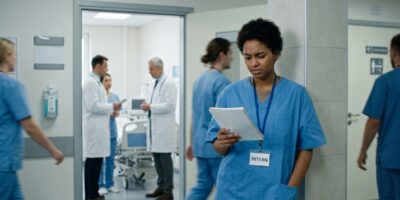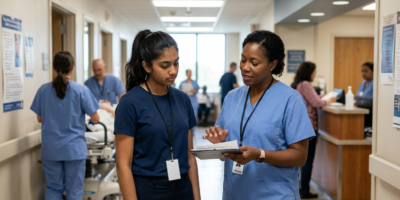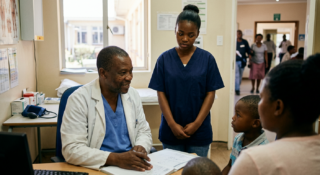
High school students who spend time in clinical settings are not there to practice medicine. They are there to watch, to ask good questions, to help with approved tasks, and to begin understanding what healthcare work actually requires. How teens support clinical teams safely comes down to a few clear principles: constant supervision, defined boundaries, honest expectations, and respect for patients and professionals alike. If those elements are in place, early clinical exposure can be genuinely valuable. If they are not, it becomes a liability for everyone involved. Programs that offer medical internships for high school students should define exactly how teens contribute to clinical teams, with supervision that matches their experience level.
This matters to parents and students equally. A student who misunderstands their role could put a patient at risk or put themselves in an uncomfortable, even dangerous, situation. A parent who does not ask the right questions about supervision and structure may unknowingly send their teenager into an environment that lacks the guardrails it should have. The good news is that well-structured programs and clinical placements do exist, and the boundaries they enforce are not limitations on learning. They are the foundation of it.
What “Supporting a Clinical Team” Actually Means for a High School Student
When we talk about high school students supporting clinical teams, we are not describing anything close to independent clinical work. The word “support” here refers to a narrow, carefully supervised set of activities that keep the student close to the action without crossing into territory that requires licensure, training, or professional credentials.
In practical terms, this can include helping organize supplies or examination rooms before and after patient visits. It might mean observing a physician, nurse, or clinical officer during consultations. In some settings, students may assist with basic health education efforts, such as helping prepare materials about hygiene or disease prevention, always with direct oversight. Some programs allow students to practice taking vital signs like pulse or blood pressure on consenting individuals, but only after training and only under the direct, real-time supervision of a qualified professional.
What it does not include, ever, is administering medication, performing any invasive procedure, diagnosing a condition, making treatment recommendations, or being left alone with a patient. These lines are non-negotiable, regardless of how competent or mature a student may seem. The Bureau of Labor Statistics overview of healthcare occupations makes clear just how much formal education and licensure each clinical role requires. High school students have not completed that training, and no amount of enthusiasm changes that fact.
Why Boundaries Protect Both Patients and Students
Clinical boundaries exist for patient safety first. A patient in a hospital or clinic is in a vulnerable position, and every person in the room should be qualified for the role they occupy. When a high school student is clearly identified as an observer or intern, the patient can give informed consent to their presence. When those roles blur, that consent is compromised.
But boundaries also protect the student. A teenager who is asked to do something beyond their training, whether it is drawing blood, interpreting a lab result, or managing a wound, is being put in a position where they could cause real harm and carry real guilt. Even well-meaning clinical staff can sometimes delegate inappropriately, especially in busy or under-resourced settings. This is why the structure of the program matters so much. The supervising organization, not just the individual clinician on duty, should have clear written policies about what student interns can and cannot do.
Parents should ask about these policies before their student begins any clinical placement. Questions worth asking include: Who supervises my student at all times? What specific tasks are students allowed to perform? What happens if a staff member asks my student to do something outside their approved role? Is there a written code of conduct? Programs that welcome these questions and answer them directly tend to be the ones worth trusting. Programs that are vague or dismissive about boundaries deserve real skepticism.
Appropriate Tasks and Where the Line Falls
It helps to get specific. Below is a realistic picture of what high school students typically do, and do not do, in structured clinical internship settings.
What Students Typically Do
Students observe consultations, rounds, and procedures. They watch how professionals communicate with patients, how teams coordinate, and how decisions get made under pressure. They may help prepare exam rooms, restock supplies, or assist with organizing medical records. In community health settings, they sometimes participate in outreach efforts, like helping set up screening events or preparing educational materials. Some programs include guided reflection sessions, case discussions, or lectures that help students process what they have seen. A resource like IMA’s overview of what high school students actually do in hospital settings gives a more detailed picture of these roles.
What Students Do Not Do
Students do not diagnose, prescribe, administer injections, suture wounds, intubate, catheterize, or perform any procedure that carries risk to the patient. They do not access patient records independently. They do not give medical advice, even informally, to patients or family members. They do not work unsupervised, even for a few minutes. If a student is ever placed in a situation that feels like it is crossing one of these lines, the right response is to step back and report it to their program supervisor immediately.
The distinction between these two categories is not a gray area. It is a bright line, and students who understand it early tend to get more out of their clinical time because they can focus on genuine learning instead of worrying about whether they are supposed to be doing something they are not equipped for.
What Parents Should Look for in a Clinical Program
Parents are often the ones doing the initial research, and their instincts matter here. A program that puts a minor in a clinical environment should be able to explain, in plain language, how it handles supervision, safety, housing, communication, and emergencies.
Supervision and Structure
Every minute a student spends in a clinical setting should involve the presence of a qualified supervisor who knows the student is there and is responsible for them. The supervisor-to-student ratio matters. So does the clarity of the daily schedule. A well-structured program will have a defined itinerary, not just “show up and follow whoever is available.” Students should know before each day begins where they will be, who they will be with, and what they will be observing or assisting with.
Housing and Communication
For programs that involve travel, whether domestic or international, parents deserve to know exactly where their student will be staying, who else will be in the housing, what security measures are in place, and how communication works. Can the student contact a parent at any time? Is there a program staff member available around the clock? What is the protocol if a student feels unsafe or unwell? IMA’s information about structured high school internship programs outlines the kind of framework parents should expect from a credible organization.
Emotional Readiness
Clinical settings can be intense. Students may witness suffering, grief, or medical emergencies. Not every 16-year-old is ready for that, and there is no shame in acknowledging it. Parents and students should have an honest conversation about emotional readiness before committing to any program. Good programs also build in reflection time and access to staff who can help students process difficult experiences. This is not a luxury; it is a basic safeguard.
How This Experience Fits Into a Student’s Longer Path
One of the most common misconceptions is that early clinical exposure guarantees something, whether that is admission to a competitive college, acceptance to medical school years later, or clarity about a career direction. None of those outcomes are guaranteed by any single experience. What structured clinical observation can do is give a student real context for the career they think they want.
The AAMC’s resource on becoming a physician outlines the long road from interest to practice. High school is early in that timeline, and that is fine. What admissions committees at medical schools, PA programs, nursing schools, and dental schools tend to value is not the prestige of the experience but the depth of the student’s reflection on it. Did the student understand their role? Can they describe what they observed with specificity? Did they learn something about themselves, about healthcare systems, or about patient interaction that shaped their thinking?
Students who approach clinical exposure with humility, who respect boundaries, and who reflect seriously on what they see tend to write stronger application essays, speak more confidently in interviews, and make better decisions about whether healthcare is genuinely the right fit. That is the real payoff, not a line on a resume but a clearer understanding of what they are signing up for. For students still figuring out what path makes sense, IMA’s guide to choosing among healthcare career paths without medical school is a useful starting point.
Maturity, Readiness, and the Honest Conversation Students and Parents Should Have
Not every student who is interested in medicine is ready for clinical observation, and readiness has less to do with grades or ambition than with emotional maturity, self-awareness, and the ability to follow rules even when no one is watching. A student who can listen more than they speak, ask questions at appropriate times, respect patient dignity without being prompted, and accept their observational role without frustration is likely ready. A student who is primarily interested in the experience as a credential, or who struggles with authority and structure, might benefit from waiting a year or finding a different kind of exposure first.
Parents play a key role here. It is worth asking your student directly: How would you handle seeing something upsetting? What would you do if a doctor asked you to do something you were not trained for? Can you spend an entire day watching and listening without needing to be the center of attention? These are not trick questions. They are the same questions a good program coordinator would ask.
The World Health Organization’s guidance on health workforce education emphasizes that building a strong healthcare workforce starts with proper training at every level. For high school students, that training is almost entirely observational. Embracing that role fully, rather than chafing against it, is the first real test of whether someone has the temperament for clinical work.
Setting Expectations That Serve the Student Long-Term
The most productive clinical experiences for high school students are the ones where expectations were honest from the start. The student knew they would be observing. The parent knew the supervision plan. The program had clear policies. And everyone understood that the value of the experience would come not from what the student did with their hands, but from what they took in with their eyes, ears, and mind.
Students who return from a clinical placement and say, “I watched a nurse manage three emergencies at once and I understood for the first time what that job actually demands,” have gained something real. Students who return and say, “I basically just stood around,” may have been in a poorly structured program, or they may not have known how to engage as an active observer. Both problems are preventable with the right preparation.
If you are a parent evaluating programs, ask for specifics. If you are a student preparing for a clinical placement, practice being a good observer before you arrive. Pay attention. Write things down. Ask questions when the timing is right. And respect every boundary you are given, because each one exists for a reason that matters more than your convenience.
Frequently Asked Questions
Can a high school student take a patient’s blood pressure or pulse during a clinical internship?
In some structured programs, students may be trained to take basic vital signs like blood pressure or pulse, but only on consenting individuals and only under the direct, real-time supervision of a licensed professional. This is never done independently, and it is never assumed to be part of the role without explicit approval from the supervising organization.
What should a parent do if they suspect their student’s program lacks proper supervision?
Contact the program coordinator immediately and ask specific questions: Who is supervising my student during clinical hours? What is the supervisor-to-student ratio? What written policies govern what students can and cannot do? If the answers are vague or dismissive, consider removing your student from the program. Proper supervision is not optional; it is the baseline requirement for any clinical placement involving a minor.
Will clinical observation in high school help with medical school admissions later?
Clinical observation can be a meaningful part of a student’s overall profile, but it does not guarantee admission to any program. Medical school admissions committees, as described by the AAMC, value reflection, ethical awareness, and genuine understanding of healthcare work over the prestige or duration of any single experience. What matters most is what the student learned and how they articulate it.