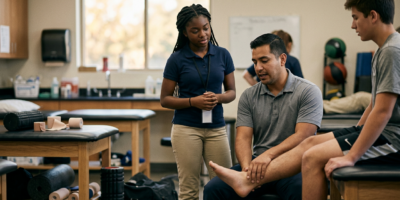
High-intensity clinical settings like emergency rooms, intensive care units, and surgical wards fascinate students who are serious about healthcare careers. For a teenager considering medicine, these environments represent the sharpest edge of the profession: rapid decision-making, high stakes, and the kind of clinical teamwork that defines acute care. But for minors, the question is not just what you want to see. It is what you are permitted to do, what you are genuinely prepared for, and what kind of structure needs to surround the experience to make it safe and worthwhile. This article is written for both the student drawn to high-intensity clinical settings teens typically associate with “real medicine” and the parent who rightly wants to understand the safeguards. The best medical internships for high school students in clinical environments set clear boundaries on what teens can observe and participate in, so students learn without being placed in roles beyond their training.
The appeal makes sense. If you want to know whether you belong in healthcare, watching a team stabilize a trauma patient or manage a cardiac event tells you something that a textbook cannot. But that appeal needs to be matched with honest expectations. Teens do not treat patients in these environments. They observe. They absorb. They ask questions after the fact. And when a program is well structured, that observation is far more educational than it might sound. The limits are not obstacles to learning; they are the framework that makes learning possible.
What “High-Intensity” Actually Means in Clinical Terms
When healthcare professionals talk about high-intensity settings, they mean environments where patients present with acute, complex, or life-threatening conditions that require immediate intervention. Emergency departments, intensive care units, trauma centers, and operating rooms all qualify. These settings share a few characteristics: unpredictable patient flow, rapid clinical decision-making, strict protocols for infection control and safety, and tightly coordinated teams.
For a working clinician, the intensity comes from the cognitive load of managing unstable patients. For a teen intern or shadow, the intensity is perceptual. You are exposed to sights, sounds, and emotional weight that most people your age have never encountered. A patient in respiratory distress, a family receiving bad news, the organized urgency of a code blue; these are experiences that register deeply even if your role is purely observational.
It is worth noting that not all high-intensity settings are equally accessible to minors. Many U.S. hospitals restrict ICU shadowing for high school students to structured programs with institutional agreements. ER experience for teens is somewhat more available, but it typically requires parental consent, background screening, vaccination documentation, and compliance with HIPAA training. Programs that place students in international clinical settings may offer broader observational access, but the same ethical principles apply: minors observe and support under supervision, period.
What Teens Actually Gain from Observing Acute Care
The value of watching experienced clinicians work under pressure is hard to replicate in a classroom or through volunteer work at a front desk. Here is what students consistently take away from structured exposure to high-acuity settings.
Clinical Reasoning in Real Time
When a physician in an emergency department evaluates a patient, they are running through differential diagnoses, prioritizing interventions, and communicating with a team simultaneously. Watching this process, especially when a supervisor explains the reasoning afterward, gives students a concrete sense of what clinical thinking looks like. It is not memorization. It is pattern recognition, risk assessment, and judgment under time pressure. For a student who has only experienced science in a lab or lecture hall, this is a meaningful shift in understanding. The AAMC’s core competencies for entering medical students emphasize critical thinking and scientific reasoning, and early observational exposure helps students begin to understand what those competencies look like in practice.
Emotional Calibration
Not every student is prepared for what high-intensity settings involve emotionally. Witnessing pain, fear, and loss is part of clinical medicine, and it affects people differently. For some teens, this exposure confirms a deep sense of purpose. For others, it surfaces important questions about whether direct patient care is right for them. Both outcomes are valuable. A well-run program builds in structured reflection time, usually through debriefing conversations or guided journaling, so that students can process what they have seen rather than carrying it unexamined.
Understanding Teamwork and Hierarchy
Acute care is never a solo act. A single patient in an ICU may be managed by an attending physician, a resident, a nurse, a respiratory therapist, a pharmacist, and support staff. Observing how these roles interact, who communicates what to whom, how disagreements are handled, and how handoffs work gives teens a realistic picture of healthcare as a collaborative profession. This is especially useful for students who are still deciding between medicine, nursing, physician assistant practice, or other health careers, because they can see each role in context. Students weighing those options may find it helpful to review resources that outline what specialty-focused programs actually offer at the high school level.
Where the Limits Are, and Why They Matter
The boundaries placed on teen interns in clinical settings exist for three reasons: patient safety, student safety, and legal and ethical compliance. None of these are negotiable, and any program that treats them casually should raise serious concerns.
Minors Do Not Provide Medical Care
This is the most important boundary. A teen in an ER or ICU does not diagnose, does not prescribe, does not perform procedures, and does not make clinical decisions. In some structured programs, students may assist with very basic tasks like organizing supplies, recording observations for their own learning, or, under direct supervision, taking a patient’s temperature or blood pressure as a learning exercise. But these are educational activities, not clinical duties. No responsible program will place a minor in a position where patient outcomes depend on their actions.
Privacy and Consent Protections
Healthcare settings are governed by strict privacy rules. In the U.S., HIPAA applies. In international settings, local regulations and institutional policies set the standard. Teens must understand that patient information, including what they see and hear, is confidential. Photographs of patients are not permitted without explicit consent, and posting about clinical experiences on social media requires extreme care. Programs should cover these rules in orientation, and supervisors should reinforce them consistently.
Emotional and Psychological Boundaries
High school students vary widely in emotional maturity. A 16-year-old who has experienced illness in their own family may handle a difficult clinical scenario differently than a peer who has not. Good programs assess readiness before placing students in the most intense settings and adjust exposure accordingly. They also provide clear channels for a student to step away if they feel overwhelmed, without shame or penalty. Parents should ask directly about these safeguards before enrolling their teen in any program that involves ICU shadowing for high school students or ER observation.
What Parents Should Ask Before Saying Yes
Parents evaluating high-intensity clinical programs for their teen are right to ask hard questions. Enthusiasm from your student is a good sign, but it is not a substitute for verified structure.
Supervision Ratios and Qualifications
Who is supervising your child in the clinical setting? Is it a licensed physician, a clinical officer, a nurse? What is the ratio of students to supervisors? In a fast-paced environment like an emergency department, one adult cannot meaningfully supervise eight teens. Look for programs that maintain small group sizes and assign dedicated supervisors whose primary role during clinical hours is guiding interns, not treating patients.
Housing, Communication, and Daily Structure
For programs that involve travel, especially international ones, parents need clear information about where their teen will live, who will be present in the housing, how communication works (phone, Wi-Fi, check-in schedules), and what a typical day looks like from morning to evening. A program overview that details the structure of high school health internships can help families compare what different organizations actually provide, rather than relying on marketing language alone.
Emergency Protocols
What happens if your teen gets sick? What happens if there is a safety incident at the clinical site? What local medical facilities are available, and what insurance coverage is required? These are not hypothetical questions. They should have specific, written answers.
Readiness and Maturity
Not every high school student is ready for high-intensity clinical exposure, and that is completely fine. Readiness involves more than academic interest. It includes the ability to follow instructions precisely, manage discomfort without acting impulsively, respect authority in a setting where mistakes carry real consequences, and ask for help when something feels wrong. Parents and students should have an honest conversation about these traits before committing to an intensive program. The WHO’s guidelines on health workforce education and training offer context on why structured mentorship at every level of healthcare education, including early exposure, matters for long-term professional development.
How This Experience Fits into a Longer Path
It is tempting to think of a high-intensity clinical experience as the single event that will define a college application or a career direction. That framing puts too much pressure on a few weeks and misses the real point.
Exposure to acute care settings is one data point in a much longer process of deciding whether healthcare is right for you and, if so, what kind of healthcare. A student who shadows in an emergency department and feels electrified has useful information. A student who shadows in an emergency department and feels anxious or uncertain also has useful information. Neither reaction is a verdict. Both are starting points for reflection.
When it comes to college or professional school applications, admissions committees are not looking for students who performed heroic acts at age 17. They are looking for students who can articulate what they observed, what it taught them, and how it shaped their thinking. A student who watched a team manage a pediatric emergency and then reflected on the communication dynamics, the ethical pressures, or the resource limitations involved is demonstrating exactly the kind of engagement that strong applications require. Students who want to understand how teen medical internships contribute to application strength can find practical guidance on framing these experiences effectively.
The Bureau of Labor Statistics Occupational Outlook Handbook for physicians and surgeons projects continued demand across medical specialties, which means the students considering these paths now will enter a profession with significant need. Starting early with structured, supervised exposure does not guarantee anything about admissions or career outcomes, but it does give students a more grounded basis for making decisions that will shape the next decade of their education.
Choosing a Program That Respects Both Ambition and Safety
The best programs for teens interested in high-intensity clinical settings share a few traits. They are transparent about what students will and will not do. They name their supervisors and describe their qualifications. They explain their safety protocols in writing, not just in conversation. They build in reflection and mentorship, not just clinical hours. And they treat parents as partners, not obstacles.
If a program promises hands-on patient care for minors, be skeptical. If it cannot clearly describe its supervision structure, keep looking. If it emphasizes the dramatic aspects of clinical medicine without addressing the emotional and ethical dimensions, it may not be the right fit for a high school student.
The goal of early clinical exposure is not to fast-track a teenager into practicing medicine. It is to help a young person see the profession clearly, with its demands and rewards in honest proportion, so that the choices they make next are informed ones. That is a serious and genuinely valuable outcome. It just does not require exaggeration to be worth pursuing.
Frequently Asked Questions
Can a high school student actually shadow in an ICU or emergency room?
Some structured programs and hospital-affiliated internships do offer observational access to ICUs and emergency departments for high school students. Availability depends on the institution, the program’s agreements with clinical sites, and the student’s age and documentation (parental consent, vaccinations, HIPAA training). Access is always observational, never hands-on, and always supervised.
What should parents look for in a program that places teens in intense medical settings?
Look for clearly documented supervision ratios, named and qualified clinical supervisors, written emergency protocols, structured daily schedules, orientation that covers privacy and safety rules, and built-in reflection or debriefing time. A trustworthy program will answer these questions directly and in writing before enrollment.
Will shadowing in a high-intensity setting help with college or medical school applications?
Observational experience in acute care settings can strengthen an application if the student can thoughtfully reflect on what they witnessed and what it meant for their understanding of healthcare. Admissions committees value self-awareness and genuine engagement over dramatic anecdotes. The experience itself does not guarantee any admissions outcome, but it provides meaningful material for essays and interviews when presented honestly.