High school students often hear people talk about “doing a specialty internship” and assume it means working directly in surgery, dermatology, or emergency medicine. Parents usually want the same thing in plain terms: What will my teen actually be allowed to see, and what will be off-limits in a real clinical environment? The reality is that specialty exposure for minors exists, but it is shaped by consent rules, privacy rules, staffing capacity, and strict limits on what teens can do around patients, even when the program is marketed as a “specialty experience” through summer medical internships for high school students.
Most families get better results when they start by learning how hospitals define student roles and then match that to the specialty they are curious about. The early healthcare exploration guide lays out a practical way to approach early clinical exposure so students spend less time chasing unrealistic access and more time building credible experience that programs will actually approve.
What “Specialty” Means In A High-School Setting
In medicine, “specialty” can mean a department (pediatrics, emergency, surgery) or a narrower field (dermatology, orthopedics, anesthesia). In a high-school setting, specialty exposure usually means one of three things. It can mean structured observation in a specialty clinic where patients are stable, and schedules are predictable. It can mean brief, supervised exposure to a specialty service inside a hospital, often through rounds or designated observation windows. Or it can mean simulation-based learning that teaches concepts and skills related to a specialty without placing teens in direct patient-care roles.
That distinction matters because many students picture specialty work as fast-paced procedures. Hospitals picture minors as observers whose presence must not slow care, increase risk, or compromise privacy. The gap between those two expectations is why families often feel confused after they start emailing departments.
What Specialty Experiences Actually Exist For Teens
Specialty exposure is most realistic when the environment is planned, consent is manageable, and patient flow is controlled. That is why outpatient specialty clinics are often easier for teens than inpatient hospital units.
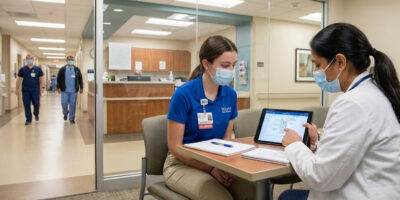
In outpatient settings, high-school observers may be able to watch portions of clinic visits when the patient agrees and the clinician is comfortable teaching. Dermatology, orthopedics, pediatrics, family medicine, sports medicine, and some women’s health clinics sometimes fit this pattern, depending on the facility and local policies. Students might see how histories are taken, how clinicians explain diagnoses, and how follow-up plans are made. The learning value comes from listening carefully and noticing patterns, not from doing procedures.
Certain hospital-based specialty experiences can also exist, but they tend to be limited and structured. Some programs allow teens to observe specialty rounds from the edge of the group or spend time in designated areas where they can observe workflow without being in the way. In some hospitals, students may observe emergency department triage from approved observation areas or attend teaching-style conferences run by a specialty team for trainees.
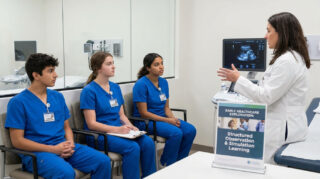
For teens who want “hands-on” learning, the safest and most realistic pathway is simulation. A high-quality program might teach sterile technique concepts, model knot-tying, basic ultrasound principles using training devices, or CPR and first aid skills. Simulation scratches the itch of curiosity without crossing into unlicensed patient care.
What Usually Does Not Exist For Minors
There are specialty settings that are simply difficult to access as a high-school student, no matter how motivated you are. Operating rooms are the clearest example. Even when a hospital allows an observer into a surgical setting, it is typically rare, tightly controlled, and dependent on the surgeon, the patient’s consent, and the team’s judgment about safety and sterility. Many hospitals do not allow minors in operating rooms at all.
High-school students also should not expect access to high-acuity areas like intensive care units, labor and delivery, or psychiatric inpatient units. These areas involve privacy-sensitive conversations, vulnerable patients, urgent decision-making, and a higher risk for disruptions. Even adults who shadow often have restricted access in these environments, and minors face additional policy limits.
It is also unrealistic for teens to expect specialty exposure that involves independent patient contact, direct clinical decision-making, documentation in medical records, medication handling, or participation in procedures. If a program suggests minors will suture patients, give injections, place IVs, intubate, or “assist in surgery,” families should treat that as a serious red flag.
Why Hospitals Set These Limits
Hospitals restrict teen access for practical, not personal, reasons. Consent is a major factor. Every additional person in a room changes the privacy equation, and many patients will decline if they are uncomfortable. Staff time is another factor. Teaching a student slows the day, and in high-stress specialties, teams may not have the bandwidth to supervise observers safely.
Safety and infection control matter as well. In procedural settings, one wrong movement can break a sterile field. In high-acuity areas, unpredictable situations arise quickly. Hospitals limit the number of people present so the team can work without distractions and without introducing unnecessary risk.
Finally, policy consistency matters. Hospitals cannot create one-off exceptions for every motivated student. They build rules that are enforceable at scale, which is why many teen programs funnel students into approved departments and keep roles clearly non-clinical.
How To Choose A Specialty To Explore Without Wasting Months
If a student wants specialty exposure, it helps to pick a specialty that matches what hospitals can reasonably approve for minors. Outpatient clinics are usually the best starting point, especially for specialties that regularly involve education and follow-up, such as pediatrics, family medicine, sports medicine, dermatology, and some orthopedic clinics.
Students who are curious about surgery can still explore surgical thinking without starting in an operating room. They can observe pre-op and post-op clinic visits when allowed, watch how surgeons explain risks and recovery, and learn how the care team coordinates imaging, labs, and follow-up. That kind of exposure is often more accessible and still highly informative.
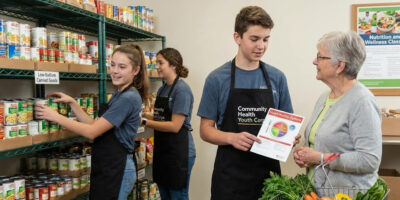
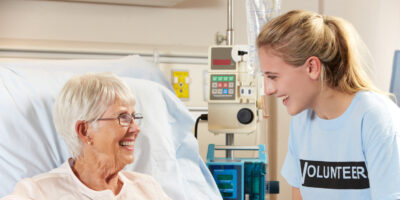
If the goal is to explore emergency medicine, it can help to look for structured observer programs rather than trying to negotiate direct access to the emergency department. Some hospitals offer teen volunteer roles that support patient flow or front-desk logistics near urgent-care settings, which still lets students see the pace and communication style of acute care without entering restricted clinical zones.
Questions That Separate Real Specialty Exposure From Marketing
Families often get better clarity by asking a short set of specific questions before committing time or money. These questions also help students avoid experiences that sound impressive but do not actually provide meaningful learning.
Use a short checklist like this when evaluating a program:
- Where will the student physically be during the experience: clinic room, hallway, conference space, or simulation lab
- Who is the on-site supervisor responsible for the student during clinical hours
- How is patient consent handled for student observers
- What are the explicit boundaries on tasks and interactions
- What training is required before entering clinical areas, such as privacy and safety orientation
- What documentation will the student receive at the end, and what exactly does it verify
If a program cannot answer these clearly, it is usually a sign the experience is not structured enough for a minor.
Operating Room Curiosity Without Operating Room Access
Many students fixate on the operating room because it feels like “real medicine.” In practice, a lot of surgical learning happens outside the OR. Students can learn how cases are evaluated, how imaging drives decisions, how risks are discussed, and how recovery plans are managed. They can also learn the fundamentals of sterile practice and surgical workflow through simulation sessions that teach gowning, gloving, positioning, and the logic of maintaining a sterile field.
For students who truly want to pursue surgical observation later, that preparation matters. Being calm, respectful, and predictable in clinical spaces is one of the strongest ways to earn trust over time. Even when an OR observer opportunity becomes available, it usually goes to the student who has already demonstrated reliability in simpler settings.
How Our Programs Approach Specialty Exposure Responsibly
In our programs at International Medical Aid, specialty exposure is built around supervised observation and structured learning rather than risky “hands-on” promises for teens. Students may rotate through multiple departments depending on the host facility’s policies and patient consent, and any technical skills practice takes place in simulation settings rather than on patients. That approach keeps the experience clinically meaningful while maintaining clear boundaries for minors.
Next Steps
If a student wants specialty exposure in high school, the most effective plan is to start with realistic environments, build reliability, and expand access gradually. Outpatient clinics and structured hospital programs are usually the best entry points. Simulation-based learning can fill in gaps when direct specialty access is limited. Over time, students who show maturity, discretion, and consistent professionalism are more likely to be invited into higher-responsibility observation settings.