High school students drawn to the field of medicine often envision working with children as their first major step into the healthcare field. They naturally think about the heartwarming moments, such as helping nervous kids feel brave in exam rooms, visiting pediatric wards to bring a smile to a patient’s face, or being present for the joyous moment when a baby finally gets to go home from the hospital.
Parents often have more pragmatic questions. They want to know exactly what this kind of exposure entails for a teenager, how clinics and hospitals ensure the safety of both the student and the patient, and what supervision looks like in practice.
As families begin to look at the range of available options involving local volunteering and hospital observer roles or structured international programs, many eventually consider medical opportunities for high school students to explore child-focused healthcare in a supervised and educational way.
Once teens and parents start comparing these programs, they quickly realize that the concept of working with children can mean very different things depending on the institution and the location. Some roles are designed to be purely observational, where the student acts as a silent witness to the clinical process.
Others mix observation with non-clinical support tasks or community outreach efforts.
High-quality programs explain these expectations clearly and follow clinical ethics guidance that prioritizes observation, privacy, and patient welfare above all else whenever minors are present in care environments. International Medical Aid aligns its pediatric and maternity experiences with that same guide to clinical expectations, which ensures that students have a clear understanding of where their role begins and ends.
Below is a detailed look at what teens can realistically expect when they work around children in clinical settings, how boundaries and privacy shape those experiences, and how IMA’s global programs help students explore child-focused healthcare in a structured and ethical way.
Why Working With Children In Clinical Settings Feels Different
Clinical spaces that serve infants, children, and adolescents are distinct from adult wards. They are shaped by two overlapping realities that every student observer must understand. First, children are often more medically vulnerable than adult patients. Second, children and their families process illness, fear, and stress differently than adults do.
The Global Data Context
Global child health data highlights exactly why pediatric care receives such special attention and resources. The World Health Organization and UNICEF estimate that around 4.8 to 4.9 million children under the age of five died worldwide in the 2022–2023 period. Tragically, most of these deaths occurred from preventable causes such as infections, complications during the first month of life, and conditions related to poor access to care.
The Reality On The Ward
These statistics shape what teens actually see when they enter pediatric wards and clinics, particularly in global health settings.
Routine Care Versus Critical Illness
Many visits in these settings concern routine care and prevention. Students will frequently observe vaccinations, growth checks, and nutrition counseling. However, other encounters involve serious illness or complicated social circumstances that can be jarring for a young observer. Seeing a child suffering from a preventable condition like severe malnutrition or an advanced infection requires a level of emotional maturity that is not typically asked of high school students in other environments.
Navigating Family Dynamics
In pediatric settings, the patient is rarely alone. Families are often juggling work, transport issues, financial constraints, and caregiving duties for multiple children simultaneously. A teenage observer must learn that treating the child often means understanding the context of the entire family. They will see physicians and nurses navigating these stressors with patience, explaining treatment plans to anxious parents who may have limited resources to follow through.
The Shifting Emotional Atmosphere
For a high school student, the emotional tone of a pediatric unit can shift incredibly quickly. A room might be filled with bubbles and laughter one moment as a child plays, and then shift to serious, urgent tones the next if a patient’s condition deteriorates. Learning to navigate this emotional volatility is a key part of the experience. It teaches students that medicine is not just about biology but about human connection and emotional regulation.
Communication Styles
Communication often flows through both the child and the caregiver, requiring a nuanced approach. Observers will notice that a doctor speaks differently to a toddler than they do to a teenager or a parent. Staff must pay attention to development, consent, and complex family dynamics, not just the physical diagnosis and treatment.
Where Teens Actually Work With Children
The concept of working with children in healthcare rarely means taking charge of medical care. Most high school roles are carefully defined as strictly observational or focused on non-clinical support. While the details vary by institution, opportunities generally cluster in a few specific settings.
Hospital Pediatric Units
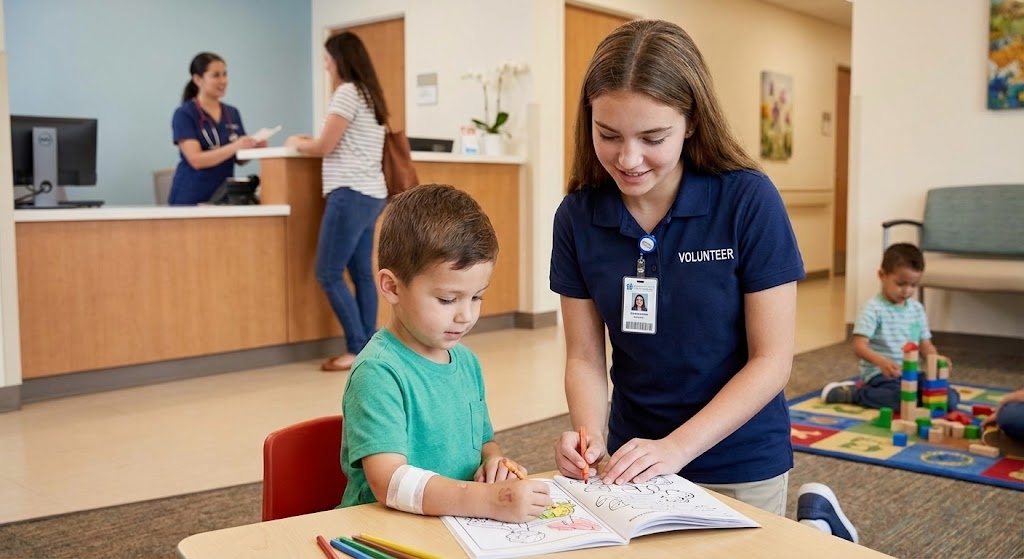
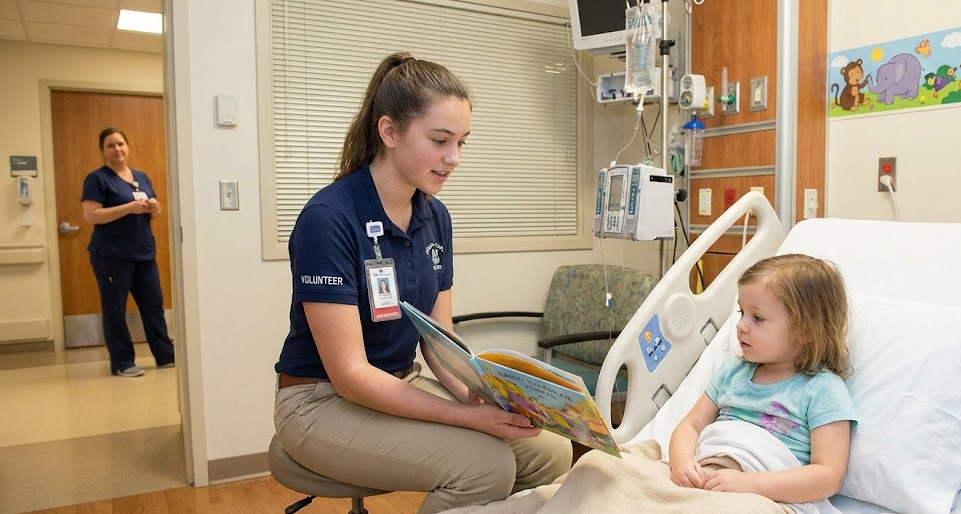
In hospital environments, teen volunteers or observers are sometimes placed in specific high-activity areas where they can be of assistance without interfering with clinical procedures. These areas commonly include general pediatric wards where children stay for overnight treatments, outpatient pediatric clinics where children come for appointments and go home the same day, and day procedure units dedicated to specific treatments like chemotherapy. Some hospitals also allow students in playrooms or child-life spaces which are dedicated zones for recreation and distraction.
Hospital volunteer programs that accept high school students usually specify strict requirements to ensure safety. These often include age minimums which are typically 15 or 16 years old, along with strict immunization requirements, TB testing, and a multi-week time commitment to ensure consistency.
Observing Exams And Consultations
One of the primary activities for students is watching physicians and nurses examine children and discuss care plans with caregivers. This is only done provided that explicit consent is given by the family. By watching these interactions, students learn how medical professionals build trust with young patients who may be frightened or in pain.
Learning Distraction Techniques
A unique aspect of pediatrics is the use of distraction to manage pain and anxiety. Students have the chance to observe how staff use child-friendly language, toys, bubbles, or games to reduce fear during medical interventions. This observation helps students understand that technical skill is only one part of being a good pediatric provider.
Seeing Adaptations For Age
Students will also see how standard hospital routines are adapted specifically for the needs of children. They might notice that vital signs checks are done more gently, medication rounds are timed to avoid interrupting sleep when possible, and visiting hours are often more flexible to allow parents to stay with their children.
Note that some hospitals limit teen volunteers to strictly non-clinical tasks in pediatric areas. This is especially common in North America and Europe where privacy and safety guidelines for minors are incredibly strict. Others may allow supervised observation in patient rooms or clinics but only once extensive orientation and confidentiality agreements are complete.
Outpatient And Community Settings
Outside of the large hospital walls, teens may encounter children in community-based settings. These environments are often less intense but equally educational. They include community pediatric clinics, large-scale public health efforts like immunization or growth-monitoring days, and community outreach events focused on hygiene or nutrition education.
These settings are particularly common in International Medical Aid sites. Students may spend part of their time in hospital pediatric wards and part in these community-based programs where families seek preventive services or follow-up care.
Weighing And Measuring
In these community settings, one of the most common activities students observe is the foundational tracking of child growth. Watching staff weigh and measure infants and children highlights the importance of monitoring development to catch issues like malnutrition early.
Vaccine Counseling And Administration
Students may watch nurses administer vaccines and, more importantly, explain their importance to parents. This exposes students to the public health side of medicine and the critical role of education in preventing disease.
Group Education Sessions
Another common feature is group education for parents on vital topics like breastfeeding, oral hygiene, or diarrhea prevention. IMA uses these varied environments to show high school interns how pediatric health depends on a mix of both acute clinical care and strong public health systems.
What Teens Are Allowed To Do Around Children
Across hospitals, clinics, and global health placements, one principle remains consistent which is that high school students are present to learn and not to treat. This aligns with major guidance for student clinical experiences which states that the primary purpose of these activities is observation and that patients must never be exposed to unqualified procedures.
Observation Comes First
In practice, the philosophy of observation first means that teen interns engage in learning through watching and listening rather than doing.
Watching Professionals In Action
They watch physicians, nurses, and allied health professionals conduct patient histories and physical exams. This allows them to see how professionals systematically gather information and look for physical signs of illness without disrupting the process.
Shadowing Teams On Rounds
Students follow medical teams on rounds or sit in during clinic sessions. This gives them insight into how medical decisions are made, how teams communicate with each other, and how care is coordinated across different specialties.
Listening To Clinical Discussions
They listen to case discussions in hallways or team rooms strictly within privacy limits. These moments are often where the most valuable learning happens as doctors discuss differential diagnoses and treatment options.
Analyzing Clinical Data
They learn to read vital sign trends and basic growth charts when staff are willing to explain them. Understanding how to interpret a fever curve or a growth trajectory is a key skill that students can begin to develop even without touching a patient.
Strict Limits On Procedures
Importantly, teens do not perform physical exams. They do not touch patients for exams beyond very basic tasks explicitly taught and supervised in a teaching setting. They never independently diagnose illnesses, interpret lab results, or suggest treatment plans. Furthermore, they do not enter orders, chart in official electronic records, or handle medication systems. IMA’s programs follow this model closely. High school participants are positioned where they can see and hear the clinical encounter, but they stay out of the immediate circle of hands performing actual clinical tasks on children.
Supportive Non-Clinical Tasks
Within that strict observational framework, some non-clinical tasks may be appropriate and helpful.
Wayfinding And Logistics
Students can assist by escorting families to designated waiting areas when staff request help. This simple task helps improve patient flow and reduces anxiety for families trying to navigate a busy facility.
Supply Management
Another common task is restocking non-sterile supplies such as gloves, wipes, and linens. This ensures that clinical staff have what they need to provide care efficiently.
Environment Maintenance
Teens may help by tidying playrooms, organizing books or toys, and wiping surfaces under staff instruction. Maintaining a clean and organized environment is crucial for infection control and patient comfort.
Play Support And Comfort
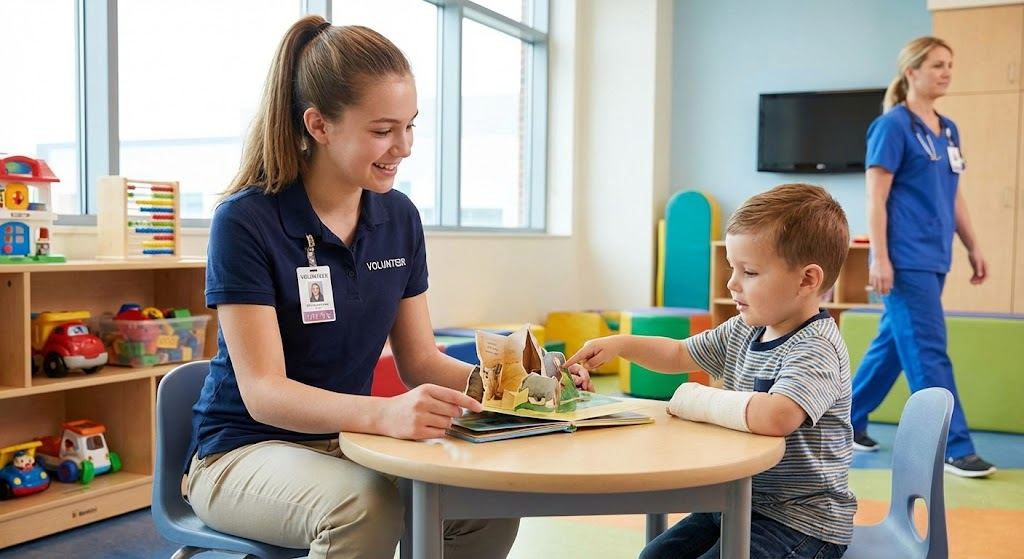
Helping a child choose a toy or activity in a supervised play area is a valuable way for students to interact with patients. This supports the child’s emotional well-being and allows the student to engage in a non-medical way.
Administrative Aid
Students can support check-in desks by guiding families to sign-in stations or explaining basic forms. In international pediatric wards specifically, additional tasks sometimes include assisting child-life or nursing staff with group activities in day rooms or demonstrating handwashing techniques during community health sessions.
IMA designs these child-focused roles so that teens contribute in ways that support staff without ever replacing professional responsibilities or making independent decisions. If a task is even borderline clinical, it is either moved into a simulation lab context or reserved strictly for trained personnel.
Boundaries, Consent, And Privacy With Children And Families
When a teen is present in a room with a child, there are always at least three sets of rights to consider involving the child, the caregiver, and the student. This complexity is why pediatric departments often apply particularly strict rules around consent and confidentiality.
Consent For Observation
Common safeguards to ensure consent include several key steps.
Informing Families Explicitly
Staff typically begin by informing caregivers and older children that a student is observing and explicitly stating that they may say no. This ensures that the family feels empowered to control who is present during their care.
Clear Identification
Students are introduced clearly as high school learners to ensure they are not mistaken for medical providers. This transparency helps manage expectations and maintains trust between the patient and the medical team.
Right To Refuse
Parents are allowed to request that the student step out at any time without needing to provide an explanation. IMA reinforces that a family’s decision to refuse an observer must always be respected. Students are taught that it is normal and appropriate for some caregivers to decline, especially in emotionally charged or intimate encounters.
Privacy And Confidentiality
High school observers in pediatric care are typically required to adhere to strict privacy rules.
Comprehensive Training
They must complete confidentiality training before entering patient areas. This training covers the legal and ethical requirements for protecting patient information.
Signed Agreements
They sign agreements acknowledging that they will not share identifiable patient information in any form, including online. This legal contract underscores the seriousness of privacy in healthcare.
Discretion In Public Spaces
They must avoid discussing specific cases in public spaces such as elevators, cafeterias, or on social media, even without using names. Clinical ethics guidance for shadowing stresses that students should imagine how they would feel as patients if untrained observers had access to their exams or sensitive history, and then act accordingly. In IMA programs, mentors regularly remind students to change details or combine cases when reflecting on what they have seen, ensuring that no single child or family can be identified later in applications or essays.
Protecting The Student
Boundaries also exist to protect the teen observer from situations they may not be equipped to handle.
Maintaining Emotional Distance
Students should not be drawn into family disputes, legal discussions, or intense counseling sessions beyond the scope of observation. These situations require professional intervention and are not appropriate for a student observer.
Safety Valves For Distress
If a case is especially distressing, students should be free to step out and talk with a mentor. Recognizing when a situation is overwhelming is a sign of maturity and self-awareness.
Cultural Guidance
In cross-cultural settings, students receive guidance on what topics are appropriate to discuss directly with families and what should remain in the hands of local professionals. IMA incorporates structured debriefs for difficult pediatric encounters which aligns with best practice recommendations for global health trainees who are exposed to emotionally complex situations.
Emotional Realities Of Working With Sick Or Vulnerable Children
Working around children in clinical settings exposes high school students to a wide range of intense emotions. A typical day may include a mix of joy, relief, frustration, and grief.
Joy And Relief
Students often experience joy when celebrating a child who improves and gets to go home. There is also a clear sense of relief when test results rule out serious conditions. These moments highlight the positive impact of medical care and can be incredibly motivating for aspiring healthcare professionals.
Frustration And Systemic Barriers
Conversely, students may witness families facing systemic barriers such as lack of transport, financial struggles, or limited follow-up options. This can be frustrating and eye-opening, revealing the inequities in global health.
Grief And Loss
Perhaps most challenging is processing the reality when a child does not recover, especially in settings where resources are limited. Recent reports suggest that global child mortality, after decades of improvement, may rise in the next few years due to reduced international health funding and fragile health systems. In some of IMA’s host countries, these pressures show up as crowded pediatric wards, staff shortages, or severe supply constraints that teens will see firsthand.
The Impact On Students
For students, this exposure brings a deeper understanding of why global child health remains a priority. It provides a sharp sense of the difference between medical drama on television and the realities of pediatric care. It can also lead to emotional fatigue or periods of sadness that need to be processed with support.
Families and students considering child-focused rotations should discuss ahead of time how the student generally copes with stressful situations, whether they have support systems in place, and how they will communicate if something they see abroad continues to weigh on them after returning. IMA’s model of group reflection, access to mentors, and structured discussion around ethics and systems is designed to help high schoolers convert difficult experiences into insight rather than silent distress.
How International Medical Aid Supports Teen Experiences With Children
International Medical Aid integrates pediatric and women’s health exposure into its broader hospital-based internships for teens while keeping safety and ethics at the center of the experience.
Partner Hospitals
IMA collaborates with hospitals and clinics that understand the role of student observers and agree to host them in specific departments. This includes pediatrics and maternal-child health, where appropriate. These partnerships ensure that the clinical staff are prepared to welcome and guide students.
Clinical Mentors
Dedicated mentors introduce students to the clinical environment, manage their movement through units, and strictly enforce boundaries around what teens may and may not do. These mentors serve as a crucial resource for students, answering questions and providing support.
Structured Rotations
IMA organizes rotations that expose students to pediatric wards, outpatient clinics, and community health activities focused on child and maternal health. This structured approach ensures that students get a comprehensive view of pediatric care rather than leaving their placement to chance.
Simulation Sessions
To satisfy the desire for hands-on learning without risking patient safety, IMA provides sessions where technical skills are practiced on models. This allows students to learn without practicing on children or pregnant patients.
Global Health Seminars
Educational seminars give context to what students observe. These sessions draw on current WHO, UNICEF, and academic data about child survival and maternal health, helping students understand the broader public health challenges behind individual cases.
For many students, these programs function as a bridge between local volunteer work and the more formal clinical exposure they will pursue later as undergraduates. The aim is not to turn a teenager into a provider but to give them meaningful and supervised insight into how professionals care for children and families in diverse healthcare systems.
Preparing For Child-Focused Clinical Experiences
High school students who want to work around children in clinical settings can take several steps before they arrive at a hospital or clinic to ensure they are ready.
Building Foundational Skills
Helpful preparation often begins with communication. Students can practice basic communication with younger children through tutoring, camps, or school programs. This helps them feel more comfortable interacting with young patients. Demonstrating experience with responsibility is also key. Consistent part-time work, leadership in clubs, or long-term volunteering shows that a student is reliable and mature. Taking introductory coursework in biology or health can also be beneficial so that medical terminology feels less overwhelming once they are in the clinical setting. None of these are formal requirements, but they make it easier to focus on clinical learning instead of being overwhelmed by basic logistics or expectations.
Health And Safety Requirements
Hospitals and clinics that allow teen volunteers or observers commonly require strict health compliance. This typically includes documentation of routine immunizations such as measles, mumps, rubella, and varicella. TB screening is almost always required, and in some cases, seasonal influenza or COVID-19 vaccination may be necessary.
Adherence to age minimums is also strict, usually 15 or 16 for hospital role,s with higher thresholds for intensive units. Finally, participation in orientation sessions on infection control, hand hygiene, and the use of personal protective equipment is mandatory where applicable. IMA mirrors local standards in its partner institutions and may add additional requirements based on international travel or site-specific policies.
Mental And Emotional Readiness
Before committing to pediatric or maternal-child health experiences, students and parents should talk openly about personal limits. This includes discussing comfort levels regarding the sight of illness, injury, or medical procedures.
It is also important to assess comfort levels with cross-cultural communication and situations where families speak different languages. Identifying coping strategies for handling emotional reactions, such as taking brief breaks, journaling, or reaching out to mentors, is also crucial. Being honest about these factors ahead of time makes it easier to ask for support if certain cases turn out to be more challenging than expected.
Using Child-Focused Experiences In Future Applications
Many teens hope to use pediatric or women’s health exposure later when they apply to selective high school programs, colleges, or early pre-health tracks. A few practical guidelines help keep those descriptions accurate, respectful, and effective.
Describe The Role Clearly
Admissions readers and advisors respond best when students use specific titles like pediatric ward volunteer or clinical observer in pediatric clinic. It is important to clarify the scope of the role by explaining that the work involved observation and non-clinical support tasks rather than independent care.
Detail the context by mentioning approximate dates, hours, and types of settings such as hospital, outpatient clinic, or community outreach. Avoiding exaggerated claims about treating patients or providing care protects the student’s credibility and aligns with ethical guidance that warns against misrepresenting short-term global health experiences.
Focus On Learning Over Drama
When writing essays or preparing for interviews, students should highlight what they learned about communication with children and families. Reflecting on how they saw teams manage limited resources or difficult decisions shows maturity and insight. Explaining how the experience changed the way they think about healthcare careers demonstrates a thoughtful approach to their future.
Describing a complex case is appropriate if privacy is protected and the emphasis is on the student’s own insight rather than shocking details. IMA mentors often help students identify examples that show growth in maturity and understanding without compromising confidentiality.
Connect To Next Steps
Child-focused clinical exposure is most compelling when it is part of an evolving story rather than a one-time event. Students can show this by linking pediatric or women’s health experiences to later service or advocacy at school. Demonstrating curiosity by seeking additional learning, such as coursework, reading, or projects related to child health, is also effective.
Explaining how the experience influenced their thinking about potential specialties or roles helps paint a picture of a dedicated and thoughtful student. Admissions guidance from organizations such as the AAMC repeatedly notes that there is no magic number of clinical hours that guarantees success, but sustained and thoughtful engagement with patient care settings is highly valued.
Next Steps For Teens Interested In Working With Children
For high school students who want to move from interest to actual experience with children in clinical settings, a practical path often involves several progressive steps.
The journey often begins locally. Students can engage with school-linked health clubs, general hospital volunteering, or community service that brings them into contact with families and children. Even in non-clinical roles, this interaction builds comfort and communication skills.
Self-education is the next vital step. Learning about pediatric health issues through trusted sources such as UNICEF, WHO, or national pediatric associations provides a solid knowledge base. Focusing on topics like vaccination, nutrition, and early childhood development helps students understand the context of the care they hope to observe.
Consulting with advisors and parents is crucial. Talking openly about readiness for hospital environments, travel, and cross-cultural settings helps ensure that the student is emotionally prepared. This is especially important if they are considering an international program.
Comparing options carefully is also important. Students should look at programs with a critical eye, paying attention to supervision, safety, clinical boundaries, and how clearly they describe what teens actually do around children.
Finally, for those who are ready, a structured international option like International Medical Aid offers a unique opportunity. Once a student has a basic foundation at home and meets age and health requirements, these programs can provide a deep and meaningful introduction to global health.
Working with children in clinical settings as a teenager is not about becoming a junior provider. It is about observing how pediatric and maternal-child health professionals care for young patients and their families, learning to respect complex privacy and consent issues, and beginning to understand what a long-term path in child-focused healthcare might involve.
International Medical Aid’s high school medical internships abroad are built to support that kind of careful early exploration by combining hospital-based observation, community work, and structured teaching in ways that keep both students and patients safe.