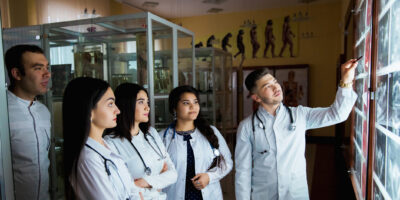
Internships in hospitals and medical centers give motivated high school students a measurable head start in healthcare. This is not theory. It is real responsibility in real settings where patients, research, and hospital operations do not slow down to make things easier. When a student spends several weeks inside a functioning medical environment, they return with clarity about their future and a stronger argument for admission to competitive college and pre-health programs.
These experiences teach what classrooms cannot. Teens see what physicians and nurses deal with each day. They discover how hospital labs run. They learn how communication keeps patients safe and care coordinated. Many students confirm that medicine is the right path. Some learn that a different niche in healthcare suits them better. Either outcome is valuable and honest.
Hospitals keep patient safety first, so interns work under strict supervision. They never handle direct patient procedures alone. Instead, they assist with real tasks, shadow licensed professionals during rounds, join research projects, or rotate through departments to understand how care moves from one stage to another. These programs are selective and require applicants to show maturity, reliability, and curiosity.
Before getting into program examples, remember that International Medical Aid (IMA) provides exceptional high school medical internships abroad with direct clinical shadowing, community health work, and personalized mentorship. If hospital programs near you are full or limited, IMA offers a global route to real experience.
Let’s look at respected hospital-based opportunities across the United States and what students gain from them.
How Hospital Internships Actually Work
Most hospital internships fall into one of two tracks.
- Research-focused
Students spend the entire program inside a medical research lab. They practice controlled lab techniques, analyze data, attend mentor-led sessions, and finish with a poster or research report. These internships support future careers in medicine, biotechnology, epidemiology, and laboratory science. - Clinical-focused
Students spend their days shadowing physicians, nurses, pharmacists, or allied health professionals. They observe real patient care, learn clinical communication, and see how departments coordinate. Some internships also include basic responsibilities such as answering calls, stocking supplies, or escorting patients.
Programs usually last between two and eight weeks. They are highly structured, with attendance expectations that match professional standards instead of school habits. A missed shift is treated the same way a hospital treats any absence: serious and justified only with clear reasons.
Many hospitals require:
- Minimum age of 15 or 16
- GPA expectations
- Local residency
- Teacher recommendations
- Personal essays showing clear motivation
Planning ahead is essential. Application windows often open in November or December for a June start. The most competitive programs close by February.
Top Hospital Internships for High School Students in the United States
Below is a selection of strong options across major regions. These summaries are rewritten and expanded to reflect what students actually experience.
Memorial Sloan Kettering Cancer Center (MSKCC) — New York, NY
Summer Student Program
MSKCC is one of the world’s biggest names in cancer research. High school juniors accepted into this eight-week internship join a research team working on cancer biology or computational research. This is not busywork. Interns attend lab meetings, learn practical lab techniques such as microscopy and pipetting, and complete a small but meaningful research project under direct supervision.
Eligibility is strict. Students must be at least 14, entering their junior year, live in the NY, NJ, or CT area, and show a strong academic record in science around a 3.5 GPA or higher. Stipends are often available. The level of exposure here sets a high standard for realism.
Children’s Mercy Hospital — Kansas City, MO
STAR 2.0 Program
This six-week paid research internship supports freshman through junior high school students in the Kansas City region. Each student is paired with a pediatric research mentor. Participants attend ethics seminars, learn lab methods step by step, and finish with a presentation of their findings. The $2,600 stipend shows how seriously this hospital invests in young talent.
Publishing is possible for standout contributors. That alone makes STAR 2.0 stand out. Many alumni continue into competitive STEM opportunities.
Houston Methodist — Houston, TX
High School Emerging Researcher Experience
Houston Methodist is known for translational medical innovation. Top high school juniors and seniors (age 16+) spend eight full-time weeks working directly in hospital research labs. Alongside college interns, they support experiments that aim to connect scientific breakthroughs to actual patient care.
A poster presentation concludes the experience. Applicants should show strong academic performance and attention to detail. This is a real lab job with serious expectations.
Dartmouth-Hitchcock Medical Center — Lebanon, NH
Foundations Summer Internship
This seven-week paid clinical internship gives rising juniors and seniors exposure to multiple hospital departments such as radiology, pharmacy, or clinical laboratories. Students do not remain in one spot. They rotate and see many sides of hospital operations.
Professional development workshops focus on teamwork, communication, and patient-first thinking. Applicants must be at least 16, live in NH or VT, commit to 30 to 40 hours per week, and show they are ready to carry responsibility.
Cleveland Clinic Education Institute — Northeast Ohio
CYCE High School Internship
The Cleveland Clinic system offers some of the strongest early-pipeline experiences in the country. This seven-week paid internship pays around $15 per hour and allows students (grades 9 to 12) to choose from clinical, technology, or administrative tracks.
Orientation sessions, healthcare workforce training, and real participation inside one of America’s best hospitals help students understand what real healthcare looks like beyond TV or social media. Applicants need at least a 2.5 GPA and strong motivation.
Cleveland Clinic Florida — Weston, FL
Summer Scholar Program
Focused on rising seniors in Broward County, this three-week clinical program moves fast. Participants rotate through core hospital departments including surgery, radiology, and emergency medicine. Students watch patient care in real time, take notes on decisions physicians make, and finish with case study presentations.
The performance expectations match a real hospital’s pace. Applicants need strong grades, professionalism, and reliability.
Stanford Medicine — Palo Alto, CA
Clinical Summer Internship (CSI)
This two-week on-campus clinical simulation program gives rising juniors and seniors supervised hands-on practice. They perform guided organ dissections, basic suturing, and structured trauma response simulations. Stanford faculty and medical residents lead every session.
This program accepts only a small percentage of applicants. Students must show strong academic readiness and a clear interest in medicine. The value of Stanford on a résumé is obvious.
Children’s Hospital Los Angeles (CHLA) — Los Angeles, CA
LA-HIP: Samuels Family Latino and African American High School Internship Program
This is a full-year paid internship that begins with a seven-week summer research residency before senior year. Interns spend their days inside the Saban Research Institute working on biomedical projects. CHLA supports participants with mentorship, public transit resources, meals, and college preparation, including SAT support.
The selectivity is real. This is designed for juniors in public schools who excel academically and show a strong drive to work in science or medicine.
Are There More Programs? Yes.
Major teaching hospitals such as UCSF, Mayo Clinic, Johns Hopkins, and University of Chicago often run high school pipeline programs. Some rotate between being active and paused depending on funding and staffing. Volunteer roles can be a stepping-stone. Even if unpaid, they count as clinical exposure when handled professionally.
Parents and students should check:
- Local hospital education or workforce development pages
- School counselor announcements
- HOSA or local STEM networks
- Community health organizations
Every hospital has different application rules. Some require local residency only. Others accept national submissions. Deadlines differ. Serious students track these dates like they track college applications.
What Students Actually Gain
Real experience builds skills in specific areas that admissions teams value.
Confidence under pressure
Students learn to follow professional expectations. Showing up early, paying attention to direction, and working alongside adults builds confidence through real performance.
Communication
Shadowing teaches how healthcare workers talk to patients clearly. Interns see how miscommunication causes problems. They learn when to speak and when to observe.
Technical exposure
Research programs introduce:
- Microscopy
- Proper uses of pipettes and lab reagents
- Data management
- Safety protocols
Clinical programs show:
- Patient handoffs
- Telemetry and diagnostic equipment
- Scheduling and triage basics
- Electronic health record workflow
A realistic view of medicine
Students learn what medical work looks like hour to hour. They see long shifts, routine tasks, problem-solving, and the emotional weight of caring for people.
Strong college story material
Top schools look for evidence of sustained interest in medicine. These internships give students stories rooted in action, not ambition alone.
How to Strengthen Applications
Students can improve their odds with practical steps.
Start early and plan ahead
Set a calendar for known deadlines. Draft essays well before they are due. Teachers will write better recommendations with time instead of urgency.
Show reliability
Hospitals choose people they can trust. Demonstrating attendance success, part-time work, or volunteer commitment helps.
Highlight specific interest
Generic statements about “helping people” do not stand out. Hint: focus on what part of healthcare interests you and why.
Build complementary activities
If applications fail, persistence matters. Continue volunteering in healthcare. Join HOSA. Enroll in STEM enrichment programs. Then apply again with a stronger profile.
A Global Option That Stands Out is International Medical Aid High School Internships
Hospital internships in the United States are competitive. Seats are limited, and residency restrictions can block excellent students who live outside the target region. International Medical Aid solves that problem with structured high school medical internships hosted at clinical sites in East Africa and South America.
IMA programs include:
- Direct shadowing of licensed physicians
- Community health engagement projects
- Workshops on medical ethics and cultural responsibility
- Strong mentorship from healthcare professionals
- Leadership opportunities in real public health settings
- Housing, meals, security support, and local coordination
- A professional letter of recommendation based on performance
IMA interns gain a perspective that hospital-only programs cannot match. Most teens in the United States have never seen healthcare systems that operate with limited resources. Understanding global health realities builds serious maturity. Students return home with experiences that make personal statements far stronger than standard volunteer hours.
IMA accepts applications from:
- Rising high school juniors and seniors
- Graduates taking a gap year
- Students with a strong interest in healthcare fields
These programs are competitive but remain accessible to motivated students across the country because location rules do not limit eligibility.
The Right Mindset for Success
Every student needs one thing: the willingness to do the work. Hospitals do not bend rules for interns. They expect professionalism at all times.
Successful interns:
- Show up early
- Ask relevant questions at the right time
- Respect confidentiality without reminders
- Wear proper attire and PPE when required
- Accept feedback without excuses
- Keep notes on what they see and learn
- Understand that earning trust takes time
Parents often want to support but cannot intervene inside the internship. Students have to stand on their own. That independence becomes a valuable asset in college.
The Bottom Line
Hospital internships for high school students provide a clear look into healthcare. The experience is real. The expectations are serious. The rewards are meaningful for both personal and academic growth.
These programs set students apart because they show readiness. Admissions offices recognize applicants who chose to spend their summer working in a demanding clinical environment. That choice signals maturity and commitment.
Hospital-based opportunities are competitive, so students should expand their search and consider trusted international options. International Medical Aid delivers a structured and safe way to gain real medical exposure, build confidence, and understand global health at a level that few students encounter before college.
Students who want a future in medicine should prepare early, apply with purpose, and choose programs that stretch their skills. Real experience changes how young people think about healthcare. It turns interest into action.
To see if an international clinical opportunity fits your goals, read more about IMA’s high school medical internships and connect with our advising team to discuss placement options and deadlines.