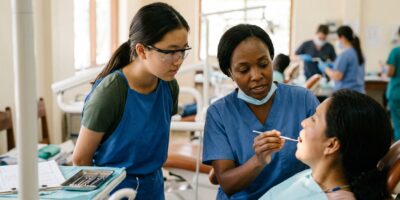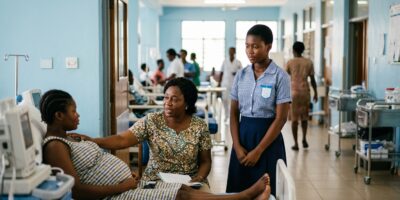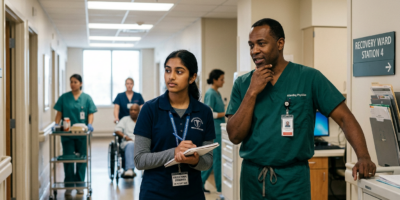
When a high school student steps into a neurology clinic as an observer, they are not scrubbing into brain surgery or diagnosing patients from a whiteboard. What teens observe in neuro clinics through these internships for high school students medical programs is far more grounded than that, and in many ways, far more useful. They watch a clinician test reflexes, ask careful questions about a patient’s memory or coordination, and interpret imaging results. They see how a physician thinks through a complex case in real time, connecting symptoms to anatomy. For a student weighing whether medicine, and specifically a neuroscience-related field, might be the right fit, this kind of structured observation builds a type of understanding that no textbook can replicate.
Neurology is a specialty centered on the brain, spinal cord, and peripheral nerves. It encompasses conditions like stroke, epilepsy, multiple sclerosis, migraines, and neurodegenerative diseases such as Alzheimer’s. According to the WHO’s reporting on neurological conditions, more than one billion people worldwide are affected by neurological disorders. In the United States alone, the CDC estimates that stroke affects roughly 795,000 people each year and epilepsy impacts 3.4 million Americans. These numbers matter because they explain why neurology clinics are busy, why the cases are varied, and why observation in these settings exposes students to a broad range of clinical reasoning. For parents and students considering this type of medical internship for high school students, understanding the scope of what happens inside a neuro clinic, and what does not, is the right starting point.
What a Neurological Exam Actually Looks Like
The neurological exam is the cornerstone of every clinic visit, and it is the single thing students spend the most time observing. Unlike a standard physical exam that focuses on the heart, lungs, and abdomen, a neurological exam is designed to test how well the nervous system is functioning. Students watch clinicians assess cranial nerves, which control things like eye movement, facial sensation, and the ability to swallow. They observe reflex testing, where a clinician taps specific tendons to evaluate spinal cord pathways. They see coordination tests, such as asking a patient to touch their nose and then the examiner’s finger in rapid succession.
What makes this valuable for a high school student is that the exam is visible and structured. A teen does not need years of medical training to notice that a patient’s hand trembles during a coordination test or that one pupil does not respond to light the same way the other does. Supervising clinicians often explain what they are looking for during or after the exam, which turns each patient encounter into a real-time learning experience.
Students also observe cognitive assessments. These might include simple memory tests, asking a patient to recall a short list of words, or orientation questions that assess whether someone knows the date, where they are, and recent events. For teens who associate neurology with dramatic surgical procedures, this quieter, detective-like process often comes as a surprise. It is diagnostic reasoning in its most visible form.
Brain Imaging, Case Discussion, and the Pace of a Real Clinic
Beyond the physical exam, observation time in a neurology clinic often includes reviewing brain imaging. Students may sit with a supervising physician as they look at CT scans or MRI results on a screen, pointing out areas of concern such as evidence of stroke, swelling, or structural abnormalities. No one expects a high school student to interpret a brain scan independently. The value is in watching how a clinician connects what they found during the exam to what the imaging shows, and then how they explain it to the patient and family.
Case discussions are another significant part of the experience. Many clinics begin the day with a brief review of the patients scheduled for that session. A supervising clinician might outline a patient’s history, the suspected diagnosis, and what the team plans to assess. For students, this is an opportunity to hear medical terminology used in context and to understand how clinicians organize their thinking before they even enter the exam room.
The pace of a neurology clinic is worth mentioning because it shapes the student’s day. Neurology is not an emergency department. Most clinic visits involve follow-ups for chronic conditions, new consultations for referred patients, and ongoing management of diseases like epilepsy or Parkinson’s. The rhythm is deliberate and conversational. Students who expect constant urgency may find the pace slow at first, but those who pay attention will notice how much information passes between clinician and patient in a single 20-minute appointment.
What Is Strictly Off-Limits for High School Observers
This is the section that matters most to parents, and it should. High school students in a clinical observation setting do not perform any part of a neurological exam. They do not touch patients, operate equipment, administer medication, or participate in procedures. They are observers, and that boundary is firm.
In a structured program, students maintain appropriate distance during all patient encounters. A supervising healthcare professional is present at all times. Students are briefed on privacy and confidentiality expectations before they enter any clinical space, including the rule that no patient information is discussed outside the clinical setting and no photographs or recordings are taken. These are not suggestions; they are requirements.
Certain cases are also screened for age-appropriateness. For example, a student would typically not be placed in a room during a psychiatric emergency or a situation involving severe patient distress without additional support structures in place. If a student feels overwhelmed by what they observe, they can step out, and debriefing sessions are built into the day for exactly this reason.
For parents evaluating any observation program, the right questions to ask are: Who supervises my child during clinical hours? What happens if my child feels uncomfortable? What training do students receive before entering a clinic? And what are the explicit rules about patient contact? Programs that cannot answer these questions clearly are not worth considering. IMA’s high school programs overview outlines the supervision and structure families should expect.
How Structured Observation Supports a Student’s Growth
Watching a neurologist work does not make a teenager a neurologist, and no honest program would suggest otherwise. What it does is give a student concrete material to reflect on. They learn what chronic disease management looks like when the patient is sitting across from them, not described in a paragraph. They see how a clinician communicates a difficult diagnosis with patience and precision. They begin to understand that medicine involves uncertainty, that not every patient receives a clear answer in a single visit, and that follow-up care is often more important than the initial diagnosis.
For students who are considering a pre-health path, this kind of observation also provides meaningful content for future applications. The AAMC’s overview of medical school admissions emphasizes that reflection on clinical exposure matters more than the number of hours logged. Admissions committees at medical, PA, nursing, and other health professions programs want to see that a student noticed something specific, thought about it critically, and connected it to their understanding of patient care. A student who can write about watching a clinician explain an epilepsy management plan to a worried family, and who reflects on what effective communication looked like in that moment, has something real to draw from.
Students interested in early clinical exposure across multiple specialties may also find it helpful to read about dermatology observation opportunities for high schoolers, which follows a similar observation-based structure adapted for younger students.
Neurology vs. Neurosurgery: A Common Mix-Up
One of the most frequent misunderstandings among high school students, and sometimes their parents, is the difference between neurology and neurosurgery. Neurology is a medical specialty focused on diagnosing and treating disorders of the nervous system through medication, therapy, and ongoing management. Neurosurgery is a surgical specialty that involves operating on the brain, spine, and peripheral nerves. The two fields overlap in some areas, but they are distinct training paths and distinct daily experiences.
A student observing in a neurology clinic will not see surgery. They will see clinic-based care: history-taking, physical exams, cognitive assessments, imaging review, treatment planning, and patient education. This distinction matters because students sometimes enter a neurology observation expecting an operating room experience and feel disappointed. In reality, the clinic setting offers a clearer view of diagnostic reasoning and patient relationships than an OR ever could for an observer standing several feet away.
Understanding this distinction early also helps students think more carefully about what aspect of brain-related medicine interests them. Some students realize they are drawn to the long-term relationships neurologists build with patients managing chronic conditions. Others recognize that they want to pursue a more procedural path. Both realizations are equally useful at this stage.
Readiness, Maturity, and Honest Self-Assessment
Not every high school student is ready for clinical observation, and that is perfectly fine. Readiness is not about age alone. It involves emotional maturity, the ability to follow strict rules about conduct and confidentiality, comfort with being in unfamiliar environments, and a genuine interest in watching and learning rather than performing.
Parents should have a direct conversation with their teen about what observation actually involves. It means standing or sitting quietly for extended periods. It means watching a patient struggle to recall their own name during a cognitive screen and not reacting visibly. It means hearing a clinician discuss a serious diagnosis and processing that information later, during a debrief, rather than in the moment. Students who can handle this thoughtfully will get a great deal out of the experience. Students who are not yet at that point can build toward it with other forms of exposure, such as general physician shadowing in a domestic setting or health-related research and volunteer work.
For parents specifically, it is worth noting that structured programs differ significantly from informal shadowing arranged through a family connection. In a structured program, there is a defined schedule, a clear chain of supervision, housing and logistics handled by the organization, regular communication channels between the program and parents, and protocols for unexpected situations. These layers of structure exist because they matter, especially when the participant is a minor.
The NIH’s National Institute of Neurological Disorders and Stroke is a strong resource for families who want their student to build foundational knowledge about neurological conditions before entering any observation setting. Reviewing basic information about common conditions like stroke, epilepsy, and headache disorders helps a student follow clinical conversations more effectively and ask better questions during debrief sessions.
What to Take Away from a Neuro Clinic Experience
The most valuable outcome of neurology observation for a high school student is not a line on a resume. It is a clearer, more grounded sense of what clinical medicine actually requires. Students leave with a better understanding of how long a diagnostic process can take, how much listening is involved in good patient care, and how clinicians manage uncertainty when the nervous system does not reveal its problems easily.
For parents, the takeaway is equally practical. A well-structured observation experience, with clear boundaries, active supervision, and space for reflection, gives a teenager real information to work with as they think about their future. It does not guarantee anything about admissions or career direction, and any program that suggests otherwise is overpromising. What it does provide is a reference point, something concrete a student can return to when they are deciding whether to pursue a pre-health track, choosing a college major, or writing about their motivations in an application essay years down the line.
If your student is genuinely curious about how the brain works, comfortable with structured observation, and willing to approach the experience with patience and respect, a neurology clinic is a setting where that curiosity can be met with real substance.
Frequently Asked Questions
Will my teenager be allowed to touch patients or assist with any procedures?
No. High school students in observation programs are there strictly to watch and learn. They do not perform any part of a neurological exam, handle equipment, administer treatments, or make physical contact with patients. A supervising healthcare professional is present during all clinical encounters, and the observation-only boundary is non-negotiable.
What happens if my teen feels overwhelmed by something they see in the clinic?
Structured observation programs include regular debrief sessions where students can discuss what they observed and how it affected them. If a student feels uncomfortable at any point during a clinical session, they can step out. Cases are also screened for age-appropriateness, and program staff are available to provide support. Parents should confirm that any program they consider has explicit protocols for emotional well-being.
Does neurology observation in high school actually help with medical school applications later?
Clinical observation can be a meaningful part of a future application, but only if the student reflects on the experience thoughtfully. Admissions committees value what a student noticed, how they processed it, and what it taught them about patient care, not simply the number of hours they spent in a clinic. Observation alone does not guarantee any admissions outcome, but it can provide the kind of specific, honest material that strengthens a personal statement or activity description.