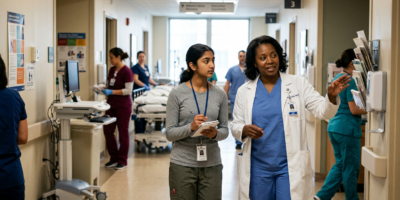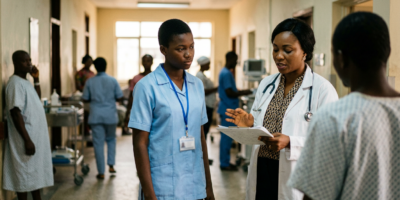
Clinic safety and sterilization basics for teens start with a simple reality: infection control is not a minor administrative detail. It is one of the most critical systems in all of healthcare. The CDC reports that on any given day, about 1 in 31 hospital patients has at least one healthcare-associated infection. That statistic applies to fully staffed, well-resourced facilities in the United States. For a high school student preparing to observe in any clinical environment through internships for high school students medical programs, whether at a local dental office or an international health program, understanding how sterilization works and why safety protocols exist is not optional background reading. It is essential preparation.
If you are a student interested in a healthcare career, or a parent helping your teenager evaluate clinical observation opportunities like a medical internship for high school students, this article will walk you through what sterilization actually means in practice, what students should expect to see (and not do) in clinical settings, how supervision and safety boundaries protect minors, and how this knowledge connects to future academic and professional goals. The dental and oral health context is especially useful here, because dental settings involve high volumes of instrument processing and clear, repeatable sterilization steps that make the principles easy to observe and understand.
Why Sterilization Is Not the Same as Cleaning
Most people use the words “clean” and “sterile” interchangeably, but in clinical practice, they refer to very different standards. Cleaning removes visible debris, dirt, and organic material from surfaces and instruments. Disinfection reduces the number of viable microorganisms to a level considered safe for a given purpose. Sterilization goes further: it eliminates all forms of microbial life, including bacterial spores, which are among the hardest organisms to kill.
In dental settings, the distinction matters enormously. The CDC’s guidelines for disinfection and sterilization in healthcare facilities specify that all semi-critical and critical instruments, meaning anything that contacts mucous membranes or penetrates soft tissue, must be sterilized between patients. In dental care, that includes handpieces, scalers, mirrors, forceps, and a wide range of other instruments. The standard for dental instrument sterilization requires a 6-log reduction of bacterial spores, which translates to eliminating 99.9999% of them. That number is not arbitrary. It reflects decades of evidence about what it takes to prevent the transmission of hepatitis B, hepatitis C, HIV, and other bloodborne pathogens.
For teens, understanding this distinction is one of the first real lessons in clinical thinking. It moves you past the assumption that “wiping something down” is enough and into the evidence-based reasoning that underpins every protocol in a medical or dental facility.
What Teens Actually See During Sterilization Observations
A common misconception among students (and sometimes parents) is that observing sterilization procedures is either boring or trivial. In practice, the instrument reprocessing cycle in a busy dental clinic is a carefully sequenced, multi-step operation. Watching it unfold under professional supervision teaches more about systems thinking and patient safety than most classroom exercises can.
The Instrument Reprocessing Cycle
In a well-equipped dental clinic, the cycle typically follows this sequence: used instruments are collected in designated containers and transported to a decontamination area. They are cleaned manually or with an ultrasonic cleaner to remove organic debris. After cleaning, instruments are inspected, dried, packaged in sterilization pouches or wraps, and placed into an autoclave, which uses pressurized steam at high temperatures to achieve sterilization. After the cycle, biological indicators are checked to confirm that sterilization was successful. The instruments are then stored in a clean, dry area until needed.
In international settings, some of this equipment may look different. Where ultrasonic cleaners are unavailable, staff may rely on thorough manual scrubbing. In resource-limited facilities, efficient scheduling of autoclave cycles becomes critical because the equipment may be shared across departments. The WHO’s guidance on decontamination and reprocessing of medical devices provides the international framework that clinics worldwide use to maintain safety standards regardless of equipment availability. The core principles, thorough cleaning before sterilization, validated sterilization methods, proper storage, remain the same everywhere.
What Students Do and Do Not Do
This is the part that matters most for both teens and parents. High school students in structured observation programs do not handle contaminated instruments. They do not operate autoclaves independently. They do not touch sharps containers or biohazardous waste. What they do is watch each step of the process, ask supervised questions, and document what they observe.
A typical observation day might include a morning safety briefing, followed by watching pre-sterilization cleaning, witnessing an autoclave cycle and the checking of biological indicators, and then discussing what happened with a supervising clinician. The value is in understanding the reasoning behind each step: why the packaging has to be sealed a certain way, why instruments must be fully dry before autoclaving, why biological indicators exist in addition to chemical ones. Students who engage with these questions develop the kind of critical thinking about safety systems that will serve them throughout any healthcare career path. For students considering programs that offer structured clinical exposure, IMA’s high school internship programs outline what observation looks like in a professionally supervised, age-appropriate setting.
How PPE and Hand Hygiene Fit Into the Bigger Picture
Sterilization is one piece of a larger infection control system. Personal protective equipment and hand hygiene are the other pillars, and they are the parts of the system that students interact with most directly during clinical observations.
Proper hand hygiene alone can prevent up to 50% of healthcare-associated infections, according to CDC data. Yet the WHO reports that global hand hygiene compliance among healthcare workers averages only about 40%. That gap between what works and what actually happens is one of the most important lessons a student can absorb early. It explains why training programs spend so much time reinforcing technique, timing, and consistency.
For teens entering any clinical observation setting, PPE training happens before any clinical exposure begins. Students are taught how to properly don and doff gloves, masks, and eye protection; how to dispose of PPE correctly; and when PPE is required versus when standard hand hygiene is sufficient. In dental observation contexts, this is especially relevant because aerosol-generating procedures (like the use of high-speed handpieces) create specific exposure risks that require specific precautions.
Parents should expect any responsible program to provide this training explicitly and to enforce it consistently. If a program does not explain its PPE and hand hygiene protocols clearly before students enter a clinical area, that is a meaningful red flag.
Supervision, Safety Boundaries, and What Parents Should Ask
The most important question a parent can ask about any clinical observation program is not “What will my child see?” It is “Who is responsible for my child’s safety, and how is that responsibility structured?”
Direct Supervision, Not Loose Oversight
For high school students, clinical observation requires direct visual supervision. That means a qualified clinical staff member is present and watching whenever a student is in a clinical area. It does not mean a student is in a building where professionals happen to be working. The distinction is significant. Students should have a pre-briefing before entering any clinical space, clear instructions about where to stand and what not to touch, and immediate access to a supervisor who can answer questions or intervene if something unexpected occurs.
Programs that serve high school students should also have explicit protocols for safety check-ins throughout the day, a clear process for students to report concerns, and structured debrief sessions where students can process what they observed. These elements are not extras. They are baseline requirements for any program that places minors in clinical environments.
What Parents Should Look For
Housing, communication, and daily structure are legitimate concerns, not helicopter parenting. Parents should ask how the program communicates with families during the experience, what the housing arrangements look like, whether students are supervised outside of clinical hours, and what happens if a student feels unwell or uncomfortable. They should also ask whether the program provides written safety policies, and whether those policies are shared with families before enrollment.
For students who are still building their understanding of what clinical exposure involves, reading about what to expect when working with children in clinical settings can provide useful context about how structured observation programs handle age-appropriate boundaries.
It is also worth acknowledging that readiness varies. Not every 16-year-old is equally prepared to spend time in a clinical environment, and that is fine. Maturity, emotional readiness, and the ability to follow instructions consistently are real factors. A student who is not quite ready now can prepare, build foundational knowledge, and revisit the opportunity when the timing is better.
Why This Knowledge Matters for Future Applications
Understanding infection control and sterilization is not just about staying safe during a single observation experience. It is foundational knowledge that connects directly to what medical, dental, PA, nursing, and other health professions programs expect students to understand.
The ADEA’s competencies for the new general dentist include infection control as a core area. Medical school admissions committees, as reflected in AAMC guidance, value applicants who can demonstrate an understanding of patient safety principles, not just clinical curiosity. When a student can write or speak about why sterilization protocols exist, how they vary across resource settings, and what role every team member plays in maintaining them, that reflects a level of maturity and awareness that stands out.
This is not about padding a resume. It is about building genuine understanding early. A student who has watched an autoclave cycle, asked why biological indicators are tested, and reflected on the gap between ideal hand hygiene compliance and real-world behavior has started to think like someone who belongs in a clinical profession. That kind of thinking develops through structured exposure, not textbook reading alone.
For students planning their broader pre-health preparation, understanding how these experiences fit into a longer timeline is helpful. An article on how hospitals evaluate teen internship applications can offer perspective on what clinical programs look for and how safety awareness factors into those decisions.
Practical Steps Before Entering Any Clinical Setting
Whether a student is preparing for a local dental office shadowing day or an international observation program, a few concrete steps make the experience safer and more meaningful.
First, study the basics before you arrive. You do not need to memorize every CDC guideline, but you should understand the difference between cleaning, disinfection, and sterilization. You should know what an autoclave does and why hand hygiene matters. Arriving with that baseline allows you to ask better questions and absorb more from what you observe.
Second, take the safety briefing seriously. Every responsible program begins with one. Listen carefully, ask questions if anything is unclear, and follow the instructions exactly. If you are told not to touch something, do not touch it. If you are told to stay behind a line, stay behind it. These boundaries exist to protect you and the patients in that facility.
Third, document what you observe. Keeping a simple log of the sterilization steps you watched, the questions you asked, and the answers you received builds a record that is useful for reflection, for future application essays, and for your own learning. It also reinforces the habit of paying close attention to process, which is a skill every healthcare professional needs.
Fourth, talk about what you saw. Discuss the experience with a parent, a teacher, or a mentor. Reflecting on what surprised you, what you did not understand, and what you want to learn more about turns a single day of observation into a lasting piece of your education.
Finally, be honest about your readiness. If you feel overwhelmed, say so. If something makes you uncomfortable, tell your supervisor. Clinical environments are serious places, and there is no shame in needing a moment to regroup. The ability to recognize your own limits and communicate them is itself a professional skill.
Frequently Asked Questions
Will my teenager handle medical or dental instruments during a clinical observation?
No. In any properly structured observation program for high school students, teens do not handle contaminated instruments, operate sterilization equipment independently, or touch sharps or biohazardous materials. Their role is to observe each step of the process under direct supervision and to ask questions. This boundary protects both the student and the patients in the facility.
How does understanding sterilization help with future medical or dental school applications?
Infection control is a core competency in medical, dental, nursing, PA, and other health professions programs. When a student can articulate why sterilization protocols exist, how they work, and how they vary across settings, it demonstrates genuine patient safety awareness. Admissions committees value this kind of informed perspective because it reflects maturity and readiness for clinical training.
What should parents ask a program before allowing their teen to observe in a clinical setting?
Parents should ask about the supervision structure (specifically whether students have direct visual supervision at all times), PPE training procedures, written safety policies, housing and communication arrangements, daily schedules, and how the program handles situations where a student feels unwell or uncomfortable. Any program that cannot answer these questions clearly and specifically deserves further scrutiny before enrollment.