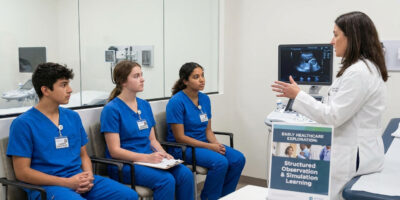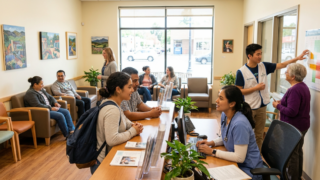
Community clinics serve populations that often have limited access to hospital-based care. For teenagers exploring careers in healthcare, these settings offer a distinct kind of clinical exposure, one that emphasizes primary care, continuity of patient relationships, and the social context of health. Students pursuing medical opportunities for high school students in community clinic settings encounter a clinical environment that is fundamentally different from the acute hospital units most people picture when they think about medicine.
The differences are significant and worth understanding before a student commits to any particular type of clinical observation experience. For students who want a structured overview of how clinical observation works for minors across different healthcare settings, including what is permitted and how supervision is managed, this skills and readiness overview provides relevant preparation guidance.
What Makes Community Clinics Different From Hospitals
A community clinic, also called a federally qualified health center, community health center, or free clinic depending on its funding and structure, is typically an outpatient primary care setting that serves patients regardless of their ability to pay. These clinics operate in neighborhoods and communities where access to specialist care, insurance coverage, or transportation to larger medical facilities is limited.
The clinical work in a community clinic reflects this context. Providers in these settings see a high volume of patients with complex social circumstances, chronic conditions managed over years rather than acute episodes, and health challenges that are directly connected to housing, food security, income, and access to medication. A teenager observing in a community clinic will see medicine that looks and operates differently from emergency department medicine or surgical unit care.
Patients in community clinic settings often have long-standing relationships with the same provider. This continuity of care is a defining feature of primary care and community health work. Students who observe these relationships gain an understanding of how trust and consistent communication over time influence patient outcomes, a dimension of healthcare that acute hospital settings often cannot demonstrate as clearly.
Clinical Roles Students Observe in Community Clinics
Community clinics typically operate with smaller, more integrated teams than hospital units. The roles students observe in these settings include primary care physicians, family nurse practitioners, licensed practical nurses, medical assistants, community health workers, patient navigators, and social workers. In many clinics, a single visit involves multiple members of this team, each contributing a different component of the patient’s care.
For high school students interested in understanding how a healthcare team functions without the hierarchical complexity of a hospital, community clinic settings can be particularly instructive. The team is smaller, the communication is often more visible, and the range of roles is wide enough to give students a comparative view of different health career pathways in a single setting.
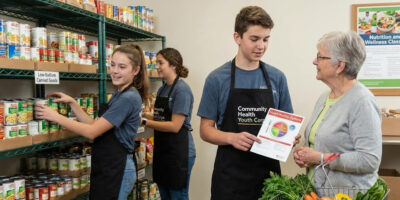
Community health workers, in particular, are a role that many high school students have not encountered before. These professionals serve as a bridge between clinical staff and the patients and communities they serve, providing health education, care coordination, translation, and social support. Their work is grounded in the communities they serve in ways that clinical roles are not, and observing it gives students a concrete introduction to the social determinants of health in practice.
What Teen Interns Do in Community Clinic Settings
The observational and support activities available to teen interns in community clinic settings are broadly similar to those in hospital environments, with some distinctions that reflect the smaller scale and different patient population.
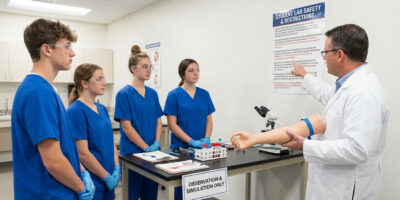
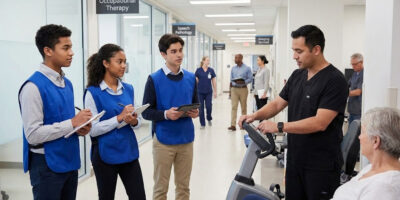
Students observe patient intake processes, including how patient history is collected and how social and economic factors are documented alongside clinical information. They observe clinical consultations, with patient consent and staff supervision, noting how providers communicate with patients who have complex or chronic conditions. They may assist with nonclinical administrative tasks such as organizing educational materials, preparing examination room supplies, or supporting patient flow logistics under direct staff supervision.
What they do not do in community clinic settings is identical to the restrictions that apply in any clinical environment. They do not provide clinical advice, assist with procedures, access patient records independently, or initiate patient communication without instruction. These boundaries apply regardless of the informality of the setting.
Entry-level healthcare shadowing in community clinics often feels more accessible than hospital-based observation because the environment is smaller and the pace of work is more predictable. Students who find hospital environments overwhelming at first may find community clinic observation a more manageable starting point for building clinical familiarity.
Health Equity and the Community Clinic Context
Students who intern in community clinic settings are exposed, often for the first time, to the structural dimensions of health inequality in a direct and concrete way. The patients served by community clinics are disproportionately from low-income households, immigrant communities, communities of color, and populations with limited access to preventive care. The health challenges these patients face are not solely biological. They are shaped by the conditions in which people live, work, and age.
Healthcare professionals who work in community settings are trained to practice with this context explicitly in mind. They screen for social needs alongside clinical ones, connect patients with community resources, and advocate for systemic changes that affect patient health outside the clinic walls. Students who observe this approach gain an understanding of medicine that extends beyond diagnosis and treatment into the social and structural conditions that shape health outcomes.
The National Association of Community Health Centers provides detailed information about the community health center model, including data on the populations served and the scope of services provided. Reviewing this resource gives students a concrete understanding of the scale and purpose of community clinic work before they begin observing in these settings.
How Community Clinic Experience Strengthens Health Career Applications
Community clinic experience is particularly valuable for students applying to programs with a stated commitment to underserved populations, primary care medicine, or health equity. Medical schools with rural health or urban underserved tracks, nursing programs with community health emphases, and public health programs all look favorably on applicants who have engaged with community-based care rather than limiting their clinical exposure to acute hospital settings.
Beyond the application value, students who have observed care in community clinics develop a more complete picture of what healthcare looks like across different populations and settings. They understand that medicine is not practiced the same way everywhere, that patient populations have different needs and different relationships with the healthcare system, and that the social context of health is as relevant to clinical practice as the biological one.
The Health Resources and Services Administration maintains information on federally qualified health centers and their role in the US healthcare system. Students interested in understanding the policy and funding context of community health work will find this resource useful as background preparation.
Summer healthcare experiences for teens that include community clinic placement alongside hospital-based observation give students the comparative exposure needed to make genuinely informed decisions about their future training and career direction.
Frequently Asked Questions
What is a community clinic, and how is it different from a hospital for a teen intern?
A community clinic, also called a federally qualified health center or community health center, is an outpatient primary care setting that serves patients regardless of their ability to pay. Unlike hospitals, which handle acute and emergency care, community clinics focus on primary care, chronic disease management, and preventive services for populations that may have limited access to other healthcare settings. For teen interns, community clinics offer a smaller, more integrated team environment where patient-provider relationships develop over time and the social context of health is more directly visible than in acute hospital units.
What does a teen intern actually do during a community clinic placement?
Teen interns in community clinic settings observe patient intake processes, clinical consultations with patient consent and staff supervision, and care team communication. They may assist with nonclinical tasks such as organizing educational materials, preparing examination room supplies, or supporting patient flow logistics under direct staff direction. They do not provide clinical advice, assist with any medical procedures, access patient records independently, or initiate patient communication without specific instruction from their supervisor.
Why are community clinics a good starting point for high school students new to clinical settings?
Community clinics tend to offer a more manageable introduction to clinical environments than large hospital units because they operate at a smaller scale, with more predictable patient flow and more visible team communication. Students who find hospital environments overwhelming at first may find community clinic observation a more accessible starting point. The clinical work is still substantive and professionally relevant, but the environment is less complex and the team structure is easier to follow for a student without prior clinical exposure.
How does community clinic experience address health equity in a college application?
Medical schools and nursing programs with commitments to underserved populations, primary care, or health equity look specifically for applicants who have engaged with community-based care. A student who has observed care in a community clinic setting, who understands how social determinants of health affect patient behavior and outcomes, and who can describe a specific encounter that illustrated the connection between a patient’s social circumstances and their health can speak to health equity in a concrete and credible way. This is more compelling to admissions committees than a general statement of interest in serving underserved communities.
What is a community health worker and why is this role significant for teen interns to observe?
A community health worker is a trained professional who serves as a bridge between clinical teams and the communities they serve. They provide health education, care coordination, translation, and social support, and their authority within their community often influences patient willingness to seek and follow through on clinical care. Teen interns who observe community health workers in action are seeing a role that directly addresses the social determinants of health in practice, which provides clinical and health systems literacy that many students with purely hospital-based experience lack.
Are community clinic internships accessible to high school students under age 16?
Accessibility depends on the specific clinic and its policies for minors. Some community health centers accept teen volunteers in nonclinical support roles at younger ages, while reserving formal clinical observation for students who meet a minimum age threshold, often 16. Families should contact specific programs directly to confirm eligibility requirements. Structured programs that include community clinic placement as a component of a broader healthcare internship, such as those offered through global health programs or HOSA-affiliated organizations, typically have clearly defined age and eligibility criteria.
How does community clinic observation compare to international clinical program experience?
Community clinic observation provides direct exposure to primary care, chronic disease management, and the social context of health for underserved domestic populations. International clinical programs provide many of the same dimensions of care but in settings where resource constraints, infectious disease burden, and health system differences are more pronounced. Both are professionally valuable, and students who have experienced both develop a comparative understanding of how healthcare is delivered across different contexts and resource levels. For students building toward careers in primary care, global health, or community medicine, the combination provides a particularly strong preparation.