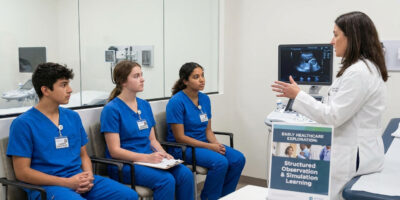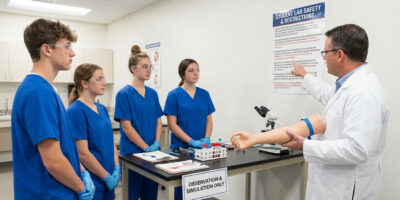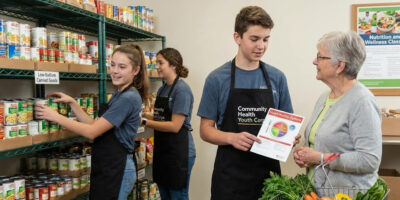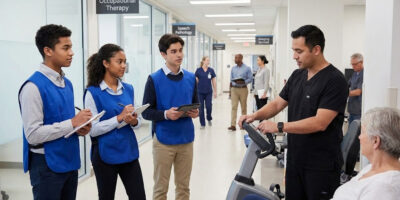
Public health is one of the broadest and most accessible entry points into healthcare for high school students. Unlike hospital-based clinical roles, public health work focuses on communities, systems, and prevention rather than individual patient care, which means the access barriers that often restrict medical internships for high school students in clinical settings are frequently lower in public health contexts. Students can engage meaningfully with public health work at the community level without the age and licensing restrictions that apply to direct patient care.
The skills developed through public health engagement, including data interpretation, community communication, health education facilitation, and understanding the social determinants of health, are directly relevant to medical, nursing, and allied health applications. For students who want to understand how public health experience connects to the broader landscape of clinical preparation, this early healthcare overview outlines the foundational skills and expectations that apply across health career pathways.
What Public Health Work Involves at the High School Level
Public health operates at the intersection of medicine, policy, sociology, and data. At the high school level, meaningful engagement with public health does not require clinical licensing or hospital access. It requires curiosity, organizational commitment, and a willingness to work with communities rather than individual patients.
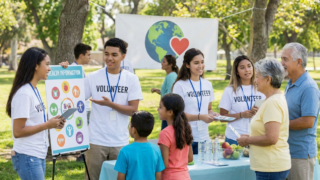
Common public health activities available to high school students include health education outreach in community settings, support for data collection for local health initiatives, participation in vaccination or screening event logistics, support for community needs assessments, and health communication projects involving writing, translation, or media creation for public audiences.
In global health internship settings, public health work takes on additional dimensions. Students working alongside healthcare teams in East Africa, Latin America, or the Caribbean may assist with community outreach efforts that address hygiene, maternal health, nutrition, or disease prevention. These activities are structured to be age-appropriate and non-clinical, meaning students contribute meaningfully without crossing into licensed practice.
How Public Health Differs From Clinical Medicine
Students who are considering both public health and clinical medicine as potential directions benefit from understanding the practical differences between the two types of work.
Clinical medicine focuses on the individual. A physician or nurse is primarily concerned with diagnosing and treating the patient in front of them. Public health focuses on populations. A public health professional is primarily concerned with patterns, trends, risk factors, and systemic interventions that affect groups of people rather than single individuals.
This does not mean public health is less rigorous or less scientifically demanding than clinical medicine. Epidemiology, biostatistics, health policy analysis, and environmental health science are technically demanding fields that require strong quantitative skills and scientific literacy. But the day-to-day work looks and feels different, and students who have experienced both clinical observation and public health project work are better positioned to make informed decisions about their own direction.
For students who find that direct patient contact in hospital settings is not yet a comfortable fit, public health internships for high school students offer a structured alternative that still builds a credible healthcare record.
Core Competencies Public Health Experience Develops
The AAMC Premed Competency Framework includes several areas where public health experience is directly relevant. Social skills, cultural competency, and service orientation are all competencies that public health workers develop in measurable ways. Students who have worked on community health education projects, assisted with data collection for local health initiatives, or participated in disease prevention outreach can speak to these competencies with specific examples.
Beyond the AAMC framework, schools of public health and nursing programs increasingly seek evidence that applicants understand health at the systems level, not just at the individual clinical level. Students who have engaged with community health data, participated in health equity discussions, or worked alongside public health professionals in under-resourced settings demonstrate a breadth of preparation that purely clinical applicants often lack.
The Centers for Disease Control and Prevention maintains resources for students interested in public health career pathways, including information on program types and educational preparation relevant to the field. Reviewing these resources gives students a concrete sense of what professional public health work involves and how high school engagement fits into a longer pathway.
Global Health as a Form of Public Health Engagement
International medical programs that include community outreach components give students direct exposure to public health work in resource-limited settings. In these environments, public health challenges are often visible in ways that are less apparent in higher-income domestic contexts. Water access, sanitation infrastructure, vaccination coverage, maternal mortality rates, and infectious disease burden are not abstract statistics. They are observable features of the communities where students work.
Students who participate in structured global health programs as part of their high school healthcare experience gain a comparative understanding of health systems that domestic clinical shadowing alone cannot provide. They observe how healthcare is delivered when resources are constrained, how community health workers function as the primary point of contact for many patients, and how public health interventions are designed and implemented at the community level.
This kind of exposure is particularly relevant for students considering careers in global health, international medicine, public health policy, or any field where understanding health disparities is professionally important.
Academic Subjects That Strengthen Public Health Preparation
High school students interested in public health benefit from a specific academic foundation that extends beyond the biology and chemistry courses typically associated with pre-medical preparation.
Statistics and data analysis are fundamental to public health practice. Students who have taken statistics courses, worked with data sets in any context, or completed research projects that involved quantitative analysis are better prepared for the analytical demands of public health work at the college level and beyond.
Social sciences, including sociology, psychology, and economics, provide frameworks for understanding the behavioral and structural factors that influence population health. Students who can connect patterns in health data to social and economic contexts are thinking in the way that public health work requires.
Writing and communication skills matter considerably in public health, where a significant portion of professional output involves reports, policy briefs, community education materials, and grant applications. Students who develop strong writing skills in high school carry a practical advantage into public health coursework and careers.
The American Public Health Association provides student resources, including information on public health as a career pathway and the academic preparation that supports entry into the field.
Connecting Public Health Experience to Long-Term Career Planning
Students do not need to decide between public health and clinical medicine in high school. Many physicians, nurses, and allied health professionals incorporate public health principles into their clinical work throughout their careers. Epidemiologists work alongside clinical teams. Public health nurses provide both individual care and community-level health education. Physicians in underserved settings routinely engage with the social and structural factors that affect their patients’ health.
What high school engagement with public health provides is not a career commitment. It is a more complete picture of what healthcare involves beyond the hospital room, and a set of competencies and experiences that strengthen any health career application. Students who combine clinical shadowing with public health engagement emerge with a broader and more differentiated preparation than those who focus on a single track.
Frequently Asked Questions
What is public health, and how does it differ from clinical medicine for high school students?
Public health focuses on the health of populations rather than individual patients. Where clinical medicine addresses the diagnosis and treatment of illness in a specific person, public health identifies patterns, risk factors, and systemic factors that affect groups of people and designs interventions at the community or policy level. For high school students, this distinction matters because public health activities, including community health education, data collection support, and health outreach, are more accessible to minors than many clinical medicine activities, which are restricted by age, licensing, and patient privacy considerations.
What kinds of public health activities can high school students actually participate in?
High school students can contribute meaningfully to public health work through health education outreach in community settings, data collection support for local health surveys, assistance with vaccination or screening event logistics, community needs assessment activities, and health communication projects. In global health programs, students may assist with community outreach addressing hygiene, maternal health, nutrition, or disease prevention. All of these activities are non-clinical, which means they do not require the licensing or supervision restrictions that apply to direct patient care.
Does public health experience count for medical school applications?
Yes. Medical school admissions committees evaluate applicants on the AAMC Premed Competency Framework, which includes service orientation, social skills, and cultural awareness, all of which public health experience develops directly. Additionally, medical schools increasingly value evidence that applicants understand health at the systems level, not just the individual clinical level. Students who have engaged with community health data, participated in health equity discussions, or worked alongside public health professionals in under-resourced settings demonstrate a breadth of preparation that purely clinical applicants often lack.
What academic subjects best prepare a high school student for public health work?
Statistics and data analysis are fundamental to public health practice and the most directly applicable high school subject. Social sciences, including sociology, psychology, and economics, provide frameworks for understanding the behavioral and structural factors that influence population health. Strong writing and communication skills matter considerably in public health, where significant professional output involves reports, policy briefs, community education materials, and grant applications. Biology and chemistry remain important but are less central to public health than to clinical medicine.
How does global health experience relate to public health preparation?
Global health experience provides direct exposure to public health challenges in resource-limited settings where the consequences of inadequate public health infrastructure are visible and concrete. Students in international programs observe how community health workers function as primary health contacts for many patients, how public health interventions are designed and implemented at the community level, and how infectious disease burden, maternal mortality, and environmental health factors affect population health in ways that differ significantly from high-income domestic contexts. This comparative understanding is directly relevant for students considering careers in global health, public health policy, or any field where health disparities are professionally significant.
Can a high school student interested in public health skip clinical experience entirely?
Skipping clinical experience entirely is not advisable for students who intend to pursue medicine, nursing, or allied health careers, even those with a primary interest in public health. Clinical experience and public health engagement are complementary rather than interchangeable. Clinical experience develops the patient-centered perspective and professional habits that healthcare requires. Public health engagement develops systems-level thinking and community health literacy. Students who have both are better prepared and present more complete applications than those who have focused exclusively on one dimension.
What is the difference between a public health internship and a hospital volunteer role for teens?
A hospital volunteer role for teens typically involves nonclinical support tasks within a hospital setting, such as greeting visitors, stocking supplies, or delivering items. A public health internship focuses on community-level health work outside or alongside clinical settings, including health education, data collection, outreach, and health communication. Both are valuable and appropriate for high school students, but they develop different competencies. Hospital volunteering builds familiarity with clinical environments and professional conduct within a healthcare facility. Public health internship experience builds systems-level health literacy and community engagement skills.