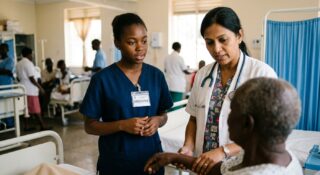
High school students considering healthcare careers often look for ways to gain early exposure beyond classroom learning. Some search for paid medical internships for high school students or similar structured programs that place them in real health settings. Community outreach and health education roles abroad offer one of the most accessible, age-appropriate, and genuinely useful ways for teens to engage with global health. These roles focus on supporting local health teams through education, screenings support, and community projects rather than clinical care. For students and parents weighing this kind of experience, it helps to understand exactly what teens do, how they are supervised, and why these roles matter.
Programs that place high school students in international health settings vary widely. Some focus on observation in clinical environments, while others, like medical research internships for high school students, emphasize data collection or academic projects. Community outreach and health education programs sit in a distinct category. They put students alongside local healthcare workers and community health volunteers who lead the work. The student’s job is to support, assist, and learn within clearly defined boundaries. In East Africa, where community-level health education is critical to addressing conditions like malaria, waterborne diseases, and maternal health challenges, these roles connect students to some of the most pressing public health issues on the planet.
What Community Outreach and Health Education Roles Actually Involve
When a teen participates in community health outreach abroad, their activities center on education, logistics, and observation. They are not practicing medicine. They are not diagnosing, treating, or advising patients. This distinction matters, and any reputable program makes it explicit from the start.
In a typical week, a high school student might help prepare visual materials for a hygiene education session at a local school, assist with setting up a community health screening by recording height and weight, or participate in a water, sanitation, and hygiene (WASH) project. These are real contributions. The World Health Organization has documented that the projected shortfall of 10 million health workers by 2030 is concentrated in low- and lower-middle-income countries, which means community-level health education is not a minor add-on; it is often the front line of disease prevention.
Students may also observe clinical consultations with local professionals, attend community health talks led by trained community health workers, or help distribute educational materials about malaria prevention or safe water practices. These tasks are non-invasive and non-clinical. They require attentiveness, cultural respect, and willingness to follow instructions. For students exploring whether healthcare is the right path, this kind of work reveals a side of medicine that is rarely visible from inside a U.S. classroom.
Why These Roles Exist and Why They Matter in East Africa
East Africa, particularly Kenya and Tanzania, operates a tiered healthcare system where community health workers play a central role. In many rural areas, a clinical officer or community health volunteer may be the only health professional available for miles. The CDC’s global WASH data shows that improved hygiene education can reduce diarrheal diseases significantly, which underscores how critical basic health literacy is in communities with limited access to clean water and sanitation infrastructure.
For teens, this context matters because it shapes the kind of support that is genuinely helpful. When a student assists with a handwashing demonstration at a primary school or helps organize a community health fair focused on nutrition, they are contributing to work that local teams have designed and are leading. The student is not the expert. The student is the support. That structure is what separates ethical, well-run programs from those that treat international communities as backdrops for resume building.
Students interested in how this kind of community-based health work connects to a longer career path can find useful background in IMA’s coverage of how community health work shapes tomorrow’s physicians. The overlap between public health education abroad and the competencies that health professional schools value is significant, but only when the experience is genuine and well-structured.
What a Typical Day Looks Like for a Teen in a Health Education Program
Structure and predictability are important for any program involving minors, and parents should expect to see a clear daily schedule before committing.
A morning might begin with a group briefing where IMA staff review the day’s plan, safety reminders, and learning objectives. From there, students travel together to a partner clinic, school, or community center. Late-morning hours could involve supporting a health education session on topics like disease prevention, proper nutrition, or maternal health awareness. Students might prepare materials, help with registration at a screening event, or take notes during a supervised community health visit.
Afternoons often include continued outreach, observation at a local clinic, or work on a community project such as assembling water filters or supporting a sanitation initiative. The day wraps up with a structured debriefing session where students discuss what they observed, ask questions, and reflect on what they learned. This reflection component is not filler; it is where much of the real learning happens, and it gives students language and perspective they can carry into future applications and interviews.
Evenings are free time, typically spent at the group accommodation with cultural activities or independent study. Students are housed in vetted, secure accommodations and are not permitted to travel independently. Parents can expect regular communication channels, including designated check-in times and emergency contact procedures. For a detailed overview of how IMA approaches safety and supervision for minors, the parent’s guide to high school teen medical internships covers these logistics thoroughly.
How These Experiences Connect to Health Professional School Applications
Admissions committees at medical, PA, dental, nursing, and OT programs look for evidence of genuine engagement, not just a list of activities. The AAMC’s core competencies for entering medical students include interpersonal skills, cultural competence, ethical responsibility, teamwork, and critical thinking. Community outreach and health education roles abroad can develop all of these, provided the student reflects seriously on the experience.
What matters most is not whether you spent two weeks or four weeks abroad. It is whether you can articulate what you observed about health disparities, what you learned about working alongside professionals from a different healthcare system, and how the experience shifted your understanding of what healthcare actually requires. A student who can describe a specific moment, like watching a community health worker explain malaria prevention to a group of families using locally relevant examples, and connect that moment to a broader understanding of public health, will stand out more than someone who simply lists “international health volunteer” on a resume.
It is also worth being honest about what these programs do not provide. Community outreach and health education roles for high school students do not involve direct patient care, clinical decision-making, or any form of medical practice. Students who describe their experience accurately, including the boundaries of their role, demonstrate the kind of ethical awareness that admissions reviewers respect. Programs that promise high schoolers clinical responsibilities should raise serious red flags for both students and parents.
Writing About the Experience Honestly
When it comes time to write about this experience in a personal statement or activity description, specificity wins. Instead of saying “I helped with health education,” a stronger approach is to describe the setting, the team you supported, and what you noticed about how health education is delivered in a resource-limited environment. Discussing a moment of cultural learning, an unexpected challenge, or a realization about the gap between U.S. and East African healthcare systems gives your writing substance.
Students who have participated in shadowing doctors in East Africa as high school students often find that their community outreach experiences complement their clinical observations. The combination of seeing how a clinic operates and understanding the community-level health work that supports it provides a more complete picture of healthcare delivery than either experience alone.
What Parents Should Evaluate Before Saying Yes
Parents are right to ask hard questions about any program that sends a minor abroad. Safety, supervision, and structure are non-negotiable, and a trustworthy program will welcome scrutiny rather than deflect it.
Supervision and Safety Protocols
Every activity should be supervised by program staff or qualified local professionals. High school students should never be left unsupervised in a clinical or community health setting. Transportation should be arranged by the program, accommodations should be vetted and secure, and there should be a clear emergency response plan in place. Ask for specifics: Who is with my child at all times? What happens if there is a medical emergency? How will I be contacted?
Age-Appropriate Expectations
A well-designed program for teens will be explicit about what students can and cannot do. If a program implies that high schoolers will perform clinical tasks, administer treatments, or work independently with patients, that is a warning sign. The appropriate role for a minor is to observe, support, and learn within defined boundaries. This is not a limitation; it is the ethical standard. It is also what prepares students for the structured learning environments they will encounter in college and professional school.
Communication and Emotional Readiness
Being abroad in a setting with visible poverty, unfamiliar diseases, and a different healthcare system can be emotionally challenging. Programs should include pre-departure orientation, on-site debriefing, and access to staff who can support students through difficult moments. Parents should also talk honestly with their teen about readiness. Maturity, adaptability, and the ability to follow rules in unfamiliar settings are more important than academic achievement when it comes to thriving in this kind of program.
For students still weighing whether a structured health experience abroad is the right fit, IMA’s post on what makes a teen medical internship high quality lays out specific criteria worth considering. The Bureau of Labor Statistics occupational outlook for healthcare occupations also provides useful context for students thinking about long-term career paths in health.
Choosing the Right Program and Setting Realistic Goals
The best outcome from a community outreach and health education experience abroad is not a dramatic story to tell in an interview. It is a grounded understanding of what health work looks like at the community level, an awareness of global health disparities, and the beginning of cultural competence that will serve a student throughout their career.
Students should set goals that match what the program actually offers. Good goals include understanding how health education is delivered in a specific community, learning to work effectively as part of a team with people from different backgrounds, and identifying what kind of healthcare role appeals to you most. These are practical, achievable, and genuinely useful for personal and professional development.
Parents should look for programs that are transparent about structure, honest about limitations, and committed to ethical engagement with host communities. A program that prioritizes the community’s needs alongside the student’s learning is one worth trusting. Community outreach and health education roles for teens abroad can be among the most grounding, perspective-building experiences a young person has before entering higher education, when the program is designed with care and the student approaches it with the right expectations.
Frequently Asked Questions
Will my teen be performing medical procedures or providing patient care during a community outreach program abroad?
No. High school students in community outreach and health education programs do not perform medical procedures, make diagnoses, or provide direct patient care. Their roles are strictly supportive and observational. They may help prepare educational materials, assist with non-clinical tasks like recording height and weight at screenings, or observe local professionals during health education sessions. All activities are supervised by qualified staff.
How are high school students supervised during international health education programs?
Students are under direct supervision at all times during program activities. This includes supervision by program staff and local healthcare professionals during outreach sessions, clinical observations, and community projects. Transportation is arranged by the program, accommodations are vetted for security, and there are designated emergency contacts and communication protocols so parents can stay informed throughout the experience.
Can a community health outreach experience abroad actually help with college or health professional school applications?
It can, but only if the student engages genuinely and reflects thoughtfully on what they observed and learned. Admissions committees value evidence of cultural competence, ethical awareness, teamwork, and a realistic understanding of healthcare challenges. Simply listing the experience is not enough. Students who can describe specific moments, articulate what they learned about health disparities, and honestly discuss the boundaries of their role will present a much stronger application.