If your teenager has expressed interest in medical summer internships for high school students focused on women’s health, your first reaction might be a mix of pride and hesitation. That reaction is completely reasonable. Parent questions about women’s health exposure for teens tend to center on a few core concerns: Is the content age-appropriate? What will my child actually see? Who is supervising them? And will this be handled with the seriousness and professionalism that a clinical setting demands? These are the right questions to ask, and the answers should be specific, not vague reassurances.
Women’s health is a broad field that extends well beyond labor and delivery rooms. It includes prenatal care, preventive screenings, family planning education, maternal nutrition, and community health outreach. For a high school student, supervised exposure to these areas through the best medical internships for high school students can build real understanding of how healthcare systems function, what health disparities look like up close, and whether a career in medicine, nursing, or another health profession is genuinely a good fit. But the quality of that experience depends entirely on how a program is structured, who is in charge, and how clearly boundaries are defined.
What “Women’s Health Exposure” Actually Means for a High School Student
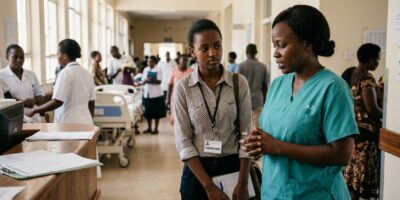
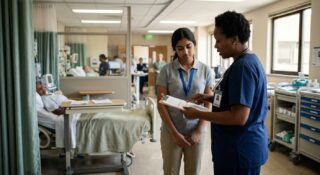
When parents hear “women’s health,” the mind often jumps to sensitive clinical scenarios. It helps to know what a structured, age-appropriate program actually involves. High school students in supervised clinical settings typically observe prenatal consultations, watch how routine health screenings are conducted, sit in on community health education sessions about maternal nutrition or family planning, and assist with basic tasks like organizing health education materials or recording non-sensitive data under supervision.
They are not performing examinations. They are not making clinical decisions. They are not left alone with patients. In a well-run program, the student’s role is to watch, listen, ask questions in appropriate moments, and reflect on what they’ve observed. The emphasis is on understanding the healthcare process, not participating in it as a practitioner.
This distinction matters, and it should be one of the first things you confirm with any program you evaluate. If a program cannot clearly articulate the boundaries of student involvement, that is a red flag. Programs like IMA’s high school internships are designed specifically with these boundaries in mind, placing students in observation and support roles with direct professional supervision at all times.
Is OB-GYN Shadowing Appropriate for Teens?
This is one of the most common concerns parents raise, and it deserves a straightforward answer. OB-GYN shadowing can be appropriate for teens when three conditions are met: the experience is carefully screened for age-appropriateness, a qualified healthcare professional is present at all times, and the student has been prepared in advance for what they will observe.
In most structured programs for high school students, exposure to women’s health does not mean standing in an operating room during a cesarean section. It means sitting in on a prenatal consultation where a healthcare provider checks a patient’s blood pressure, discusses nutrition, and reviews the progress of a pregnancy. It means watching how community health workers educate groups of women about preventive care. It means seeing the organizational side of public health: how clinics function, how patient records are maintained, how outreach programs are designed.
The World Health Organization’s maternal health data makes clear that women’s health is a global priority, with approximately 287,000 maternal deaths recorded worldwide in 2020. When a teenager sees the conditions that drive those numbers, even in an observational capacity, they begin to understand healthcare not as an abstraction but as a system with real stakes. That kind of understanding is valuable. But it must be delivered responsibly.
If your teenager is specifically interested in obstetrics and gynecology as a career direction, early exposure to the broader landscape of women’s health can help them understand what the field involves day to day. Much of OB-GYN practice is preventive care and routine monitoring, not high-drama emergencies. A well-structured shadowing experience reflects that reality.
Supervision, Safety, and What Parents Should Expect
No question matters more than this one: who is responsible for my child, and what systems are in place to keep them safe?
A credible program for minors should be able to tell you, in specific terms, how supervision works. That means identifying who the on-site supervisor is, what their qualifications are, what the student-to-supervisor ratio looks like, and how the program handles emergencies. It also means providing clear information about housing, transportation between the housing site and the clinical setting, communication protocols (including how and when parents can reach their student and program staff), and what happens if a student feels overwhelmed or uncomfortable.
For international programs, these questions become even more important. Parents should ask about in-country staff, local emergency contacts, health clearance and vaccination requirements, and the specific clinical sites where their student will be placed. A program that is vague about any of these details has not done the work that minors require.
IMA’s approach to high school programming includes structured daily schedules, supervised clinical observation, regular debriefs, and clear guidelines about what students can and cannot do. As outlined in their article on why well-supervised internships reduce risk and increase value, the supervision framework is designed not just to keep students safe but to make the educational experience more meaningful. A student who feels secure is a student who can actually pay attention and absorb what they’re seeing.
Housing and Communication
For programs that involve travel, housing arrangements for minors should be clearly documented. Parents should know where their child will be staying, who else will be in the housing, what security measures are in place, and what the rules are around curfews and free time. Communication plans should include regular check-in times, emergency phone numbers, and a clear chain of command if something goes wrong.
Emotional Readiness and Support
Clinical environments can be emotionally intense, even for adults. A responsible program prepares students for this through pre-departure orientation, gradual introduction to clinical settings, and structured reflection sessions where students can process what they have observed. If your teenager tends to be sensitive to difficult situations, that is not necessarily a disqualifier. But it is something to discuss with the program and with your child beforehand, so everyone has realistic expectations.
How This Type of Experience Fits Into a Pre-Health Path
Parents often want to know whether a women’s health clinical experience will “count” for something. The honest answer is that it depends on what you mean by “count.”
No single high school experience guarantees admission to medical school, PA school, nursing school, or any other health professions program. Admissions committees evaluate applicants based on a combination of academic performance, standardized test scores, clinical exposure, community involvement, personal statements, and interviews. What a structured clinical experience can do is give a student something concrete and specific to write and speak about when the time comes.
The AAMC’s guidance on clinical experiences for aspiring physicians consistently emphasizes the value of diverse clinical exposure, cultural competency, and demonstrated interest in underserved populations. A student who has observed women’s health care in a low-resource setting, reflected thoughtfully on what they saw, and can articulate how the experience shaped their understanding of healthcare will have a genuine story to tell. That is far more useful in an application than a generic line about wanting to help people.
For students considering nursing, the connection to maternal-child health and community health nursing is direct. For those interested in physician assistant programs, experience observing primary care, including women’s health, aligns well with the PA profession’s emphasis on broad clinical training. The Bureau of Labor Statistics’ occupational outlook for healthcare professions projects continued growth across nearly all health fields, which means early and meaningful exposure to specific areas of practice can help students make better-informed decisions about where they want to focus.
It is worth noting that IMA’s blog includes practical guidance for students at various stages of preparation, including a useful resource on why early exposure to critical care and emergency medicine shapes future physicians. While the specialty focus differs, the underlying principle is the same: structured, supervised early exposure helps students build realistic expectations about clinical work.
What to Watch Out for When Evaluating Programs
Not all programs that advertise clinical exposure for high school students are built the same way. Here are several things parents should evaluate carefully.
First, ask whether the program explicitly differentiates between what minors do and what college-aged or graduate-level participants do. A program that places a 16-year-old in the same role as a 22-year-old pre-med student has not thought carefully enough about age-appropriate design.
Second, look at how the program describes student involvement. If the marketing language suggests that students will “provide care,” “treat patients,” or “deliver health services,” be cautious. High school students in clinical settings observe and support. They do not practice medicine. Any program that blurs this line, even in its marketing copy, is misrepresenting what is safe and ethical.
Third, ask about the educational structure beyond the clinical component. A good program includes pre-departure preparation, on-site educational sessions or seminars, daily reflection, and mentorship from qualified professionals. Clinical observation without context is far less valuable than observation embedded in a structured learning framework.
Fourth, ask about cultural preparation. Women’s health is deeply influenced by cultural, religious, and social factors. A student who arrives at a clinical site in another country without understanding local customs around gender, privacy, and reproductive health is not prepared. Responsible programs invest in cultural orientation before students enter clinical environments.
Finally, trust your instincts as a parent. If a program’s representatives cannot answer your questions directly, if they deflect concerns about safety, or if their primary pitch is about how impressive the experience will look on a college application, that is useful information.
Deciding Whether Your Teenager Is Ready
Readiness is not just about age. It is about maturity, emotional resilience, genuine interest, and the ability to follow instructions in an unfamiliar environment. Some 16-year-olds are ready for supervised clinical observation; some 18-year-olds are not. This is a conversation to have honestly with your child, and it is a conversation that should include the following:
Can you handle being in a setting where people are experiencing real health concerns, some of which may be serious? Are you comfortable following strict rules about what you can and cannot do, even if it feels limiting? Are you prepared to be respectful and professional in a culture different from your own? And are you interested in this because you genuinely want to understand healthcare, or because you think it will look good on an application?
There is no wrong answer to that last question, but an honest one will help both of you set realistic expectations. A student who goes into this kind of experience with curiosity and humility will get far more out of it than one who is checking a box.
Your role as a parent is to ask the hard questions, verify the details, and make sure your child is entering an environment that is safe, structured, and genuinely educational. If those conditions are met, supervised exposure to women’s health can be a valuable and appropriate experience for a motivated high school student.
Frequently Asked Questions
Will my teenager be exposed to graphic or inappropriate medical content?
In a properly structured program, all clinical exposure for high school students is screened for age-appropriateness. Students typically observe routine prenatal consultations, preventive health screenings, and community health education sessions. They are not placed in surgical settings or exposed to high-acuity clinical scenarios without careful preparation and supervision. If you have specific concerns, ask the program directly what types of cases students may observe.
Does my teenager need any special preparation before a women’s health clinical experience?
Most reputable programs require health clearances and up-to-date vaccinations, and they provide cultural orientation and clinical etiquette training before students enter any healthcare setting. It also helps to have a frank conversation at home about what to expect: the role is observational, the pace may be slow at times, and professional behavior is required throughout. Emotional readiness is just as important as logistical preparation.
Will this experience help my child get into medical school or another health professions program?
No single experience guarantees admission to any program. What structured clinical exposure provides is a foundation for meaningful reflection, stronger personal statements, and a more informed understanding of whether a healthcare career is the right fit. Admissions committees value specificity and genuine engagement over resume padding, so the quality of the experience and how thoughtfully your child reflects on it matter more than the experience itself.