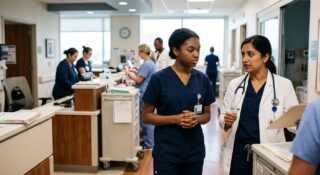
The clinical experiences a high school student gains today will matter most three, four, or even six years from now, when an admissions committee reads a personal statement or listens to an interview answer. The problem is that most students do not write anything down, or they write the wrong things down, and by the time applications roll around the details have blurred into a vague memory of “I shadowed a doctor once.” Whether a student is volunteering at a local hospital, completing a summer program, or looking into paid medical internships for high school students, the ability to document clinical experiences in high school with precision and honest reflection is a skill that pays off for years. This article is written for both students and their parents, because good documentation habits are easier to build when the adults in a student’s life understand what is at stake and what is realistic.
Many students assume that logging hours is the entire point of documentation. Hours matter, but admissions committees at medical schools, PA programs, nursing programs, and dental schools care far more about what a student observed, what they learned, and how those experiences shaped their thinking. A student who can describe a single afternoon in a clinic with specificity and genuine reflection will outperform a student who lists 500 hours with nothing memorable to say about them. The same principle applies whether a student is pursuing medical research internships for high school students or shadowing a family physician in their hometown. What follows is a practical framework for building documentation habits that are honest, useful, and appropriate for a high school student’s level of involvement.
Why Documentation Matters More Than Total Hours
There is a persistent myth among pre-health students that more hours automatically means a stronger application. The reality, according to data from the AAMC’s core competencies for entering medical students, is that admissions committees evaluate the quality of a student’s reflection and the depth of their understanding far more than the raw number on a spreadsheet. A student who spent 40 hours observing in a community health clinic and can speak thoughtfully about what they witnessed will be more compelling than a student who logged 400 hours but cannot recall a single meaningful moment.
This is especially important for high school students, because their clinical exposure is, appropriately, limited to observation and supervised support. No high school student should be performing procedures, diagnosing patients, or providing unsupervised care. What a student can do is pay close attention, ask good questions during debriefs, and write down what they noticed. That combination of attentiveness and reflection is exactly what future applications will demand.
Parents should know that admissions committees are not expecting teenagers to have extensive patient care experience. What they are looking for is evidence of curiosity, ethical awareness, maturity, and a genuine interest in healthcare as a field. Good documentation is the bridge between a meaningful experience and the ability to convey that meaning when it counts.
What to Record After Every Clinical Observation
The best time to document a clinical experience is the same day it happens. Waiting even a week causes important details to fade. Students should aim to capture five categories of information each time they observe in a clinical setting.
The Basic Facts
Record the date, location, type of setting (hospital, clinic, community health center), the name and role of the supervising clinician, and the approximate number of hours spent. This is the logbook portion, and it should be consistent and accurate. If a student is participating in a structured program, the program may provide its own tracking system, but keeping a personal record is still wise.
What You Observed
This is the most important section and the one students most often skip. Write down what actually happened during the observation. What kinds of patients were being seen? What conditions were being discussed? How did the healthcare team communicate with each other and with patients? What equipment or processes were in use? A student does not need to use technical medical terminology. Clear, honest descriptions are better than forced jargon. For example, “I watched the physician explain a diabetes management plan to a patient who seemed overwhelmed by the number of medications” is far more useful than “Observed endocrinology consult.”
Your Honest Reaction
Admissions committees want to see that a student can reflect on what they witnessed, not just report it. Did anything surprise you? Did you feel uncomfortable, and if so, why? Did you notice something about how the clinician communicated that you admired or questioned? This is where documentation becomes personal, and it is the material that will eventually fuel personal statements and interview answers. Students should write honestly, even if their reactions feel uncertain or incomplete. Uncertainty is not a weakness; it is a sign of genuine engagement.
Questions That Came Up
Every good observation raises questions. Maybe a student wonders why a clinician chose one treatment approach over another, or why a patient had to wait so long, or how a rural clinic manages without certain technology that seems standard in a US hospital. Writing these questions down serves two purposes: it gives the student something concrete to discuss with a mentor or supervisor, and it demonstrates intellectual curiosity in future applications.
Connections to Bigger Themes
Over time, a student’s documentation should start to show patterns. Maybe they notice recurring themes around access to care, communication barriers, the role of community health workers, or differences in how various healthcare professionals approach the same patient. These connections are where a student’s documentation moves from a log to a genuine record of learning. This kind of reflection is exactly what schools like those described in guides on how to get into newer osteopathic medical colleges are looking for in applicants.
Tools and Formats That Actually Work
Students do not need expensive software or elaborate systems. The best documentation tool is the one a student will actually use consistently.
A simple Google Doc or Word document organized by date works well for most students. Each entry can follow the five-category structure above. Some students prefer a spreadsheet with one tab for the factual log (dates, hours, locations, supervisors) and a second tab for reflections. Either approach is fine, as long as it is maintained regularly.
Handwritten journals work too, especially for students who process information better on paper. The risk with handwritten notes is that they are harder to search and easier to lose, so students who prefer this method should consider photographing or scanning pages periodically.
One format to avoid: the social media post. While it might be tempting to document experiences on Instagram or a personal blog, clinical settings involve real patients with real privacy rights. Even if no names are used, descriptions of patients combined with dates and locations can risk identifying someone. Students should keep their detailed clinical documentation private and only share appropriately de-identified reflections in application materials later.
For students participating in international programs, structured reflection time is often built into the schedule. IMA, for example, includes daily debriefing sessions and dedicated journaling time in its high school programs, with all clinical observation conducted under direct supervision by licensed healthcare providers. This kind of built-in structure makes consistent documentation much easier than trying to build the habit alone.
What Admissions Committees Actually Do With This Material
Understanding how clinical documentation gets used in applications helps students write better entries from the start.
Personal Statements and Secondary Essays
When a student sits down to write a personal statement for medical school, PA school, nursing school, or dental school, they will need specific moments to draw from. Not generalizations, but concrete scenes. “I want to be a doctor because I want to help people” is a sentence admissions committees have read thousands of times. “During an observation at a rural health clinic, I watched a clinical officer explain a malaria diagnosis to a mother through a translator, and I realized how much of medicine depends on trust and communication, not just knowledge” is a sentence that only one applicant can write. That level of specificity comes from documentation, not from memory.
The PAEA’s resources on PA program prerequisites confirm that healthcare experience documentation is specifically evaluated during the application process. Students applying to PA programs will need to describe their clinical exposure in detail, and early documentation makes this far easier.
Interview Preparation
Almost every health professional school interview includes some version of “Tell me about a clinical experience that influenced your decision to pursue this career.” Students who have documented their observations thoroughly can prepare for these questions with real examples rather than scrambling to reconstruct faded memories. The students who perform best in interviews are typically the ones who can speak about specific moments with clarity and genuine emotion.
Demonstrating Growth Over Time
If a student begins documenting clinical experiences in high school and continues through college, their records will show a trajectory. Early entries might focus on basic observations. Later entries might show more sophisticated thinking about healthcare systems, ethics, patient autonomy, or interprofessional collaboration. This growth arc is powerful in applications because it demonstrates sustained interest and intellectual development. Students considering healthcare careers can also benefit from understanding the different paths available to them, such as the distinctions between radiologists and radiographers, which can inform what they choose to observe and document.
Privacy, Ethics, and What Not to Write Down
This is a section that matters for both students and parents. Clinical documentation carries ethical responsibilities, and high school students need clear guidance on boundaries.
Never record a patient’s full name, date of birth, address, or any other identifying information. In documentation intended for personal learning and future applications, patients should be described in general terms: “a middle-aged woman with a chronic respiratory condition” rather than anything that could identify a specific person. This practice aligns with HIPAA principles in the US and with patient privacy standards internationally.
Never photograph patients, patient records, or clinical procedures without explicit consent from both the patient and the supervising clinician. Even with consent, photos from clinical settings should generally not be posted on social media or shared publicly. Students participating in international programs should be especially attentive to local customs around photography and consent, which may differ from what they expect.
Documentation should focus on what the student learned, not on graphic descriptions of medical conditions. Admissions committees are not looking for shock value. They are looking for maturity, empathy, and professional awareness. A student who writes thoughtfully about watching a clinician deliver difficult news to a family demonstrates more readiness for healthcare than a student who describes a surgical procedure in unnecessary detail.
Parents play an important role here. Reviewing a student’s documentation periodically, not to edit it, but to ensure that privacy boundaries are being respected and that the student is processing their experiences in a healthy way, is a reasonable and helpful step.
How Parents Can Support Good Documentation Habits
Parents of high school students interested in healthcare often wonder what their role should be. When it comes to documentation, a few practical steps make a real difference.
First, help your student choose a consistent system and check in periodically to see if they are keeping up with it. Documentation habits are like exercise habits; they are easier to maintain with some gentle accountability. You do not need to read every entry, but asking “Did you write up your notes from today’s shadowing?” goes a long way.
Second, ask your student questions about what they observed. Not quizzing them on medical facts, but genuine questions: “What was interesting about today? Did anything make you uncomfortable? What did you notice about how the team worked together?” These conversations help a student process their experiences and often surface reflections worth writing down.
Third, understand what is age-appropriate. High school students in clinical settings should be observing, not participating in patient care. Supervision should be constant and provided by licensed professionals. If your student is considering a structured program, ask about supervision ratios, daily schedules, safety protocols, housing arrangements, and communication policies. Programs that are transparent about these details, and that clearly define the boundaries of student involvement, are the ones worth considering. The HRSA’s data on health professional shortage areas can also help parents and students understand the broader context of where and why clinical observation opportunities exist, especially in underserved communities domestically and internationally.
Finally, do not pressure your student to accumulate hours for the sake of a number. A student who has 50 well-documented, deeply reflective hours of clinical observation is better positioned for applications than a student who has 300 hours they can barely remember. Quality, consistency, and honesty are the things that matter.
Building a Documentation Habit That Lasts Through College
The documentation skills a student develops in high school will serve them well beyond their first application. Pre-med, pre-PA, pre-nursing, and pre-dental students in college continue to accumulate clinical experiences, and the students who already have a system in place have a significant advantage.
Start simple. After every clinical observation, spend 15 to 20 minutes writing. Follow the five-category structure described earlier, or develop a variation that fits your style. The key is consistency, not perfection. Some entries will be short and factual. Others will be longer and more reflective. Both have value.
Review your documentation periodically. Every few months, read back through your entries and look for patterns, growth, and recurring questions. This review process helps consolidate learning and often surfaces themes that become central to a student’s professional identity and application narrative.
Keep your records safe and backed up. A lost journal or a crashed hard drive should not erase years of thoughtful documentation. Use cloud storage, keep copies, and treat your clinical documentation as the valuable professional resource it is.
For students exploring early clinical experiences through programs like those offered through IMA’s high school program options, the structured reflection and mentorship built into these programs can help establish documentation habits in a supportive environment. But regardless of whether a student’s first clinical exposure happens locally or internationally, the principles are the same: observe carefully, reflect honestly, write it down, and keep your records organized.
The students who do this well are not the ones with the most dramatic stories. They are the ones who paid attention, thought carefully about what they saw, and took the time to put it into words.
Frequently Asked Questions
Do high school clinical hours count toward medical school or PA school requirements?
Most medical schools do not set a specific minimum number of clinical hours for applicants, and high school hours are generally not counted separately from college-era experience. PA programs typically require direct patient care hours, which are distinct from observation. However, well-documented high school clinical observations demonstrate early and sustained interest in healthcare, which admissions committees view favorably. The value is in the reflection and growth the experiences show, not in the hours alone.
What should a student do if they forgot to document experiences in real time?
Write down what you remember as soon as possible. Even a partial entry recorded weeks later is better than no record at all. Focus on the moments that made the strongest impression, your emotional reactions, and the questions those experiences raised. Going forward, set a routine: write your notes the same day, ideally within a few hours of the observation. The longer you wait, the more detail you lose.
Is it appropriate for parents to read their teen’s clinical documentation?
Yes, with some consideration. Parents should review documentation to ensure patient privacy is being maintained and to check in on their student’s emotional well-being, especially after difficult observations. However, the reflective portions of clinical documentation are most useful when the student feels free to write honestly without worrying about an audience. A good approach is to discuss experiences in conversation and let the student manage their written documentation with periodic, supportive check-ins rather than routine editing.