Selecting medical summer internships for high school students focused on neurology is a serious decision, and the quality of that program matters more than its marketing. When you evaluate neurology program quality at the high school level, you are asking whether a specific program is safe, well-supervised, educationally honest, and worth your time and family’s investment. That is a reasonable thing to want clarity on before committing.
The challenge is that there is no single accrediting body for pre-college clinical exposure programs, making it difficult to identify the best medical internships for high school students. Quality varies widely. Some programs are carefully structured with licensed professionals, clear learning goals, and appropriate boundaries for minors. Others are vague about what students actually do, who supervises them, and what the experience adds up to. This article walks through the specific things students and parents should look for, ask about, and watch out for when comparing neurology programs.
Why Neurology Programs Attract High School Interest
Neurology sits at the intersection of science, problem-solving, and patient care in ways that naturally appeal to students drawn to medicine. Neurological disorders affect over one billion people worldwide, according to the WHO’s reporting on neurological conditions. Stroke alone is the second leading cause of death globally, and conditions like epilepsy, headache disorders, and infectious meningitis represent enormous public health challenges, particularly in low- and middle-income countries where 80% of the neurological disease burden exists.
For students considering careers in medicine, early exposure to neurology can clarify whether the specialty genuinely interests them. It also introduces the realities of clinical observation: how physicians assess patients, how diagnoses are reached with limited resources, and how healthcare systems differ across settings. These are meaningful things to understand before entering college, let alone medical school.
But the value of that exposure depends entirely on how the program is built. A well-run program gives students a structured window into neurological care. A poorly run one risks being confusing, unsafe, or misleading about what clinical medicine actually involves.
What a Quality Neurology Program Actually Looks Like for High Schoolers
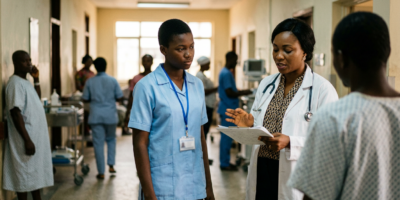
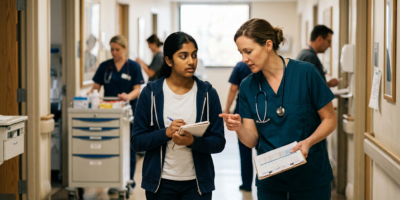
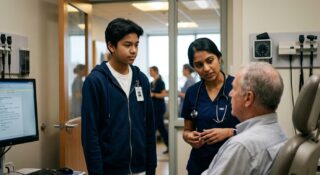
The first thing to understand is what high school students realistically do in a neurology-focused clinical program. In a properly structured program, students observe. They watch patient interviews and basic neurological examinations. They sit in on educational rounds with clinical staff. They may see demonstrations of reflex testing or review of diagnostic procedures like EEGs. They participate in case discussions, morning briefings, and guided reflection sessions.
What they do not do is practice medicine. They do not perform procedures, handle medications, consult with patients independently, or make diagnostic decisions. Any program that promises otherwise for minors should raise immediate concerns. This boundary is not a limitation; it is a sign that the program takes safety and ethics seriously.
A quality program is also transparent about its daily structure. A typical day might include a morning briefing and case review, several hours of supervised clinical observation in outpatient neurology or ward rounds, a midday break for lunch and reflection, afternoon educational sessions, and a closing debrief. If a program cannot describe what a student’s day looks like in concrete terms, that is worth questioning.
Students considering IMA’s structured programs can review the high school internships overview for specific details on how clinical exposure is organized for younger participants.
Supervision, Safety, and What Parents Should Ask
Parents are right to ask hard questions. “Who is supervising my teenager during clinical hours?” is not an overprotective question; it is the most important one. A quality program should be able to answer it clearly.
Supervision Standards
Look for programs that maintain a defined supervisor-to-student ratio with licensed medical professionals present during all clinical activities. Students should never be left unsupervised in a clinical setting. Daily safety briefings, check-ins, and clear escalation procedures for concerns should be standard. If a program does not mention these things on its website or in its materials, ask directly, and pay attention to how specific the answer is.
Housing, Communication, and Emergency Protocols
For programs that involve travel, especially international programs, parents should also ask about housing arrangements, transportation logistics, and emergency protocols. Is there 24/7 emergency contact access? What happens if a student gets sick or injured? Is medical evacuation coverage included in travel insurance? Are accommodations vetted and approved in advance?
Communication matters too. Parents should know how and how often they will hear from their student or from program staff. Structured programs typically provide regular updates and maintain open lines of contact throughout.
Medical Clearances and Preparation
Reputable programs require medical clearances, up-to-date vaccinations, and appropriate travel insurance before departure. They also provide cultural orientation and sensitivity training so students understand the context they are entering. If a program does not require these things, it may not be taking the basics seriously.
Red Flags That Signal a Weak or Unsafe Program
Not every program that looks professional on a website is well-run in practice. Here are specific warning signs to watch for.
Promises of Hands-On Clinical Work for Minors
If a program markets “hands-on patient care” or “clinical procedures” for high school students, be skeptical. Minors observing in clinical settings is appropriate and valuable. Minors performing clinical tasks is not. The distinction matters for safety, for ethics, and for how honestly the program represents itself.
Vague Descriptions of Staff and Structure
A quality program names the types of professionals involved in supervision: licensed physicians, clinical officers, program coordinators. If a program describes its staff only in broad terms like “experienced mentors” without specifying credentials, ask for specifics.
No Mention of Boundaries or Ethics
Programs that do not address patient privacy, informed consent for student observation, professional conduct expectations, or social media policies around clinical content may not have thought carefully about the ethical dimensions of placing young people in healthcare settings.
Overstated Admissions Benefits
Any program that implies or states that participation guarantees medical school admission is being dishonest. Early clinical exposure can strengthen a future application, but it is one component of a much larger picture. Medical school admissions committees, as described in AAMC’s guide to the medical school application process, evaluate candidates across academics, experiences, personal qualities, and reflection. A program that oversells its admissions impact is prioritizing enrollment over honesty.
How International Settings Add Context, and Complexity
Some neurology programs take place in international settings, which can add genuine educational value but also adds layers of complexity that families should evaluate carefully.
What Students Gain from International Clinical Observation
In many countries, the ratio of neurologists to population is dramatically different from the United States. In sub-Saharan Africa, there may be roughly one neurologist per one million people, compared to approximately one per 28,000 in the US. This means students may observe how clinical officers and general practitioners manage neurological conditions like epilepsy, stroke, and meningitis with fewer specialists and fewer diagnostic tools. That kind of exposure builds perspective on healthcare access and resource allocation that is difficult to replicate in a domestic setting.
Students may also observe conditions that are less common in the US, including neurological complications of malaria, TB meningitis, or parasitic infections. The Bureau of Labor Statistics occupational profile for physicians and surgeons outlines workforce projections that reflect growing demand for physicians who understand diverse patient populations and global health challenges.
What Families Should Evaluate About International Programs
International programs should provide detailed information about the local healthcare system, the clinical sites students will visit, the language support available, and the cultural orientation provided before arrival. Language barriers are real, and a good program addresses them honestly rather than glossing over them.
Families should also consider whether the student is genuinely ready for the experience. Maturity, adaptability, and the ability to handle unfamiliar environments are real factors. A student who thrives on structure and is comfortable asking questions will likely benefit more than one who is not yet ready to spend extended time away from home in an unfamiliar setting. This is not a judgment; it is a practical consideration that both students and parents should think through honestly.
For students beginning to think about how early clinical exposure fits into a longer pre-med path, the post on what to expect during the first week of medical school provides useful context on how the skills built during observational programs connect to later training.
How to Compare Programs Side by Side
When you have two or three programs on your shortlist, a structured comparison helps cut through marketing language. Here are the specific things to compare.
Clarity of Learning Goals
Does the program state what students will be able to understand, describe, or reflect on by the end? Learning goals should be specific to neurology and to the student’s level. “Students will observe and discuss basic neurological examination techniques under licensed supervision” is a real learning goal. “Students will gain medical skills” is not.
Documented Structure and Schedule
Ask for a sample daily schedule. Programs that can provide one are more likely to have thought carefully about how each day serves the student’s learning. Programs that cannot may be improvising.
Staff Credentials and Availability
Who leads the clinical components? Who leads the educational sessions? Who is available after hours if a student has a concern? The answers should be specific and verifiable.
Student-to-Supervisor Ratios
Smaller ratios generally mean more individual attention and safer oversight. Ask what the ratio is during clinical observation hours and whether it changes during other parts of the day.
Reflection and Educational Components
The best programs do not just place students in a hospital and hope for the best. They build in structured reflection, case discussions, and educational sessions that help students process what they are seeing. This is especially important for high schoolers, who may be encountering illness, disability, and healthcare systems for the first time in a sustained way.
Understanding how admissions committees later evaluate these kinds of experiences can also help families assess whether a program is building something genuinely useful. The post on how medical school admissions consulting works offers perspective on how advisors think about clinical exposure in the context of applications.
Making a Decision That Fits the Student
There is no single “best” neurology program for every high school student. The right program depends on the student’s maturity, goals, comfort with travel, interest level in neurology specifically, and the family’s priorities around safety and structure. A program that is excellent for one student may not be the right fit for another, and that is fine.
The most important thing is that the decision is informed. Ask questions. Request specifics. Talk to former participants if possible. Read program materials critically rather than taking them at face value. And trust your instincts as a parent: if something feels vague or oversold, it probably is.
A well-chosen neurology program gives a high school student something genuinely valuable: a clearer, more honest picture of what clinical medicine looks like, how neurological conditions affect real people, and whether this is a direction they want to pursue further. That kind of clarity is worth seeking, but only through a program that earns your trust.
Frequently Asked Questions
Can a high school student perform clinical procedures in a neurology program?
No. In any reputable program, high school students observe clinical activities under the supervision of licensed professionals. They do not perform procedures, administer medications, or consult with patients independently. This boundary exists for the safety of both students and patients, and it is a sign of a well-run program, not a shortcoming.
Will participating in a neurology program guarantee admission to medical school?
No program can guarantee medical school admission. Early clinical exposure in neurology can strengthen a future application by demonstrating genuine interest, maturity, and reflection, but admissions committees evaluate candidates across many dimensions including academics, personal qualities, and a broad range of experiences. Be cautious of any program that implies otherwise.
How should parents evaluate the safety of an international neurology program for a teenager?
Parents should ask specific questions about supervision ratios, staff credentials, housing arrangements, transportation, emergency protocols, medical evacuation coverage, and communication policies. A quality program will answer these questions clearly and in detail. If a program is vague about safety logistics or reluctant to provide specifics, consider that a significant warning sign.