Getting into a competitive summer medical program as a high school student takes more than strong grades. Programs that offer structured clinical observation, mentorship, and professional exposure are selective because they place students in real healthcare settings where maturity, preparation, and accountability matter. If you are a student thinking about summer medical program preparation in high school, or a parent helping your teen weigh options, the process starts well before the application deadline. It starts with honest self-assessment, targeted preparation, and a clear understanding of what these programs actually involve.
The demand for these opportunities has grown steadily, in part because healthcare occupations are projected to grow much faster than average over the next decade, according to Bureau of Labor Statistics employment projections. That growth draws more students toward early clinical exposure, increasing competition for the best-structured programs. This article walks through the specific steps that make a high school applicant more competitive and helps parents evaluate what to look for in a program that is both rigorous and safe.
What Competitive Summer Medical Programs Actually Expect From High School Applicants
Most competitive pre-med summer programs are not looking for students who already know everything about medicine. They are looking for students who demonstrate genuine curiosity, the ability to follow instructions in professional settings, and the self-awareness to reflect on what they observe. Academic performance matters, but it is rarely the only factor.
Programs typically evaluate a combination of elements: GPA and coursework rigor, a written essay or personal statement, letters of recommendation, and sometimes an interview. The essay is often where strong applicants separate themselves. Admissions reviewers want to see that a student has thought seriously about why they want this experience, not just that they want to “help people” or “become a doctor.” Specificity counts. A student who writes about a particular moment that sparked their interest, or a specific question they want to answer through observation, stands out from applicants offering vague enthusiasm.
Letters of recommendation carry weight when they come from teachers or mentors who can speak to the student’s character, reliability, and intellectual engagement. A letter from a science teacher who watched a student persist through a difficult lab project says more than a generic endorsement from a counselor who barely knows the student.
For students just beginning to think about what kinds of opportunities exist, this overview of healthcare experiences available to teens is a useful starting point for understanding the range of options.
Building a Foundation Before You Apply
Academics and Coursework
You do not need a perfect GPA, but you do need to show that you take your academics seriously, especially in science. If your school offers AP Biology, AP Chemistry, or anatomy and physiology courses, enrolling in those signals that you are preparing yourself for the content you will encounter in a clinical setting. Strong performance in these courses also helps you follow along during observation and ask better questions of supervising clinicians.
If your school does not offer advanced science courses, that is not a disqualifier. What matters is that you are performing well in the courses available to you and supplementing your knowledge through reading, online coursework, or independent study. Some students take community college courses in biology or health sciences during the school year, which can strengthen an application.
Volunteering and Community Involvement
Programs want to see that your interest in healthcare extends beyond the classroom. Volunteering at a local hospital, clinic, senior care facility, or community health organization shows initiative. It also gives you a realistic sense of what healthcare environments feel like, which is something you can speak to in your application essay.
The quality of your volunteer work matters more than the quantity of hours. Spending six months volunteering weekly at a hospice, where you interact with patients and staff, says more than a single weekend at a charity walk. If you have been involved in health-related organizations like HOSA (Future Health Professionals), that experience is relevant. IMA’s partnership with HOSA for global pre-health internships is one example of how structured organizations connect students with meaningful opportunities.
Developing Soft Skills That Programs Value
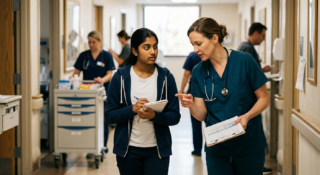
Clinical settings require professionalism, communication, and emotional composure. Programs know that high school students are still developing these qualities, but they look for evidence that a student is on that trajectory. Can you listen carefully? Can you handle seeing something uncomfortable without shutting down? Can you follow directions from supervising adults without needing to be told twice? These are the kinds of traits that make a student a good fit for a structured clinical observation experience.
One practical way to develop these skills is through any role that requires you to work with the public, follow protocols, and communicate with adults. A part-time job, a tutoring role, or a position as a teaching assistant all build the kind of interpersonal reliability that translates well into healthcare settings.
Writing an Application Essay That Shows Real Thinking
The personal statement is where many applicants either distinguish themselves or blend into the crowd. The most common mistake is writing a broad essay about wanting to be a doctor. The second most common mistake is telling a dramatic personal story without connecting it to a genuine question or goal.
Strong essays tend to share a few qualities. They are specific about what sparked the student’s interest. They are honest about what the student does not yet know. And they connect the program to a concrete next step in the student’s thinking, not just a line on a resume.
For example, instead of writing, “I want to attend this program because I am passionate about helping others,” a stronger approach might be: “After volunteering in a pediatric clinic last year, I noticed how often families seemed confused by discharge instructions. I want to observe how clinicians in different settings communicate with patients so I can better understand what effective patient education looks like.”
That kind of specificity tells a reviewer that you are paying attention, that you have real questions, and that you will bring something thoughtful to the experience. If you want detailed guidance on structuring your written materials, this advice on writing a strong internship application covers the essentials.
What Parents Should Evaluate Before Saying Yes
For parents, the decision to send a teenager to a summer medical program involves questions that go well beyond the academic value. Safety, supervision, structure, communication, and ethical standards all deserve scrutiny. Here is what to look for and what to ask.
Safety and Supervision
Any reputable program will clearly describe its supervision structure. Ask who supervises students during clinical observation, what the staff-to-student ratio is, and what protocols exist for emergencies. If a program is vague about these details, that is a reason to look elsewhere. Students should never be left unsupervised in clinical settings, and minors should have 24/7 access to program staff.
For international programs specifically, ask about in-country logistics: airport transfers, housing security, local emergency contacts, and medical evacuation plans. Programs operating in countries with healthcare systems that differ significantly from the U.S. should be transparent about what students will observe, who will be present during observations, and how boundaries are maintained.
Housing and Communication
Find out where your student will be staying, who else will be in the housing, and what rules apply. Ask about internet access and communication tools so your family can stay in touch. A well-run program will provide regular updates and have a point of contact for parents throughout the experience.
Ethical Standards and Age-Appropriate Expectations
This is critical. High school students in clinical programs observe and support within approved limits. They do not practice medicine. They do not perform procedures. They do not provide medical advice to patients. Any program that implies otherwise is either exaggerating what it offers or operating irresponsibly.
Reputable programs will explain what “observation” means in their specific context, including what departments students will rotate through, what kinds of cases they may observe, and how patient privacy and consent are handled. The AAMC’s resource on clinical experiences and ethical standards provides a broader context on how clinical education is structured, even though it is geared toward medical students, because the ethical principles apply at every level.
Parents should also ask about how a program handles emotional difficulty. Watching patients in pain, seeing serious illness, or encountering death for the first time can be overwhelming. Programs should have structured debriefing, reflection time, and access to staff who can support students through these moments.
Making the Most of the Experience Once You Are Accepted
Getting accepted is only the beginning. How you prepare for and engage with the program determines how much you take away from it.
Before You Go
Read about the healthcare setting you will be entering. If the program is international, spend time understanding the country’s healthcare system, common conditions, and cultural norms around medicine. If it is domestic, research the hospital or clinic and the population it serves. This background knowledge helps you ask better questions and understand more of what you observe.
Review basic medical terminology. You do not need a medical dictionary, but knowing the difference between a vital sign check and a diagnostic test, or understanding what “triage” means, will help you follow conversations in clinical settings. The World Health Organization’s fact sheets on global health topics are a solid, accessible resource if your program involves international health systems.
Pack a dedicated journal. Writing down what you observe, what surprises you, and what questions you have each day creates material you can draw on later for college essays, scholarship applications, and interviews. Reflection is a skill, and building it into your routine during the program makes a real difference.
During the Program
Show up on time. Follow dress codes and behavioral expectations without being reminded. Ask questions when appropriate, and listen more than you speak. Your role is to observe, to absorb, and to learn from the professionals around you. Treat every patient, clinician, and staff member with respect.
Take notes after each clinical session, not during patient interactions, as that can be distracting or inappropriate. Focus on what you noticed, what confused you, and what you want to ask about later. If the program includes structured reflection sessions or discussions, participate actively.
After the Program
Write a thank-you note to the program staff and any clinicians who took time to mentor or teach you. This is both good manners and good practice for the professional world you are heading toward.
Reflect on what you learned and how it shaped your thinking. Did the experience confirm your interest in healthcare? Did it redirect your interest toward a specific specialty or setting? Did it surface questions you want to pursue in college? These reflections are valuable not just for applications but for your own decision-making about what comes next.
For students considering how early experiences fit into a longer pre-health trajectory, IMA’s high school internships page outlines what structured clinical observation looks like for students at this stage and what they can realistically expect.
How Early Clinical Observation Fits Into a Longer Pre-Health Path
A single summer program will not make or break your future in healthcare. What it can do is give you a concrete, honest look at what healthcare work involves, which is something that helps you make smarter decisions about your coursework, extracurriculars, and college plans going forward.
Admissions committees at medical, PA, dental, nursing, and OT schools value applicants who can speak with specificity about their clinical exposure. They want to hear what you observed, what you learned about yourself, and how you thought through what you saw. A well-structured summer program gives you material to draw on for years, provided you engaged thoughtfully while you were there.
It is also worth noting that one program is not enough. Building a strong pre-health profile over time involves sustained engagement: continued volunteering, academic rigor, mentorship relationships, and ongoing reflection. A competitive summer medical program is a meaningful piece of that picture, not the whole picture.
For students and families, the key is to approach this process with realistic expectations, honest preparation, and a willingness to do the work, both before and after the program itself. That is what sets a strong candidate apart, and it is what makes the experience genuinely valuable.
Frequently Asked Questions
Do competitive summer medical programs for high school students guarantee any admissions advantage?
No reputable program can guarantee admission to any college or professional school. What a strong program does is give you structured clinical exposure, reflection skills, and concrete experiences that you can speak to in applications and interviews. The value depends on how thoughtfully you engage with the program and how you articulate what you gained from it.
Will my high school student be performing medical procedures during a summer clinical program?
No. High school students observe and support within approved, supervised limits. They do not perform procedures, provide medical advice, or engage in unsupervised patient care. Any program that suggests otherwise should be evaluated very carefully. Reputable programs are transparent about the boundaries of student involvement and prioritize patient safety and ethical standards at all times.
How far in advance should a student start preparing for a competitive summer medical program application?
Starting six to twelve months before the application deadline is a reasonable timeline. This gives you time to strengthen your grades, build meaningful volunteer experience, secure strong letters of recommendation, and write a thoughtful personal statement. Rushing the process often leads to generic essays and weaker applications, so give yourself the time to prepare well.