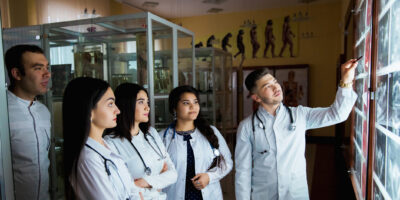
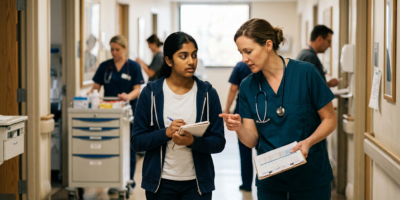
For a high school student dreaming of a medical career, the path to becoming a physician can seem overwhelming. The journey is undeniably long. Think years of undergraduate and medical school, followed by another four to 12 years of internships, residencies, and fellowships. With so many steps ahead, it’s easy to feel disconnected from your goals, stuck between textbooks and standardized tests, while your future career feels impossibly distant. Structured medical internships for high school students give future doctors their first real look at patient care, clinical teamwork, and the daily realities of medicine.
So how do you bridge that gap between aspiration and reality? High school medical internships. These are foundational experiences that provide invaluable early exposure to the realities of healthcare. While shadowing a doctor offers a passive glimpse into medicine, a true internship program immerses you directly into clinical environments.
Learning How Medicine Really Works
Medicine operates differently from any other profession. There are protocols to follow, detailed records to maintain, and a unique way of communicating that values clarity above all else. For a high school intern, even one who isn’t directly working with patients, these realities become clear quickly. They see firsthand how nurses, technicians, and specialists collaborate.
This immersion demystifies the day-to-day operations that are rarely taught in a classroom. They might learn how to properly prepare a room, manage inventory, or handle confidential patient information, offering early lessons in the responsibility and structure that define medical practice.
Observing senior physicians also allows high school students to start building foundational clinical skills. The benefit? By the time you reach your clinical rotations in medical school, you’re not starting from scratch. You’ve already absorbed the unwritten rules of hospital culture and developed the professional presence that takes others months to learn.
Developing Empathy Through Observation
At its heart, medicine is about relationships. It’s the trust between doctor and patient, built through respect, compassion, and genuine human connection. You can memorize every bone in the body and every drug interaction, but no textbook can prepare you for the emotional weight of caring for someone who’s scared, hurting, or facing life-altering news.
This is where summer internship experiences and the like come in. Students watch physicians navigate difficult conversations with grace, comfort anxious families in waiting rooms, and share in the quiet joy of a patient’s progress. They see how chronic illness affects not just individuals but entire families. They begin to recognize the real-world impact of health disparities in their own communities, too. Suddenly, empathy shifts from something you’re told to have into something you understand you must have.
Most importantly, interns learn by example. They observe how skilled clinicians choose their words carefully, when to speak and when to simply listen, and how to offer comfort even when they can’t offer a cure. These aren’t skills you can practice on a mannequin or study for on a test. They’re absorbed through experience.
Gaining a Realistic Perspective on the Profession
Most students interested in medicine have likely been influenced at least somewhat by television dramas. While these shows are entertaining, they paint an incomplete (and often glamorized) picture of what being a doctor actually means. Internships cut through the fantasy and show students what the profession truly demands.
As an intern, you get to witness the reality. Think paperwork, the exhaustion after a 12-hour shift, the phone calls that interrupt dinner, and the heartbreaking moments when, despite everyone’s best efforts, a patient doesn’t improve. But you also gain deep respect for the entire healthcare team, which includes the nurses, technicians, social workers, and countless others whose work is just as vital as the physician’s.
For some students, this reality check strengthens their resolve. They see the challenges clearly and think, “Yes, this is still what I want.” For others, it sparks an important shift, maybe toward public health, scientific research, or another path within healthcare that better aligns with their strengths and values. Either outcome is a win because the student gains clarity early, saving years of pursuing the wrong path.
If you really want to understand healthcare’s challenges and possibilities, consider taking your internship experience global. We at International Medical Aid (IMA) offer high school students the chance to witness medicine in diverse, resource-limited settings abroad. These experiences don’t just build your resume; they can reshape how you think about health, equity, and what it means to care for patients across different cultures and circumstances.
Finding Your Focus Early
Medicine isn’t one career; it’s hundreds. Cardiology, surgery, pediatrics, pathology, public health, the list goes on. For high school students, these specialties are often just words in a book or scenes from a movie. It’s nearly impossible to know what actually appeals to you without seeing these fields up close.
This is where internships become incredibly practical. Students might spend a week observing emergency medicine, assist with cancer research, and then shadow doctors in a pediatric clinic. Each clinical experience feels completely different: the fast-paced decisions in the ER, the careful precision of lab work, the ongoing patient relationships in primary care. By comparing these firsthand, students naturally discover which medical specialty appeals to them.
The earlier you gain this clarity, the better. You can choose undergraduate programs strategically, seek out relevant research opportunities, and build a medical school application that tells a story about who you are and where you’re headed. Instead of applying to medical school with vague aspirations, you’ll have genuine experience backing up your goals, and that can make all the difference.
Learning to Communicate Like a Professional
Being a good doctor requires more than medical knowledge, it demands strong communication skills. Physicians work closely with nurses, specialists, pharmacists, social workers, and, of course, patients and their families every single day. In healthcare, miscommunication can be dangerous.
Internships throw students into this world of professional communication. They get to watch how doctors speak differently depending on their audience. For instance, they talk crisp and technical with colleagues, but warm and clear with patients. They see physicians explain complex diagnoses using analogies and plain language, balancing honesty with compassion. They observe the art of really listening, not just to what patients say, but to what they’re afraid to say.
These aren’t skills you can learn from a textbook or practice in a classroom. They develop through repetition and real stakes, by watching experienced professionals navigate difficult conversations day after day. By the time you reach medical school, you won’t just sound more professional; you’ll actually be more experienced.
Final Thoughts
A high school medical internship takes your dreams of becoming a doctor and tests them against reality. You’re no longer just reading about medicine; you’re experiencing it firsthand, developing the empathy, professionalism, and communication skills that will define your entire career.
Ready to transform your understanding of healthcare? International Medical Aid offers high school students immersive internship programs both domestically and abroad, providing hands-on clinical exposure that goes far beyond shadowing. Visit our page today to explore programs and take the first real step toward your future in medicine.