Medical schools have been clear for years. Grades and MCAT open the door, but they do not answer the question that matters most: what kind of future physician will you be with real patients who face real limits? Community Health Work, or CHW, gives you defensible proof. It puts you in front of people, not just monitors. It teaches why treatment plans break outside the clinic, and how to adapt with humility and structure. The result is a set of experiences that admissions committees can trust because they produce concrete outcomes, steady commitment, and reflective growth.
Why Community Health Work Matters Right Now
Hospital volunteering and scribing still help. They teach documentation, clinical language, and team flow. They are not enough on their own. Committees need to assess whether you can communicate effectively across language, income, and cultural barriers, and whether you can keep patients engaged when the issues have nothing to do with lab values.
Community health is where these skills are put to the test. When you help a food-insecure family stabilize diabetes or arrange safe transport for prenatal visits, you are working on the drivers that shape outcomes more than any single visit. That is the kind of proof that turns into strong interviews and reliable letters.
Community Health Work, Defined
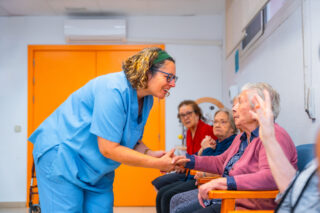
A Community Health Worker is a trained front-line professional who connects people with care and helps remove practical barriers to staying healthy. Standard functions include health education, system navigation, benefits screening, appointment preparation, medication support, and follow-through on referrals. Settings include homes, schools, shelters, faith centers, street outreach, and community clinics. The key feature is trust. Many CHWs come from the communities they serve, which makes advice more believable and support more consistent.
CHW vs Patient Navigator vs Hospital Volunteer
These roles overlap, but their focus differs. Patient navigators keep people moving along the formal care pathway. They schedule imaging, confirm instructions, and ensure referrals are completed. Hospital volunteers support unit flow and patient comfort, which can be helpful depending on the assignment.
- Community Health Worker: Focuses on life outside the clinic. Home visits, group education, benefits and housing referrals, social support, and behavior change. Outcome focus is access, adherence, and stability.
- Patient Navigator: Focuses on the clinic or hospital pathway. Scheduling, instructions, imaging referrals, insurance paperwork, and follow-up calls. Outcome focus is completion of care steps.
- Hospital Volunteer: Supports unit operations and patient comfort. Exposure can be useful, but impact varies widely by assignment.
If a child with asthma keeps returning to the emergency department, a navigator may close gaps between visits. A CHW may find mold, pest exposure, or heating issues in the home and help the family address the cause. That difference makes a memorable interview story and demonstrates systems thinking.
Is CHW “Clinical” Experience?
Yes. You are not performing procedures, but you are engaging patients directly and affecting outcomes. You are documenting encounters, using behavior change techniques, coordinating with clinicians, and measuring follow-up. That is patient-facing. That is clinical. It also shows attributes that schools prize, such as service orientation, cultural humility, ethical responsibility, and teamwork.
What CHW Teaches
- Communication under constraint. You learn to give instructions that match a patient’s budget, language, and home setup. If someone has no full kitchen, you adjust diet advice to a microwave and basic pantry items.
- Behavior change that sticks. You move from telling to coaching. You use small steps, teach back, and written checklists. You measure adherence and troubleshoot.
- System awareness. You see how insurance categories, eligibility rules, and transportation windows shape care. You become the person who turns a plan into doable steps.
- Documentation with a point. Your notes track barriers, actions, and outcomes. That discipline translates to strong activity descriptions and STAR interview stories.
How Community Work Maps to AAMC Core Competencies
Service orientation shows up as steady weeks of direct support that address real needs. Cultural humility shows up when you adjust your approach to match language and norms instead of forcing your own. Ethical responsibility shows up when you protect privacy in small communities and escalate concerns through the right channels.
- Service Orientation: Regular, scheduled hours in programs that address real needs. Not a one-off trip, but months of steady engagement.
- Cultural Humility: Listening first, adapting language, and checking understanding without judgment. Learning to ask what matters to the patient before listing what the matter is.
- Ethical Responsibility to Self and Others: Respect for privacy in small communities. Knowing when to escalate and when to step back. Clear boundaries.
- Teamwork and Oral Communication: Coordinating with nurses, social workers, and case managers. Brief, structured updates that help a team act.
- Reliability and Dependability: Showing up consistently and closing the loop on each referral or action item.
Teamwork and oral communication are evident when you brief nurses, social workers, and clinicians with concise updates that prompt action. Reliability shows up when you keep appointments, close loops, and return calls. These are not slogans. They are visible to supervisors and easy to verify in letters.
Getting a CHW-Type Role Without a New Credential
Many regions certify CHWs, but you can do related work under supervision in a range of settings. Community clinics and Federally Qualified Health Centers often hire care coordinators or health educators. Local health departments run maternal health, TB control, HIV support, and chronic disease programs that use trained volunteers or assistants.
Nonprofits that focus on housing, food access, refugee support, or senior services need health-related outreach. Hospital community benefits departments run home visiting and screening programs. School-based health centers rely on family outreach teams.
Use practical search terms like community health worker, care coordinator, health educator, outreach worker, patient support, promotor de salud, or navigator. If you are a student, ask your pre-health office for partners who can take volunteers for a full semester or longer.
Training You Actually Need
Before you start, cover core topics. Learn privacy basics for community settings. Complete a short module on motivational interviewing. Take a cultural humility workshop. Review de-escalation and field safety so you know when to pause and how to report concerns. Understand mandatory reporting rules for your state. Clarify boundaries for home visits and messaging.
- HIPAA and privacy basics for community settings.
- Motivational interviewing fundamentals.
- Cultural humility workshops or modules.
- De-escalation and field safety, including when to leave and how to document concerns.
- Mandatory reporting rules for your state.
- Boundaries and ethics in home visits.
Reputable programs provide this training or will point you to it. If they cannot, that is a sign to press for support or look elsewhere.
Day-to-Day Responsibilities You Can Expect
Expect to confirm transportation, childcare, and documents before visits. Sit in during clinical encounters when allowed, then leave with a list of follow-ups that fit your role. Conduct home visits with checklists for environment, food, and medication storage when your program allows it. Teach one focused skill at a time and have the patient demonstrate it back to you.
Schedule specialist and imaging appointments, then hand the patient a simple written plan with locations, dates, and phone numbers. Screen for benefits and make referrals to food pantries, legal aid, or housing resources, then track whether those referrals were completed. Follow up with calls or texts using approved systems. Keep your notes short, specific, and de-identified.
- Call a patient before a visit to confirm transportation, childcare, and what to bring.
- Meet at the clinic, sit in during the visit if allowed, and take notes on follow-up tasks you can help with.
- Conduct a home visit to assess the environment, food, and medication storage. Use a simple checklist and always de-identify notes.
- Teach one focused skill such as inhaler technique, glucose logging, or salt-reduction strategies.
- Schedule imaging or specialist appointments. Provide a written plan with dates, addresses, and phone numbers.
- Screen for benefits and make referrals to local food pantries, legal aid organizations, or housing resources. Track completion.
- Follow up by phone or text with permission. Use concise templates to maintain clear and professional messages.
Boundaries That Protect Patients and You
Proper boundaries are part of the proof that you can be trusted. Do not perform tasks that require licensure. Do not share identifiable patient stories in class, online, or in your application. Do not enter unsafe homes alone. Do not use personal phone numbers for patient communication. Do not accept gifts that conflict with policy. When something sits at the edge of your role, ask the licensed team to decide. That habit reads as maturity in letters and interviews.
- Do not do tasks that require licensure. No injections, no medication instructions outside scripts approved by clinical staff, no independent triage.
- Do not share patient stories with identifying details in classes, essays, or on social media. De-identify or composite.
- Do not enter unsafe homes alone. Use agency protocols and go with a partner as required.
- Do not give personal contact information. Use program phones or approved messaging tools.
- Do not accept gifts that violate policy. If a patient insists, follow the guidance of your program.
Boundaries are not obstacles. They are evidence that you can be trusted in sensitive settings.
Turn Fieldwork Into Application Strength
Hours do not speak for themselves. Reflection makes them meaningful for your AMCAS personal statement. Build one system that serves both the application and the interview. Keep a simple journal with two sections. Record administrative details like organization, role, dates, completed hours, and supervisor contact.
Add a short reflection after each shift. Capture one encounter, the main obstacle, the action you took, and what changed. De-identify every time. This habit creates a pipeline of specific examples, not generic claims.
The Dual-Purpose Activities Journal
Create a single place to track both administrative details and meaningful moments.
- Application data: Organization, role, start and end dates, completed hours, supervisor name, and contact.
- Interview data: A short entry after each shift that captures one encounter, one obstacle, one step you took, and one outcome. Keep it to five or six sentences. De-identify every time.
Example entry:
- Family medicine clinic outreach, care coordinator
- Supervisor: Maria Lopez, RN, 555-0100
- Shift note: Patient missed two blood pressure checks. No car. Called transit line, set up three rides, gave printed schedule, practiced teach back. At next visit, readings logged. Patient reported fewer headaches. The next step is a diet class referral.
Build STAR Stories as You Go
Admissions interviews use behavioral questions because past behavior is often a reliable predictor of future behavior. Structure your stories with four parts. Begin with the situation and explain why it was significant. Explain your task so the listener knows your role. Walk through your action in clear, step-by-step instructions. Close with the result and one lesson you will carry forward.
Here is a short example. A child had seven asthma emergencies in six months. Your task was to reduce triggers and improve control with approved tools. You used a home checklist, found mold and smoke exposure in the stairwell, set up a low-cost cleaning plan, secured a dehumidifier through a partner agency, practiced spacer use with the parent and child, and provided a simple daily checklist on a fridge magnet.
Emergency visits dropped for two months, and school attendance improved. Your lesson was to pair small actions with a written plan that the family can manage without you. That is the kind of story that holds up under questions.
A good STAR narrative is specific and short.
- Situation: What was happening and why it mattered.
- Task: What you were responsible for.
- Action: What you did, in order, with just enough detail to be credible.
- Result: What changed and what you learned.
Two sample STARs you can adapt:
Asthma home visit
- Situation: Seven emergency visits in six months. Child under eight. Mother overwhelmed.
- Task: Identify triggers and improve control with approved education tools.
- Action: Home walk-through with checklists, found mold and smoke exposure on the stairwell, provided a low-cost cleaning plan, secured a dehumidifier through a local program, practiced spacer and mask use, created a magnet checklist for daily meds and weekly cleaning.
- Result: Two months with no emergency visits and better school attendance. Learned to pair tiny steps with a written plan that the family can run without me.
Diabetes food security
- Situation: A1c uncontrolled. Patient reported following diet advice but had only shelf-stable food.
- Task: Align diet plan with actual pantry and income.
- Action: Reviewed what was in the home, built a two-week menu based on pantry items and local food pantry options, demonstrated label reading on three staples, set a weekly text reminder for refills, and scheduled a nutrition class with interpreter support.
- Result: Patient kept two follow-ups and brought a glucose log. A1c improved at three months. Learned that diet counseling fails if it assumes a kitchen that does not exist.
Using CHW in AMCAS Work and Activities
For a standard 700-character entry, start with the setting, patient group, and supervision. Describe the main duties and frequency. Show one concrete outcome with a number if you have one. Close with a line on what changed in your approach.
For a Most Meaningful entry, begin with why the work mattered, include one STAR story that highlights growth in a core competency, and end with how you will show up in medical school because of that growth. Keep it specific and free of filler language.
A 700-character structure that works
- One sentence on setting, patient group, and supervision.
- One sentence on core tasks and frequency.
- One sentence on a concrete outcome with numbers when possible.
- One sentence on what changed in your approach.
A Most Meaningful structure that works
- A short context paragraph on why the work mattered.
- One STAR story that shows growth in a core competency.
- A closing line that connects what you learned to how you will show up as a medical student.
Anticipated Hours, Update Letters, and Follow-Through
Application services allow you to list anticipated hours. Use them sparingly. They carry less weight than completed work. The better approach is to list a realistic projection, then convert it to completed hours quickly and send a concise update letter once you reach a real milestone. Include date ranges, specific tasks, and an outcome line. Keep it factual and short. Check each school’s policy on updates before sending.
Letters That Help
Ask supervisors who have seen you problem solve. A nurse manager, care coordination lead, or program director who watched you navigate barriers can speak to reliability, communication, and ethical judgment. Provide a short summary of your role, three concrete examples of impact, and your target deadlines. Do not script the letter. Give raw materials and step back.
Common Pitfalls and How to Avoid Them
Do not stack hours without substance. Seek tasks that lead to measurable steps such as completed referrals, consistent logs, or reduced no-shows. Do not rely on vague descriptions. Replace general language with two or three precise actions and a result. Do not drift past your scope. Ask when a task requires a licensed clinician. Do not sprint for one month and quit. Commit for a semester or more. Do not inflate stories. Quiet, steady work with clear outcomes reads far better than dramatic claims.
- High hours, low substance: Do not log time without outcomes. Focus on tasks that change something measurable. Transportation arranged. Forms completed. Classes attended. Logs brought back.
- Vague descriptions: Replace generalities with one or two precise actions and results.
- Boundary drift: If a task feels like clinical practice without supervision or training, do not do it. Escalate to the licensed team.
- One-month sprints: Commit to at least a semester. Depth beats variety.
- Story creep: Do not dramatize crisis moments. Stronger stories show calm, structure, and respect for limits.
A One-Year Roadmap You Can Follow
Spend the first two months getting trained, setting a weekly shift, and starting your journal. Months three through five are for owning a small caseload or a recurring class and recording a STAR-quality moment every two weeks.
Ask for structured feedback at the sixty-day mark and adjust one behavior based on the feedback you receive. In months six through eight, brief your team on a case with a short update that focuses on barrier, action, and outcome, then add a new responsibility, such as a screening event.
During months nine through twelve, consolidate your results in a short summary for your supervisor, request a letter, and draft a Most Meaningful entry while the details are fresh. If you will continue in the role, list a realistic number of anticipated hours and plan a single update after you reach a real benchmark.
Months 1 to 2
- Secure a community role through a clinic or nonprofit.
- Complete privacy, safety, and motivational interviewing training.
- Start your dual-purpose journal.
- Set a weekly shift and stick to it.
Months 3 to 5
- Own a small caseload or a recurring class.
- Log a STAR-worthy moment every two weeks.
- Ask for structured feedback at 60 days. Adjust your approach based on one item you can improve.
Months 6 to 8
- Present a brief case at a team huddle. Focus on barriers, actions, and outcomes.
- Add a second responsibility such as a screening event or group education series.
Months 9 to 12
- Consolidate results and share a one-page summary with your supervisor.
- Request a letter from the person who knows your work best.
- Draft your Most Meaningful entry while the details are fresh.
- If you keep working, list realistic anticipated hours and plan an update letter with a firm milestone.
How International Medical Aid Fits Your Plan
IMA programs combine supervised clinical observation with community outreach, allowing you to build both sides of your resume. You see hospital systems at work, and you also spend time in public health settings that influence what happens far from the bedside.
Roles are clearly defined, on-site mentors are available, and ethical guardrails are in place. That structure gives you credible material for competencies such as service orientation, cultural humility, teamwork, and ethical responsibility. It also provides you with mentors who can write letters that address performance, not just presence.
Final Takeaway
Admissions teams want proof that you can serve real people with real limits, keep boundaries, and make a plan work outside the hospital. Community Health Work delivers that proof. Pair it with steady clinical exposure, keep a disciplined journal, and build concise STAR stories. Then let your supervisors speak to what you achieved, not just where you stood. If you do those things for one full year, you will enter the application and interview process with authentic evidence that you are ready for the work of medicine.
Frequently Asked Questions
Defining the Role & Scope
What Is a Community Health Worker?
A community health worker (CHW) is a trained frontline professional who helps patients understand care plans, get to appointments, use medications correctly, and connect with programs that remove barriers such as food insecurity, housing instability, or transportation gaps. CHWs operate in clinics, homes, schools, shelters, and community centers. The role is patient-facing, supervised by licensed staff, and focused on steady, practical follow-through.
What Are Common Titles and Abbreviations for Community Health Workers?
“CHW” is the standard abbreviation. However, programs also use titles like community health care worker, patient navigator, promotor or promotora de salud, outreach worker, health educator, or care coordinator. Regardless of the label, the core function is the same: translating a medical plan into steps a person can complete in their real environment and reporting back to the team so nothing falls through the cracks.
What Does a Community Health Worker Do?
CHWs prepare patients before visits, sit in during encounters when permitted, and reinforce instructions afterward. They schedule referrals, arrange imaging, check that medications are filled, and teach skills like inhaler or glucometer use. They screen for social needs, submit applications for benefits, and coordinate with community partners. They document each contact and escalate concerns that require licensed judgment.
Why Is Community Health Important?
Most health outcomes are decided outside the clinic. Food access, stable housing, safe environments, and transportation drive whether a plan is followed. Community health work identifies barriers early, aligns services, and makes small, realistic steps possible. The result is fewer crises, lower readmission rates, and better control of chronic disease.
What Is the Difference Between a CHW, a Community Worker, and a WHO Worker?
- Community Workers: A broad term including case managers, housing navigators, and youth workers. CHWs are a specific subset of this group directly linked to clinical care.
- WHO Workers: Staff employed by the World Health Organization to shape global policy.
- CHWs: Professionals working locally to support individual patients day-to-day.
Career Path & Compensation
How Do You Become a Community Health Worker?
Start with a high school diploma or higher and enroll in a short CHW training program through a community college, health department, or hospital partner. These programs cover privacy, communication, de-escalation, cultural humility, chronic disease basics, field safety, and documentation. Many include a supervised practicum. Look for entry roles at Federally Qualified Health Centers (FQHCs), health departments, and nonprofits.
What Is CHW Certification?
States handle this differently. Where available, CHW certification confirms that you completed approved training, met supervised hour requirements, and passed an assessment. Certification can expand hiring options and makes it easier for employers to bill certain services. If your state does not certify CHWs, employers will rely on training records and references.
How Much Do Community Health Workers Make?
Pay depends on region, employer, and responsibilities. Entry-level compensation commonly starts in the low-to-mid $40,000s. Bilingual skills, evening availability, and field leadership can push compensation higher (often into the $50,000s). Total compensation reflects base pay plus benefits; large health systems often include health insurance, retirement contributions, and paid training time.
What Can You Do With a Community Health Degree?
You can work as a CHW, care coordinator, health educator, program evaluator, or quality improvement assistant. Many graduates step into roles at FQHCs, health departments, Medicaid managed care organizations, and hospital community health divisions.
For Pre-Health Applicants (Medical, PA, Nursing Students)
Does Community Health Work Replace Hospital Clinical Experience?
No, it complements it. You still need time in physician-led settings to see diagnosis and acute care up close. However, community health proves you can turn plans into real steps, coordinate outside the clinic, and help patients stick with care. The combination shows range and judgment.
Can I Count Community Health Work Toward Clinical Experience Hours?
In most cases, yes. It is patient-facing, supervised, and tied to outcomes. Check school policies and describe your role precisely in your application so committees can see the scope, setting, and supervision.
How Many Hours of Community Health Experience Do Schools Expect?
There is no single number that fits every school. A semester of weekly engagement with clear outcomes is stronger than a short burst. Aim for steady work that produces several specific examples and a supervisor who can describe your reliability and impact.
What If My Area Does Not Have a Formal CHW Program?
Partner with community clinics, health departments, or nonprofits that run health-related outreach. Many have roles for care coordination, education, or benefits support. Your goal is direct contact, measurable help, and consistent supervision. If you are on a campus, ask your pre-health office for standing partnerships.
How Do I Protect Patient Privacy When Writing About Community Health Experiences?
Remove names, dates, locations, and any unique details that could identify a person. Focus on the barrier you addressed, the steps you took, and the outcome. When in doubt, ask your supervisor to review how you describe the situation. Protecting privacy is part of professional judgment.
How Does International Medical Aid (IMA) Incorporate Community Health?
IMA combines supervised clinical observation with structured community engagement. You learn inside hospitals and carry that knowledge into outreach, which changes daily routines. Roles are clear, mentors are present, and outcomes are tracked. You leave with documented responsibilities and specific examples regarding service orientation, cultural humility, and teamwork.
Skills, Strategy, and Interviews
How Should I Discuss My Community Health Experience in Interviews?
Use the STAR structure (Situation, Task, Action, Result) to keep your answers specific.
- Situation: An older adult missed two cardiology appointments due to transit failures.
- Task: Stabilize attendance.
- Action: You enrolled the patient in a door-to-door paratransit program and set up reminders.
- Result: Attendance stabilized, and medication adjustments occurred. This structure proves you can solve logistical barriers for patients with complex schedules.
How Do I Start Volunteering in Community Health Without Losing Momentum?
Pick one program you can attend every week for six months. Request a clear description of your role and the supervision structure. Keep a simple, de-identified journal after each shift, recording the date, the task you handled, the barrier you encountered, the action you took, and the outcome. This habit provides you with material for applications and interviews that reads as genuine.
What Are the Ethical and Safety Considerations for Community Health Workers?
CHWs must never perform tasks that require licensure or certification. Protect privacy, especially in small communities. Do not enter unsafe situations. Use program phones or approved messaging platforms. Escalate concerns to licensed staff. Boundaries show judgment and make supervisors comfortable writing strong letters.