


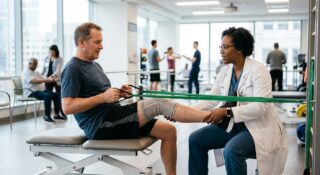
Physical medicine and rehabilitation, commonly known as PM&R, is a medical specialty focused on restoring function and improving quality of life for patients with physical impairments or disabilities. Physiatrists treat a wide range of conditions, from sports injuries and chronic pain to spinal cord injuries and stroke recovery. Rather than focusing on a single organ system, these specialists take a whole-person approach, designing treatment plans that address physical, emotional, and functional goals. Their work spans the full continuum of care, from acute hospital settings to outpatient clinics, and they frequently collaborate with multidisciplinary teams of therapists, surgeons, and other physicians.
Understanding the path to becoming a physiatrist is essential for anyone considering this specialty. The training is rigorous and requires years of focused education, but the reward is a career built around helping people regain independence and function. Whether you are a pre-med student mapping out your future or someone exploring a career change within medicine, knowing what the journey involves, from undergraduate studies through residency and board certification, will help you make an informed decision about whether PM&R is the right fit for you.
What Does a Physiatrist Do?
Physiatrists specialize in diagnosing and treating conditions that affect the muscles, bones, nerves, and brain, particularly when those conditions limit a person’s ability to move or function in daily life. Their scope of practice is broad. They manage musculoskeletal injuries such as back pain, tendinitis, and fractures. They also treat neurological conditions including traumatic brain injuries, spinal cord injuries, strokes, and multiple sclerosis. Additionally, physiatrists frequently work with patients recovering from amputations, managing chronic pain syndromes, or living with conditions like cerebral palsy or post-polio syndrome.
Unlike surgeons, physiatrists use nonsurgical approaches as the foundation of their treatment plans. They may prescribe medications, order and interpret diagnostic imaging and electrodiagnostic studies such as EMGs and nerve conduction studies, perform joint and spinal injections, and design rehabilitation programs that incorporate physical therapy, occupational therapy, and speech-language pathology. Their focus is always on maximizing function and reducing pain so that patients can return to the activities that matter most to them.
Physiatrists practice in a variety of settings. Many work in outpatient rehabilitation clinics, where they see patients with chronic conditions or those recovering from injuries. Others work in inpatient rehabilitation hospitals, managing care for patients who need intensive, daily therapy after events like strokes or spinal cord injuries. Some physiatrists are based in acute care hospitals, consulting on complex cases that involve functional impairment. Sports medicine clinics, pain management centers, Veterans Affairs hospitals, and academic medical centers are also common workplaces. A typical day might include evaluating new patients, reviewing imaging results, performing procedures such as ultrasound-guided injections, leading team conferences with therapists and nurses, and adjusting rehabilitation plans based on patient progress.
Education and Training Path
Undergraduate Education
The journey to becoming a physiatrist begins with a bachelor’s degree. While there is no single required major, most aspiring physicians complete pre-med coursework that includes biology, general chemistry, organic chemistry, physics, biochemistry, and mathematics. Many programs also recommend courses in psychology, statistics, and English composition. Strong performance in these courses is critical, as medical school admissions committees evaluate both GPA and the rigor of your academic record. Beyond coursework, gaining clinical experience through volunteering, shadowing physicians, or working in rehabilitation settings can strengthen your application and help you confirm your interest in PM&R.
The MCAT
Before applying to medical school, you must take the Medical College Admission Test, known as the MCAT. This standardized exam tests your knowledge of biological and physical sciences, critical reasoning, and psychological and social foundations of behavior. A competitive MCAT score, combined with a solid GPA, research experience, and meaningful clinical exposure, forms the core of a strong medical school application. Most students take the MCAT during their junior year of college or after completing prerequisite coursework.
Medical School
Medical school is a four-year commitment that can be completed at either an allopathic (MD) or osteopathic (DO) institution. The first two years typically focus on classroom and laboratory instruction in the foundational sciences, including anatomy, physiology, pharmacology, pathology, and neuroscience. The final two years shift to clinical rotations, during which students gain hands-on experience in hospitals and clinics across multiple specialties. During clinical rotations, students interested in PM&R should seek out elective rotations in physical medicine and rehabilitation to build experience and establish mentorship relationships that will be valuable during the residency application process.
Residency Training
After earning an MD or DO degree, graduates enter residency training in physical medicine and rehabilitation. PM&R residency programs are four years in total. The first year, sometimes referred to as an internship or preliminary year, includes broad clinical training in areas such as internal medicine, surgery, neurology, and pediatrics. The remaining three years are dedicated specifically to PM&R training. During these years, residents gain in-depth experience in musculoskeletal medicine, electrodiagnostic testing, spinal cord injury management, brain injury rehabilitation, pediatric rehabilitation, pain management, and prosthetics and orthotics. Residents also develop procedural skills, including performing spinal and joint injections under fluoroscopic or ultrasound guidance.
Fellowship Training
After completing residency, some physiatrists choose to pursue additional fellowship training to subspecialize. Common fellowship options include sports medicine, pain medicine, spinal cord injury medicine, brain injury medicine, pediatric rehabilitation medicine, and neuromuscular medicine. Fellowships typically last one to two years, depending on the subspecialty. While fellowship training is not required to practice as a physiatrist, it can open doors to more specialized clinical roles and academic positions.
Licensing and Board Certification
Medical Licensing Examinations
All physicians in the United States must pass a series of licensing examinations to practice medicine. Graduates of allopathic (MD) programs take the United States Medical Licensing Examination, known as the USMLE, which consists of three steps. Step 1 and Step 2 are completed during medical school, and Step 3 is typically taken during residency. Graduates of osteopathic (DO) programs take the Comprehensive Osteopathic Medical Licensing Examination, known as COMLEX-USA, which follows a similar multi-step structure. DO graduates may also choose to take the USMLE. Passing these examinations is a prerequisite for obtaining a medical license.
State Medical Licensure
In addition to passing national licensing exams, physiatrists must obtain a medical license in the state where they intend to practice. Each state has its own medical board with specific requirements, which generally include completion of an accredited residency program, passage of the USMLE or COMLEX, and a background check. Some states have additional requirements, such as jurisprudence exams covering state-specific medical laws and regulations. Physicians must maintain their state license through periodic renewal, which often includes completing continuing medical education credits.
Board Certification
Board certification in PM&R is granted by the American Board of Physical Medicine and Rehabilitation (ABPMR). To become board certified, a physician must complete an accredited PM&R residency program and pass the ABPMR certification examination. This exam tests comprehensive knowledge of the specialty, including musculoskeletal medicine, neuromuscular conditions, rehabilitation techniques, and procedural skills. Board certification is not legally required to practice, but it is widely regarded as a mark of competence and is expected by most hospitals, health systems, and insurance networks. Certified physiatrists must participate in the ABPMR’s Maintenance of Certification program, which includes ongoing learning activities, practice assessments, and periodic re-examination to ensure they remain current in the field.
Physiatrists who complete fellowship training can also pursue subspecialty certification. The ABPMR offers subspecialty certificates in areas such as brain injury medicine, pain medicine, pediatric rehabilitation medicine, spinal cord injury medicine, and neuromuscular medicine. These additional certifications demonstrate advanced expertise and are particularly valuable for physicians working in academic or highly specialized clinical settings.
Is This Specialty Right for You?
Job Outlook
The demand for physiatrists continues to grow. An aging population, increased awareness of rehabilitation medicine, and a greater emphasis on nonsurgical treatment options all contribute to steady demand for PM&R specialists. The Bureau of Labor Statistics projects strong growth for physicians overall, and PM&R is no exception. Physiatrists are needed in both urban and rural areas, and the specialty offers flexibility in terms of practice setting and patient population. Graduating residents generally find a favorable job market with multiple opportunities across the country.
Lifestyle Considerations
PM&R is often cited as one of the more lifestyle-friendly medical specialties. Compared to surgical fields, physiatrists tend to have more predictable schedules, with most outpatient practitioners working standard weekday hours. On-call responsibilities are generally less demanding than those in emergency medicine or surgery, though physiatrists working in inpatient rehabilitation facilities may have weekend and evening duties. The specialty offers a strong balance between intellectual challenge and personal time, which is a significant draw for many medical students evaluating their options.
Who Thrives in PM&R
Physiatrists tend to be physicians who value long-term relationships with patients and find satisfaction in gradual, meaningful progress. If you are someone who enjoys problem-solving across multiple body systems, working as part of a team, and thinking creatively about how to restore function, PM&R may be an excellent fit. The specialty rewards strong communication skills, patience, and a genuine interest in understanding how injuries and disabilities affect a person’s entire life, not just their physical body. Physicians who are drawn to both the science of medicine and the human side of recovery often find deep fulfillment in this field.
Gaining early exposure is one of the best ways to determine whether PM&R aligns with your interests. Volunteering at rehabilitation hospitals, shadowing practicing physiatrists, and completing clinical rotations in the specialty during medical school will give you firsthand insight into the work. Organizations like the Association of Academic Physiatrists and the American Academy of Physical Medicine and Rehabilitation offer resources, mentorship programs, and conferences designed for students and trainees exploring the field. Taking advantage of these opportunities early in your education can help you build the foundation for a rewarding career in physical medicine and rehabilitation.
Physiatrist (PM&R) Salary in 2026
Physiatrists, who specialize in physical medicine and rehabilitation (PM&R), earn an average of approximately $365,000 in 2026. Interventional pain management is the highest-earning focus within the specialty.
| Detail | 2026 Figure |
|---|---|
| Average compensation | About $365,000 (2026) |
| Interventional pain management | Highest-earning PM&R focus |
| General rehabilitation | Lower end, strong lifestyle |
For more on physician pay across specialties, see our guides to the highest-paid medical specialties and how much doctors make.
Frequently Asked Questions
How much does a physiatrist make in 2026?
Physiatrists (PM&R physicians) earn an average of about $365,000 in 2026, with interventional pain specialists earning more.
What is the highest-paying focus in PM&R?
Interventional pain management is the highest-earning focus within physical medicine and rehabilitation.
How long does it take to become a physiatrist?
After medical school, it takes a one-year internship plus a three-year physical medicine and rehabilitation residency.
