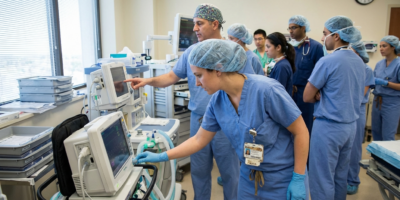
If you want to know how to become an anesthesiologist, the path is a four-year bachelor’s degree with premedical courses, four years of medical school for an MD or DO and a four-year anesthesiology residency consisting of one clinical base year and three clinical anesthesia years. You then need a state medical license and certification by the American Board of Anesthesiology. Those required stages add up to 12 years after high school, or 13 years with a one-year fellowship.
That is a long commitment, and the decisions that shape your path begin in college. Comparing the timeline with how long it takes to become a doctor in other specialties shows where anesthesiology sits, and knowing what each stage demands lets you plan for the exams and applications in between. It also helps to understand early that nurse anesthesia and anesthesiologist assistant training are separate careers with their own degrees.
The Anesthesiologist Path at a Glance
- College, medical school and anesthesiology residency add up to 12 years after high school. A 12-month fellowship brings the total to 13 years, within the 12 to 14 years of education described by the American Society of Anesthesiologists.
- Anesthesiologists earn an MD or DO. There is no required undergraduate major, separate anesthesiology major or standalone anesthesiologist school.
- All 1,865 PGY-1 anesthesiology positions filled in the 2026 Match. Among consenting U.S. MD seniors, matched applicants had a median Step 2 CK score of 255, compared with 239 for unmatched applicants.
- The national median annual wage for anesthesiologists was $391,490 in May 2025, while employment is projected to grow 4 percent from 2025 to 2035.
What Is an Anesthesiologist?
An anesthesiologist is an MD or DO physician who specializes in anesthesia care, pain management and critical care medicine, according to the American Society of Anesthesiologists. This guide describes the United States path. Outside the United States, the specialty is often spelled anaesthesia or anaesthesiology, and organizations including the Australian and New Zealand College of Anaesthetists and World Federation of Societies of Anaesthesiologists use the titles anaesthetist or anaesthesiologist for these physicians.
Anesthesiologists evaluate patients and oversee anesthesia care before, during and after procedures. They administer and adjust anesthetics, monitor breathing and vital signs, manage pain and may care for critically ill patients. For a closer look at clinical responsibilities and practice settings, read about what an anesthesiologist does.
The work suits someone interested in applying physiology and pharmacology while caring for patients whose condition can change quickly. The ACGME describes the specialty as peri-operative medicine that also involves managing critically ill patients and acute, chronic and cancer-related pain. Physicians may lead an Anesthesia Care Team, so sound clinical judgment must be paired with communication and team leadership.
How Long Does It Take to Become an Anesthesiologist?
It takes 12 years after high school to complete the standard path: four years of college, four years of medical school and the four years of residency that the ACGME requires for anesthesiology. A one-year fellowship makes the total 13 years. The American Society of Anesthesiologists describes a broader range of 12 to 14 years of education, including medical school, plus 12,000 to 16,000 hours of clinical training.
The residency can be a categorical 48-month program that includes the clinical base year or an advanced 36-month program entered after a separate base year. The timeline below follows the lengths in the ACGME’s 2026 anesthesiology program requirements and names the exam or decision that stands between each stage and the next.
| Stage | Length | Exam or gatekeeper | Source |
|---|---|---|---|
| Bachelor’s degree with premedical coursework | 4 years | The MCAT, which all U.S. medical schools require for regular admission, then medical school admission itself | ABMS, AAMC |
| Medical school (MD or DO) | 4 years | USMLE Step 1 and Step 2 CK for MD students or COMLEX-USA Level 1 and Level 2-CE for DO students, then the residency Match in the final year | AAMC, NBOME, NRMP |
| Clinical base year (PGY-1): fundamental clinical skills of medicine | 1 year (12 months) | USMLE Step 3 or COMLEX-USA Level 3, taken during residency. Every state board requires at least one year of postgraduate training for a full license | ACGME, AAMC, FSMB |
| Clinical anesthesia years (CA-1, CA-2 and CA-3) | 3 years (36 months) | The ABA BASIC Exam, which residents are encouraged to take at the end of the CA-1 year | ACGME, ABA |
| Board certification in anesthesiology | After residency | The ABA ADVANCED Exam after residency, then the APPLIED Exam, which combines a Standardized Oral Examination with an Objective Structured Clinical Examination | ABA |
| Optional subspecialty fellowship | 1 year (12 months) each | An ABA subspecialty exam where one exists, such as pain medicine, critical care medicine, pediatric anesthesiology or adult cardiac anesthesiology | ACGME, ABA |
| Total after high school | 12 years, or 13 with a one-year fellowship | A state medical license is required to practice. Board certification is voluntary but widely expected | Arithmetic from the rows above, AAMC |
The table above shows why a 36-month advanced residency is not a three-year route from medical school to practice. You complete the 12-month clinical base year separately, so training after medical school still lasts four years.
What Degree Do You Need to Become an Anesthesiologist?
You need a bachelor’s degree followed by either an MD or DO medical degree to become an anesthesiologist. The Bureau of Labor Statistics physician profile says no specific undergraduate degree is required for admission to an MD or DO program, so you do not need to major in biology or another science.
There is no anesthesiology major and no separate anesthesiologist school. You complete the science and clinical education required of all physicians in medical school, then learn anesthesiology through residency. Both degrees lead to the specialty. IMA’s MD and DO comparison explains how the two kinds of medical school differ.
MD and DO graduates now enter the same graduate medical education system. Graduates of LCME-accredited MD schools are eligible for ACGME-accredited residencies, while U.S. DO schools are accredited by AOA COCA. Choose a medical school by considering accreditation, fit and your ability to build a strong record, rather than looking for a special anesthesiology degree.
Anesthesiologist Education Requirements in College
College preparation involves earning a bachelor’s degree, completing each medical school’s premedical courses, taking the MCAT and developing enough clinical exposure to make an informed career choice. Premedical requirements vary, but AACOM says osteopathic medical colleges generally expect at least one year each of biology, physics and English composition plus two years of chemistry. Use a current medical school prerequisites checklist to compare individual schools before selecting courses.
All U.S. medical schools require MCAT scores for regular admission. The exam assesses problem solving, critical thinking and knowledge of science concepts needed to study medicine. If you are using practice exams, an MCAT score calculator can help you interpret the relationship between raw and scaled practice results.
Medical schools also commonly consider transcripts, recommendation letters, interviews, leadership and extracurricular experiences. Your immediate goal is admission to medical school, not early specialization. Strong academic preparation matters, but so does learning how physicians work with patients and clinical teams.
How Can You Test Your Interest in Anesthesiology?
You can test your interest by observing anesthesia care and paying attention to how the team prepares a patient, watches the monitors and responds when something changes. Shadowing can help you decide whether you are comfortable with the operating room, serious illness and the need for sustained attention.
Clinical exposure does not need to prove that anesthesiology is your final choice. Its value is in helping you ask better questions before making a long commitment. International Medical Aid runs CRNA and pre-anesthesiology internships abroad, with structured clinical rotations and shadowing alongside nurse anesthetists and anesthesiologists in hospitals and surgical centers.
Anesthesiologist Schooling During Medical School
Medical school usually lasts four years and moves from foundational science and clinical skills into supervised patient care. The BLS describes an initial phase involving subjects such as anatomy, biochemistry, pharmacology, psychology and medical ethics, followed by clerkships in hospitals and clinics. A guide to how long medical school is year by year provides more detail on that progression.
MD students usually take USMLE Step 1 during the second year and Step 2 CK during the third or fourth year. Step 1 has been reported only as pass or fail for exams taken since January 26, 2022. DO students usually follow the COMLEX-USA sequence, taking Level 1 in the second year and Level 2-CE in the third or fourth year.
In your final year, you apply to anesthesiology residency programs and complete interviews. Applicants and programs submit rank order lists, and the NRMP algorithm matches them according to those stated preferences. Match Day is in March, with residency generally beginning in July.
What Happens in Anesthesiology Residency?
Anesthesiology residency lasts four years: a clinical base year of broad medical training, then three clinical anesthesia years called CA-1, CA-2 and CA-3. The ACGME program requirements set what each year must contain.
The Clinical Base Year
The clinical base year develops broad physician skills before concentrated anesthesia training. At least six months must involve inpatient care in fields such as internal medicine, surgery, pediatrics, neurology or obstetrics and gynecology. The year must also include one to two months each of critical care and emergency medicine.
The Clinical Anesthesia Years
CA-1 through CA-3 provide 36 months of clinical anesthesia education. Requirements include at least two one-month rotations each in obstetric, pediatric, neuro and cardiothoracic anesthesia plus three months of pain medicine. Case minimums include caring for 40 patients undergoing vaginal delivery, 20 undergoing cesarean section and 20 undergoing cardiac surgery.
Optional Fellowships
A fellowship is not required for general anesthesiology practice. Six ACGME-accredited options are 12 months long: pain medicine, critical care medicine, pediatric anesthesiology, adult cardiothoracic anesthesiology, obstetric anesthesiology and regional anesthesiology and acute pain medicine. The American Board of Anesthesiology (ABA) offers subspecialty certification in critical care medicine, pain medicine, pediatric anesthesiology and adult cardiac anesthesiology, and also in hospice and palliative medicine, sleep medicine and neurocritical care.
Anesthesiologist Requirements for Licensing and Board Certification
You must pass a physician licensing exam sequence, qualify for a state medical license and complete the American Board of Anesthesiology certification process. All state medical boards require either USMLE or COMLEX-USA, although the precise license requirements depend on the jurisdiction. IMA’s guide to becoming a doctor step by step explains the general licensing path shared by physician specialties.
USMLE Step 3 is normally taken during the first or second residency year after the medical degree. Physicians on the osteopathic sequence take COMLEX-USA Level 3 during residency as well. Most state boards issue a resident or training permit that allows supervised practice within the residency program. Every state requires at least one postgraduate training year for a full unrestricted license, while some require two or three.
ABA initial certification involves three exams. The American Board of Anesthesiology certification sequence begins with BASIC, which residents are encouraged to take at the end of CA-1. ADVANCED follows residency and a passing BASIC result. APPLIED follows ADVANCED and includes an Objective Structured Clinical Examination and a Standardized Oral Examination consisting of two 35-minute sessions.
Board certification is voluntary, but the AAMC says it is widely expected in practice and academic settings. That distinction matters: your state license gives you legal authority to practice medicine, while board certification demonstrates that you have met the specialty board’s standards.
How Hard Is It to Match Into Anesthesiology?
Matching into anesthesiology requires a credible academic and clinical application, and the 2026 results show that applicants should not assume a position is guaranteed. In the 2026 NRMP Main Residency Match, all 1,865 PGY-1 anesthesiology positions across 200 programs filled. U.S. MD seniors filled 70.5 percent and U.S. DO seniors filled 18.2 percent. All 306 PGY-2 advanced positions across 50 programs also filled.
Across positions of all types, 2,988 applicants preferred anesthesiology for 2,290 positions, or 1.30 applicants per position. Of 1,737 U.S. MD seniors who preferred the specialty, 1,518 matched to it. That works out to about 87 percent, compared with a 93.5 percent rate for U.S. MD seniors matching to any PGY-1 position in 2026.
Among consenting U.S. MD seniors in the 2026 NRMP Charting Outcomes report, matched applicants had a median Step 2 CK score of 255 and 13 contiguous ranks. Unmatched applicants had medians of 239 and five. Alpha Omega Alpha membership was reported by 18.6 percent of matched applicants and none of the unmatched group, while 32.2 percent of matched applicants and 25.7 percent of unmatched applicants graduated from one of the 40 U.S. medical schools with the highest NIH funding.
These figures describe groups in one Match year. They show associations, not an individual’s probability or proof that one characteristic caused a result. NRMP also notes that course evaluations, reference letters and the Medical School Performance Evaluation contribute to outcomes.
Across specialties, program directors most often cited Step 2 CK, a Step 1 pass and specialty-specific recommendation letters when offering interviews. Interpersonal skills and interview interactions were leading considerations when ranking applicants. For you, the practical priorities are a strong Step 2 CK result, useful anesthesiology clinical experience, persuasive specialty letters and a sufficiently long rank list. Anesthesiology was also among the five specialties receiving the highest mean number of applications per program in the 2026 survey.
How Much Do Anesthesiologists Make?
The national median annual wage for anesthesiologists was $391,490 in May 2025, according to the Bureau of Labor Statistics. That was fifth among the physician and surgeon occupations listed by the BLS and above the $275,930 median for physicians and surgeons overall. IMA’s guide to the highest-paying medical specialties puts that figure in broader context.
The BLS counted 41,500 anesthesiologist jobs in 2025 and projects 43,000 in 2035, an increase of 1,500 jobs or 4 percent. Pay and demand must be weighed against the length and cost of training. The AAMC reported median education debt of $215,000 for the medical school class of 2025 and median four-year cost of attendance of $297,745 at public schools and $408,150 at private schools for the class of 2026.
Residency is paid employment, but compensation is much lower than a practicing physician’s salary. The AAMC reported a mean first-year resident stipend of $68,166 as of July 1, 2025 across 345 responding institutions. You should also expect the possibility of long shifts, irregular or overnight hours and on-call work, which the BLS identifies as common for physicians.
Anesthesiologist vs CRNA vs Anesthesiologist Assistant
Anesthesiologists, CRNAs and certified anesthesiologist assistants all participate in anesthesia care, but they enter through different professions, degrees and certification systems. An anesthesiologist is a physician practicing medicine. A CRNA is an advanced practice registered nurse practicing nurse anesthesia. A CAA is a master’s-trained professional who works under an anesthesiologist’s supervision within the Anesthesia Care Team.
The table below compares the three paths. Its wage column uses national medians for May 2025 from the Bureau of Labor Statistics Occupational Outlook Handbook, which reports nurse anesthetists on its page for advanced practice nurses and anesthesiologists on its page for physicians and surgeons.
| Role | Degree | Training after a bachelor’s degree | License and certification | How they practice | BLS median annual wage (May 2025) |
|---|---|---|---|---|---|
| Anesthesiologist (physician) | MD or DO | 4 years of medical school, then 4 years of residency: 12 months of fundamental clinical skills and 36 months of clinical anesthesia | State medical license. Board certification through the American Board of Anesthesiology (BASIC, ADVANCED and APPLIED exams) | Practices medicine and often leads the Anesthesia Care Team | $391,490 |
| Nurse anesthetist (CRNA) | Doctoral degree from a nurse anesthesia program accredited by the Council on Accreditation (COA) | Registered nurse license and at least 1 year of full-time critical care nursing, then a program of 36 to 51 months | National Certification Examination from the NBCRNA, plus state nursing licensure | Practices nursing. Anesthesia given by a CRNA is recognized as the practice of nursing | $236,590 |
| Certified anesthesiologist assistant (CAA) | Master’s degree from an anesthesiologist assistant program accredited by CAAHEP | Premedical coursework in a bachelor’s degree, then a program of 24 to 28 months | Certifying exam from the National Commission for Certification of Anesthesiologist Assistants (NCCAA). Practice is authorized in 22 states, Washington DC and Guam | Works under the supervision of an anesthesiologist within the Anesthesia Care Team | No separate BLS figure. Federal wage data group anesthesiologist assistants with physician assistants |
The table above shows that the CRNA route begins in nursing. CRNA preparation requires an appropriate bachelor’s or graduate degree, an unencumbered RN or APRN license and at least one year of full-time critical care nursing experience. Students entering accredited programs since January 1, 2022 enroll in doctoral programs, which run 36 to 51 months. Graduates must pass the NBCRNA National Certification Examination. The May 2025 national median annual wage was $236,590; IMA’s CRNA salary guide examines pay in more detail.
The certified anesthesiologist assistant (CAA) route begins with premedical education followed by a master’s degree from an accredited anesthesia program, according to the American Academy of Anesthesiologist Assistants. Current programs run 24 to 28 months. Graduates or final-semester students of a CAAHEP-accredited program can apply for NCCAA certification, which requires passing its certifying examination. The academy says CAAs can currently practice in 22 states, Washington, DC and Guam. The BLS does not publish a separate wage for anesthesiologist assistants; federal wage data group them with physician assistants.
The right comparison is not simply which path is shortest. Consider whether you want to practice as a physician, enter through nursing or work in the CAA role under anesthesiologist supervision. A detailed anesthesiologist and CRNA comparison sets the physician and nursing paths side by side in more depth.
Choosing Whether Anesthesiology Fits Your Goals
Anesthesiology may fit you if you want to become a physician and are prepared for a long training path that ends with you responsible for patients at their most vulnerable. Before committing, seek meaningful clinical observation and consider whether the work itself still appeals to you when separated from the salary.
Your next step depends on where you are now. In high school or college, focus on completing the courses needed for medical school and learning how clinical teams function. In medical school, use rotations, conversations with anesthesiologists and honest reflection on the work environment to decide whether you want to build a competitive residency application.
Frequently Asked Questions
How Long Does It Take to Become an Anesthesiologist?
Plan on 12 years after high school, or 8 years after college: 4 in medical school and 4 in residency. One 12-month fellowship brings the total to 13 years. The American Society of Anesthesiologists gives a range of 12 to 14 years of education for the specialty.
What Degree Do You Need to Be an Anesthesiologist?
You need an MD or DO after completing a bachelor’s degree. No specific undergraduate major is required, and anesthesiology is not an undergraduate or medical school major. You specialize through a four-year anesthesiology residency after medical school.
What Are the Requirements to Become an Anesthesiologist?
You must complete college prerequisites, earn an MD or DO, pass USMLE or COMLEX-USA, complete a clinical base year and three clinical anesthesia years and qualify for a state medical license. ABA board certification then requires the BASIC, ADVANCED and APPLIED examinations.
How Hard Is It to Become an Anesthesiologist?
Becoming an anesthesiologist is demanding because it requires 12 years of education and training plus a successful residency match. All 1,865 PGY-1 anesthesiology positions filled in 2026. Matched U.S. MD seniors in the NRMP research group had stronger median Step 2 CK scores and longer rank lists than unmatched applicants, although group results cannot predict one person’s outcome.
How Much Do Anesthesiologists Make?
Anesthesiologists earned a national median of $391,490 a year in May 2025, the Bureau of Labor Statistics reports, against $275,930 for physicians and surgeons as a group. A median is the midpoint of reported wages, not a starting salary. Pay during the four years of residency is far lower: the AAMC put the mean first-year resident stipend at $68,166 as of July 1, 2025.
What Is the Difference Between an Anesthesiologist and a CRNA?
An anesthesiologist is an MD or DO physician, while a CRNA is an advanced practice registered nurse with doctoral-level nurse anesthesia education. CRNA applicants first qualify as nurses and obtain critical care nursing experience. Anesthesiologists complete medical school and physician residency training.
What Is an Anesthesiologist Assistant?
A certified anesthesiologist assistant is a master’s-trained anesthesia professional who works under an anesthesiologist’s supervision within an Anesthesia Care Team. CAA programs currently run 24 to 28 months after premedical education, and certification requires the NCCAA examination. IMA’s guide to becoming an anesthesiologist assistant covers that path in detail.
Do You Have to Complete a Fellowship to Be an Anesthesiologist?
No. A fellowship is optional after anesthesiology residency. ACGME-accredited anesthesiology fellowships such as pain medicine, critical care medicine and pediatric anesthesiology each last 12 months, so completing one extends the standard timeline from 12 to 13 years after high school.