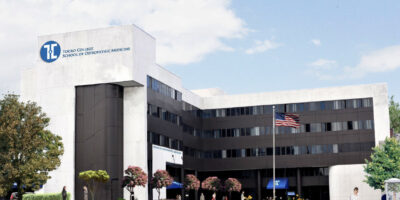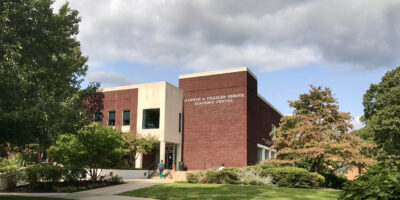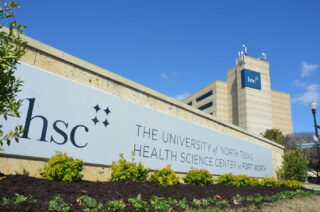
The Texas College of Osteopathic Medicine (TCOM) in Fort Worth is the state-supported osteopathic medical school of UNT Health Fort Worth, the institution formerly called the University of North Texas Health Science Center. TCOM grants the Doctor of Osteopathic Medicine (DO) degree through a four-year, full-time program on its campus in Fort Worth’s Cultural District. It was the founding college of UNT Health: TCOM accepted its first class of 20 students in 1970, and the university grew around it.
Like Lake Erie College of Osteopathic Medicine and Western University of Health Sciences, TCOM is a strong option for students who want to become osteopathic physicians. What sets it apart is a public-school price, a Texas focus and a long record in primary care and rural medicine. More than 60 percent of TCOM graduates practice primary care, and the school runs one of the state’s best-known rural medicine tracks.
Doctors of Osteopathic Medicine and Doctors of Medicine are licensed to practice the full scope of medicine, but DO schools add training in osteopathic principles and osteopathic manipulative treatment. We recommend learning the differences between the two paths before you decide where to apply. Our guide to explaining osteopathic manipulative medicine gives a clearer picture of how DO training differs in practice.
This guide covers the 2026-2027 application cycle, Entry Year 2027, for students who will start medical school in summer 2027. TCOM takes applications only through the Texas Medical and Dental Schools Application Service (TMDSAS), not the national DO application service. For this cycle, the TMDSAS application was due October 1, 2026, and the TCOM secondary application was due October 15, 2026. If you are planning for the next cycle, the same structure applies with new dates. All facts were checked on October 17, 2026.
So, what programs does TCOM offer? How much does it cost to attend? How many secondary essays are there, and how should you answer them? What is the interview like? The sections below answer those questions in the order you will face them, from whether TCOM fits you, to what it requires and costs, to how to present yourself in the secondary and the interview.
Key Takeaways
- Eligibility. TCOM considers only U.S. citizens and U.S. permanent residents. It does not admit international applicants, and DACA recipients are not considered. As a state-supported school, it fills at least 90% of each class with Texas residents, so non-residents compete for about 10% of seats (15 non-residents enrolled in Fall 2025).
- Application route. TCOM accepts applications only through TMDSAS. Every applicant also completes TCOM’s own secondary in the UNT Health admissions portal. You open the secondary yourself; there is no invitation email. The fee is $75.
- Academic context. The Fall 2025 entering class averaged a 3.82 overall GPA, a 3.75 science (BCPM) GPA and a 507.2 MCAT. TCOM has no minimum GPA or MCAT, but it expects better than a B average in prerequisite courses.
- Selectivity. For Fall 2025, TCOM received 4,495 applications, conducted 683 interviews, offered 435 acceptances and enrolled 233 students.
- Key dates. For Entry Year 2027, TMDSAS was due October 1, 2026, and the secondary, letters and MCAT scores were due October 15, 2026. For best consideration, submit TMDSAS and the secondary by August 15. A binding Early Decision Program is open to applicants who apply only to TCOM.
- Costs. Tuition for 2026-2027 is $13,078 per year for Texas residents and $28,766 for non-residents. The full Year 1 cost of attendance, including living costs, is $60,308 for residents and $75,996 for non-residents. Average graduate debt is $112,644.
- Distinctive training. Students start in a primary care clinic in their first semester, train in osteopathic manipulative treatment in all four years, sit for a patient safety certification exam in Year 3 and can join the Rural Osteopathic Medical Education (ROME) Rural Scholars Program.
- Next step. If you are applying this cycle, confirm in the portal that your secondary, $75 fee, letters and MCAT scores are complete, then prepare for a virtual Multiple Mini Interview. If you are applying next cycle, plan to submit TMDSAS and the secondary by August 15.
Key Statistics About Texas College of Osteopathic Medicine
TCOM’s key numbers give you a quick snapshot of the class, the admissions funnel and the cost. The graphic and the table below come from the same verified fact record. Each figure names its cohort or academic year, because the school publishes class data, tuition and cost budgets on different schedules.

| Measure | Value | Cohort, population and source |
|---|---|---|
| Institution | UNT Health Fort Worth, Texas College of Osteopathic Medicine (TCOM) | Rebranded from University of North Texas Health Science Center in July 2025 (UNT Health history page) |
| Location | Fort Worth, Texas; 33-acre campus in the Cultural District | Choose DO Explorer, facilities |
| Degree | Doctor of Osteopathic Medicine (DO), four years, full time | TCOM DO program page |
| Founded | 1970 (first class of 20 students) | UNT Health history page |
| Accreditation | COCA; 10-year Accreditation with Exceptional Outcome granted in 2018 | TCOM accreditation page |
| Planned class size | About 230 first-year students | TCOM admissions FAQ |
| Entering class | 233 (218 Texas residents, 15 non-residents) | Fall 2025 entering class (TCOM Admissions Statistics) |
| Total DO enrollment | 944 | Choose DO Explorer, labeled 2024-2025 academic year |
| Average MCAT | 507.2 | Fall 2025 entering class, matriculants (TCOM Admissions Statistics) |
| Average overall GPA | 3.82 | Fall 2025 entering class, matriculants (TCOM Admissions Statistics) |
| Average BCPM GPA | 3.75 | Fall 2025 entering class, matriculants (TCOM Admissions Statistics) |
| Applications, interviews, acceptances, enrolled | 4,495; 683; 435; 233 | Fall 2025 entering class (TCOM Admissions Statistics) |
| Acceptances offered per application | About 9.7% (435 of 4,495) | Fall 2025; calculated from the school’s acceptances offered and total applications |
| Minimum GPA or MCAT | None; better than a B average in prerequisites expected | TCOM admissions FAQ |
| Residency rule | At least 90% of seats for Texas residents | TCOM admissions FAQ |
| Citizenship | U.S. citizens and permanent residents only; no international or DACA applicants | TCOM requirements page; Choose DO Explorer |
| Application service | TMDSAS only | Choose DO Explorer; TCOM online applications page |
| Secondary fee | $75, non-refundable | TCOM requirements page; Choose DO Explorer |
| CASPer | Not required | TMDSAS list of medical schools requiring CASPer, Entry Year 2027 |
| Interview format | Multiple Mini Interview (MMI), virtual only | Choose DO Explorer, 2026-2027 |
| Tuition | $13,078 resident; $28,766 non-resident | 2026-2027 academic year (Choose DO Explorer; UNT Health tuition tables) |
| Year 1 cost of attendance | $60,308 resident; $75,996 non-resident | UNT Health DO Year 1 budget, current table using 2026-2027 tuition |
| Acceptance deposit | None | Choose DO Explorer |
| Average graduate debt | $112,644 | Choose DO Explorer, TCOM profile (class year not stated) |
| COMLEX first-time pass rates | Level 1 97.4%; Level 2-CE 93.5%; Level 3 97.8% | 2024-2025 testing cycle (TCOM COMLEX-USA performance data) |
| Residency placement | 100% placed; 58% matched in Texas | 2026 graduating class (TCOM residency placement data; DO program page) |
| Primary care recognition | Tier 1 medical school for primary care, U.S. News & World Report, 2024 | TCOM DO program page |
A note on the acceptance figure: TCOM publishes acceptances offered, so the share of applicants who received an offer can be calculated directly. About 9.7% of Fall 2025 applications led to an offer. That is not the same as the share who enrolled (233 of 4,495, about 5.2%), because many admitted applicants hold offers from several Texas schools and choose one through the TMDSAS match.
Mission and Educational Priorities
TCOM’s mission is to “create solutions for a healthier community by preparing tomorrow’s patient-centered physicians and scientists and advancing the continuum of medical knowledge, discovery and osteopathic health care.” Its vision is shorter: “Changing the way health care is delivered.”
The school spells out how it carries out that mission. TCOM commits to recruit and support a diverse student body with the academic and humanistic qualifications to become accomplished osteopathic physicians dedicated to patient care and the communities they serve. It commits to an evidence-based curriculum grounded in the learning sciences, clinical experiences that prepare graduates for diverse careers, mentored research and postdoctoral training that supports the Texas health care workforce.
Primary Care and Community Health
TCOM describes itself as a leader in training physicians skilled in comprehensive primary care and rural medicine. More than 60 percent of its graduates practice primary care, which helps reduce the physician shortage in Texas communities. TCOM was named a Tier 1 medical school for primary care by U.S. News & World Report in 2024, In 2023, U.S. News ranked TCOM No. 11 nationally for primary care and No. 1 in Texas.
The mission shows up in the first semester. From the start of the DO program, each student is placed in one of TCOM’s primary care clinics to see community health care and its problems firsthand. Many schools wait until the second year or later to put students in clinics.
Rural and Underserved Texas
Rural medicine is a formal track at TCOM, not just a theme. The Office of Rural Medical Education runs the ROME Rural Scholars Program inside the DO curriculum and two “2+1+4” pathways for high school graduates in Midland and Weatherford. Students also run a clinic for people experiencing homelessness in Fort Worth, and a Street Medicine Team works with JPS Health Network to bring care to unhoused residents of Tarrant County.
Changing How Care Is Delivered
The vision statement drives a set of courses that many applicants overlook. Professional Identity and Health Systems Practice runs alongside the science courses in Years 1 and 2 and continues through the clinical years. It covers innovation, ethics, policy, professionalism, practice-based learning and systems-based practice, including the business of medicine, population health and the impact of technology. In Year 3, a patient safety course prepares students to sit for the Certified Professional in Patient Safety (CPPS) exam.
What the Mission Means for Your Application
TCOM scores applicants in three domains, and each one maps to the mission. Academic qualifications show you can handle the curriculum. Personal (humanistic) development asks whether your activities show a sincere and consistent interest in serving others, and whether you understand the human side of the doctor-patient relationship. Diverse experiences look at your path to osteopathic medicine and how it would add to the class.
In practice, that means your application should show three things: sustained service to people, especially in primary care or underserved settings; real exposure to osteopathic medicine; and reflection on what those experiences taught you. A long list of activities without reflection will not show the humanistic development TCOM is scoring.
Accreditation and Institutional Identity
COCA Accreditation
TCOM is accredited by the American Osteopathic Association’s Commission on Osteopathic College Accreditation (COCA), the accreditor for all U.S. osteopathic medical schools. In 2018, COCA granted TCOM a 10-year Accreditation with Exceptional Outcome, the highest level COCA awards. It means the school met all COCA standards and elements at the time of review. COCA accreditation is what allows TCOM graduates to sit for COMLEX-USA licensing exams and enter residency.
Regional and Graduate Medical Education Accreditation
TCOM is part of UNT Health Fort Worth, which holds regional institutional accreditation from the Southern Association of Colleges and Schools Commission on Colleges (SACSCOC). TCOM also holds sponsoring institution accreditation from the Accreditation Council for Graduate Medical Education (ACGME), which means it sponsors residency programs. The school is affiliated with eight additional GME sponsoring institutions and 37 residency programs across Texas.
UNT Health Fort Worth: A New Name
TCOM is part of UNT Health Fort Worth, formerly known as the University of North Texas Health Science Center (UNTHSC). In July 2025, the university rebranded to UNT Health Fort Worth. The medical school itself is still called the Texas College of Osteopathic Medicine, and its mission has not changed. You will still see “UNTHSC” in some email addresses, application portals and older documents.
The history explains the name. TCOM opened in 1970 as a private osteopathic college, graduated its first 18 doctors in 1974 and merged with North Texas State University (now the University of North Texas) the next year. In 1993, the state expanded TCOM into the University of North Texas Health Science Center. UNT Health is part of the University of North Texas System, which also includes UNT in Denton and UNT Dallas.
Four Colleges After the 2026 Reorganization
In 2026, UNT Health reorganized from six colleges to four: the Texas College of Osteopathic Medicine, the College of Biomedical and Translational Sciences, the College of Nursing and the College of Pharmacy and Health Professions. No degrees were eliminated. As part of the change, public health degrees moved into TCOM as a Department of Public Health, which now partners on the DO/MPH and DO/MHA dual degrees. UNT Health enrolls 2,446 students across its programs, including future pharmacists, physical therapists, physician assistants, nurses and biomedical scientists, which gives DO students regular contact with other health professions.
Why This Matters for Applicants
Accreditation status tells you the degree will lead to licensure and residency. The institutional history matters for a different reason: TCOM is the original college of a public health science university, not a newer program added to an existing campus. That shows in its research base, its statewide clinical network and its graduate medical education ties. It is also why you apply through TMDSAS with the other Texas public medical schools.
Medical Programs and Affiliations
TCOM offers the Doctor of Osteopathic Medicine on its own and with several dual degrees, plus accelerated pathways that begin in high school or college. Each option has its own eligibility rules and timeline, so check the current program page before you plan around one. The TCOM admissions and outreach page links to the pathway details.
Here are the programs connected to the TCOM DO degree:
- Doctor of Osteopathic Medicine (DO)
- DO/PhD in Biomedical Sciences
- DO/Master of Public Health (DO/MPH)
- DO/Master of Health Administration (DO/MHA)
- DO with a Graduate Certificate in Healthcare Management (DO/HCM Certificate)
- Early Decision Program
- ROME Rural Scholars Program
- Joint Admission Medical Program (JAMP) partnership
- Accelerated pathways: UNT Denton 3+4, UNT Dallas 3+4, UT Arlington BS/DO 4+4, and the Midland College and Weatherford College 2+1+4 pathways
- Post-baccalaureate study in the College of Biomedical and Translational Sciences
Doctor of Osteopathic Medicine
The DO is a four-year, full-time, on-campus program in Fort Worth with a planned class of about 230 students. Students first learn normal structure and function system by system, then study disease through more than 100 patient presentations that cover about 1,000 diseases. After the first two years, they finish their education through TCOM’s statewide network of affiliated hospitals and clinics. The TCOM Doctor of Osteopathic Medicine page lists the full rotation sequence, which is covered in detail in the curriculum and rotations sections below.
One additional curricular feature worth highlighting: every TCOM student completes a patient safety course in Year 3 that focuses on safety science, human factors engineering and the practice of safe care. During the course, students sit for the Certified Professional in Patient Safety (CPPS) exam. If patient safety and quality improvement matter to you as a future physician, this is a meaningful distinction, and it gives you something concrete to discuss in your secondary and interview.
Doctor of Osteopathic Medicine / Ph.D.
The DO/PhD pairs the DO with a PhD in Biomedical Sciences through the College of Biomedical and Translational Sciences. Because the program awards a research doctorate as well, students should expect about six to seven years to finish. Graduates are prepared to work with patients in clinics and to lead research in laboratory and clinical settings, with careers in academic medicine, government agencies such as the NIH, FDA or CDC, and biotechnology. Students can complete their research in a number of areas of interest.
Doctor of Osteopathic Medicine / Master of Public Health
The DO/MPH trains physicians to understand how public health approaches improve the health of populations, including efforts to reduce health disparities. Public health courses may be completed online while students are enrolled in medical school. Coursework covers epidemiology and biostatistics, health policy, community change strategies, program planning and evaluation, and the structural determinants of health. MPH-trained physicians often work in government agencies as regional medical directors or local health authorities.
Since the 2026 reorganization, the public health side of this dual degree sits in the Department of Public Health. For more on dual DO/MPH programs generally, see our guide on how to get into an MD-MPH program, which covers reasoning and preparation that also apply to DO/MPH programs.
Doctor of Osteopathic Medicine / Master of Health Administration
The DO/MHA prepares physicians for leadership roles such as chief medical officer, vice president for medical affairs or chief quality officer. The MHA portion is completed part time over five years, with online courses taken alongside the DO curriculum. Training covers performance measurement, process and quality improvement, strategic planning, finance and information technology. The public health and administration faculty now sit in the Department of Public Health.
Doctor of Osteopathic Medicine / Master of Science and the Healthcare Management Certificate
Students who want a shorter credential alongside the DO can add a Graduate Certificate in Healthcare Management through UNT Health’s dual-enrollment option. The current dual-degree listing for DO students includes the DO/MHA, DO/MPH, DO/PhD and DO/HCM Certificate. Students interested in pairing the DO with a research master’s degree should contact the TCOM admissions office, which advises on all DO dual degrees, and compare that goal with the DO/PhD and the summer research options described below. The UNT Health dual-degree programs page lists current options and advisors.
Early Decision Program
Applicants who apply only to TCOM can use the Early Decision Program (EDP). You submit your TMDSAS application by August 1 and the TCOM secondary by August 3, and TCOM decides by October 1, before regular offers begin. If you are accepted, you must enroll. If you are not accepted, you are free to apply to other schools. TCOM places no cap on the number of EDP admits, and the program is open to Texas residents and non-residents. Typically, applicants admitted through EDP have exceptional academic and non-academic credentials. The dates are in the admissions section below.
Rural Osteopathic Medical Education (ROME) Rural Scholars Program
ROME prepares students for life and practice in rural and underserved communities. Admission to the Rural Scholars Program begins during the first semester of medical school. Rural Scholars complete the regular curriculum plus extra courses: Fundamentals of Rural Medical Practice in Year 1 and Applied Principles of Rural Medical Practice I and II in Year 2. These sessions cover telemedicine, rural environmental health risks, special patient populations and procedures that matter in rural practice. Each student also completes a community health research project on a health concern in rural or underserved areas of Texas or abroad.
In Year 3, Rural Scholars spend the year outside the Dallas-Fort Worth Metroplex at rural training sites. Their year includes a required 12-week Family Medicine and OMM clerkship at a rural continuity site, plus internal medicine, general surgery, patient safety, pediatrics, OB/GYN, psychiatry and electives. The ROME Rural Scholars Program page shows the current sequence. For background on the case for rural careers, read our article on why practice rural medicine.
Joint Admission Medical Program (JAMP)
The Texas Legislature created JAMP to support Texas students from economically disadvantaged backgrounds who have the potential to succeed in medical school. The program assists students with summer internships, scholarships, stipends, MCAT preparation, mentoring and guaranteed admission to a Texas medical school if they meet each and every program requirement. TCOM partners with JAMP to admit these students. If you are a Texas undergraduate and money has limited your options, check your eligibility early in college on the JAMP website.
Accelerated Pathways
TCOM participates in several pathway programs for students planning ahead. These are good examples of medical internships for high school students and early college planning paying off, because most of them require you to start at a partner school right after high school.
- UNT/TCOM 3+4 Pathway (UNT Denton). Exceptionally qualified students earn a Bachelor of Arts and a DO in seven years. Students must be first-time-in-college at UNT the fall after high school (or enrolled in the Texas Academy of Mathematics and Science), complete at least 90 semester hours at UNT, earn a semester GPA of 3.5 or higher in all six semesters and keep a BCPM and cumulative GPA of 3.75 or higher.
- UNT Dallas 3+4 Programs. Two seven-year combined options with the University of North Texas at Dallas: a Bachelor of Science in Biology/DO and a Bachelor of Science in Public Health/DO.
- BS/DO Biomedical Engineering 4+4 (UT Arlington). An early admission program with the University of Texas at Arlington for biomedical engineering students.
- TCOM-ROME Pathway: Midland College (2+1+4). Two years of full-time study at Midland College, one year at UNT in Denton and four years at TCOM with clinical clerkship training in Midland and West Texas. Eligible students are Texas high school graduates with competitive ACT or SAT scores who start college at Midland College. The pathway includes two summer internships and a cohort learning community. Students who complete every requirement on time are granted admission to medical school, and completing all prerequisites may lead to early admission notification without an MCAT.
- TCOM-ROME Pathway: Weatherford College (2+1+4). A newer seven-year pathway built to address the shortage of primary care physicians in rural and underserved Texas. Its first cohort was expected to start at Weatherford College in fall 2026. Students complete two years at Weatherford College, a third year in the UNT Health College of Biomedical and Translational Sciences and then four years at TCOM. They must be Texas residents who live in the Weatherford College service area or a rural Texas area, keep a cumulative and BCPM GPA of 3.75 or higher with no repeated or withdrawn courses, and submit a TMDSAS application with a health professions advisory committee letter. See the Weatherford College pathway page for the full benchmarks.
Each pathway can save time and money, but each also locks you into one school’s timeline and GPA standards. If you are a high school senior, compare the pathways’ GPA floors with your own study habits before committing.
College of Biomedical and Translational Sciences
Formerly known as the Graduate School of Biomedical Sciences, the College of Biomedical and Translational Sciences offers master’s degrees, certificates and PhDs. For pre-meds, its Master of Medical Sciences is the most relevant. It is a post-baccalaureate option with basic science courses in biochemistry, cell biology, immunology, histology, anatomy, physiology and pharmacology, plus an MCAT prep course. If you are weighing whether more graduate coursework could strengthen your application, our article on whether grad school helps you get into medical school is worth reading.
Program areas in the college include:
- College of Biomedical and Translational Sciences overview, including certificates such as biomedical entrepreneurship and specialized master’s degrees such as biotechnology
- Clinical Research Management
- Medical Science
- PhD in Biomedical Sciences
- PhD and MS in Biomedical Sciences, including pharmaceutical sciences and pharmacotherapy
- Biochemistry and Cancer Biology
- Cell Biology, Immunology and Microbiology
- Integrative Physiology and Anatomy
- Genetics
- Pharmacology and Neuroscience, including structural anatomy and rehabilitation sciences research
- MS in Biomedical Sciences, including visual sciences
Each link opens the program’s own page, where you can check current admission dates and requirements.
Clinical Affiliations
TCOM uses a statewide network of hospitals and clinics for core rotations. Affiliated sites include Cook Children’s Medical Center, Texas Health Harris Methodist Hospital, JPS Health Network and Medical City Fort Worth in Fort Worth, Methodist Dallas Medical Center in Dallas and Driscoll Children’s Hospital in Corpus Christi. Satellite campuses for third-year rotations are Bay Area Medical Center and Christus Spohn Health System in Corpus Christi, Texoma Medical Center in Denison, Christus Good Shepherd Medical Center in Longview and Midland Memorial Hospital in Midland. UNT Health also runs 13 primary and specialty care clinics of its own.
Curriculum Overview
TCOM uses a modified integrated systems approach. Instead of teaching anatomy, physiology and pharmacology as separate year-long courses, it organizes the first two years around body systems. The curriculum has the same medical science content as an MD program. What differs is the osteopathic layer: principles of whole-person care and hands-on osteopathic manipulative treatment, taught in every year.
Years 1 and 2: Two Passes Through the Body
The preclinical years use a “two-pass” design.
- Year 1, first pass: normal structure and function. Each system’s anatomy, physiology, pharmacology and other basic sciences are taught together, so you learn how a system works as a whole. At the same time, students work individually and in groups on clinical topics related to that system.
- Year 2, second pass: disease by patient presentation. Students study disease mainly through more than 100 patient presentations, such as chest pain or shortness of breath, that cover about 1,000 different diseases. This approach ties basic science to the way patients actually arrive in a clinic.
Two course series run in parallel with the systems courses:
- Medical Practice teaches communication, interviewing, the physical exam, osteopathic manipulative medicine, documentation, oral presentations, point-of-care ultrasound and other procedural skills.
- Professional Identity and Health Systems Practice builds skills in innovation, ethics, policy, professionalism, practice-based learning and systems-based practice. It also covers emotional intelligence, health care policy, the business of medicine, population and public health and the impact of technology.
Early Clinical Exposure
From the first semester, every DO student is placed in one of TCOM’s primary care clinics to see community health care directly. If you have read our piece on why early clinical exposure changes how students prepare for medicine, you will see why this matters: you start connecting coursework to patients from the beginning.
Osteopathic Manipulative Treatment in All Four Years
TCOM teaches osteopathic manipulative treatment (OMT) in all four years. Students learn the principles and philosophy behind OMT and apply them to common patient presentations. Through weekly hands-on classroom and clinical sessions, they practice techniques such as muscle energy, counterstrain, high-velocity low-amplitude, myofascial release, balanced ligamentous tension, and visceral and cranial manipulation. In the clinical years, OMT is integrated into patient care, including a required clerkship in osteopathic manipulative medicine. Students also learn to explain OMT to other health professionals and include it in team care plans.
Years 3 and 4: Clinical Training
The last two years are devoted mainly to rotations, covered in detail in the clinical section below. All students take COMLEX Level 1 before entering clinical clerkships and COMLEX Level 2-CE at the beginning of Year 4. Passing both is required to graduate. Year 3 also includes the two-week patient safety rotation, where students sit for the CPPS exam, and the year-long Professional Identity and Health Systems Practice course.
Assessment and Support
Students who need academic help can use the Center for Academic Performance, which provides tutoring and other academic support. Each entering student is also assigned to one of six advisory colleges, which provide faculty-student and student-student mentoring on wellness and professional development.
How the Rural Scholars Track Differs
Rural Scholars complete the same core curriculum, plus the rural medicine courses in Years 1 and 2, a community health research project and a third year at rural sites built around a 12-week Family Medicine and OMM clerkship. If rural practice is your goal, ROME is the most direct route inside TCOM.
What the Curriculum Means for Applicants
The curriculum rewards students who learn by connecting facts to patients, who are comfortable with hands-on skills and who are curious about how health systems work. In your secondary and interview, it helps to name specific features, such as the patient presentation approach or first-semester clinic placement, and explain why they fit how you learn.
Admissions Requirements and Application Process
Eligibility and Residency
To be considered, you must be a U.S. citizen or a U.S. permanent resident at the time of application. TCOM does not accept international students, and DACA recipients are not considered for admission. TMDSAS confirms that TCOM is one of the Texas schools that reviews only U.S. citizens and permanent residents.
Because TCOM is state supported, it must fill at least 90% of each incoming class with Texas residents. The remaining seats, about 10%, are open to non-residents with outstanding credentials. TMDSAS determines residency. The most common route is graduating from a Texas high school (or earning a Texas GED), living in Texas for the 36 months before graduation and living in Texas for the 12 months before the application deadline. Another route is establishing and keeping domicile in Texas for 12 consecutive months before the application deadline. Check the TMDSAS residency rules early if your history is complicated.
Prerequisite Coursework
You need at least 90 semester credit hours (or the quarter-hour equivalent) toward a bachelor’s degree from a regionally accredited U.S. college or university, or a Canadian equivalent. TCOM gives strong preference to applicants who finish a bachelor’s degree before matriculation. Your major can be in any field, and second-career applicants are welcome, but you must complete the required courses.
The following science and non-science courses are required:
| Subject | Requirement | Notes |
|---|---|---|
| Biology | At least 12 semester credits of course work plus 2 semester credits of lab | Courses for traditional science majors. Human physiology and anatomy, cell and molecular biology and microbiology are highly recommended. |
| Inorganic chemistry | At least 6 semester credits plus 2 credits of lab | Includes general chemistry, physical chemistry and quantitative analysis. |
| Organic chemistry | At least 6 semester credits plus 2 credits of lab | Courses must have “Organic” in the title. |
| Physics | At least 6 semester credits plus 2 credits of lab | Any physics applied toward a traditional science degree. |
| Statistics | At least 3 semester credits (or 5 quarter credits) | Any discipline. Must cover descriptive statistics, hypothesis testing, sampling, measures of relationship and regression. Must be completed before matriculation. |
| English | Two to three semester credit courses | Any course that meets a bachelor’s general education English requirement. No remedial, developmental or ESL courses, and no pass/fail. |
In total semester hours, those requirements work out to about 14 hours of biology, 8 each of inorganic chemistry, organic chemistry and physics, 6 of English and 3 of statistics. Anatomy, biochemistry, genetics and physiology are recommended but not required.
A few course policies matter:
- Courses designed for nursing, pharmacy or allied health majors do not count toward science prerequisites.
- Pass/fail grades for prerequisites are accepted only for courses taken in Spring 2020, Summer 2020, Fall 2020 and Spring 2021.
- Online courses and online labs from regionally accredited schools are accepted.
- Coursework from schools outside the U.S. or Canada cannot fill a prerequisite and is excluded from your GPA.
MCAT and GPA
The MCAT is required, and TCOM does not waive it. For Entry Year 2027, TCOM accepts MCAT scores from 2022 onward (the earliest test date considered is January 21, 2022), and the last test date considered is September 12, 2026. Send all scores to TMDSAS.
TCOM does not use a minimum cutoff for GPA or MCAT. Grades and scores are two of many factors, but TCOM does expect better than a B average in prerequisite courses. For context on competitive scores, read our breakdown of what MCAT score you need to get into medical school. The Fall 2025 averages, 3.82 GPA and 507.2 MCAT, are averages, not minimums.
Letters of Evaluation
TMDSAS requires a written evaluation from your premedical or health professions advisory committee. If your school has no committee, letters from three people who know you well can meet the requirement. Those letters should come from faculty members, pre-health advisors or other professional contacts who can judge your fitness for medicine. TMDSAS allows up to four individual letters. A physician letter is not required, but a letter from a DO can strengthen your case for osteopathic medicine, and TCOM accepts letters through TMDSAS, Interfolio, email or paper. Letters of evaluation are due October 15, 2026, for this cycle.
Clinical Experience, Shadowing and Service
TCOM does not publish a minimum number of clinical or shadowing hours. It accepts either virtual or in-person shadowing. Its scoring, though, makes experience central: the personal development domain looks for a consistent and sincere interest in serving others and an understanding of the nature of medical practice. Direct patient contact, primary care exposure and time with osteopathic physicians all give you material for that domain. Structured pre-med internships can add hands-on clinical hours, but they work best alongside sustained service in your own community.
Situational Judgment Tests
TCOM does not require CASPer or any other situational judgment test. TMDSAS keeps a list of Texas medical schools that require CASPer for Entry Year 2027, and TCOM is not on it.
Primary Application: TMDSAS
TCOM accepts applications only through the Texas Medical and Dental Schools Application Service in Austin. If you are applying only to private DO schools in other states, you would use a different service; our guide to applying through the national DO application service covers that route. For TCOM, the primary is TMDSAS, which you can reach at www.tmdsas.com. Our guide to the Texas Medical and Dental School Application Service explains the essays, activities and timeline.
Official transcripts and MCAT scores go to TMDSAS. Do not send transcripts until TMDSAS asks. Processing can be delayed if your grades or MCAT scores are missing when you apply.
Secondary Application: Start It Yourself in the Portal
TCOM requires its own web-based secondary application, and every applicant completes it. There is no screening and no invitation. The secondary opened in early May 2026 in the UNT Health admissions portal. You create an account in the portal and open the secondary yourself. TCOM states plainly that applicants will not receive an email invitation to complete the secondary application, so do not wait for one.
The secondary fee is $75 and is not refundable. Payment must be entered and submitted for your secondary to count by the deadline. TCOM will not extend an interview offer until it has received all letters of evaluation, your MCAT scores, the secondary application and the fee. Both a completed primary and a completed secondary are required before any review of your application. The six secondary prompts, with full examples, are in the secondary section below.
Holistic Review and Selection Criteria
TCOM’s admissions committee evaluates each application holistically, looking at the application, supporting documents and interview results. Applicants who complete the interview are forwarded to a selection team, which scores them in three domains:
- Academic qualifications (metrics). Your coursework and test scores, plus your ability to build competency in scientific, social science and health care systems concepts, to manage heavy demands in and out of the classroom and to improve.
- Personal (humanistic) development. Activities and interests that show a consistent, sincere interest in serving others in medicine; your ability to explain how those experiences helped you understand medical practice; your self-awareness and grasp of the doctor-patient relationship; and behaviors that reflect the values of the University of North Texas System.
- Diverse experiences. Your path to osteopathic medicine and how it relates to TCOM’s mission to enroll a diverse class, including times you overcame challenges or learned through socially diverse settings, qualities such as resilience and cultural competence and how your experiences would add to classmates’ learning.
Applicants approved by a selection team receive a score, and all scored applicants are reviewed by the Dean. Applicants approved by both the team and the Dean go on a rank list based on the team’s score. Each team’s rank list is standardized using z-scores and combined from highest to lowest, and applicants are admitted in rank order until the class is full. TCOM does not discriminate on the basis of race, ethnicity, color, sex, sexual orientation, gender, gender identity, national origin, age, disability or religion.
Interviews, Offers and the TMDSAS Match
Only selected applicants are invited to interview. TCOM invites 650 to 750 applicants a year for about 230 seats, and interviews are virtual Multiple Mini Interviews.
Offers follow the TMDSAS calendar shared by Texas public medical schools. Schools may begin extending pre-match offers on October 15. Applicants rank their school preferences by January 29 (5 p.m. CST), and match results are announced February 12, when the rolling admissions period begins. Applicants holding several offers must choose one by April 30, and after May 15 schools can no longer make offers to Texas applicants who hold a seat elsewhere.
TCOM charges no acceptance deposit. Admitted students may ask for a one-year deferment if they make the request on or before June 1; holding a seat in the next class then requires a $1,000 non-refundable deposit.
Timeline and Key Dates (Entry Year 2027)
| Date | What happens |
|---|---|
| May 1, 2026 | TMDSAS application opens (8 a.m. CST); TCOM secondary opens in the portal in early May |
| May 15, 2026 | TMDSAS submissions open (8 a.m. CST) |
| August 1, 2026 | TMDSAS submission deadline for Early Decision Program applications |
| August 3, 2026 | TCOM secondary due for EDP applicants |
| August 15, 2026 | EDP MCAT scores and documents due; recommended date to submit both TMDSAS and the secondary for best consideration |
| September 12, 2026 | Last MCAT test date considered |
| October 1, 2026 | TMDSAS application due (11:59 p.m. CT); EDP decisions announced |
| October 15, 2026 | TCOM secondary due (5 p.m. CT); letters of evaluation and MCAT scores due; pre-match offers begin |
| January 29, 2027 | TMDSAS ranking of school preferences due (5 p.m. CST) |
| February 12, 2027 | Match results; rolling admissions begins |
| April 30, 2027 | Applicants with multiple offers choose one school |
| May 15, 2027 | Schools can no longer make offers to Texas applicants holding another seat |
| June 1, 2027 | Deadline to request a one-year deferment |
If you are planning for the 2027-2028 cycle, the pattern should be similar: TMDSAS opens in May, best consideration comes with submission by mid-August and the secondary is due in mid-October. Confirm the new dates on the TCOM online applications page. If you are mapping out your summers, pre-med summer internships are one way to add clinical hours in the year before you apply.
Tuition, Cost of Attendance and Financial Aid
TCOM is one of the most affordable osteopathic medical schools in the country for Texas residents. Because the state funds the school, Texas residents pay a fraction of private DO tuition, and non-residents still pay less than many private programs. UNT Health also provides a tuition calculator and posts cost of attendance budgets for each year of the DO program.
Tuition and Fees for 2026-2027
- Annual tuition: $13,078 for Texas residents and $28,766 for non-residents.
- Annual fees (Year 1): $6,690 for all students. Fees vary by year: $5,250 in Year 2, $5,736 in Year 3 and $2,870 in Year 4.
- Health insurance: $2,868 per year in the budget.
Year 1 fees include one-time charges such as a $2,000 technology fee, a $750 anatomy fee, a $150 matriculation fee and a $100 white coat ceremony fee. The Fall 2026 and Spring 2027 schedule splits tuition between a statutory portion and a board-designated portion.
Cost of Attendance by Year
UNT Health’s current DO budgets add books, housing and food, transportation, personal costs, health insurance and loan fees to tuition and fees. These are the amounts used to set financial aid limits.
| Budget item | Year 1 | Year 2 (11 months) | Year 3 (13 months) | Year 4 (10 months) |
|---|---|---|---|---|
| Tuition, resident | $13,078 | $13,078 | $13,078 | $13,078 |
| Tuition, non-resident | $28,766 | $28,766 | $28,766 | $28,766 |
| Fees | $6,690 | $5,250 | $5,736 | $2,870 |
| Books, course materials, supplies | $1,900 | $1,554 | $2,054 | $1,308 |
| Living expenses (housing and food) | $26,364 | $24,168 | $28,562 | $21,970 |
| Transportation and travel | $4,470 | $4,124 | $6,623 | $5,168 |
| Personal and miscellaneous | $4,440 | $4,786 | $6,436 | $6,700 |
| Health insurance | $2,868 | $2,868 | $2,868 | $2,868 |
| Loan fees | $498 | $476 | $498 | $452 |
| Total cost of attendance, resident | $60,308 | $56,304 | $65,856 | $54,414 |
| Total cost of attendance, non-resident | $75,996 | $71,992 | $81,543 | $70,102 |
Source: UNT Health cost of attendance tables for the DO program, Years 1 to 4, which use 2026-2027 tuition. The Year 2 non-resident tuition total is printed as $28,776 on the school’s table, though its two semester charges add up to $28,766.
A few details explain the differences between years. Year 1 includes a one-time $2,000 computer budget. Year 2 personal costs include $715 for COMLEX Level 1. Year 3 runs 13 months and includes COMLEX Level 2 costs. Year 4 personal costs include an allowance for residency interviews.
Added together, the four budgets come to about $236,882 for a Texas resident and about $299,633 for a non-resident. That is the full cost of attendance, including living expenses, not tuition alone.
How TCOM’s Cost Compares to Other Osteopathic Schools
When you weigh cost, compare TCOM with the other DO programs on your list. TCOM’s resident tuition of $13,078 per year is far lower than at many private osteopathic schools, where tuition can top $50,000 a year. If you are a Texas resident, you might also look at Sam Houston State University College of Osteopathic Medicine or University of the Incarnate Word School of Osteopathic Medicine, both Texas DO programs with different tuition structures and class sizes.
For out-of-state applicants, TCOM’s non-resident tuition of $28,766 is still competitive with many private DO programs. Remember, though, that TCOM fills at least 90% of its seats with Texas residents. In Fall 2024, 14 non-residents enrolled; in Fall 2025, 15 did. Out-of-state applicants are competing for roughly 15 seats.
Cost alone should not decide where you apply, but it belongs in your decision. TCOM’s affordability is a real advantage, especially for Texas residents.
Financial Aid, Scholarships and Debt
Most TCOM students use financial aid: 83% of enrolled students receive it. The average annual award per student is $5,484 in scholarships and $1,982 in grants. UNT Health offers internal scholarships through a General Scholarship Application, typically open for two to three months, and scholarship opportunities for cohort applicants. Questions go to the UNT Health Financial Aid Office.
Average graduate indebtedness for TCOM is $112,644, well below what is common at private osteopathic schools. Your own total will depend on how much you borrow for living costs, whether you receive scholarships and how long interest accrues.
Even at a school as affordable as TCOM, plan your finances carefully:
- Federal student loans. Most medical students rely on federal Direct Unsubsidized Loans and Grad PLUS Loans. Terms and borrowing limits change, so check the Federal Student Aid website for current rules.
- JAMP support. If you qualify for the Joint Admission Medical Program, scholarships, stipends and mentoring can cut your costs. JAMP eligibility is based on financial need and Texas residency, among other criteria.
- Texas-specific aid. As students at a state-supported school, TCOM students may qualify for Texas aid programs, including grants and loan repayment programs administered by the Texas Higher Education Coordinating Board.
- Loan repayment for primary care. Because so many TCOM graduates enter primary care, many are well positioned for federal and state loan repayment programs tied to service in rural and underserved areas. Programs like the National Health Service Corps repay loans in exchange for a service commitment.
- Deposits. TCOM charges no acceptance deposit, which lowers the cost of holding a seat during the TMDSAS match.
Keeping your total debt low gives you more freedom in residency and career choices later.
Campus Facilities and Student Life
The Fort Worth Campus
UNT Health Fort Worth sits on 33 acres just outside downtown Fort Worth, in the city’s Cultural District. The campus is surrounded by art museums and galleries, as well as residential neighborhoods. Fort Worth has a population of about one million, so students get big-city clinical volume with a commute that is usually manageable.
Study and Clinical Training Spaces
- Medical Education and Training (MET) Building. Home to most preclinical class sessions since it opened in 2010. It holds two 250-seat lecture halls, OMM training space, small classrooms and meeting rooms.
- Gross anatomy lab. Students have 24-hour access to the anatomy lab on campus.
- Gibson D. Lewis Library. A free-standing, three-floor library with group and quiet study spaces, open 24 hours a day, seven days a week. The collection includes more than 25,000 electronic journals, 28,000 print and electronic books and 162 searchable databases, all available remotely.
- Simulation center. TCOM students use a state-of-the-art simulation center with virtual reality rooms, procedural skills training space, exam rooms and learning lounges. The Regional Simulation Center opened in 2022.
Housing
Most TCOM students live in nearby houses, apartments or townhomes, and many options are within a short commute. The school holds a housing fair on campus each year before matriculation. The Year 1 cost of attendance budgets $26,364 for housing and food, which gives you a realistic target when you start looking.
Student Organizations and Service
Student organizations cover social, professional and service interests, and several promote interprofessional work with pharmacy, physical therapy, physician assistant, nursing and biomedical science students. Service opportunities include:
- Homeless Outreach through Medical Education (HOME). A student-run clinic for the homeless community in Fort Worth.
- Street Medicine Team. A partnership with JPS Health Network that brings care and awareness to unhoused residents of Tarrant County.
- Rural Scholars service trips. The Rural Scholars Program runs two service mission trips.
- Community service across Texas. Students take part in service in the Fort Worth area and in underserved parts of the state.
Advising and Wellness
Every entering student joins one of six advisory colleges. The colleges create a mentoring network of faculty and students and run curricular and co-curricular activities on wellness and professional development throughout the year. The Center for Academic Performance offers tutoring and academic support.
The Student Body
TCOM’s total DO enrollment is 944 students, 539 women and 405 men (Choose DO, 2024-2025 label). The first-year class of 233 included 158 women and 75 men. In that class, 76% were science majors, 24% were non-science majors and 17% held graduate degrees. First-year students self-reported as 37% Asian, 33% White, 14% Hispanic or Latino, 6% Black or African American, 4% multiple races, 1% Native Hawaiian or Pacific Islander and 5% undisclosed.
UNT Health is designated a military-friendly institution and has held that designation for 13 straight years. Its alumni network includes 14,520 graduates across its programs.
Clinical Rotations and Research Opportunities
Core and Required Rotations
TCOM students complete these required clinical rotations, mainly in Year 3:
| Rotation | Length |
|---|---|
| Introduction to Core Clerkships | 2 weeks |
| Family Medicine | 8 weeks |
| Internal Medicine | 8 weeks |
| Surgery | 6 weeks |
| Obstetrics and Gynecology | 4 weeks |
| Pediatrics | 4 weeks |
| Manipulative Medicine | 4 weeks |
| Psychiatry | 4 weeks |
| Emergency Medicine | 4 weeks |
| Geriatrics | 4 weeks |
| Patient Safety | 2 weeks |
| Professional Identity and Health Systems Practice | Year-long course in Years 3 and 4 |
| Electives | Nine elective rotations, 36 weeks total |
Geriatrics is taught through the Department of Internal Medicine and Geriatrics. Rural Scholars follow a different Year 3 schedule built around a 12-week rural Family Medicine and OMM clerkship.
Rotations run in block schedules, usually two to eight weeks each. Students work under the supervision of attending physicians and take part in patient care, diagnostic evaluation, treatment planning and procedures. Settings include inpatient wards, outpatient clinics, emergency departments, operating rooms, labor and delivery and psychiatric units.
Rotation Sites and Travel
All core rotations must be completed at affiliated hospitals or clinics in Texas. Fort Worth affiliates include Cook Children’s Medical Center, Texas Health Harris Methodist Hospital, JPS Health Network and Medical City Fort Worth. Other sites include Methodist Dallas Medical Center and Driscoll Children’s Hospital in Corpus Christi. Third-year satellite campuses are in Corpus Christi (Bay Area Medical Center and Christus Spohn), Denison (Texoma Medical Center), Longview (Christus Good Shepherd) and Midland (Midland Memorial Hospital). Depending on your assignment, you may spend your third year away from Fort Worth, so plan for possible relocation and transportation costs. The Year 3 budget allows $6,623 for transportation and travel.
Electives and International Rotations
Students have more freedom for electives, which can be completed at hospitals and clinics across the United States. International elective rotations are also possible: TCOM students can currently complete an elective rotation in Malawi, Thailand or Russia, and other international rotations are available through outside organizations. If global health interests you, building some healthcare internships abroad into your premedical years can help you decide whether an international elective belongs in your fourth year.
Board Exams and Outcomes
TCOM students must pass COMLEX-USA Level 1 and Level 2-CE to graduate. They take Level 1 before starting clerkships and Level 2-CE at the beginning of Year 4. Level 3 comes during residency. TCOM’s first-time pass rates have stayed above national rates in most recent testing cycles:
| Testing cycle | Level 1: TCOM / national | Level 2-CE: TCOM / national | Level 3: TCOM / national |
|---|---|---|---|
| 2024-2025 | 97.4% / 90.3% | 93.5% / 91.3% | 97.8% / 96.8% |
| 2023-2024 | 94.0% / 93.1% | 97.8% / 92.5% | 96.4% / 94.7% |
| 2022-2023 | 93.4% / 90.6% | 96.3% / 94.5% | 99.5% / 96.3% |
| 2021-2022 | 97.8% / 92.2% | 94.4% / 95.1% | 99.6% / 97.1% |
| 2020-2021 | 97.4% / 93.7% | 98.2% / 96.5% | 100% / 97.0% |
Source: TCOM COMLEX-USA performance data, first-time pass rates by testing cycle.
Residency Placement
TCOM placed 100% of its 2026 graduates in graduate medical education, and 58% matched to residencies in Texas. Placement has been 99% to 100% every year from 2022 through 2026. The largest 2026 destinations were:
| Specialty | 2026 graduates placed |
|---|---|
| Internal Medicine | 63 |
| Family Medicine | 40 |
| Psychiatry | 21 |
| Emergency Medicine | 18 |
| Pediatrics | 15 |
| Obstetrics and Gynecology | 14 |
| Radiology | 13 |
| Anesthesiology | 11 |
| Physical Medicine and Rehabilitation | 11 |
| General Surgery | 8 |
Source: TCOM residency placement data, 2026 column.
Of the graduates placed, 57% entered primary care residencies. Across classes, about 60% of graduates typically enter a primary care residency (family medicine, internal medicine, OB/GYN or pediatrics), while nearly 40% choose specialties such as anesthesiology, emergency medicine, pathology, psychiatry, radiology and surgery. More than 60% of TCOM graduates practice primary care, and alumni represent more than 70 specialties and subspecialties. The 2026 class matched into 19 specialties.
Research Opportunities
TCOM students can do research in several ways:
- Summer research program. Between Years 1 and 2, students can join a summer research fellowship with faculty mentors on campus and develop their own project.
- Pediatric research at Cook Children’s. Students interested in pediatrics can complete a research program with Cook Children’s Medical Center in Fort Worth.
- Honors research course. A select group of second-year students is invited into a research honors course with enhanced research training.
- DO/PhD. For students who want a research career, the dual DO/PhD takes about six to seven years.
- ROME community health research. Rural Scholars complete a research project on a rural or underserved health concern.
TCOM’s Family Medicine and Osteopathic Manipulative Medicine departments collaborate on research in biobehavioral health, clinical trials, education, human movement and performance, music and medicine, OMT, pain, preventive medicine and wellness, and primary care practice. UNT Health also hosts major research institutes. TCOM’s Institute for Translational Research received a $150 million grant for Alzheimer’s disease research in 2022, the largest in UNT System history, and the Institute for Health Disparities received a $100 million grant for its AIM-AHEAD program in 2021. TCOM has $64.63 million in research awards.
Other Distinctive Training
- Hazelden Betty Ford Program. Each year, a select group of second-year students completes a week-long training program at the Hazelden Betty Ford Center in California, one of the best-known addiction treatment centers.
- Patient safety certification. The Year 3 patient safety rotation covers safety science, human factors engineering and safe care, and students sit for the CPPS exam.
- Graduate medical education ties. TCOM is affiliated with eight additional GME sponsoring institutions and 37 residency programs in Texas, which helps explain why many graduates stay in the state.
Notable Alumni, Faculty, Leadership and Admissions Staff
TCOM’s leaders and faculty include several of its own graduates, which says something about the school’s ties to Texas medicine. The profiles below show who shapes the curriculum and admissions, not who decides individual applications.
School Leadership
Lisa R. Nash, DO, MS-HPEd, FAAFP, Dean and Vice President for Clinical Affairs. Dr. Nash is a TCOM alumna (DO, 1991) and a professor of family medicine. She grew up on a farm in rural north Texas and studied at Weatherford College and Texas Christian University before medical school at TCOM. She completed her family medicine residency at Osteopathic Medical Center of Texas in Fort Worth and is board certified in family practice and OMT. After four years in rural private practice, she spent 1998 to 2010 at the University of Texas Medical Branch, where she directed the family medicine residency and developed a rural training track. She returned to TCOM in 2010 as Senior Associate Dean for Graduate Medical Education and was appointed dean in 2025. She also holds a master’s degree in health professions education from the MGH Institute of Health Professions in Boston. Her path, from a rural Texas farm and Weatherford College to TCOM, rural practice and residency leadership, mirrors the primary care and rural mission the school asks applicants to understand. It also connects to the new Weatherford College pathway.
Sajid (Saj) Surve, DO, FAOCPMR, FAAO, Interim Senior Associate Dean for Educational Programs (GME). Dr. Surve is an osteopathic graduate of the school now called Rowan University School of Osteopathic Medicine and is board certified in physical medicine and rehabilitation and in osteopathic neuromusculoskeletal medicine, with added qualification in pain medicine. Since joining UNT Health in 2014, he has co-directed the UNT Texas Center for Performing Arts Health and become a leading performing arts medicine physician in Dallas-Fort Worth. He also serves as music medicine provider for the UNT College of Music. His interests include musculoskeletal injury prevention and osteopathic manipulative medicine. Applicants interested in OMT, sports or performing arts medicine will find his work a useful example of where osteopathic skills lead.
Ryan Seals, DO, Senior Associate Dean for Academic Affairs and Interim Assistant Dean for Osteopathic Clinical Education. Dr. Seals earned his DO at Oklahoma State University in 2008. He oversees academic affairs and, on an interim basis, the osteopathic clinical education office that organizes rotations.
Rita Patterson, PhD, Associate Dean of Research. Dr. Patterson is a biomedical engineer and professor in the Department of Family and Osteopathic Manipulative Medicine. Her research focuses on musculoskeletal function and human performance, and she works with a team of physicians, scientists, physical therapists and engineers on rehabilitation for abnormal motion. Her lab uses the V-gait CAREN system, which combines motion capture, virtual reality and computational modeling. She earned degrees from Baylor University and Texas A&M and a PhD from UTMB Galveston. Students curious about research that connects OMT with measurable outcomes should look at her group.
Andrea Gordon, EdD, Assistant Dean for Assessment and Accreditation. Dr. Gordon oversees assessment and accreditation, including the outcome data TCOM reports to COCA and SACSCOC.
Kirk A. Calhoun, MD, FACP, President of UNT Health Fort Worth. Dr. Calhoun became president of TCOM’s parent university in 2025, the year it rebranded to UNT Health Fort Worth.
Admissions Leadership
Mike Kennedy, EdD, Assistant Dean for TCOM Admissions. Dr. Kennedy leads TCOM’s admissions office in the Office of the Dean. He holds degrees from UNLV, the University of South Carolina and an EdD from the University of North Texas. He is also listed as the admissions contact for the DO/MHA, DO/MPH and DO/PhD dual degrees, so he is the right person to ask about dual-degree timing. For general questions, the admissions office takes email at [email protected] and offers virtual advising meetings and campus tours.
Faculty and Department Chairs
Albert H. O-Yurvati, DO, PhD, FACOS, FICS, FAHA, Chair of Medical Education and Health Systems Science. Dr. O-Yurvati is a 1986 graduate of TCOM and a professor of surgery. He trained in general surgery in Tulsa and in cardiothoracic and vascular surgery at Deborah Heart and Lung Center, serving as chief resident in both programs, and is board certified in cardiothoracic-vascular and general surgery. He later earned a PhD in education focused on organizational leadership. He is also a professor of integrative physiology and a visiting professor of biomedical engineering at the University of Strathclyde in Scotland. His career shows that TCOM’s primary care identity does not close doors to surgical specialties.
Priya Bui, DO, FAAP, Chair of Pediatrics and Women’s Health. Dr. Bui is a TCOM alumna (DO, 2011) who studied at the University of Texas at Austin before medical school. As an associate professor, she now chairs the department behind two of the core third-year rotations.
Curtis Galke, DO, FAAFP, Chair of Family Medicine and Osteopathic Manipulative Medicine. Dr. Galke, a 1989 graduate of the College of Osteopathic Medicine of the Pacific, leads the department that houses TCOM’s family medicine and OMM teaching, the core of the school’s primary care and osteopathic mission.
Asim Kichloo, MD, FACP, Chair of Internal Medicine and Geriatrics. Dr. Kichloo chairs the department that teaches internal medicine and geriatrics. Internal medicine was TCOM’s largest residency destination in 2026, with 63 graduates.
Maria Crompton, DO, FAAFP, DipABLM, CPPS, Director of the Office of Rural Medical Education. Dr. Crompton directs the office that runs the ROME Rural Scholars Program and the Midland College and Weatherford College pathways. Her CPPS credential also reflects TCOM’s patient safety emphasis.
Notable Alumni
TCOM’s most visible alumni include several current leaders: Dean Nash (DO 1991), Dr. O-Yurvati (DO 1986) and Dr. Bui (DO 2011). Beyond its faculty, TCOM has more than five decades of graduates. More than 60% practice primary care, many in Texas communities, while others practice in fields from aerospace medicine to cardiovascular surgery.
Why These People Matter for Applicants
Knowing who leads TCOM helps you write and speak accurately about the school. A dean who trained in rural Texas, a rural medicine director, an OMT research program and a surgery chair who graduated from TCOM all point to the same message: TCOM values primary care and rural service, osteopathic skill and Texas roots, but its graduates go everywhere. Use these details to understand the school, not to name-drop. Do not claim a connection you do not have.
Admissions Statistics and Class Profile
TCOM publishes its own class data for the two most recent entering classes. Here are the numbers, with each cohort labeled.
| Category | Fall 2024 | Fall 2025 |
|---|---|---|
| Texas resident applicants | 3,517 | 3,767 |
| Non-resident applicants | 710 | 728 |
| Total applications | 4,227 | 4,495 |
| Interviews conducted | 687 | 683 |
| Acceptances offered | 473 | 435 |
| Entering class size | 241 | 233 |
| Texas residents enrolled | 227 | 218 |
| Non-residents enrolled | 14 | 15 |
| Average overall GPA | 3.81 | 3.82 |
| Average BCPM GPA | 3.73 | 3.75 |
| Average MCAT score | 507.6 | 507.2 |
Source: TCOM Admissions Statistics, Fall 2024 and Fall 2025 entering classes.
What the Numbers Show
- Applications are rising. TCOM received 4,495 applications for Fall 2025, up from 4,227 a year earlier, while the class size stayed near 230.
- About 15% of applicants interview. In Fall 2025, 683 interviews from 4,495 applications works out to about 15.2%. That is an interview ratio, not an acceptance rate.
- About 9.7% receive an offer. TCOM offered 435 acceptances for Fall 2025, about 9.7% of applications. In Fall 2024, 473 offers came from 4,227 applications, about 11.2%. Acceptances offered per application is the closest published measure to an acceptance rate.
- Most interviewees are admitted. In Fall 2025, 435 offers went to 683 interviewees, about 64%. Once you reach the interview, your odds improve a great deal, which is why the interview matters so much.
- Residents dominate the class. For Fall 2025, 218 of 233 students (about 94%) were Texas residents. Non-residents made up about 16% of applicants but only about 6% of the class.
- Averages are steady. The overall GPA moved from 3.81 to 3.82, the BCPM GPA from 3.73 to 3.75 and the MCAT from 507.6 to 507.2. These are averages, so many admitted students fall below them.
For Non-Residents
If you are applying from out of state, you are competing for roughly 15 seats. In Fall 2025, 728 non-residents applied and 15 enrolled. Only apply if you have strong ties to Texas, a clear reason to train there or a strong interest in TCOM’s specific programs.
Reapplicants
TCOM welcomes reapplicants, and many have gained admission after improving their applications. Its newest published reapplicant figures cover 2017 to 2019:
| Year | Reapplicants | Interviews | Admits | Enrolled |
|---|---|---|---|---|
| 2019 | 597 | 96 | 58 | 33 |
| 2018 | 544 | 71 | 48 | 38 |
| 2017 | 666 | 103 | 80 | 55 |
Source: TCOM admissions and outreach page, reapplicant statistics 2017 to 2019.
Those admitted as reapplicants typically made clear improvements and showed they were ready for osteopathic medicine. The reapplicant guidance is informational, not a checklist. It is your job to find and fix the weak points before you reapply.
Limits of These Data
These are averages, not medians, and TCOM does not publish GPA or MCAT ranges or percentiles. The figures cover the DO class as a whole, not EDP, pathway or Rural Scholars subgroups. The reapplicant numbers are older than the class data. Use them as a general picture, not a prediction for your own application.
Tips and Strategies for Admission
Why TCOM Stands Out Among Texas DO Programs
Texas now has several osteopathic medical schools, and competition for seats has grown. Knowing what makes TCOM distinct helps you speak to it in your secondary and interview.
- Primary care focus. More than 60% of TCOM graduates practice primary care, and the school was named a Tier 1 medical school for primary care by U.S. News & World Report in 2024. If you plan to practice family medicine, internal medicine, pediatrics or OB/GYN, TCOM’s curriculum and clinical partnerships are built around that goal.
- Affordability. For Texas residents, TCOM’s tuition of $13,078 is among the lowest at any medical school in the country. The full Year 1 cost of attendance, including living costs, is $60,308 for residents, and average graduate debt is $112,644.
- Patient safety training. Every student completes a patient safety rotation and sits for the CPPS exam. Patient safety is part of how every TCOM student is trained, not an elective.
- A health science university campus. UNT Health has four colleges and 2,446 students, including pharmacy, physical therapy, physician assistant, nursing and biomedical science students. That gives TCOM students interprofessional learning that smaller standalone schools may not offer.
- Accelerated and rural pathways. The UNT Denton and UNT Dallas 3+4 programs, the UT Arlington 4+4, and the Midland College and Weatherford College 2+1+4 pathways give students several entry points. ROME gives enrolled students a full rural track.
- A long record. TCOM has trained DOs since 1970 and holds COCA’s highest accreditation outcome.
Apply Early, and Use the August 15 Target
TCOM recommends submitting both TMDSAS and the secondary by August 15 for best consideration. Offers do not start until October 15, and final placement runs through the TMDSAS match, but interviews are scheduled as files become complete. Applicants who finish early get the widest choice of interview dates. Waiting until the October deadlines leaves you competing for the last interview slots.
Because the secondary opens in the portal without an invitation, you can submit it as soon as your TMDSAS application is in. Pay the $75 fee at the same time. Make sure your letters and MCAT scores have reached TMDSAS, since interview offers wait until every piece is in.
Consider the Early Decision Program Carefully
EDP makes sense only if TCOM is clearly your first choice and your application is already strong in the summer. You would apply only to TCOM, submit early and accept the offer if admitted. EDP can save money on applications and gives you a decision by October 1. If you are not admitted, you can still apply elsewhere, but you will have lost time on other schools’ rolling timelines.
Build Experience That Fits TCOM’s Scoring
TCOM’s personal development domain looks for consistent, sincere service to others and an understanding of medical practice. To show that:
- Get sustained patient contact. Work or volunteer in roles where you help patients directly, such as a medical assistant, scribe, patient care technician, EMT or CNA. Several months in one role says more than a long list of short stints. Clinical internships for pre-med students can add intensive, supervised patient care, especially during a summer.
- Shadow osteopathic physicians. TCOM accepts virtual or in-person shadowing and does not require a physician letter. Still, spending time with a DO, especially one who uses OMT, gives you the specific stories that the motivation essay asks for.
- Serve underserved communities. Free clinics, rural health fairs, homeless outreach and community health work match TCOM’s mission and its HOME clinic and Street Medicine Team.
- Reflect as you go. Keep notes on patients and moments that changed your thinking. TCOM scores whether you can explain how experiences shaped your understanding of medicine, not just whether you had them.
Many students also look at internships for pre-med students that combine clinical work with travel, but treat these as one part of a broader record of service.
Show Commitment to Primary Care or Rural Texas
TCOM’s mission centers on primary care and community health. If your experiences fit that mission, make it clear. If you grew up in a rural area, have worked in a rural clinic or want to practice in a small town, say so, and look at the ROME Rural Scholars Program. If your goal is a specialty, that is fine too, since nearly 40% of graduates choose specialties, but show that you value primary care and community health.
Be Honest About Disadvantage
TCOM asks directly about financial and educational disadvantage, and its diverse experiences domain values the ability to overcome challenges. If either applies to you, answer honestly and specifically in the secondary. Do not overstate hardship, and do not hide it either.
Prepare for the MMI
The MMI is not something you can cram for, but you can practice. Work through ethical scenarios, practice thinking aloud and get comfortable giving brief, focused answers. The MMI tests reasoning, empathy and communication, not medical knowledge. More on this in the interview section below.
Plan a Gap Year with Purpose
If you need more time, a gap year can strengthen your application, especially if you use it for full-time clinical work, a post-baccalaureate program such as UNT Health’s Master of Medical Sciences or a focused MCAT retake. Many students look at pre-med gap year programs to add clinical depth in a short period. Whatever you choose, be ready to explain what you learned.
Reapplying to TCOM
If you were not admitted, find out why before you reapply. Common gaps include limited clinical experience, little exposure to osteopathic medicine, a weak secondary, a late application or an MCAT that does not match your GPA. TCOM’s reapplicant data show that people who made real improvements have been admitted. Use the TMDSAS update prompt in the secondary to show exactly what changed.
Get Feedback
Have someone you trust read your secondary essays for clarity and accuracy. If you want professional support, IMA offers medical school admissions consulting for essays, school lists and interviews.
Additional Reading
- Compare TCOM with other DO programs in our guide to osteopathic medical schools.
- Review the TMDSAS process in our guide to the TMDSAS application.
Secondary Application Questions, Example Responses and Analysis
After you submit your TMDSAS application, you will move on to TCOM’s secondary application, which goes directly to TCOM. Part of it is a set of short essay prompts that help the admissions committee get to know you. Below are the questions for the 2026-2027 cycle, how to approach each one and an original example for every prompt.
The TCOM secondary at a glance:
- Who completes it: every applicant. There is no screening step and no invitation.
- How you get it: you open it yourself. The secondary opened in early May 2026 in the UNT Health admissions portal. Create a portal account and start the secondary on your own. Applicants do not receive an email invitation to complete the secondary application.
- Fee: $75, non-refundable, as listed in TCOM’s admissions requirements. Payment must be submitted for the application to count. Fee waivers are limited, so if cost is a barrier, ask the TCOM admissions office ([email protected]) about a waiver before you pay.
- Deadline: October 15, 2026, by 5 p.m. CT for Entry Year 2027. Letters of evaluation and MCAT scores are due the same day.
- Best consideration: submit both TMDSAS and the secondary by August 15.
- Interviews: TCOM does not extend interview offers until it has your letters, MCAT scores, secondary and fee.
- Prompts: six questions. Questions 1 and 6 are written by everyone. Questions 2 through 5 apply only if they fit your situation. Limits are in characters, not words: 2,000 characters for Questions 1 and 6 and 1,000 characters for Questions 2 through 5.
- Program and reapplicant prompts: the 2026-2027 secondary has no separate essays for the DO/PhD, other dual degrees, the Rural Scholars Program or reapplicants. Reapplicants use Question 3 to show what has changed.
Tips for a strong TCOM secondary:
- Count characters, including spaces. A 2,000-character answer is about 300 to 350 words. Draft in a document with a character counter, then paste and check the portal’s counter, which may count line breaks differently.
- Answer every part. Question 6 has several parts: a specific instance, the three listed behaviors and what the story says about your character.
- Use TCOM’s real features. First-semester primary care clinic placement, OMT in all four years, the patient presentation curriculum, the patient safety rotation, ROME and the HOME clinic are all verified and specific to TCOM.
- Do not repeat your TMDSAS essays. Add new stories or new depth.
- Write the conditional answers carefully. If Questions 2 through 5 apply to you, answer them plainly and briefly. If they do not, leave them blank or follow the portal’s instructions.
Every example below is an Illustrative example, not an actual applicant essay. Each one was written from scratch to show structure and reflection; the applicant details are invented for teaching. Do not copy them. Your answers must describe your own experiences.
If at any point you feel stuck, reach out for help. Reviewing secondary essays is part of IMA’s medical school admissions consulting, and we would be glad to help as you prepare to become a DO candidate.
Question 1: “What experiences and/or relationships have motivated you toward a career in osteopathic medicine?”
Limit: 2,000 characters. Who answers: all applicants.
What it asks. TCOM wants to know what led you to osteopathic medicine in particular, not medicine in general. The prompt allows experiences, relationships or both. The admissions committee also wants to see that you understand what osteopathic medicine is. TCOM describes the osteopathic difference as a philosophy that “takes care of people, not just symptoms,” with training in osteopathic manipulative treatment. The medical science content of DO and MD schools does not differ, so avoid claiming that MDs only treat symptoms.
How to approach it. Pick one or two real experiences, such as shadowing a DO, receiving OMT, working with osteopathic physicians or a relationship with a mentor, and show what you saw. Then explain what it taught you about the osteopathic approach. Finish by connecting your motivation to two or three specific TCOM features. Admissions committees care far more about why you are doing something than about the activity itself.
Illustrative example, not an actual applicant essay (1,878 characters including spaces):
My grandfather ran cattle outside Hico, Texas, until a fall from a feed truck left him with back pain that no pill seemed to touch. The nearest clinic was a 40-minute drive, and the physician there, a DO, was the first person who put her hands on his spine instead of only reading his chart. I sat in the corner during those visits at fourteen. I watched her test his motion, treat the muscles along his lower back and then ask a question nobody else had asked: was he sleeping? He was not. He had stopped going to church and stopped calling his brother. She treated his back, and she also noticed the man.
That memory stayed with me, but my reason for choosing osteopathic medicine came later. For two years I worked as a medical scribe in a rural family practice. I documented hundreds of visits for a DO who used manipulative treatment for neck pain, rib pain after pneumonia and tension headaches, and who spent as much time asking about a patient’s work, food and family. I learned that the hands-on exam and the conversation were not separate. Each made the other better. Patients trusted her because she touched the problem and listened to the person.
I also saw the limits of a small town. When a farmer with chest pain needed a cardiologist, the wait was six weeks and the drive was two hours. Rural communities need physicians who can manage a wide range of problems and who choose to stay.
These experiences point me toward TCOM. Placing students in a primary care clinic from the first semester matches how I learn best, through patients rather than lists. Training in osteopathic manipulative treatment across all four years would build the skill I watched change my grandfather’s life. I hope to join the Rural Scholars Program and spend my third year at a rural site, because I want to return to a town like Hico and be the doctor who notices the whole person.
Why this example works.
- It answers both parts of the prompt. The relationship is with the DO who treated the writer’s grandfather. The experience is two years of scribing in a rural DO practice.
- It shows the osteopathic approach instead of defining it. The DO uses a hands-on exam and treatment and also asks about sleep, church and family. The scribe sees manipulative treatment used for neck pain, rib pain and headaches alongside questions about work and food. The reader sees “whole person” care in action.
- It reflects. The writer draws a conclusion (“the hands-on exam and the conversation were not separate”) instead of only telling a story.
- It connects to TCOM. The last paragraph names three verified features: primary care clinic placement from the first semester, OMT training in all four years and the Rural Scholars Program third year at a rural site. It also ties back to TCOM’s mission in rural Texas.
- It stays within the limit and leaves room for portal formatting differences.
Mistakes to avoid.
- Claiming that MDs only mask symptoms or that DOs alone treat root causes. That misstates both professions.
- Writing only about a parent’s or grandparent’s illness without showing your own later experience in medicine.
- Ending with praise that could fit any school (“TCOM’s excellent reputation”).
- Listing every activity from your TMDSAS application instead of developing one or two.
Question 2: “If you attended more than two colleges/universities, explain why. Community colleges are not needed.”
Limit: 1,000 characters. Who answers: only applicants who attended more than two four-year colleges or universities. Community colleges do not count.
What it asks. This is a conditional question. If you attended one or two four-year schools, it does not apply to you. If you attended three or more, TCOM wants a short, factual reason for each move. Transferring does not make you a weak applicant, but it can raise questions about continuity, credits and grades. Answer those questions before the committee has to ask.
How to approach it. Use a simple pattern: list each four-year school with dates, give the reason for each transfer in a sentence or two and close with what stayed stable, such as full-time enrollment, completed prerequisites or rising grades. Skip community colleges, dual credit and summer courses at other schools.
Illustrative example, not an actual applicant essay (966 characters including spaces):
I attended three four-year universities. I started at Texas Tech University in fall 2021 as a mechanical engineering major. In spring 2022 my mother was diagnosed with breast cancer, and I transferred to the University of Texas at Arlington so I could live at home in Fort Worth, drive her to chemotherapy and care for my two younger brothers. Those months in infusion rooms changed my goals, and I switched to biology.
In summer 2024, after my mother finished treatment, my family moved to Denton for my stepfather’s job. To avoid long commutes during my final year of lab courses, I transferred to the University of North Texas, where I will graduate in May 2027.
Each move had a family reason, and I kept full-time enrollment through all of them. My science GPA rose after each transfer, and I completed every prerequisite at a four-year school. The transfers also taught me to adjust quickly to new systems and new people, a skill I expect to use on rotations.
Why this example works. It names each school and date, gives a clear family reason for each move and states that full-time enrollment never lapsed. It answers the concern behind the question by noting that science grades rose and prerequisites were completed at four-year schools. It ends with a transferable skill without overselling it.
Mistakes to avoid. Blaming former schools, writing a long backstory, including community colleges or leaving the box blank when the question applies to you.
Question 3: “If applicable, please update the information contained on your TMDSAS application. Indicate any additional grades earned, alterations in your proposed coursework or graduation date, additions to your extracurricular activities, name change, or anything else you feel the Admissions Committee should know.”
Limit: 1,000 characters. Who answers: applicants with any change since they submitted TMDSAS. This is also the best place for reapplicants to show improvements.
What it asks. TCOM wants to fill in any gaps. Things change after you submit, and TMDSAS does not let you edit most sections. This box lets you report new grades, changes to your coursework or graduation date, new activities, a name change and anything else relevant. It is as straightforward as it gets. If you have no changes, even after careful review, say so.
How to approach it. Use the prompt’s own categories as a checklist. Write a dated, numbered list. Give hours, roles and outcomes for new activities. Report facts only; save reflection for the essays.
Worked response pattern, illustrative example, not an actual applicant essay (893 characters including spaces):
Updates since my TMDSAS submission on June 2, 2026:
Coursework: I completed Biochemistry II (A) and Genetics (A) in summer 2026. This fall I am taking Immunology and Medical Spanish. My expected graduation date is unchanged: May 2027, B.S. in Biology.
Clinical work: I now work 20 hours per week as a patient care technician on a medical-surgical unit at a Fort Worth hospital, starting August 2026. I take vital signs, assist with mobility and hygiene and report changes to nurses. I have logged 160 hours so far.
Service: I added 45 hours at a free clinic in Tarrant County, where I check patients in and help with intake in Spanish.
Research: my poster on readmission rates after heart failure discharge was accepted for a regional undergraduate research conference in November 2026.
Name change: none.
No other changes. My letters of evaluation are complete in TMDSAS.
Why this example works. It follows every category in the prompt, in order, and dates each update. It gives hours and duties for the new clinical job, which adds to the personal development domain. It reports the name change category even though nothing changed, and it confirms letters are complete, which matters because interview offers wait for every document.
Mistakes to avoid. Repeating TMDSAS entries, writing an essay, listing plans as accomplishments or padding the box when nothing has changed. If you have no updates, write “No updates at this time.”
Question 4: “Do you consider yourself financially disadvantaged? If yes, please explain.”
Limit: 1,000 characters. Who answers: applicants who answer yes write an explanation. Others answer no.
What it asks. TCOM asks this separately from educational disadvantage. If your family’s finances limited your opportunities, this is where you explain how. TCOM’s diverse experiences domain looks at the ability to overcome challenges, so an honest answer helps the committee read your record in context.
How to approach it. Answer the yes or no question first. Then give specific, checkable facts: household size and income range, need-based aid such as a Pell Grant, work hours during school and fee assistance. Explain briefly how money shaped your record, such as fewer research hours or summer prerequisites. End with what you learned, in one or two sentences.
Illustrative example, not an actual applicant essay (948 characters including spaces):
Yes. I grew up in a household of five supported by my father’s work as a long-haul truck driver, with yearly income near $38,000. When I was 16, he was injured on the job and could not work for eight months. We relied on food assistance, and I took a weekend job at a grocery store to help pay the electric bill.
I qualified for the federal Pell Grant every year of college. I have worked 25 to 30 hours per week since my first semester, first as a cashier and then as a patient care technician, to cover rent and books. I paid for my MCAT preparation with savings from two summers of extra shifts and used the AAMC Fee Assistance Program for my exam fee.
Working while studying limited my early research time and pushed some prerequisites into summer terms. It also taught me to plan my weeks carefully and to keep going when I was tired. I want to practice in a community where patients make the same hard choices about cost that my family did.
Why this example works. It answers the yes or no question directly, then supports it with concrete markers: household size, income, a parent’s injury, food assistance, Pell Grant eligibility, 25 to 30 work hours a week and fee assistance for the MCAT. It explains the effect on the record without making excuses and closes with a short link to future practice.
Mistakes to avoid. Vague hardship language, exaggeration, answering yes without specifics or answering yes when your situation does not fit. Simply stated and clearly explained is the goal.
Question 5: “Do you consider yourself educationally disadvantaged? If yes, please explain.”
Limit: 1,000 characters. Who answers: applicants who answer yes write an explanation. Others answer no.
What it asks. Educational disadvantage is about the schooling and guidance available to you: under-resourced schools, missing advanced courses, first-generation status or limited advising. It is a separate question from finances, so do not repeat your answer to Question 4.
How to approach it. Answer yes or no, then describe your school or setting with concrete facts. Connect the gap to something in your record, such as a weak first semester, then show how you responded and how your grades changed.
Illustrative example, not an actual applicant essay (974 characters including spaces):
Yes. I attended a rural high school of about 200 students that offered no AP science courses and one physics class taught by a substitute for most of the year. My parents did not attend college, and no one at home could guide me through admissions or financial aid. My school counselor served three campuses and met with me once in four years.
I arrived at college without study habits for exams that covered hundreds of pages. I earned a C in General Chemistry I my first semester. I responded by using the campus tutoring center three times a week, forming a study group and meeting with my professor during office hours. I retook nothing, but I earned an A in General Chemistry II and A grades in Organic Chemistry I and II.
This gap explains my lower first-year science grades and my upward trend after. It also shapes my goals. I now tutor first-generation students in chemistry, because I know how much one person who explains the system can change a student’s path.
Why this example works. It gives school-level facts (size, no AP science, a substitute physics teacher, a counselor shared across campuses, first-generation status) and links them to one weak grade. It then shows specific steps and the result: A grades in later chemistry courses. The tutoring role at the end shows the experience shaped the writer’s values, which fits TCOM’s interest in how experiences enhance the learning of others.
Mistakes to avoid. Blaming teachers, using this box for a general life story or repeating the financial answer.
Question 6: Courageous Integrity
The prompt, word for word:
One of the values of the University of North Texas System is Courageous Integrity which means one should model exceptional standards and act in the best interest of our community. These behaviors include:
- Build trust through consistent actions that are honest, transparent, and authentic
- Provide, accept, and support open and constructive feedback
- Hold yourself and others accountable for decisions, behaviors, actions, and results
Please select a specific instance where you have demonstrated Courageous Integrity and describe how this is indicative of your character
Limit: 2,000 characters. Who answers: all applicants.
What it asks. This prompt ties directly to TCOM’s personal development domain, which assesses “behaviors that reflect the values of the University of North Texas System.” It asks for one specific instance, not a general description of your values. The three listed behaviors give you a checklist: honesty and transparency, giving and accepting feedback and holding yourself and others accountable. The last line asks you to explain what the instance says about your character.
How to approach it. Choose a moment with real tension, where doing the right thing cost you something: a friendship, a grade, a job or comfort. Tell the story briefly, show the choice you made and how you made it, and include a moment when you received feedback as well as gave it. Then explain, in two or three sentences, how this reflects who you are and how it will shape your work as a physician. Keep identifying details about other people out of the story.
Illustrative example, not an actual applicant essay (1,872 characters including spaces):
In my second year as a certified nursing assistant at a long-term care facility in Fort Worth, I noticed that a coworker on the night shift was charting two-hour repositioning turns for residents she had not turned. One resident, a man with limited mobility, had a new red area on his hip that the day nurse had not seen yet.
I liked this coworker. She had trained me, and she was exhausted from working double shifts. Saying nothing would have been easier. But the chart is a promise to the next caregiver that the work was done, and a false entry puts a vulnerable person at risk.
I spoke with her first, privately, at the end of our shift. I told her what I had seen, that I understood how stretched we were and that we could split the turns on the hall so neither of us fell behind. She was upset and told me to mind my own residents. The next night the charting still did not match the care, so I reported it to the charge nurse with the times and room numbers, and I told my coworker I had done so. I did not want her to hear it from someone else.
The review that followed included my own notes. The charge nurse pointed out that I had been late documenting fluid intake for two residents. That was fair. I owned it, started charting in real time on the hall tablet and asked her to check my entries for the next two weeks.
The facility changed its night staffing and added a turn sheet at each door. My coworker and I worked together for another year. She later told me the resident’s pressure injury healed because it was caught early.
This moment reflects who I am. I tell the truth even when it costs me something, I speak to people directly before I go over their heads and I accept correction without excuses. As a physician, I will document what actually happened and expect the same from my team, because patients cannot check our charts for themselves.
Why this example works.
- It is one specific instance. The setting, the problem and the stakes (a resident’s new pressure area) are clear in the first paragraph.
- It shows honesty and transparency. The writer speaks to the coworker privately first and then tells her about the report, so nothing happens behind her back.
- It shows feedback in both directions. The writer offers a practical fix to the coworker and then accepts the charge nurse’s correction about their own late charting, without excuses.
- It shows accountability for self and others. The writer reports false charting with times and room numbers, changes their own habits and asks to be checked.
- It answers the final question. The last paragraph explains what the instance shows about the writer’s character and connects it to documentation and teamwork in medicine.
- It has tension and a cost. The writer liked and owed the coworker, which makes the choice meaningful.
Mistakes to avoid.
- Choosing a story where you were a bystander or where the right choice cost nothing.
- Addressing only one of the three behaviors.
- Skipping the “indicative of your character” part.
- Naming or identifying the other people involved.
- Writing about integrity in general terms without a specific moment.
Interview Format and Preparation
Congratulations if you have been invited to interview at TCOM. It means the committee wants to know you better and see whether you fit the school. TCOM interviews 650 to 750 applicants a year for about 230 seats, and in Fall 2025 about 64% of interviewees received an offer, so the interview carries real weight.
Format
TCOM uses the Multiple Mini Interview (MMI) format, and all interviews are virtual. Instead of one or two long conversations, you move through a series of short stations, each with its own scenario or question. Every applicant at a station gets the same prompt, which makes the format consistent.
TCOM does not publish the number of stations or the length of each one. Your invitation and interview-day materials will give the schedule. Plan for several short stations with brief breaks between them.
The MMI is different from a traditional interview in two helpful ways. First, you get a short break between stations. Having a moment to breathe during a medical school interview is something to be thankful for. Second, you see each prompt shortly before that station begins, so you have a little time to organize your thoughts before you speak.
Timing and Logistics
- When invitations go out. TCOM interviews applicants on a rolling basis once their files are complete. In the 2026-2027 cycle, applicants on Student Doctor Network reported first invitations in mid-July and early interview dates in the first week of August, with invitations continuing into the fall.
- What must be in first. TCOM will not offer an interview until your letters, MCAT scores, secondary and $75 fee are received.
- Technology. Because interviews are virtual, test your camera, microphone and internet connection in advance. Choose a quiet, well-lit room and remove distractions.
- After the interview. Pre-match offers can begin October 15. Others come through the TMDSAS match on February 12 and the rolling period that follows.
What the MMI Measures
The MMI tests how you think, communicate and treat people, not what you know about medicine. TCOM’s selection team scores interviewed applicants on academic qualifications, personal (humanistic) development and diverse experiences, and the interview feeds into that score. Expect stations that ask you to:
- Work through an ethical dilemma, such as a patient refusing treatment or a colleague cutting corners.
- Discuss a health policy or health system issue, such as access to care in rural Texas.
- Explain why you chose osteopathic medicine and what you know about OMT.
- Reflect on a personal experience, such as a time you received hard feedback or held someone accountable.
- Show teamwork or communication, sometimes with an actor or a partner.
Several of these themes overlap with the Courageous Integrity value from the secondary, so review your own essay before interview day.
How to Prepare
- Practice a structure. For ethical scenarios, identify the issue, consider each person’s perspective, weigh options and give a clear recommendation with your reasoning.
- Practice out loud and on camera. Record yourself answering timed prompts. Watch for filler words and long setups.
- Know TCOM well. Be ready to discuss specific features: first-semester primary care clinics, OMT in all four years, patient presentations, the patient safety rotation, ROME and the HOME clinic.
- Know your application. Reread your TMDSAS essays and secondary answers, since interviewers may draw on themes from your file.
- Review common questions. Our list of medical school interview questions covers the topics that come up most often.
- Prepare your own questions. Ask about rotation site assignments, Rural Scholars or student support if you get the chance.
Take the MMI seriously. Your interview performance is one of the most important parts of the admissions decision. For more about the school before your interview, visit TCOM’s admissions and outreach page.
Frequently Asked Questions
Does TCOM use TMDSAS or the national DO application?
TCOM accepts applications only through TMDSAS, the Texas Medical and Dental Schools Application Service. It does not accept the national DO application. You also complete TCOM’s own secondary in the UNT Health admissions portal. Both must be complete before TCOM reviews your file. If you are applying to DO schools in other states too, you will use both systems.
Do I have to wait for an invitation to start the TCOM secondary?
No. TCOM does not screen applicants or send secondary invitations. The secondary opened in early May 2026 in the UNT Health admissions portal, and you create an account and start it yourself. TCOM states that applicants will not receive an email invitation. The $75 fee is due with the secondary, and the deadline for Entry Year 2027 is October 15, 2026, at 5 p.m. CT. For best consideration, submit by August 15.
Is there a fee waiver for the TCOM secondary?
Waivers for the $75 secondary fee are limited. If the fee is a barrier, contact the TCOM admissions office at [email protected] before you pay and ask whether you qualify and what proof of economic need is required. Do this early, because your secondary does not count until the fee is paid.
What is TCOM’s acceptance rate?
For the Fall 2025 entering class, TCOM offered 435 acceptances from 4,495 applications, about 9.7%. About 15% of applicants (683) were interviewed, and 233 students enrolled. Most interviewees, about 64%, received an offer. That makes the interview the key step once your file is complete.
Does TCOM have a minimum GPA or MCAT score?
No. TCOM does not use minimum cutoffs for GPA or MCAT. It does expect better than a B average in prerequisite courses. The Fall 2025 class averaged a 3.82 overall GPA, a 3.75 science GPA and a 507.2 MCAT. Those are averages, so many admitted students had lower numbers, but you should aim for a record that is clearly competitive.
Can out-of-state applicants get into TCOM?
Yes, but seats are limited. TCOM must fill at least 90% of each class with Texas residents. In Fall 2025, 728 non-residents applied and 15 enrolled. Apply from out of state only if you have strong ties to Texas or a clear reason to train there, and make that reason plain in your application.
Does TCOM accept international students or DACA recipients?
No. Applicants must be U.S. citizens or U.S. permanent residents at the time of application. TCOM does not admit international students, and DACA recipients are not considered. If you are not eligible, look at DO schools that accept international applicants.
Does TCOM require CASPer?
No. TCOM does not require CASPer or another situational judgment test. Several other Texas medical schools do, so check each school on your TMDSAS list.
How old can my MCAT score be?
For Entry Year 2027, TCOM accepts MCAT scores from 2022 onward, with January 21, 2022, as the earliest test date considered. The last test date considered was September 12, 2026. The MCAT cannot be waived. If you are planning for the next cycle, expect the window to shift forward by a year and confirm the dates when the new cycle opens.
What is TCOM’s Early Decision Program?
EDP is a binding early admission option for applicants who apply only to TCOM. Submit your TMDSAS application by August 1 and your secondary by August 3, with MCAT scores and documents by August 15. TCOM decides by October 1. If you are accepted, you must enroll. If not, you can still apply elsewhere. EDP suits applicants with strong credentials for whom TCOM is a clear first choice.
How much does TCOM cost?
For 2026-2027, tuition is $13,078 for Texas residents and $28,766 for non-residents. The full Year 1 cost of attendance, including living expenses, is $60,308 for residents and $75,996 for non-residents. Across four years, the budgets add up to about $236,882 for residents. Average graduate debt is $112,644. There is no acceptance deposit.
What is the TCOM interview like?
TCOM uses a virtual Multiple Mini Interview. You move through short stations, each with a scenario or question, with brief breaks between them. Stations test ethics, communication and reasoning rather than medical knowledge. Prepare by practicing timed answers out loud and learning TCOM’s specific programs.
How much clinical experience and shadowing do I need?
TCOM does not publish minimum hours. It accepts virtual or in-person shadowing and does not require a physician letter. What matters is showing a consistent, sincere interest in serving others and an understanding of medical practice. Aim for sustained direct patient contact, time with DOs and community service you can reflect on. Medical internships for undergraduates can add supervised patient care, but they work best alongside steady local experience.
Does TCOM accept pass/fail or online prerequisites?
Pass/fail prerequisites are accepted only for courses taken in Spring 2020, Summer 2020, Fall 2020 and Spring 2021. Outside those terms, pass/fail courses do not count toward prerequisites. Online courses and online labs from regionally accredited schools are accepted. Courses designed for nursing, pharmacy or allied health majors do not count toward science prerequisites.
What is the ROME Rural Scholars Program?
ROME is TCOM’s rural medicine track. Enrolled DO students can join during their first semester. Rural Scholars take extra rural medicine courses in Years 1 and 2, complete a community health research project and spend their third year at rural training sites outside Dallas-Fort Worth, including a 12-week Family Medicine and OMM clerkship. It is a strong fit if you plan to practice in a small town.
What are the Midland College and Weatherford College pathways?
Both are seven-year “2+1+4” pathways that start right after high school. Students spend two years at the community college, one year at a UNT System campus and four years at TCOM. The Weatherford College pathway’s first cohort was expected in fall 2026, and it requires Texas residency, a home in the Weatherford College service area or rural Texas and a 3.75 GPA. Students who meet every Midland requirement on time are granted admission to TCOM.
Can I defer my TCOM acceptance?
TCOM considers one-year deferment requests made on or before June 1. If your request is approved, you pay a $1,000 non-refundable deposit to hold your seat in the next class.
Can TCOM students do rotations abroad?
Yes. TCOM students can currently complete an elective rotation in Malawi, Thailand or Russia, and other international electives are available through outside organizations. Core rotations must be completed at affiliated sites in Texas.
How do TCOM students do on board exams and in the Match?
For the 2024-2025 testing cycle, TCOM’s first-time COMLEX pass rates were 97.4% for Level 1, 93.5% for Level 2-CE and 97.8% for Level 3, all above national rates. In 2026, 100% of graduates were placed in residency, and 58% matched in Texas. Internal medicine and family medicine were the most common specialties.
Is TCOM part of UNT Health Science Center?
Yes. The University of North Texas Health Science Center rebranded in July 2025 to UNT Health Fort Worth. TCOM kept its name and mission. In 2026, UNT Health reorganized into four colleges: TCOM, the College of Biomedical and Translational Sciences, the College of Nursing and the College of Pharmacy and Health Professions.
Related Medical School Guides
Choosing an osteopathic school means weighing location, cost, residency rules, curriculum and mission. The schools below are useful comparisons for TCOM applicants. The relationships are by geography, degree or pathway, not by selectivity.
- University of the Incarnate Word School of Osteopathic Medicine: another Texas DO school, in San Antonio, useful for comparing a private school’s tuition and application route with TCOM’s public, TMDSAS-only model.
- Campbell University School of Osteopathic Medicine (CUSOM): a Southern DO school in North Carolina with a primary care and rural mission, a natural comparison for applicants drawn to TCOM’s ROME track.
- Philadelphia College of Osteopathic Medicine: a large, long-established DO school with campuses that include Georgia, for applicants comparing TCOM’s single Fort Worth campus with a multi-campus model.
- Edward Via College of Osteopathic Medicine (VCOM): a Southern DO school focused on rural and underserved care, for applicants weighing rural mission against cost.
- Oklahoma State University College of Osteopathic Medicine: a public DO school next door with a strong rural focus, the closest public-school comparison to TCOM outside Texas.
- Arkansas College of Osteopathic Medicine (ARCOM): a newer regional DO school, useful for applicants comparing a young school’s track record with TCOM’s outcomes since 1970.
- Sam Houston State University College of Osteopathic Medicine: a Texas DO school in Conroe, for Texas residents comparing tuition, class size and rural mission.
- Kansas City University College of Osteopathic Medicine: a large private DO school in the central U.S., for applicants building a list that goes beyond Texas.
State and topic guides. For a full view of your options in the state, see our guide to medical schools in Texas.
Other Schools to Consider
If you are looking at medical schools in Texas or osteopathic programs, TCOM is one of the strongest options available. Still, apply to several schools. Your list should include your dream schools, schools that fit your profile well and schools where you are highly competitive. That strategy greatly improves your chances of acceptance. Here are other programs worth researching, including MD schools for applicants applying to both degrees:
- Baylor College of Medicine (Houston)
- George Washington University School of Medicine
- Vanderbilt University School of Medicine
- St. George’s University School of Medicine
- Lake Erie College of Osteopathic Medicine (Pennsylvania)
- Sidney Kimmel Medical College at Thomas Jefferson University
- Wake Forest University School of Medicine
- Western University of Health Sciences (California)
- Drexel University College of Medicine
- Stritch School of Medicine at Loyola University Chicago
- Georgetown University School of Medicine
- Yale School of Medicine
- Perelman School of Medicine
- UCLA Medical School
- NYU Medical School
- Washington University School of Medicine
- Johns Hopkins School of Medicine
- Brown Medical School
How International Medical Aid Can Help
TCOM looks for applicants with real patient contact, sustained service and a clear understanding of what primary care and underserved medicine involve. International Medical Aid (IMA) helps pre-health students build and explain that kind of experience through clinical programs and admissions support.
Clinical Internships Abroad
IMA’s pre-med internships abroad place students in hospitals and clinics in Kenya and other sites. The internships are intensive and patient-facing. Under the supervision of local clinicians, interns take vital signs, help with patient intake and triage and assist with direct patient care. They also shadow physicians and see how care is delivered with limited resources. For TCOM applicants, that experience can give concrete material for the osteopathic motivation essay and for MMI stations about access to care, especially if you reflect on how distance, cost and limited specialists shaped the care patients received, much like in rural Texas.
IMA also offers pre-health internships for students exploring medicine alongside other health careers, and a range of medical internships abroad across specialties and countries.
Medical School Admissions Consulting
Whether you need help with your TCOM secondary essays, your TMDSAS personal statement, your school list or MMI practice, IMA’s pre-med advising services offer personalized support. You can schedule a free consultation to get started.
An IMA internship is one experience among many and does not replace sustained clinical work and service in your own community, which TCOM values highly. IMA is not affiliated with TCOM or UNT Health, and no program guarantees admission. Next step: compare your clinical, service and DO shadowing experience with TCOM’s three scoring domains, then decide whether an internship, consulting or both would close the gaps you find.
Final Thoughts and Sources
Final Thoughts and Next Steps
The Texas College of Osteopathic Medicine combines a public-school price, a 50-year record in osteopathic training and a clear commitment to primary care and rural Texas. It puts students in clinics from the first semester, teaches OMT in every year, trains every student in patient safety and places nearly all graduates in residency, most of them in Texas. For Texas residents, it is one of the best values in American medical education.
For the 2026-2027 cycle, the practical steps are clear: confirm that you are a U.S. citizen or permanent resident, submit TMDSAS early, open the secondary yourself in the portal, pay the $75 fee and make sure your letters and MCAT scores are in so your file is complete.
Next steps:
- If you applied this cycle: check the portal for missing items and prepare for a virtual MMI.
- If you are applying next cycle: plan to submit TMDSAS and the secondary by August 15, and decide early whether EDP fits you.
- Build your experience: focus on sustained patient care, DO shadowing and service in underserved communities, with notes you can use in your essays.
- Draft the two required essays: the osteopathic motivation essay and the Courageous Integrity essay, each to 2,000 characters.
- Connect with the school: attend an admissions event, take a campus tour or book a virtual advising session with the admissions team.
We wish you good luck with your medical school applications. If you need help, IMA is here for you. Pre-med advising is a useful tool for any student, and one of our advisors will gladly help you prepare.
Source notes
All facts were checked on October 17, 2026. Cohort labels follow each source.
- TCOM and UNT Health official pages (unthealth.edu): TCOM Admissions Statistics (Fall 2024 and Fall 2025 entering classes); Admissions Requirements and Selection (citizenship, prerequisites, letters, $75 secondary fee, scoring domains); TCOM online applications page (Entry Year 2027 dates, portal, MCAT window); Early Decision Program; TCOM admissions FAQ (class size, residency rule, rotations, sites, research, international electives); admissions and outreach page (selection process, pathways, reapplicant statistics 2017 to 2019); Doctor of Osteopathic Medicine program page (OMT, rotations, 2026 placement, accreditation, research awards); About TCOM (mission, vision, first-semester clinics); TCOM accreditation; COMLEX-USA performance data (2020-2021 to 2024-2025); residency placement data (2022 to 2026); TCOM senior leadership; UNT Health faculty profiles; ROME Rural Scholars Program and Office of Rural Medical Education staff; Midland College pathway; Weatherford College pathway; UNT Health dual-degree programs; UNT Health cost of attendance (DO Years 1 to 4 budgets) and DO Year 1 tuition and fees (Fall 2026 and Spring 2027); UNT Health history (July 2025 rebrand, 2026 reorganization); UNT Health Impact at a Glance; UNT Health leadership.
- AACOM Choose DO Explorer, UNT Health-TCOM profile, accessed October 17, 2026: 2026-2027 tuition, fees and health insurance; average graduate indebtedness; financial aid share and average awards; enrollment and first-year demographics (labeled 2024-2025); facilities and student activities; interview format; EDP and secondary dates; fee waiver policy; deferral; MCAT dates; curriculum and special programs.
- TMDSAS: Entry Year 2027 deadlines (EDP, offers, ranking, match); residency guide; letters of evaluation guide; list of medical schools requiring CASPer.
- Secondary questions: 2026-2027 prompt wording and character limits as posted in the Student Doctor Network 2026-2027 TCOM applicant thread and recorded in the Med School Insiders and MedCoach secondary prompt databases for 2026-2027. TCOM shows its prompts only inside the admissions portal. Interview timing reports are from the same Student Doctor Network thread.
- U.S. News & World Report primary care recognition as cited on TCOM’s DO program page (Tier 1, 2024) and Midland College pathway page (No. 11 and No. 1 in Texas, 2023).