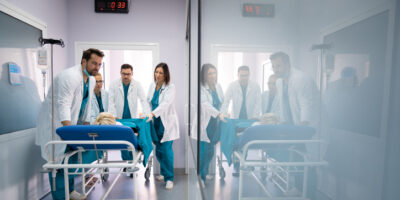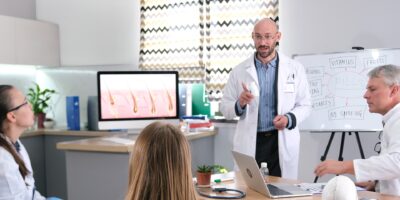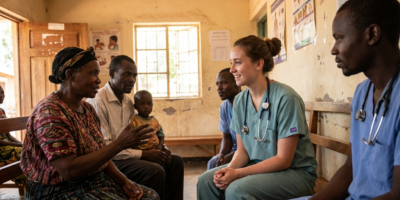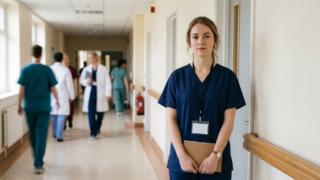
An observation shift in a clinical setting is one of the most intellectually demanding experiences a pre-health student can have, precisely because it demands so much while appearing to ask so little. You are not taking vitals. You are not charting. You are not interacting directly with patients. You are standing near the edge of rooms where high-stakes decisions are being made and trying to absorb as much as you possibly can without getting in anyone’s way.
That combination, high cognitive demand and low structural support, is exactly what makes staying genuinely focused so difficult. Without a task to complete or a supervisor asking you direct questions, your attention is entirely self-directed. For students who have spent years in classrooms where focus was externally prompted, the shift to self-directed clinical observation can feel disorienting. Some students respond by retreating into their phones. Others are physically present without mentally engaging, watching a ward round the way someone might watch a television show they cannot follow.
Neither of those responses serves you. This article is about the specific mental strategies that allow you to remain focused and engaged across a full observation shift, even when you are exhausted, even when you cannot understand what is being said, and even when nothing dramatic is happening. Because most of medicine, even in busy international hospitals, involves long stretches of quiet routine interrupted by moments of intensity. Learning to focus during the quiet stretches is what prepares you for the intense ones.
What Observation Actually Requires of Your Brain
There is a common misconception that clinical observation is a passive activity. You watch, you absorb, you go home. In reality, meaningful clinical observation requires active cognitive processing across multiple channels simultaneously. You are tracking verbal communication between clinicians, reading nonverbal cues from patients, trying to connect what you see with the anatomy and pathophysiology you have studied, and monitoring your own position in the space so that you remain respectful and unobtrusive.
Research on cognitive load in clinical learning environments distinguishes between intrinsic load, the inherent complexity of the material being observed, and extraneous load, the mental effort spent managing distractions and environmental noise. In a busy international hospital, both loads are high. Clinicians are managing multiple patients. Staff are moving quickly through crowded spaces. Equipment is beeping. The language being spoken may not be one you understand. Managing all of that while maintaining genuine attention on the clinical content requires deliberate strategy, not just goodwill.
The good news is that focus in clinical settings is a trainable skill. The same way a surgeon develops the ability to block out the noise of an operating room and concentrate on the tissue in front of them, pre-health students can develop the ability to sustain productive attention across a long shift. It starts with preparation before the shift begins.
Before the Shift: Preparation That Pays Off During It
Set a Specific Learning Intention
One of the highest-leverage things you can do before any observation shift is to decide what you want to learn from it. Not in a vague way, such as I want to learn as much as possible, but in a specific, answerable way. Before this shift, I want to understand how the triage process works in this facility. Before this shift, I want to watch how the attending physician structures a patient history. Before this shift, I want to observe how the ward round team communicates handoffs.
A specific learning intention does two things. It gives your brain a filter, so that relevant information stands out against background noise rather than blending into it. And it gives you a success criterion, something you can actually evaluate at the end of the day. Did you learn what you set out to learn? If not, why not? What would you focus on differently next time?
Review the Relevant Clinical Context
If you know in advance what specialty, ward, or type of patient you will be observing, spend 15 to 20 minutes the night before reviewing the basics of that clinical area. You do not need to prepare like you are going into an exam. You need to refresh enough relevant vocabulary and conceptual scaffolding that when you hear a term or see a procedure, your brain has something to attach it to.
A student who has reviewed the basics of dehydration assessment before a pediatrics shift will recognize when the physician is checking skin turgor and understand why. A student who has done no preparation will watch the same interaction and register only that the doctor touched the child’s arm. The clinical content is identical. The learning outcome is completely different.
Prepare Your Documentation Tools
Bring a small notebook and a pen. This is not negotiable. Notes taken by hand during or immediately after a clinical observation encode information far more effectively than mental notes or typed summaries composed from memory at the end of the day. You are not going to write down patient information. You are going to write down clinical concepts, questions that occurred to you, and observations about how care was delivered. The act of writing forces synthesis that passive watching does not.
During the Shift: Active Engagement Strategies
The Question Frame
The most effective focus technique available to a clinical observer is continuous, quiet question generation. As you watch, ask yourself questions about what you are seeing. Why did the physician order that test rather than this one? What is the nurse checking on the monitor and why does it matter? What is the patient communicating through their body language that they are not saying out loud? How is this facility’s triage process similar to or different from what I have read about?
You do not need to answer all of these questions in the moment. Many of them you cannot answer without more training. The point is that question generation keeps your brain in active processing mode rather than passive reception mode. It is the difference between reading a textbook and studying one. The content is the same. The cognitive engagement is not.
Anchor Your Attention to One Person
When a ward round involves multiple people moving through a space quickly, it is easy to lose the thread of what is happening by trying to follow everyone simultaneously. A useful technique is to anchor your observation to one person at a time, typically the most senior clinician, and follow their attention deliberately. Where do they look first when they enter a patient’s room? What do they ask? What do they physically examine? How do they end the encounter?
Following one person’s clinical reasoning through a series of encounters builds a much more coherent understanding of how clinical decision-making works than scattered observation of multiple people doing different things at once. Once you have a solid picture of how the attending approaches patients, you can shift your anchor to the resident, or the nurse, or the clinical officer, and observe how their roles and priorities differ.
Use Transitions as Reset Points
Every shift has natural transition points: the end of a ward round, the move from one patient bay to another, a break in the flow while results are awaited. Use these moments deliberately. Take 60 seconds to write down the most important thing you just observed. Ask yourself whether your attention drifted during the last stretch and why. Reconnect with your learning intention for the shift. These brief resets prevent the gradual drift from active engagement to passive presence that happens to most observers over the course of a long day.
Manage Physical Fatigue Before It Manages You
Observation shifts are physically demanding in ways that students who have never stood for six consecutive hours in a clinical environment do not anticipate. Wear comfortable shoes. Stay hydrated. Eat before the shift and bring something to sustain you through it if the schedule permits. Physical fatigue is one of the most reliable predictors of attentional failure. A student who is hungry, thirsty, and standing on sore feet by hour four of a shift is not learning effectively regardless of how motivated they are.
When the Environment Makes Focusing Hard
Noise and Sensory Overload
International hospital environments are often louder, more crowded, and more sensory-intensive than students expect. The combination of unfamiliar sounds, smells, and spatial density can trigger a stress response that competes directly with focused attention. When you feel that response activating, do not fight it and do not leave. Breathe slowly and deliberately for 30 seconds, focus your eyes on one specific point in the room, and allow your nervous system to recalibrate. This is not a weakness. It is a normal physiological response to a novel high-stimulation environment, and it passes faster when you work with it rather than against it.
Language Barriers
When clinical conversations are happening in a language you do not speak, the temptation is to disengage because you cannot follow the verbal content. Resist this. Observation shifts conducted across a language barrier are still enormously valuable for developing the ability to read nonverbal communication, procedural sequencing, clinical teamwork dynamics, and physical examination technique. None of those things requires verbal comprehension. A student who uses a language barrier as an opportunity to develop those observational muscles comes away from an international placement with skills that are genuinely difficult to build at home.
After the Shift: Making the Learning Stick
What you do in the first hour after a shift ends determines how much of what you observed you actually retain. Before you check your phone, before you shower, before you eat, spend 10 to 15 minutes writing a structured reflection. Not a diary entry. A structured summary that covers what you observed, what you did not understand, what questions it generated, and one thing you want to follow up on before your next shift.
This habit of structured reflection is what turns observation hours into genuine clinical learning. Admissions committees can tell the difference between a student who logged 200 hours and a student who learned from 200 hours. Understanding how shadowing hours translate into application strength starts with the quality of engagement during each shift, and the reflection that follows it.
The AAMC guidance on getting the most from clinical shadowing emphasizes that the value of observation comes from active engagement and reflection, not from the number of hours accumulated. Students who approach each shift with intention and document what they learn are building a clinical vocabulary and a professional identity that will serve them through applications, interviews, and medical training itself.
Common Mistakes That Undermine Focus
The most common mistake is treating an observation shift like attendance. Showing up is the minimum requirement. It is not the goal. Students who physically present without mentally engaging miss the entire point of the experience, and they often realize this only when they sit down to write their personal statement and find they cannot recall anything specific.
A second mistake is allowing a smartphone to provide easy relief from the discomfort of not understanding what is happening. Clinical observation involves long stretches of uncertainty, and that discomfort is productive. It is the discomfort of a brain working hard to construct meaning from incomplete information. Reaching for your phone short-circuits that process every time.
A third mistake is failing to ask questions when appropriate moments arise. Pre-health students sometimes assume that any question they ask will be perceived as an intrusion. In reality, most clinicians appreciate students who demonstrate genuine curiosity and ask thoughtful questions at appropriate times, during breaks between patients, at the end of a round, or when directly invited. A well-timed question signals engagement. Silence throughout an entire shift signals the opposite.
What to Do Next
Before your next shift, write down one specific thing you want to understand better by the end of it. Review the relevant clinical basics the night before. Bring a notebook. During the shift, generate questions continuously and anchor your attention deliberately. After the shift, spend 15 minutes writing a structured reflection. Then compare what you set out to learn with what you actually learned, and use that gap to set your intention for the following shift.
If you are selecting a clinical placement and want to ensure your observation experience is structured enough to support this kind of active learning, understanding what distinguishes a high-quality internship from passive observation is a critical first step. And when it comes to translating what you observe into a compelling application narrative, knowing how to frame your internship experience for admissions committees makes all the difference between hours logged and skills demonstrated.
Frequently Asked Questions
How do I stay focused when nothing dramatic is happening during a shift?
Medicine is mostly routine. A shift without dramatic moments is a normal shift, not a wasted one. Routine clinical encounters contain enormous amounts of information about how physicians build rapport, how teams communicate, how documentation works, and how decisions are made incrementally rather than all at once. Redirecting your focus from events to processes is what makes quiet shifts valuable. Ask yourself what patterns you are observing across multiple encounters rather than waiting for something exciting to happen.
Is it normal to feel overwhelmed or disoriented on early shifts?
Completely normal. Clinical environments are cognitively demanding spaces with their own rhythms, hierarchies, and vocabularies. Most students feel genuinely disoriented during their first several shifts. The disorientation typically diminishes with each shift as your brain builds a schema for how the environment works. If you are still feeling overwhelmed after five or six shifts, focus your attention more narrowly, one person, one process, one patient encounter at a time, until the overall picture becomes clearer.
How many observation hours do I need for medical school applications?
Requirements vary by program, and there is no universal minimum. Most programs recommend between 40 and 200 hours of shadowing, with some expecting more. What matters more than a specific number is the quality and variety of the experience. Shadowing across multiple specialties, in varied settings, with structured reflection, is far more compelling than a large number of passive hours in a single environment. Programs want to see that you used your observation time to develop genuine understanding of clinical medicine.
Can I take notes during a shift, and what should I write down?
Yes, with appropriate care. You should never write down anything that could identify a patient, including names, room numbers, specific diagnoses combined with any personal detail, or descriptions of procedures that could be linked to an individual. What you can and should write down includes clinical concepts you encountered, procedures or assessments you observed, questions that occurred to you, and patterns you noticed in how care was delivered. These notes become the raw material for your structured reflection after the shift.
How do I maintain focus during very long shifts?
Divide a long shift into mental segments of roughly 60 to 90 minutes and give each segment its own micro-focus question. What am I trying to understand in this next stretch? Use transition points between patient encounters or between units as reset opportunities to write a quick note and reconnect with your intention. Physical maintenance matters too. Staying hydrated, eating before the shift, and wearing appropriate footwear all affect cognitive endurance in ways that compound over a six or eight hour period.
What should I do if I am asked to do something outside my scope during an observation shift?
Decline respectfully and clearly. You might say something like, I appreciate the opportunity, but my role on this placement is observational and I would not want to overstep that. Most clinical staff will understand and respect this response. If you feel pressure to perform a clinical task that you are not trained or authorized to perform, speak with your program coordinator. Your scope of practice as an observer exists for the protection of patients, not as a limitation on your learning.
Does the specialty I shadow in matter for my application?
Breadth generally serves you better than depth in a single specialty, particularly early in the application process. Committees want to see that you have been exposed to different aspects of clinical medicine and that your interest in the profession is informed rather than narrow. If you have a genuine interest in a specific specialty, shadowing within it is appropriate and meaningful. But supplementing that with observation in primary care, emergency medicine, surgery, or another contrasting specialty gives you more material to work with and a more complete picture of the field you are entering.
How does observation in an international setting compare to domestic shadowing?
International observation offers a set of clinical exposures and learning opportunities that are genuinely difficult to replicate domestically. Resource-limited settings require clinicians to rely on clinical reasoning and physical examination skills that are sometimes less visible in high-resource environments where imaging and laboratory testing are immediately available. Observing those skills in action builds a deeper appreciation of clinical medicine than watching a process that depends primarily on technology. International observation also develops cultural competence and adaptability in ways that admissions committees recognize and value.