Analysis of Pre-Professional Pipelines and Career Connected Learning
The traditional trajectory of medical education has historically been characterized by a sharp demarcation between secondary education and professional specialization. However, recent empirical data and institutional shifts from the Association of American Medical Colleges suggest that the pre-medical phase of a clinician’s life is beginning significantly earlier than previously observed.
The professionalization of high school students through structured career exploration is no longer an outlier activity; it has become a central component of a competitive longitudinal profile. This shift is driven by a confluence of rising competitive thresholds, a transition toward competency-based admissions, and a growing body of evidence suggesting that early career-connected learning provides substantial benefits in terms of academic persistence, earnings potential, and professional identity formation. This report provides an exhaustive analysis of the data surrounding the 2025-2026 medical school admissions cycle, the efficacy of career academies, and the ethical frameworks governing clinical exposure for minors.
The Macro-Economic and Statistical Landscape of Medical Admissions
The competitive climate of U.S. medical school admissions reached an unprecedented peak in the 2025-2026 cycle. For the first time in the history of American medical education, total enrollment in MD-granting institutions surpassed 100,000 students. While this expansion reflects an institutional effort to address a national physician shortage, the corresponding surge in applicant volume indicates that the supply of medical seats is still dwarfed by the demand for entry.
The AAMC reported that 54,699 individuals applied to U.S. medical schools in 2025, a 5.3% increase compared to the 2024 cycle. A deeper analysis of this data reveals that the growth is not merely a quantitative increase but a qualitative shift in the applicant pool. First-time applicants, who represent the most intentional segment of the pipeline, accounted for 76.5% of the total pool, exhibiting an 8.4% increase from the prior year. This surge in first-time candidates suggests that students are moving through the preparatory pipeline with greater efficiency and earlier engagement.
Quantitative Admissions Benchmarks (2025-2026 Cycle)
The following table synthesizes the primary statistical indicators for the 2025-2026 academic year, illustrating the rising academic and service-oriented thresholds for matriculants.
| Metric | 2024-2025 Performance | 2025-2026 Performance | Percentage Change |
|---|---|---|---|
| Total Applicant Pool | 51,946 | 54,699 | +5.3% |
| First-Time Applicants | 38,599 | 41,830 | +8.4% |
| Total Enrolled Students | 99,428 | 100,723 | +1.3% |
| First-Year Matriculants | 23,157 | 23,440 | +1.2% |
| Mean GPA (Matriculants) | 3.79 | 3.81 | +0.5% |
| Mean MCAT (Matriculants) | 511.8 | 512.1 | +0.06% |
| Cumulative Community Service Hours | 15.5M (Est.) | 16.8M | +8.3% |
| Avg. Service Hours per Matriculant | 680 (Est.) | 717 | +5.4% |
The rise in mean GPA to 3.81 and mean MCAT to 512.1 among matriculants underscores the reality that academic excellence is now a baseline requirement rather than a distinguishing feature. The most striking figure is the accumulation of community service hours. Matriculants in the 2025 class performed over 16.8 million hours of service, averaging 717 hours per student. For a student to accumulate over 700 hours of meaningful service while maintaining a near-perfect GPA and preparing for the MCAT during their undergraduate years is a logistical challenge that often leads to burnout. Consequently, students who begin this accumulation in high school can distribute their service commitments over a seven-to-eight-year period, allowing for deeper, more impactful engagement that resonates with admissions committees during the holistic review process.
Geographic and Demographic Drivers of Application Volume
The concentration of medical interest remains high in states with large populations and established medical infrastructures. California, Texas, and Florida continue to contribute the highest number of applicants, creating intense competition for in-state seats. Conversely, states without in-state medical schools, such as Wyoming and Alaska, show the highest rates of out-of-state matriculation, with 68.2% and 58.4% of their students traveling elsewhere for their education.
The demographic profile of the applicant pool is also evolving. Women continue to hold the majority in medical school enrollment, accounting for 57.2% of all applicants and 55.0% of matriculants in 2025. The AAMC also implemented significant changes to race and ethnicity data collection in 2025, adding a Middle Eastern or North African category which recorded 3,707 applicants and 1,485 matriculants. These shifts indicate a medical community that is increasingly diverse and socially representative, yet the barriers for underrepresented groups persist. The percentage of first-generation college students among matriculants declined from 12.4% in 2021 to 10.7% in 2025, suggesting that students without inherited medical social capital may be falling behind. This further validates the necessity for structured high school programs that provide mentorship and exposure to students who may not have these resources at home.
The AAMC Premed Competencies and the Holistic Evaluation Framework
The transition from a purely metric-driven admissions process to a holistic review model has necessitated a common language for readiness. The AAMC Premed Competencies for Entering Medical Students serve as this foundational framework. Originally introduced in 2011, these competencies were most recently updated in 2023 for the 2024-2025 cycle, with further refinements in 2026 to emphasize behavioral indicators of self-awareness and understanding others. Admissions committees use these 17 competencies to evaluate whether an applicant has the maturity, resilience, and ethical foundation to succeed in clinical environments. High school exploration allows students to begin practicing these behaviors long before they reach the high-stakes environment of medical school applications.
Professional Competencies and Long-Term Development
The Professional Competencies are perhaps the most difficult to manufacture at the last minute. They represent a student’s character and social intelligence.
- Service Orientation: This competency requires a demonstrated commitment to helping others and contributing to the community. A long-term history of service beginning in 9th grade provides a more credible narrative than a series of disparate volunteer events in college. Age restrictions for hospital internships and volunteering make early planning especially important.
- Ethical Responsibility to Self and Others: Candidates must exhibit honesty, integrity, and the ability to adhere to ethical principles under pressure. Shadowing programs that involve clinical observation often include orientation on patient confidentiality (HIPAA), providing students with their first formal exposure to medical ethics.
- Reliability and Dependability: Medical schools look for a consistent track record of fulfilling obligations. Participation in a structured multi-year health science pathway or a long-term internship is the most effective evidence of this trait.
- Resilience and Adaptability: The ability to persevere in stressful or ambiguous environments is essential. Students who engage in global health internship programs often encounter resource-limited settings that challenge their assumptions and require adaptation, providing rich setback and reflection narratives for their essays.
Refinements in the 2026 Competency Model
The 2026 updates to the AAMC Premed Competency Framework renamed several categories to better reflect the behaviors medical schools are seeking. Cultural Humility was refined to Self-Awareness, emphasizing the student’s ability to reflect on personal assumptions and create respectful environments. Cultural Awareness was updated to Understanding Others, focusing on the student’s curiosity about different backgrounds and respect for individual differences. These shifts highlight that medical schools are moving away from passive knowledge toward active social cognition. High schoolers who interact with diverse patient populations through community outreach are already engaging in the second and third-order thinking required to master these nuanced traits.
Longitudinal Outcomes of Career-Connected Learning
The efficacy of starting medical exploration in high school is supported by significant longitudinal research outside of the narrow field of medical admissions. The Career Academy model, which has been analyzed for over 50 years, provides a template for how themed secondary education influences long-term success.
The MDRC Evaluation of Career Academies
MDRC’s uniquely rigorous evaluation utilized a random assignment research design in nine diverse high schools across the United States. The study followed over 1,400 students for eight years after their expected high school graduation to measure the impact of career-themed learning on labor market prospects and postsecondary attainment. The results demonstrate that investing in career-oriented experiences during high school has a substantial payoff. Participants in Career Academies produced sustained earnings gains that averaged 11% more per year than those in the control group, amounting to a total boost of $16,704 (in 2006 dollars) over the follow-up period.
| Impact Category | Academy Group Outcome | Statistical Significance |
|---|---|---|
| Annual Earnings Increase | +11% ($2,088) | High |
| 8-Year Total Earnings Increase | $16,704 | High |
| Earnings Gain for Young Men | +17% ($3,731) | Very High |
| Graduation Rate (High School) | No significant difference vs. control | N/A |
| Postsecondary Completion | No significant difference vs. control | N/A |
The data proves that career-connected learning improves transition to the workforce without compromising academic goals or college preparation. Academy members were more likely to be working in jobs directly related to their high school studies, suggesting that early exposure creates a more efficient and targeted career path. For a pre-medical student, this efficiency is critical; it reduces the likelihood of career switching in their late 20s, which is a major source of financial and professional stress in the medical community.
CTE Graduation Rates in Mississippi
The pattern of engagement-driven success is further echoed in data from Mississippi’s review of Career and Technical Education pathways, including health sciences. Their study found that CTE concentrators, defined as students who take at least two courses in a single career pathway, graduated at significantly higher rates than their peers.
From 2015 to 2018, the average graduation rate for CTE concentrators in Mississippi was 94%, while the rate for non-concentrators was only 83%. Nationally, the U.S. Department of Education reports a similar 94% graduation rate for CTE concentrators compared to an 85% national average. When a student connects their high school curriculum to a meaningful direction like healthcare, they develop a sense of purpose that sustains them through the challenges of secondary education. This staying-the-course effect is a direct predictor of success in the rigorous undergraduate years that follow.
The Psychological and Identity Benefits of Early Exploration
Beyond statistics and earnings, early exploration addresses the fundamental psychological process of professional identity formation. The transition from being a student of science to being a future doctor requires a series of experiential shifts that are best achieved through mentorship and real-world exposure.
The Mechanism of Mentorship
Mentorship is frequently cited by medical students as the instrumental factor in their development. The AAMC’s profiles of successful matriculants emphasize that these relationships often begin in high school. Sotonye Douglas, a medical student at UT Southwestern, highlights that meeting her first African American female pediatrician, Dr. Rhonda Cambridge, just a few months into high school, was a pivotal moment. Douglas describes this mentor as compassionate, trustworthy, and dedicated, qualities that she now strives to embody in her own practice.
Similarly, Jarrett Jackson, a graduate of Howard University College of Medicine, was mentored by Dr. Neal Beckford from high school through college. Jackson’s ability to hold himself to a standard of excellence was reinforced by this long-term connection. The presence of a mentor provides a student with more than just a recommendation letter; it provides a blueprint for professional behavior and a sustainable network that helps them navigate the complexities of applications and interviews.
Building Clinical Confidence and Clarity
Shadowing a physician in high school is primarily a tool for fit confirmation. It allows students to observe the nature and rhythms of clinical practice, including the challenges of interprofessional collaboration and the emotional weight of patient interactions.
When a student observes an open-heart surgery in 11th grade, they are exposed to the visceral reality of medicine. One student described seeing a family’s worried trepidation transform into elation and hope after a successful infant surgery. This specific moment became the true impetus for his medical journey, providing a source of motivation that sustained him through chaotically stressful semesters. This type of experiential clarity is a safeguard against the expensive mistake of pursuing a medical degree only to discover a lack of temperament for clinical life.
Clinical Exposure: Ethical Boundaries and Alternatives
A significant challenge for high school students is limited access to hospital settings due to age, safety, and liability regulations. However, the AAMC’s guidance and institutional surveys reveal that there are many acceptable routes to obtaining clinical exposure that do not involve traditional hospital-based shadowing.
The 87% Acceptance of Alternative Activities
In a survey conducted by the AAMC GSA Committee on Admissions, 87% of medical school admissions officers reported accepting alternate activities for applicants unable to secure traditional shadowing experiences. This finding is critical for high school students who may face age restrictions for entering clinical units like the Operating Room or Emergency Department. Acceptable alternatives include:
- Hospice Volunteering: Providing support to dying patients and their families, which demonstrates a high level of empathy and emotional maturity.
- Certified Nursing Assistant (CNA) Roles: Gaining hands-on practice in a clinical environment, which shows a willingness to engage in the direct, often unglamorous work of patient care.
- Volunteer EMT Service: Exposure to urgent medical care and community health needs.
- Hospital Scribing: Partnering with physicians to document care, which demonstrates proficiency in medical terminology and reliability within a healthcare team.
The key takeaway is that quality is more important than quantity. Admissions officers value the student’s ability to articulate what they learned and how the experience informed their motivation for medicine more than the number of hours logged.
The Danger of Unsupervised International Procedures
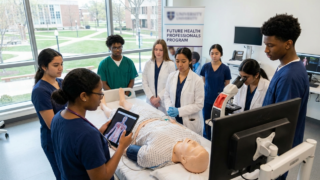
A major ethical pitfall for high school students is participating in invasive procedures during international volunteer trips. The AAMC survey found that 45 to 50% of admissions schools viewed participation in suturing, giving vaccinations, or pulling teeth as harmful to a medical school application. Even with supervision, 35 to 40% of officers remained concerned. These activities violate the professional boundary of the student’s role and potentially harm patients. Therefore, any credible high school program must maintain a strict observation-only policy for clinical areas, while offering clinical simulation as a safe and sanctioned alternative for skill development.
Operational Analysis of Structured High School Programs: The IMA Framework
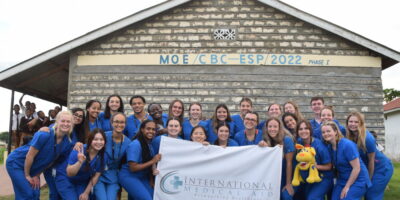
International Medical Aid (IMA) is a prominent example of a structured organization that aligns high school medical internships with the AAMC competencies. As a HOSA Premier Partner, IMA provides pre-professional foundations that are designed to be safe, meaningful, and verifiable.
Eligibility and Role Boundaries
IMA internships are open to high school students aged 15 and older. These programs draw a clear distinction between the roles of high school interns and medical students.
| Action Category | High School Intern Allowed | Role/Boundary |
|---|---|---|
| Clinical Shadowing | Yes (Observational) | Shadowing licensed clinicians; no procedures. |
| Clinical Simulation | Yes (Hands-On) | Skills practice (suturing, vitals) in simulation labs. |
| Direct Patient Care | No | No invasive procedures, medications, or injections. |
| Clinical Documentation | Limited | Observing documentation; no independent EHR entry. |
| Community Outreach | Yes | Assisting with hygiene and public health education. |
| Medical Advice | No | Students may not give diagnoses or advice to patients. |
This strict adherence to boundaries protects the integrity of the student’s application. A detailed breakdown of what teens can and cannot do in hospital-based internships is an essential resource for any family evaluating a program. By focusing on non-invasive tasks and simulation, students gain the clinical confidence needed for the future without crossing ethical lines that could later jeopardize their application.
Global Health and Cultural Competency
The IMA model integrates a Global Health Lecture Series led by U.S. and internationally trained professionals. This didactic component helps students understand healthcare infrastructure and infectious diseases in developing countries, concepts that are central to the AAMC’s Human Behavior and Living Systems competencies. Daily language instruction (Spanish or Swahili) and immersion in diverse patient populations further foster Self-Awareness and Understanding Others, the traits the AAMC prioritized in its 2026 updates.
Parental Oversight and Safety Protocols
For families, the primary concern is the safety of minors in international settings. Structured programs address this through 24/7 on-site staff, gated housing, and professional security. Parent documentation typically includes clear emergency and evacuation protocols, strict privacy policies against social media posts identifying patients or clinical situations, and dedicated supervision models with defined staff-to-student ratios.
A Step-by-Step Strategic Framework for Secondary Students
Based on the synthesis of AAMC requirements and longitudinal research, a logical grade-by-grade plan for medical exploration emerges. This plan respects the student’s developmental stage while building a credible professional narrative.
9th and 10th Grade: Exploration and Breadth
The early high school years should focus on building the academic foundation and testing initial interest. Students should pursue mastery of biology and chemistry, engage in community-based volunteering to build Service Orientation, and join local HOSA chapters to participate in competitive events that build clinical knowledge.
11th Grade: Structured Clinical Exposure
The junior year is the pivotal time for fit confirmation. Students should seek a structured program, local or international, that offers mentored clinical observation and simulation. Informational interviews with practitioners and a reflective journaling practice to de-identify and process clinical experiences are equally important during this year.
12th Grade: Leadership and Articulation
The senior year is about synthesizing experiences into a compelling story. Students should take on leadership roles in health-related clubs or community initiatives, develop their personal statement around the true impetus moment using specific and honest anecdotes, and utilize pre-med advising networks to map out the transition to undergraduate pre-medical tracks.
Critical Analysis and Fact-Check of the 2026 Webinar Script
The webinar script Is It Worth Starting Early? serves as the catalyst for this report. A rigorous fact-check against current research confirms the high level of accuracy in the script’s claims, while providing necessary context for its broader generalizations.
Verification of Statistical Claims
The script’s claim that 54,699 people applied to medical school in the 2025 cycle, reflecting a 5.3% increase, is fully verified by AAMC data released in December 2025. The claim that 76.5% were first-time applicants is also fully verified. These statistics provide a credible foundation for the webinar’s argument about the competitive landscape.
The mention of the 94% graduation rate for health science pathways via Mississippi State University is verified with nuance. The 94% figure is the actual average for CTE concentrators in Mississippi and the national average for CTE concentrators as reported by the U.S. Department of Education and the Mississippi State Auditor. While the script implies this is specific to health science pathways, it is more accurate to state that health science is a high-performing subset of the broader CTE data that reaches this 94% benchmark.
Verification of Professional Frameworks
The script correctly identifies the AAMC Premed Competencies and their implementation for the 2024-2025 cycle. It also accurately reflects the 87% acceptance of alternative clinical activities, a figure derived from the AAMC GSA Committee on Admissions survey. The advice on avoiding invasive procedures and the importance of HIPAA compliance align perfectly with AAMC ethics guidelines and professional standards.
Evaluation of Gains and Long-Term Benefits
The script cites the MDRC Career Academy study regarding the 11% earnings gains. This is fully verified by the 15-year longitudinal evaluation which found exactly 11% annual gains for participants. The webinar’s use of Sotonye Douglas and Jarrett Jackson as case studies for mentorship is also verified; their stories are part of the official AAMC Aspiring Docs and Breaking Through Barriers repositories.
The Strategic Imperative of the Early Start
The analysis of the 2025-2026 admissions cycle and associated educational research leads to a singular conclusion: starting medical exploration in high school is a powerful strategic advantage. It allows a student to spread the enormous burden of character-building and service-hour accumulation over a more manageable timeline, thereby reducing the risk of burnout and improving the quality of their reflections.
By the time a student enters the 2025-2026 application cycle, they are expected to have mastered not just science, but a complex set of behaviors ranging from Self-Awareness to Ethical Responsibility. These traits are not inherent; they are developed through years of consistent engagement. High school programs, particularly those that adhere to strict ethical boundaries and provide mentored simulation, offer the most effective environment for this development.
For students, the gain is clarity and confidence. For medical schools, the gain is an applicant who has stayed the course since high school, proving their reliability and passion through a verifiable, longitudinal story. The evidence confirms that starting early is not about looking impressive on paper; it is about being genuinely prepared for a medical career. As the competitive pool grows and benchmarks rise, the long runway of secondary exploration will continue to be the distinguishing feature of the future physicianIs it too early to start exploring medicine in high school?
No. Starting in high school is one of the most strategically sound decisions a pre-medical student can make. The AAMC Premed Competency Framework evaluates applicants on 17 behavioral and professional traits, including Service Orientation, Reliability, and Ethical Responsibility. These are not skills that can be manufactured in a single summer before college applications. Students who begin structured exploration in 9th or 10th grade have a seven-to-eight-year runway to develop these competencies authentically, distribute service hours over time, and build a longitudinal record that admissions committees trust.
Frequently Asked Questions
Do medical schools actually care about high school experiences?
Yes, and the data supports it. In the 2025-2026 admissions cycle, 54,699 individuals applied to U.S. medical schools, a 5.3% increase from the prior year. Mean matriculant GPA rose to 3.81 and mean MCAT to 512.1, making academic metrics a baseline rather than a differentiator. What separates competitive applicants is a credible, sustained story of engagement. Students who can reference specific clinical observations, mentorship relationships, and professional growth from high school through college tell a more compelling and verifiable narrative than those who began in junior year of undergrad.
What can a high school student actually do in a clinical setting?
High school interns in structured programs are permitted to observe licensed clinicians in action, assist with non-invasive community outreach tasks, and participate in clinical simulation labs where they practice skills like taking vitals or suturing on mannequins in supervised environments. What they may not do is perform any medical procedure on a patient, administer medications or injections, provide diagnoses or medical advice, or make independent entries into clinical documentation systems. This boundary is not a limitation. It is a professional standard that protects patients, protects the student, and protects the credibility of the experience on a future application.
What if my student cannot access a hospital or clinical environment?
That is more common than most families realize, and it is not a barrier to building a competitive profile. An AAMC survey of medical school admissions officers found that 87% would accept an alternative activity in place of traditional clinical shadowing for applicants who faced access limitations. Acceptable alternatives include hospice volunteering, Certified Nursing Assistant roles, volunteer EMT service, and hospital scribing. The admissions committee is evaluating what the student learned and how they articulate it, not whether they stood in a specific room.
How does international medical volunteering benefit a high school student differently than local options?
International programs add a dimension that local experiences typically cannot replicate: sustained exposure to resource-limited healthcare environments, cross-cultural patient interaction, and the personal resilience that comes from navigating unfamiliar systems. These experiences directly develop the AAMC’s 2026 competency priorities of Self-Awareness and Understanding Others. Students who complete a structured international internship return with specific, emotionally grounded stories that are far more memorable in a personal statement than generic volunteering hours. The key distinction is that the program must maintain strict observational boundaries and provide structured mentorship. A well-run international internship is not a medical tourism trip. It is a supervised pre-professional development experience.
Is international medical volunteering safe for a minor?
Safety depends entirely on the program’s operational structure, not the destination. Families should evaluate any program on five specific criteria before enrolling a minor: the supervision model and staff qualifications, the housing security setup, the emergency and evacuation protocols, the formal privacy and HIPAA training provided to students, and the explicit written policy on role boundaries prohibiting clinical procedures. Programs that answer these questions clearly and in writing are structured for student safety. Programs that are vague or evasive on any of these points should be declined. A reputable program will have 24/7 on-site staff, gated accommodations, and documented emergency procedures as standard, not optional, features.
How do I help my student choose the right pre-medical program in high school?
Start with fit, not prestige. The right program is one that matches where your student is developmentally, offers meaningful structure rather than just access, and maintains clear ethical boundaries around student roles. Look for programs affiliated with recognized organizations like HOSA, which signal accountability to professional standards. Ask whether the program includes a didactic component, mentorship from credentialed professionals, and a reflective practice element that helps students process and articulate what they observed. The goal at this stage is not to accumulate the most hours. It is to build genuine curiosity, confirm fit with the medical field, and develop the professional instincts that will define your student’s application years from now.