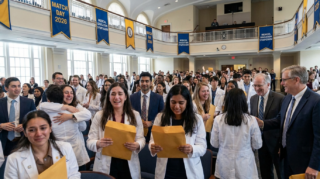
Match Day 2026 delivered the largest Main Residency Match in NRMP history. A total of 44,334 positions were offered, representing a 2.6% increase over 2025, and the data tells a more complex story than any single headline can capture. For medical students planning their applications, preparing for the 2027 cycle, or simply trying to understand where the profession is heading, the 2026 match results offer a detailed, specialty-by-specialty picture of supply, demand, and competition. This article breaks down the most important numbers, identifies the biggest surprises, and offers a framework for turning raw NRMP match data 2026 into real strategic decisions.
Whether you are an MS3 starting to narrow your specialty list or an MS4 reflecting on this year’s outcome, Match Day results function like a public dataset for career planning. They reveal which fields are expanding, which are tightening, which attract more applicants than they can absorb, and which still have room. The key is knowing how to read the data without overreacting to it.
What the 2026 Match Numbers Actually Show
The headline figure, 44,344 positions offered, confirms a trend that has held for years: residency slots continue to grow. But growth in total positions does not mean every specialty or every applicant benefits equally. The distribution of those positions, and the rate at which they filled, matters far more than the aggregate.
U.S. MD seniors matched at a rate of 93.5%, consistent with recent years. U.S. DO seniors hit a record-high 93.2%, effectively closing the gap that once separated the two tracks. That 0.3% difference is, for practical purposes, negligible, and it should put to rest lingering assumptions that DO graduates face a meaningful disadvantage in the Match. The NRMP’s official results and data reports provide the full breakdown by applicant type, specialty, and region for anyone who wants to examine the numbers in detail.
Still, the overall match rate masks the reality for specific applicant groups. International medical graduates, both U.S. and non-U.S. citizens, matched at lower rates, and the 9,696 applicants who went unmatched in 2026 remind us that the system remains highly competitive. The total number of applicants continues to grow faster than the number of available positions, even as Congress and medical schools work to expand training capacity.
Match Day Results by Specialty: Where Competition Tightened and Where It Eased
Specialty-level data is where the 2026 match results become most useful for planning. Fill rate, the percentage of offered positions that were actually filled, is the single most important metric for understanding how competitive a field was in a given year.
Surgical and Procedural Specialties
Neurosurgery and orthopedic surgery continued to fill at or near 100%, signaling that these remain among the most competitive fields in medicine. A 100% fill rate means every offered position was claimed, often by applicants with top-tier Step 2 CK scores, strong research portfolios, and multiple sub-internships. If you are targeting one of these specialties, the data confirms what you likely already know: there is almost no margin for error in your application.
Plastic surgery and otolaryngology followed similar patterns. These fields attract a relatively small number of positions and a disproportionately large pool of highly qualified applicants. For students considering these paths, the fill rate data should prompt honest self-assessment, not discouragement, but clear-eyed planning around backup specialties and application breadth.
Psychiatry’s Continued Expansion
Psychiatry offered 2,516 positions in 2026 and filled 97.4% of them. This represents sustained growth driven by workforce demand, increased public attention to mental health, and expanding insurance coverage for psychiatric services. For students drawn to psychiatry, the combination of high fill rate and growing position count is encouraging: the field is expanding, but it is also attracting more applicants each year. It is no longer accurate to think of psychiatry as a “safety” specialty. The AAMC’s data on physician workforce projections outlines the demand pressures driving this growth across multiple specialties.
Emergency Medicine’s Rebound
Emergency medicine posted a 95.6% fill rate in 2026, a notable recovery after several years of declining interest and unfilled positions. The specialty had been affected by concerns about mid-career burnout, compensation relative to lifestyle, and workforce saturation in some markets. The 2026 rebound suggests that either applicant sentiment has shifted or that programs adjusted their position counts to better match demand. Either way, the data is worth watching closely over the next two to three years before drawing firm conclusions about EM’s long-term trajectory.
Primary Care: More Positions, Fewer Takers
Internal medicine offered a record 11,632 positions, the most of any specialty by a wide margin, with a 95.2% fill rate. Family medicine offered 5,491 positions but filled only 83.6%. Taken together, primary care positions reached an all-time high, yet the overall primary care fill rate dipped to 92.1%.
This is one of the most consequential findings in the 2026 data. The United States faces a well-documented primary care shortage, and the Match numbers show that simply adding positions does not solve the problem if applicants are choosing other fields. Family medicine’s 83.6% fill rate means roughly 900 positions went unfilled, a significant gap that will be felt in communities that already lack adequate primary care access.
For students interested in family medicine or general internal medicine, this data cuts two ways. On one hand, lower fill rates mean these fields are comparatively less competitive to match into, which can be strategically valuable. On the other hand, the workforce implications are serious, and students choosing primary care should do so with an understanding of the systemic challenges they will face in practice: higher patient volumes, lower compensation relative to specialists, and fewer institutional resources in many settings. For broader context on how healthcare systems function at the primary care level in different countries, the WHO’s overview of primary health care provides a useful global comparison.
How to Read Fill Rate Data Without Overreacting
It is tempting to look at a single year’s fill rate and make sweeping decisions. But Match data is most useful when you look at trends over three to five years, not snapshots. A specialty that filled at 88% one year and 92% the next may simply be experiencing normal fluctuation, not a fundamental shift.
Here are the questions worth asking when you review match day results by specialty:
Is the number of offered positions growing, shrinking, or stable? A rising position count with a stable fill rate means the field is expanding in a healthy way. A rising position count with a dropping fill rate, as in family medicine, signals a supply-demand mismatch that may benefit individual applicants in the short term but raises long-term workforce concerns.
Is the applicant pool changing? Some specialties are attracting more DO graduates, more IMGs, or more applicants who list the field as a backup. Understanding who is applying, not just how many, helps you interpret fill rates more accurately. If you want to understand how the Match process works at a structural level, including how rankings and algorithms interact, our guide to the residency match process covers the mechanics in detail.
Does the fill rate reflect applicant preference or position quality? A low fill rate can mean applicants are not interested in a specialty, but it can also mean certain programs within a specialty are less desirable due to location, reputation, or resources. National fill rates average over hundreds of individual programs, and the program-level variation is enormous.
What Unmatched Applicants Should Know About SOAP and Next Steps
Of the 9,696 applicants who did not match in 2026, many entered the Supplemental Offer and Acceptance Program, known as SOAP. In 2026, 2,581 positions were filled through SOAP, providing a critical fallback for applicants who did not receive a match in the main algorithm.
SOAP is fast, stressful, and operates under tight timelines during Match Week itself. Applicants who anticipate the possibility of not matching should prepare SOAP materials in advance, including updated personal statements, additional letters of recommendation, and a clear list of programs they would accept. This is not pessimism; it is practical risk management, especially for applicants in highly competitive specialties where the odds of going unmatched are higher.
The Ethics of the Match and SOAP
The NRMP Match is a binding agreement. Once you match at a program, you are contractually and ethically obligated to report there and begin training. Failing to honor a match result is a serious violation that can result in being barred from future Matches. The same ethical standards apply during SOAP. Program directors communicate with many applicants in a compressed timeframe, and professionalism in those interactions matters, both for immediate outcomes and for your long-term reputation.
It is also worth addressing a common misconception: going unmatched does not mean you failed. With nearly 10,000 unmatched applicants, many of whom have strong credentials, the math simply does not work for everyone in a system where positions have not kept pace with the growing applicant pool. If you go unmatched, your options include SOAP, research years, additional clinical experience, and reapplication. Each path has trade-offs, and the best choice depends on why you did not match, which specialties you targeted, and what you can realistically strengthen in your application.
Using 2026 Data to Build a Smarter Application Strategy
Match data is not destiny. It is information, and its value depends entirely on how you use it. Here is a practical framework for incorporating the 2026 results into your own planning.
Assess Your Competitiveness Honestly
If you are targeting a specialty with a 100% fill rate, you need to be realistic about whether your application, Step scores, research, clinical evaluations, and letters, places you in the competitive range. Talk to your dean of students, your specialty advisor, and physicians in the field. Use resources like the NRMP’s Charting Outcomes data, which breaks down match rates by applicant characteristics, to see where you stand relative to others who matched in your target specialty.
Build a Balanced Rank List
One of the most common mistakes is ranking too few programs or ranking only “reach” programs. The 2026 data reinforces what advisors have been saying for years: a longer, more balanced rank list increases your chances of matching. This is especially true in competitive surgical subspecialties, where a narrow list can leave you vulnerable.
Strengthen the Parts of Your Application You Can Control
Step scores are important, but they are not the only variable. Letters of recommendation, research productivity, clinical performance, and the quality of your personal statement all contribute to how programs evaluate you. If your scores are solid but not exceptional, focus on building the strongest possible narrative around your clinical interests and experiences. Strong clinical exposure, whether through rotations, structured observerships, or globally supervised clinical experiences that build real perspective, can help differentiate your application, particularly when you can articulate what you observed, what you reflected on, and how it shaped your understanding of patient care.
Consider Specialty Fit, Not Just Prestige
The 2026 data shows that some of the most in-demand specialties, psychiatry, internal medicine subspecialties, and emergency medicine, are not traditionally considered the most prestigious. Prestige is a poor reason to choose a specialty you will practice for 30 or more years. Match data can help you identify fields where your interests align with workforce demand, which is a far stronger foundation for a fulfilling career.
If you are still early in medical school and thinking about how your undergraduate preparation connects to your residency competitiveness, our overview of how medical school admissions factors work may be a helpful reference point, especially for understanding how academic metrics and experiences interact in competitive application pools.
What the 2026 Match Means for the Next Five Years
The 2026 Match did not happen in a vacuum. Several structural forces are shaping residency training in the United States, and the data from this year reflects those forces more clearly than ever.
First, the push to expand graduate medical education funding continues. Bipartisan legislative proposals aim to increase Medicare-funded residency slots, particularly in primary care and in underserved areas. If these efforts succeed, future Matches may offer meaningfully more positions, but the impact will be uneven across specialties and regions.
Second, the integration of DO graduates into the single accreditation system is now complete, and the data confirms that DO applicants are matching at rates essentially equivalent to their MD peers. This is a significant shift from even a decade ago and reflects the broader recognition that training pathway matters less than clinical competence and preparation.
Third, the primary care gap is not closing. Despite record position counts, the persistent underfilling of family medicine and general internal medicine slots points to a systemic problem that Match data alone cannot solve. Compensation, loan burden, practice environment, and cultural attitudes toward primary care all play a role. Students choosing primary care should enter the field with open eyes and, ideally, with the kind of grounded clinical exposure that helps them understand what the work actually looks like day to day.
Finally, specialty competitiveness is not static. Emergency medicine was considered highly competitive a decade ago, then saw declining interest, and is now rebounding. Psychiatry was once seen as a less competitive option and is now filling at rates above 97%. The lesson is clear: build your application around genuine interest and strong preparation, not around last year’s fill rate.
Frequently Asked Questions
What does a specialty’s fill rate tell me about my chances of matching?
Fill rate indicates the percentage of offered positions in a specialty that were filled during the Match. A fill rate near 100% means the specialty is highly competitive, with few or no unfilled positions. A lower fill rate, such as family medicine’s 83.6% in 2026, suggests that applicants have a statistically better chance of matching, though individual outcomes still depend on the strength of your application and the quality of your rank list.
Is there still a meaningful difference between MD and DO match rates?
In 2026, U.S. MD seniors matched at 93.5% and U.S. DO seniors matched at a record-high 93.2%. The 0.3% gap is effectively negligible and reflects the completion of the single accreditation system. While individual program biases may still exist in rare cases, the national data no longer supports the idea that DO graduates face a systemic disadvantage in the Match.
What should I do if I do not match?
If you go unmatched, SOAP is the immediate next step during Match Week, where unfilled programs and unmatched applicants are paired through a rapid application process. In 2026, 2,581 positions were filled through SOAP. Beyond SOAP, options include research years, additional clinical training, strengthening your application, and reapplying in the next cycle. Speak with your medical school’s student affairs office as early as possible to develop a specific plan based on your circumstances.