Ohio has seven medical schools and eight distinct ways to earn a medical degree. Six schools grant the MD: Case Western Reserve University School of Medicine in Cleveland, Northeast Ohio Medical University (NEOMED) in Rootstown, The Ohio State University College of Medicine in Columbus, the University of Cincinnati College of Medicine, the University of Toledo College of Medicine and Life Sciences and Wright State University Boonshoft School of Medicine in Dayton. Case Western also runs the Cleveland Clinic Lerner College of Medicine, a separate five-year MD program with its own application track. The seventh school, the Ohio University Heritage College of Osteopathic Medicine, is the state’s only osteopathic (DO) college, and it teaches on three campuses in Athens, Cleveland and Dublin.
This guide compares every Ohio program side by side: where each one teaches, the latest class MCAT and GPA averages, what the first year costs, when the 2026-2027 deadlines fall and the rule that shapes many school lists, which schools admit students who are not Ohio residents. Each school profile ends with a link to IMA’s full admissions guide for that school.
Key Takeaways
- Ohio has six MD schools (Case Western Reserve, NEOMED, Ohio State, Cincinnati, Toledo and Wright State) and one DO college, the Ohio University Heritage College of Osteopathic Medicine, which teaches in Athens, Cleveland and Dublin. No new Ohio school appears in the LCME directory or on the osteopathic accreditor’s candidate-status list as of October 2026.
- Case Western Reserve posted the highest class MCAT average in the state for its 2026 entering class, 518, with an average GPA of 3.87. The University of Cincinnati followed at 515 and Ohio State at 513.
- Every Ohio school admits nonresidents, but the mix varies widely. Case Western’s 2026 class was 86% out of state, while 8.5% of the Heritage College’s 2026 class came from outside Ohio.
- Ohio’s public MD schools charge Ohio residents far less than everyone else. For 2026-27, the University of Cincinnati lists tuition and fees of $18,654 per semester for Ohio residents and $28,837 for nonresidents.
- Cleveland Clinic Lerner College of Medicine gives every student a full-tuition scholarship and admits 32 students per class.
- Several Regular Decision deadlines are still ahead for this cycle: Ohio State’s AMCAS deadline is November 2, 2026, Toledo’s AMCAS window closes November 15 and the Heritage College accepts AACOMAS applications until February 1, 2027.

Application Strategies for Ohio Med Schools
In this guide, we provide key information on each of the medical schools in Ohio. If you have been searching the web for “medical schools near me” and have your heart set on attending one of the Ohio med schools, this information can help you decide where to apply and how to best focus your application strategy.
It is important to remember that each medical school is unique and will have different admission requirements, philosophies and mission statements. Ohio is a good example. Within one state you will find a private research university in Cleveland that draws most of its class from outside Ohio, a five-year research-focused MD program inside the Cleveland Clinic, a community-based school in Dayton built around a social mission, large public research universities in Columbus and Cincinnati, a consortium-born public school in Rootstown with strong ties to Northeast Ohio hospitals, a Toledo school whose classes come from 19 states, and an osteopathic college whose mission is to educate physicians committed to practice in Ohio. This article highlights the different aspects of each Ohio med school and gives you the specific selection criteria for each college.
Starting out with a strong academic foundation, a good MCAT score and compelling pre-med experiences will help you build a competitive application. However, as the applicant pool keeps growing and admission standards continue to change, it is crucial to take a strategic approach to your med school applications. The numbers show how crowded the field is. Ohio State received 10,116 applications for its 2026 entering class of 214, the University of Toledo received 7,051 for 175 seats, and Case Western Reserve received 10,647 applications across its three MD programs for a class of 216.
A key factor to remember when applying to various med schools is to demonstrate how you are a good fit for that particular college. For example, some medical schools have a larger focus and commitment to maintaining students’ passion for ethics, empathy and compassionate health care. If you have experiences that directly reflect these values, or you have faced circumstances that led you to develop these traits and qualities, highlight them in your application. In Ohio those missions range widely: Wright State’s admissions committee looks for potential for medical service in an underserved area of Ohio, the Heritage College emphasizes primary care and both Appalachian and urban communities, and Case Western’s Lerner College Program expects substantial research experience.
Researching medical schools is an essential part of the application process. While you cannot change who you are to better fit the values and mission of the Ohio medical schools, you can use your research to highlight the parts of yourself that will put you in the best possible light in your application. Each school also sets basic rules that decide whether your application is even reviewed, and in Ohio those rules differ more than many applicants expect:
- Citizenship. Case Western Reserve’s University Program and Lerner College Program accept international applicants, including Canadians, and applicants with DACA status, and evaluate them the same way as U.S. citizens. Case Western’s MSTP, NEOMED, Cincinnati, Toledo and the Heritage College consider only U.S. citizens and permanent residents. Wright State also accepts non-citizens with an I-94 showing refugee or asylum granted status.
- MCAT age and minimums. Case Western requires at least 502 on your most recent MCAT to send a secondary. Wright State sets a minimum composite of 495. The Heritage College sends a secondary to every Ohio resident, and to nonresidents with at least a 495 MCAT and a 3.0 science GPA.
- State residency. All seven schools accept nonresidents, but the public schools give Ohio residents a large tuition break and, at Wright State, the only path into Early Decision. This is covered in detail below.
Admissions committees also look for clinical experience and service in medicine, which they weigh heavily. College students who are still building those hours can look at medical internships for undergraduates alongside volunteer and work roles closer to home. IMA’s guide on how many medical schools to apply to can help you decide how many Ohio programs belong on your list next to schools in other states.
Make Your Applications Count: Medical School Admissions Consulting
It seems like there are plenty of general tips and advice about getting into medical school, but what about personalized advice and help? That’s where International Medical Aid comes in. At IMA, we believe that every student’s journey to med school is just as unique as they are, and the advice they receive should be too. This is one of the many reasons our medical school admissions consultants offer one-on-one guidance and support built around each applicant.
IMA offers a variety of services, including:
- Essay editing
- Strategy sessions
- Interview preparation
- Mock interviews
Together, we can help you develop a plan based on your strengths and goals, whether you are deciding between NEOMED’s binding Early Decision Plan and Regular Decision, writing a research essay for the Lerner College Program or preparing for Toledo’s multiple mini interview. If you are interested in learning more about these services, visit our medical school admissions consulting page and schedule a consultation.
Ohio Medical Schools: Pre-Med Considerations
If you have begun your research into medical schools in Ohio early, odds are you are wondering what you can do now to improve your chances of being accepted. Below are a few tips for pre-med students who are just starting their journey to medical school.
Maintaining a strong GPA throughout your undergraduate years is one of the best ways to ensure that you will be a competitive applicant. Medical schools place great emphasis on academic performance, and a high GPA is likely to impress any admissions committee. In Ohio, the latest class averages run from 3.67 at the Heritage College to 3.89 at the University of Cincinnati. IMA’s Medical School GPA Calculator can show where you stand, including the science GPA that Wright State and the Heritage College report for their classes.
Getting involved in extracurricular activities can help demonstrate your commitment to helping others and showcase your interests. The AAMC Core Competencies are a good resource to reference when looking for the traits medical schools value in an applicant.
Lastly, focus on gaining meaningful and impactful clinical experiences. International Medical Aid’s pre-med internships abroad are one way to gain additional clinical experience for your application. Our programs offer service learning, specialty studies and physician shadowing, and interns take vitals, help with patient intake and triage and assist with direct care under the supervision of local physicians and nurses.
Plan your MCAT around each school’s rules
Ohio schools set different limits on how old an MCAT score can be and how late you can test. Here is how the rules compare for the 2026-2027 application cycle:
| School | MCAT rule for the current cycle |
|---|---|
| Case Western Reserve (all three MD programs) | At least 502 on the most recent exam to receive the secondary; scores from January 2023 through the September 12, 2026 test date |
| NEOMED | Scores older than three years at the time the AMCAS application opens are not accepted |
| Ohio State | Tests taken January 1, 2023 to September 30, 2026; September 2026 is the final administration accepted |
| Heritage College (DO) | For fall 2027 entry, only tests taken in 2024, 2025 and 2026 are valid |
| University of Cincinnati | Scores from a 2023, 2024, 2025 or 2026 administration |
| University of Toledo | Scores taken within five years of the anticipated matriculation year |
| Wright State | Minimum composite 495; taken no more than three years before you apply and no later than September of the application year |
Most applicants plan their MCAT date and their clinical experience around the same calendar. If you are a year or two from applying, the summer before you submit is often the best window for both: study blocks in the spring, a test date that leaves time for a retake before the school’s cutoff, and pre-med summer internships or local clinical work once the exam is behind you.
Build clinical hours that admissions committees can see
Clinical experience is where many Ohio applicants can set themselves apart. Ohio schools rarely publish an hour count for traditional applicants, but every one of them reads your experiences for evidence that you understand patient care. NEOMED’s Early Assurance program and the Heritage College’s Early Assurance Program both set shadowing, clinical or service expectations for their participants, which shows how much these schools value hands-on exposure. Clinical internships for pre-med students are one way to add structured, supervised hours to the experiences you build at home in Ohio.
IMA offers one such opportunity. Our healthcare internships abroad are popular with undergraduates, pre-med students and gap year students, and participants describe them as educational and enriching. Students experience a health care system that works very differently from the one in Ohio or anywhere else in the United States, and many come home inspired to serve where medical professionals are needed and in short supply. Students who want a Spanish-language setting can choose the medical internship in Peru, which fits applicants drawn to global health tracks such as Case Western’s Andrew B. Kaufman Global Health Pathway or the Heritage College’s DO/MGH (Master of Global Health) dual degree.
Use a gap year with purpose
Gap years are normal in Ohio medical school classes. At Case Western Reserve, 81% of the 2026 entering class took at least one gap year, and 35% of Ohio State’s 2026 entering class took at least two growth years. If you plan to take time off before applying, or you are preparing to reapply, fill that time with work that strengthens the weakest part of your application. Pre-med gap year programs are one way to add supervised clinical hours, alongside research jobs, scribe or medical assistant roles and community service.
While most medical schools in Ohio review each candidate holistically, MCAT scores and GPAs still play a large role. Every admissions committee considers them when deciding whether to move your application forward, so keep your grades up and study thoroughly for the MCAT. To help your research, IMA has also compiled the Average GPA and MCAT Score for Every Medical School in the US. Use it as a motivational tool to keep yourself on track in your studies and steady in your preparation.
Which Ohio Medical Schools Admit Nonresidents?
Every Ohio medical school accepts applications from students who are not Ohio residents. What differs is how many nonresidents each school enrolls, what nonresidents pay and whether every admission plan is open to them. Here is where each program stands for the 2026-2027 cycle:
- Case Western Reserve University School of Medicine: no Ohio preference. The school has a national application pool and no in-state admissions quota, so Ohio residents receive no preference. Only 14% of the 2026 entering class were Ohio residents, and the class came from 38 states. Tuition is the same for every student.
- Cleveland Clinic Lerner College of Medicine: no Ohio preference. The Lerner College Program gives no preference to Ohio residents, accepts international applicants, including Canadians, and gives every student a full-tuition scholarship.
- The Ohio State University College of Medicine: about half of each class comes from outside Ohio. In the 2026 entering class, 44% of students were nonresidents. Nonresidents can apply for Ohio residency after the first year to lower tuition, and the college reduces the out-of-state surcharge for third- and fourth-year students who stay nonresidents.
- University of Toledo College of Medicine and Life Sciences: nonresidents welcome. Toledo answers “Yes!” to whether it accepts non-Ohio residents, and 66 of the 175 students in the 2026 entering class (38%) came from outside Ohio, many of them from Michigan.
- University of Cincinnati College of Medicine: about one third nonresidents. Ohio residents made up 67% of the 2026 entering class and nonresidents 33%. Nonresidents filed 5,833 of the 6,782 applications.
- Northeast Ohio Medical University: mostly Ohio residents. In the Fall 2026 matriculating cohort, 76.5% were Ohio residents and 23.5% were not. Non-Ohio residents pay a $47,738 surcharge on top of 2026-27 tuition.
- Wright State University Boonshoft School of Medicine: nonresidents considered, Early Decision for Ohio residents only. About 20% of students in recent incoming classes were classified as out of state, and 66% of the Class of 2028 came from Ohio. You must be an Ohio resident to apply through Early Decision.
- Ohio University Heritage College of Osteopathic Medicine: strong preference for Ohio residents. As a state-supported school, the Heritage College gives preference to Ohio residents, and 8.5% of its 2026 entering class came from outside Ohio. Every Ohio resident receives a secondary application; nonresidents need at least a 495 MCAT and a 3.0 science GPA. The college still encourages applications from all candidates who can contribute to its mission.
If you live outside Ohio, Case Western Reserve and the Lerner College Program treat you exactly like an Ohio applicant, and Ohio State, Toledo and Cincinnati enroll large numbers of nonresidents every year. NEOMED, Wright State and the Heritage College remain open to you but enroll mostly Ohio residents. If you are an Ohio resident, all eight programs are realistic options, and the five public schools were built with you in mind.
Ohio Medical School Deadlines for 2026-2027
Most Ohio schools review applications on a rolling basis, so applying early matters more than meeting the final date. Here are the Regular Decision deadlines and secondary fees for the current cycle:
| School | Primary application deadline | Secondary deadline | Secondary fee |
|---|---|---|---|
| Case Western Reserve (University, Lerner College and MSTP programs) | AMCAS October 15, 2026 (passed) | November 15, 2026 | Not published on the school’s pages |
| NEOMED | AMCAS November 1, 2026 (Early Decision August 1) | December 1, 2026 (Early Decision August 28) | $95, waived for AMCAS fee assistance recipients |
| Ohio State | AMCAS November 2, 2026 (MSTP October 1) | December 1, 2026 (PCT November 16; MSTP October 1) | $80 |
| Heritage College (DO) | AACOMAS February 1, 2027 | March 15, 2027 | $60, waived with an AACOMAS fee waiver |
| University of Cincinnati | Confirm in AMCAS; all materials, including MCAT scores, are due by the regular admissions due date | December 1, 2026 (Early Decision deadline was August 3, 2026) | Not published on the school’s pages |
| University of Toledo | AMCAS submissions accepted June 30 through November 15 | December 15 | Not published on the school’s pages |
| Wright State | AMCAS November 1, 2026 (Early Decision, Ohio residents only, August 1) | December 1, 2026 (Early Decision August 31) | Charged, amount not published; waived for AMCAS fee assistance recipients |
When a school does not publish its secondary fee, plan on paying it when you submit the secondary and check the amount in the school’s portal. Applicants approved for AAMC or AACOMAS fee assistance should look for the waiver option at each school.
Ohio Medical School Profiles and How to Get Accepted
Let’s begin discussing each of the medical schools in Ohio and what it takes to get accepted into a program at these colleges. We cover these schools alphabetically. Click a link to read IMA’s full guide to that school, with details on the application process, what the school looks for in a candidate, campus life, interviews and secondary essay prompts with sample answers.
- Case Western Reserve University School of Medicine
- Cleveland Clinic Lerner College of Medicine of Case Western Reserve University
- Northeast Ohio Medical University
- Ohio State University College of Medicine
- Ohio University Heritage College of Osteopathic Medicine
- University of Cincinnati College of Medicine
- University of Toledo College of Medicine and Life Sciences
- Wright State University Boonshoft School of Medicine
Ohio Medical School Profiles
| School | Degree, type and campuses | Average MCAT | Average GPA | Class size | Applications and outcomes | Class or cohort | Source |
|---|---|---|---|---|---|---|---|
| Case Western Reserve University School of Medicine | MD, private; Cleveland; University Program (4 years), Lerner College Program (5 years) and MSTP (MD/PhD) | 518 (average; median 517) | 3.87 (cumulative; science 3.85) | 216 (all three programs) | 10,647 applications to CWRU; University Program: 8,272 applications, 799 interviews, 172 matriculants | Entering class of 2026 | CWRU SOM MCAT requirements, admission requirements and Entering Class 2026 profile, checked October 17, 2026 |
| Cleveland Clinic Lerner College of Medicine | MD with special qualification in biomedical research, private; Cleveland (program of CWRU SOM) | Not published separately | Not published separately | 32 | 2,954 applications; 217 interviews; 32 matriculants | Entering class of 2026 | CWRU SOM Entering Class 2026 profile; CCLCM About and FAQ, checked October 17, 2026 |
| Northeast Ohio Medical University | MD, public; Rootstown | 511 | 3.76 (overall; science 3.68) | 204 | 3,089 applicants; 358 accepted | Fall 2026 entering class | NEOMED Fall 2026 Entering Student Profile, checked October 17, 2026 |
| The Ohio State University College of Medicine | MD, public; Columbus | 513 (composite) | 3.86 (science 3.81) | 214 | 10,116 applications; 675 interviewed; 406 acceptances | 2026 entering class | Ohio State 2026 Entering Class Profile, checked October 17, 2026 |
| Ohio University Heritage College of Osteopathic Medicine | DO, public; Athens, Cleveland and Dublin | 505.08 (range 490 to 520) | 3.67 (overall; science 3.59) | 260 | 4,896 applicants | Entering class of 2026 (Class of 2030) | Heritage College admission requirements, FAQ and Student and Alumni Facts, checked October 17, 2026 |
| University of Cincinnati College of Medicine | MD, public; Cincinnati | 515 (composite) | 3.89 (science 3.87) | 174 (MD and MSTP) | 6,782 applications; 576 interviewed; 380 acceptances | 2026 entering class | UC College of Medicine Class Profile, checked October 17, 2026 |
| University of Toledo College of Medicine and Life Sciences | MD, public; Toledo (Health Science Campus) | 510 (79th percentile) | 3.81 (science 3.75) | 175 | 7,051 applications | 2026 entering class | UToledo 2026 Entering Class Profile, checked October 17, 2026 |
| Wright State University Boonshoft School of Medicine | MD, public; Dayton (community-based; six major teaching hospitals and two federal institutions) | 508.76 (average highest) | 3.68 (undergraduate science, BCPM) | 130 | 6,338 applicants; 468 interviews granted | Class of 2028 (entered 2024), the newest profile posted | Wright State Prerequisites and Application page, Profile of the Class of 2028, checked October 17, 2026 |
Ohio Medical School Costs and Residency Rules
| School | First-year tuition | First-year cost of attendance | Who may apply | Ohio residents in the latest class | Source |
|---|---|---|---|---|---|
| Case Western Reserve University School of Medicine | $72,526 for every student (2026-27) | $115,226 (University Program, 2026-27, 11.25 months) | No Ohio preference; international (including Canadian) and DACA applicants accepted for the University and Lerner programs | 14% (entering class of 2026) | CWRU SOM Estimated Cost of Attendance 2026-27; Admissions FAQs, checked October 17, 2026 |
| Cleveland Clinic Lerner College of Medicine | $72,526, covered for every student by the full-tuition scholarship (2026-27) | $111,212 before the scholarship (2026-27, 10.75 months) | No Ohio preference; international applicants accepted | Not published separately | CCLCM Estimated Cost of Attendance 2026-2027; Tuition and Financial Aid; Admissions FAQ, checked October 17, 2026 |
| Northeast Ohio Medical University | $54,354 tuition and fees for Ohio residents; nonresidents add a $47,738 surcharge (2026-27, M1) | $97,094 Ohio resident off campus; $144,832 nonresident (2026-27, 11 months) | U.S. citizens and permanent residents; nonresidents admitted | 76.5% (Fall 2026) | NEOMED Tuition and Fees and Cost of Attendance 2026-27; Fall 2026 Entering Student Profile, checked October 17, 2026 |
| The Ohio State University College of Medicine | $2,007 per credit hour, plus a $1,557.50 per-credit surcharge for nonresidents; about $33,185 (Ohio resident) and $58,105 (nonresident) for two semesters by IMA estimate (2026-27) | Not published as a total | About half of each class from outside Ohio; nonresidents may apply for Ohio residency after year one | 56% (2026 entering class) | OSU University Registrar Professional Tuition and Fees 2026-2027; Ohio State admission requirements and 2026 Entering Class Profile, checked October 17, 2026 |
| Ohio University Heritage College of Osteopathic Medicine | $21,402 per semester for Ohio residents; $33,332 per semester out of state, plus $696 in technology fees (2026-27); first-year tuition and fees were $42,334 and $61,834 in 2025-26 | $84,522 Ohio resident; $104,022 nonresident (newest nine-month budget posted) | Preference to Ohio residents; U.S. citizens and permanent residents with a U.S. degree | 91.5% (8.5% out of state, entering class of 2026) | Ohio University Bursar College of Medicine tuition 2026-27; Heritage College FAQ and Financing Medical School pages, checked October 17, 2026 |
| University of Cincinnati College of Medicine | $18,654 per semester for Ohio residents; $28,837 per semester for nonresidents (2026-27) | $64,217 Ohio resident; $84,583 nonresident (2026-27, 10 months) | U.S. citizens and permanent residents; nonresidents admitted | 67% (2026 entering class) | UC College of Medicine tuition and first-year cost of attendance 2026-27; Class Profile, checked October 17, 2026 |
| University of Toledo College of Medicine and Life Sciences | $38,022.72 for Ohio residents; $73,851.60 with the out-of-state surcharge (2025-26, newest posted) | $68,352.80 Ohio resident; $104,181.68 nonresident (2025-26) | U.S. citizens and permanent residents; nonresidents welcome | 62% (2026 entering class) | UToledo 2025-26 Year One cost of attendance; MD admissions FAQ; 2026 Entering Class Profile, checked October 17, 2026 |
| Wright State University Boonshoft School of Medicine | $54,671 tuition and fees for Ohio residents; $87,263 for nonresidents (2026-27) | $92,796.45 resident; $122,974.45 nonresident (2026-27 Year 1 budget) | U.S. citizens, permanent residents, refugees and asylees; Early Decision for Ohio residents only | 66% (Class of 2028) | Wright State Financial Aid page and 2026-27 Cost of Attendance budget; Prerequisites and Application page, checked October 17, 2026 |
A few notes on reading these tables. An acceptance rate is the number of applicants offered admission divided by the number who applied. Three Ohio schools publish both numbers for their newest class: NEOMED accepted 358 of 3,089 applicants for Fall 2026 (about 11.6%), the University of Cincinnati made 380 acceptances on 6,782 applications (about 5.6%) and Ohio State made 406 acceptances on 10,116 applications (about 4.0%). Case Western Reserve, Toledo, Wright State and the Heritage College publish applications and class size but not offers, so their acceptance rates cannot be calculated from their own figures. Dividing matriculants by applicants understates the real acceptance rate, because some admitted students enroll elsewhere.
Interview figures are also worth a look. Case Western’s University Program interviewed 799 of 8,272 applicants (about 9.7%), the University of Cincinnati 576 of 6,782 (about 8.5%), Wright State 468 of 6,338 for the Class of 2028 (about 7.4%) and Ohio State 675 of 10,116 (about 6.7%). IMA’s guide to medical school acceptance rates explains how to compare these numbers, and the guide to the cost of medical school explains how tuition, fees and living costs add up over four years.

Case Western Reserve University School of Medicine (CWRU)
Case Western Reserve University School of Medicine is a private medical school in Cleveland, Ohio. Its first classes began in the fall of 1843, when four professors from a struggling school east of Cleveland asked Western Reserve College in Hudson to establish a medical department. The college is best known as a biomedical research hub: it created the first MD/PhD dual degree program in the country, the model the NIH and others later followed, and it is home to a student body drawn from across the nation. Its 2026 entering class of 216 came from 38 states, and 86% were from outside Ohio. The LCME directory lists the school as fully accredited, with its next survey in 2032-33.
CWRU offers three distinct MD programs, each with its own application track:
- The University Program, the school’s oldest and largest MD program, a four-year track with an average entering class of about 170 students (not counting MSTP).
- The Cleveland Clinic Lerner College of Medicine (Lerner College Program), a five-year program that grants the MD with special qualification in biomedical research. It is described in its own section below.
- The Medical Scientist Training Program (MSTP), the MD/PhD program, which enrolled 12 students in 2026.
Medical Degrees
- Four-year MD (University Program)
- MD with Special Qualification in Biomedical Research (Lerner College Program)
- MD/PhD through the Medical Scientist Training Program
- MD/MA in Bioethics and Medical Humanities
- MD/MPH
- MD/MS in Applied Anatomy
- MD/MS in Biomedical Engineering
- MD/MA in Anthropology
Lerner College Program students may also pursue a master’s degree in selected areas, such as biomedical investigations, bioethics and public health.
CWRU Highlights
Here are a few of the key features of Case Western that set it apart from the other medical schools in Ohio.
Dual degree programs. Case Western Reserve offers five dual degrees in combination with the University Program MD, plus the MD/PhD through MSTP. The MD/MA in Bioethics and Medical Humanities adds no extra time to the MD, and students in both the University Program and the Lerner College Program can apply to the MD/MS in Biomedical Engineering.
Pathway programs. Pathways give students the chance to explore experiences and education beyond the standard MD curriculum. There are nine active pathways: Addiction; Advocacy and Public Health; the Andrew B. Kaufman Global Health Pathway; Climate and Health; Humanities; the Jack, Joseph, and Morton Mandel Wellness and Preventive Care Pathway; the Stephen Gehlbach, MD, MPH Medical Education Scholars Pathway; the Dr. Edward J. and Nancy M. Mueller Health Innovation and Entrepreneurship Pathway; and Urban Health. Pathway students usually meet weekly or every other week during the pre-clerkship phase.
A national class. With no in-state quota, Case Western competes for applicants from across the country, and its tuition is the same for every student: $72,526 for 2026-27.
Case Western Reserve University School of Medicine Selection Factors
The university considers a few key academic factors when selecting applicants for its programs.
GPA. There is no minimum GPA, but the entering class of 2026 had an average cumulative GPA of 3.87 and an average science GPA of 3.85.
MCAT. For the 2026-2027 cycle, Case Western sends secondary applications only to applicants with an MCAT of at least 502 on their most recent exam. The latest test date accepted was September 12, 2026, and scores more than three years old are not accepted, so the oldest valid score is from January 2023. The entering class of 2026 had an average MCAT of 518 and a median of 517, with a range of 510 to 527.
Letters of recommendation. All three programs require three to five letters of recommendation, and at least two must come from science professors or instructors or a research PI. A comprehensive premedical committee evaluation packet is accepted in place of individual letters.
Secondary application. Secondary invitations go to applicants with a verified AMCAS application and a qualifying MCAT. Your file is complete when the verified AMCAS application, the secondary, the paid secondary fee, a qualifying MCAT score and all letters have arrived. Case Western does not require CASPer or PREview.
How Competitive is Case Western Reserve University?
CWRU does not set a minimum GPA, and its MCAT minimum is only a screen. Instead, the admissions committee takes a holistic approach to reviewing applications, which means every part of your application is read together. These stats from the entering class of 2026 give more insight into the academic profile of the class:
- Total applications to CWRU: 10,647
- University Program: 8,272 applications, 799 interviews, 172 matriculants
- Total entering class: 216
- Ohio residents: 14%; out of state: 86%
- At least one gap year: 81%
- Average GPA: 3.87
- Average MCAT: 518
Case Western publishes applications, interviews and matriculants but not offers, so its exact acceptance rate is not available from its own figures. For applicants who are not Ohio residents, the open national pool makes it one of the most realistic research-intensive options in the state. For a more in-depth look at what it takes to get accepted to CWRU, check out How to Get Into Case Western Medical School: The Definitive Guide.
Cleveland Clinic Lerner College of Medicine
The Cleveland Clinic Lerner College of Medicine of Case Western Reserve University (CCLCM) is a five-year MD program for students who plan careers as physician investigators. It limits each class to 32 students, requires a research thesis and grants the MD with special qualification in biomedical research. Every student receives a full-tuition scholarship that covers the $72,526 tuition for 2026-27; students still budget for living costs, and the first-year cost of attendance before the scholarship is $111,212.
The Lerner College Program shares the CWRU secondary application and deadlines. For the 2026 entering class it received 2,954 applications and interviewed 217 applicants for its 32 seats. Applicants are expected to bring substantial research experience: the program asks for research equivalent to two summers, and one of its required letters must come from a research advisor. There is no preference for Ohio residents and no early decision program. For the full picture, read How to Get Into Cleveland Clinic Lerner College of Medicine: The Definitive Guide.

Northeast Ohio Medical University (NEOMED)
NEOMED is a public medical university in Rootstown, Ohio. It began as a consortium of three Northeast Ohio universities, and Senate Bill 72, which established the Northeastern Ohio Universities College of Medicine, was signed into law on August 24, 1973. For more than five decades, NEOMED’s College of Medicine has prepared physicians to lead and advance health care in Ohio, and it holds full LCME accreditation. The College of Medicine states its mission in one line: “To create transformational physician leaders and improve our patients’ health.”
Medical Degrees
- Four-year MD
- MD/PhD (the PhD is in Basic and Translational Biomedicine)
- Basic and Translational Biomedicine (MS or PhD), the program formerly known as integrative pharmaceutical medicine
- Master of Public Health (MPH)
- Health Systems Science (master’s program)
NEOMED Highlights
Here are a few factors that set NEOMED apart from other medical schools in Ohio.
Connection to health care partners. NEOMED is connected to more than 24 teaching hospitals and health care partners, which gives students a wealth of clinical experience opportunities across Northeast Ohio.
Academic departments. The College of Medicine has 11 academic departments, and NEOMED is also home to Colleges of Pharmacy, Dentistry and Graduate Studies, so students train alongside future pharmacists and other health professionals.
Graduates who stay in Ohio. On Match Day 2026, 162 NEOMED students matched into residencies, nearly 60% of them in Ohio, and 40% of the graduating class entered primary care.
Early Assurance. NEOMED works exclusively with ten Ohio partner colleges and universities to let strong undergraduates reserve a future seat in the MD class. High school students interested in this route apply to a partner college first, and IMA’s guide to BS/MD programs explains how early assurance and combined programs work.
NEOMED Selection Factors
Northeast Ohio Medical University, like many medical schools, takes a holistic approach to application review. Its MD curriculum is designed to develop the characteristics people want to see in their physicians, which NEOMED lists on its website as “competence, communication, caring, curiosity, character and a commitment to community.” Your application is built from a short list of parts, so each one carries weight:
- The AMCAS application, with your coursework, grades and experiences
- MCAT scores
- The supplemental application and its personal statements
- An interview, by invitation only; invitations go out through AMCAS between September and March
Read the mission and the six characteristics before you write the personal statement, because the college’s goal of creating physician leaders who improve their patients’ health is the lens it uses for every applicant.
A few rules are specific to NEOMED. Letters of evaluation are neither required nor accepted for the MD program. MCAT scores older than three years at the time the AMCAS application opens are not accepted. The secondary fee is $95, waived for applicants who qualified for an AMCAS fee waiver. Early Decision is binding, with an AMCAS deadline of August 1 and a secondary deadline of August 28; Regular Decision is non-binding, with deadlines of November 1 and December 1.
How Competitive is Northeast Ohio Medical University?
The college does not have a strict MCAT or GPA cutoff, but the Fall 2026 class shows the typical academic profile:
- Applicants: 3,089
- Applicants accepted: 358
- Matriculating class: 204
- Ohio residents: 76.5%
- Average overall GPA: 3.76
- Average science GPA: 3.68
- Average MCAT: 511
With 358 acceptances on 3,089 applications, about 11.6% of applicants were accepted for Fall 2026, the highest published acceptance rate among Ohio’s MD schools. Costs are much higher for nonresidents: the 2026-27 first-year cost of attendance is $97,094 for an Ohio resident living off campus and $144,832 for a non-Ohio resident. If you’d like a more detailed article about what it takes to be accepted into NEOMED, check out How to Get Into Northeast Ohio Medical University: The Definitive Guide.
Ohio State University College of Medicine (OSU College of Medicine)
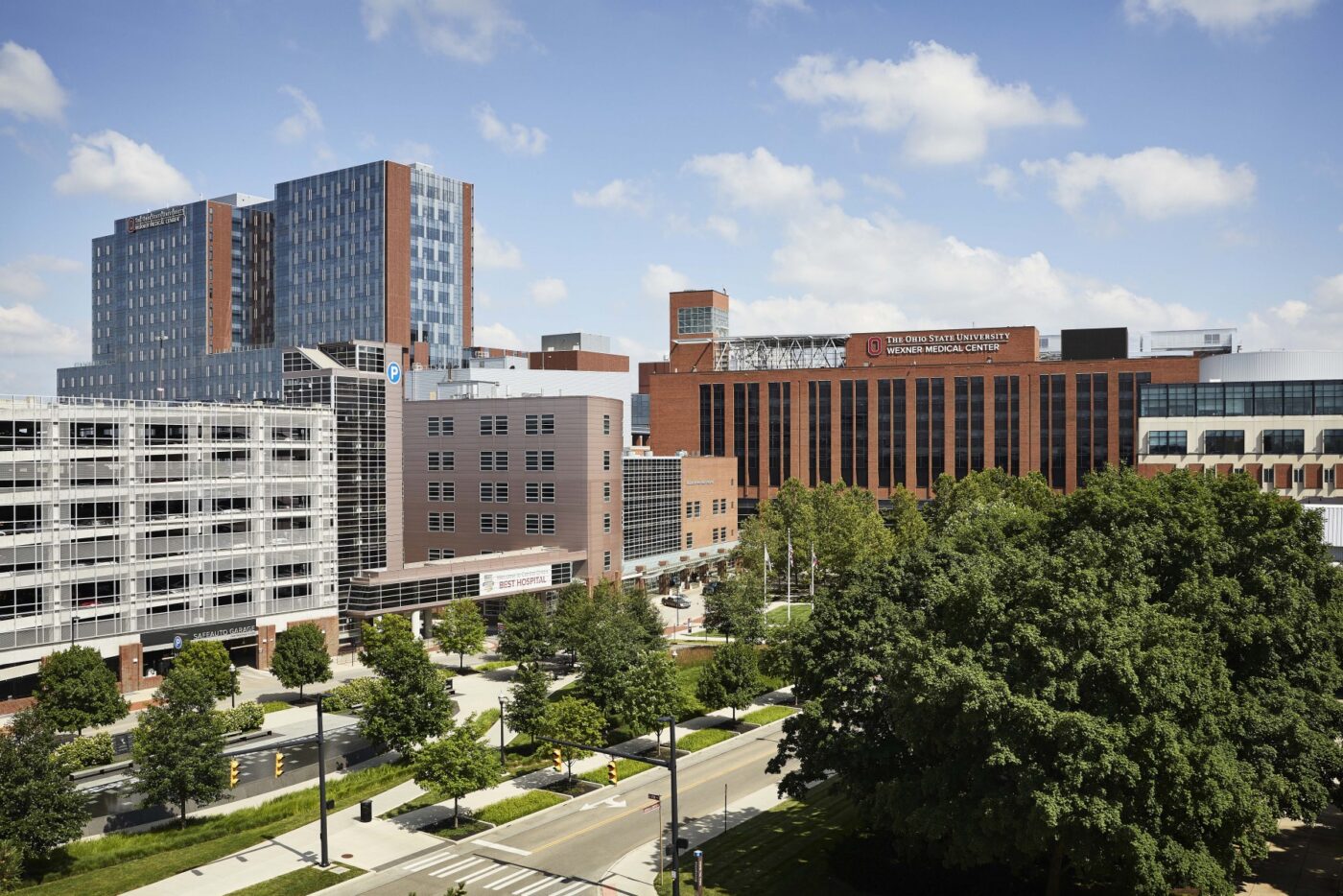
OSU College of Medicine is easily one of the most well-known and respected medical schools in Ohio. The college is located in Columbus, Ohio, and The Ohio State University opened its College of Medicine in 1914. Students learn on the campus of The Ohio State University Wexner Medical Center, whose flagship University Hospital is home to a Level I Trauma Center. The LCME directory lists the college as fully accredited, with its next survey in 2029-30.
Medical Degrees
- Four-year MD (Regular MD)
- Community Medicine MD Track (CMT)
- Three-Year Primary Care Track (PCT)
- MSTP (MD/PhD)
- MD/MBA
- MD/MHA
- MD/MPH
- MD/JD
- ODT/PhD
- DPT/PhD
OSU College of Medicine Highlights
Aside from being known for its connection to the Ohio State Wexner Medical Center, OSU College of Medicine offers a few unique programs and features that set it apart from other medical schools in Ohio.
Three-Year Primary Care Track. This track places students on a fast track to becoming a primary care physician and lets them graduate in three years. It includes a tuition scholarship of up to 50% of in-state tuition for all three years, plus the savings of a year of tuition. Four students in the 2026 entering class were in the PCT, and dual degrees are not available in this track.
LSI curriculum. Ohio State’s Lead.Serve.Inspire. (LSI) curriculum is a three-part, four-year curriculum that integrates basic science learning in the classroom with clinical science applied in a clinical setting. It is competency based and focuses on self-directed learning.
Several ways into the class. Applicants can choose the Regular MD, the Community Medicine MD Track (15 students in the 2026 class), the PCT or MSTP (11 students in the 2026 class). The MD/MHA is the first program of its kind in Ohio.
Ohio State University College of Medicine Selection Factors
The college’s website clearly lists the technical standards every student must meet for admission, retention and graduation, with or without reasonable accommodation. These are not ranking criteria, but they describe the abilities the college expects:
- Intellectual, conceptual, integrative and quantitative abilities
- Stamina
- Observation
- Communication
- Motor skills
- Professional interactions
Beyond those standards, Ohio State reviews applications holistically. Secondary invitations start in early July, go to screened applicants with a verified AMCAS application and a valid MCAT, and require an $80 fee. Interviews for the Regular MD run from August 2026 to March 2027 and consist of two one-on-one virtual interviews, one with a faculty member and one with a medical student or resident.
How Competitive is OSU College of Medicine
In terms of MCAT and GPA scores, there is no minimum score required for application. The best benchmark is the most recent class profile. Here are the admission statistics for the 2026 entering class:
- Applications: 10,116 (1,265 Ohio residents; 8,851 nonresidents)
- Applicants interviewed: 675
- Acceptances: 406
- New entrants: 214
- Ohio residents: 56%
- Class GPA: 3.86 (science GPA 3.81)
- MCAT composite: 513
With 406 acceptances on 10,116 applications, about 4.0% of applicants were accepted. Ohio State attracts a very large nonresident pool: nonresidents filed 8,851 of the applications and make up 44% of the class. To learn more about how to be a competitive applicant at OSU College of Medicine, check out How to Get Into The Ohio State Medical School: The Definitive Guide.

Ohio University Heritage College of Osteopathic Medicine (OUHCOM)
The Ohio University Heritage College of Osteopathic Medicine is a public, state-supported college with three campuses. The Heritage College was established in 1975, and its primary campus is in Athens, Ohio. The college operates under a “one college, three locations” approach: the admission process, requirements and curriculum are the same no matter which campus an applicant prefers. OUHCOM is the only osteopathic medical school in Ohio. It is accredited by the Commission on Osteopathic College Accreditation (COCA), which granted it accreditation for ten years after its most recent comprehensive visit in fall 2021; the next comprehensive visit is in 2031-32.
The three campuses enrolled 990 students in 2026-27:
- Athens (477 students), a traditional university campus in southeast Ohio.
- Cleveland (237 students), in Warrensville Heights, the result of a joint initiative with Cleveland Clinic.
- Dublin (276 students), minutes from downtown Columbus, where OhioHealth is the campus’s lead education partner.
Medical Degrees
- DO
- DO/PhD
- DO/MBA
- DO/MS in Biomedical Engineering
- DO/MPH
- DO/MGH (Master of Global Health)
- DO/MA (IIP)
- Early Assurance Program for Ohio high school seniors (undergraduate degree at a partner school, then the DO)
OUHCOM Highlights
Here are a few things that make OUHCOM unique among the other Ohio med schools.
DO programs. The Ohio University Heritage College of Osteopathic Medicine is the only medical school in Ohio that offers the DO degree instead of the MD. Its mission is to educate physicians committed to practice in Ohio, with an emphasis on primary care and on both Appalachian and urban communities.
Early Assurance for high school students. The college selects outstanding Ohio high school seniors for its Early Assurance Program (EAP). In as few as seven years, students earn an undergraduate degree at a partner school (Baldwin Wallace University, Cleveland State University, John Carroll University, Ohio Dominican University, Ohio University, Otterbein University or Shawnee State University) and then the DO from the Heritage College. Applicants must be Ohio residents who graduate from an Ohio high school with at least a 3.5 unweighted GPA, and the application is open through December 18, 2026. High school students thinking about this route can build early exposure through medical internships for high school students.
A three-year family medicine pathway. With Cleveland Clinic, the Heritage College runs the TCC pathway, an accelerated program that prepares students for careers in family medicine through a continuous experience from medical school through residency and lets participants graduate in three years instead of four.
Summer programs with a guaranteed interview. Premedical students who complete the Summer Undergraduate Research Fellowship (SURF) or Summer Scholars are guaranteed an interview for the DO program.
OUHCOM Selection Factors
Ohio University Heritage College of Osteopathic Medicine reviews applications holistically, and everything on your application counts, from science grades to community service. Beyond grades and test scores, the college looks for clinical experience, volunteer activities, demonstrated leadership, strong letters of recommendation, grade trends, strength of curriculum, maturity and dedication to osteopathic principles and practices. A well-rounded list of work and volunteer experiences is key.
Letters can come from a premedical committee, or from one natural science faculty member who taught you plus a second professor, a licensed physician (DO or MD), a supervisor or another qualified professional. An additional letter from a DO or another health care professional who can speak to your fit for osteopathic medicine is strongly encouraged. Applicants must be U.S. citizens or permanent residents with a degree from an institutionally accredited U.S. institution, and starting with the 2026-2027 cycle the college no longer accepts transfer applications from other osteopathic schools.
How Competitive is OUHCOM?
The college does not set strict GPA and MCAT requirements for Ohio residents. It states that the best predictors of success in its program are a solid natural science GPA and MCAT score, and competitive applicants typically have at least a 3.6 science GPA and a 125 or higher on each MCAT subsection. Applicants with an MCAT below 500 will likely not be considered for an interview, and the college encourages applicants scoring 495 to 500 to retake the exam. As the only DO school in Ohio, it receives thousands of applications, so you will want a competitive application.
Here are a few stats from the entering class of 2026:
- Applicants: 4,896
- Enrolled: 260
- Average overall GPA: 3.67 (science 3.59; non-science 3.79)
- Average MCAT: 505.08 (range 490 to 520)
- Out of state: 8.5%
- First-generation college students: 11.2%
The Heritage College does not publish its number of offers, so its acceptance rate cannot be calculated from its own figures. It offers seats every week once interviews begin in September, and interviews are virtual, so submitting early helps. For 2026-27, full-time tuition and general fees are $21,402 per semester for Ohio residents and $33,332 per semester for out-of-state students, plus $696 per semester in technology fees. If you’d like to learn more about what it takes to get into OUHCOM, check out How to Get Into the Ohio University Heritage College of Osteopathic Medicine: The Definitive Guide. IMA’s guide to AACOMAS explains the osteopathic application service step by step.
University of Cincinnati College of Medicine (UCCOM)
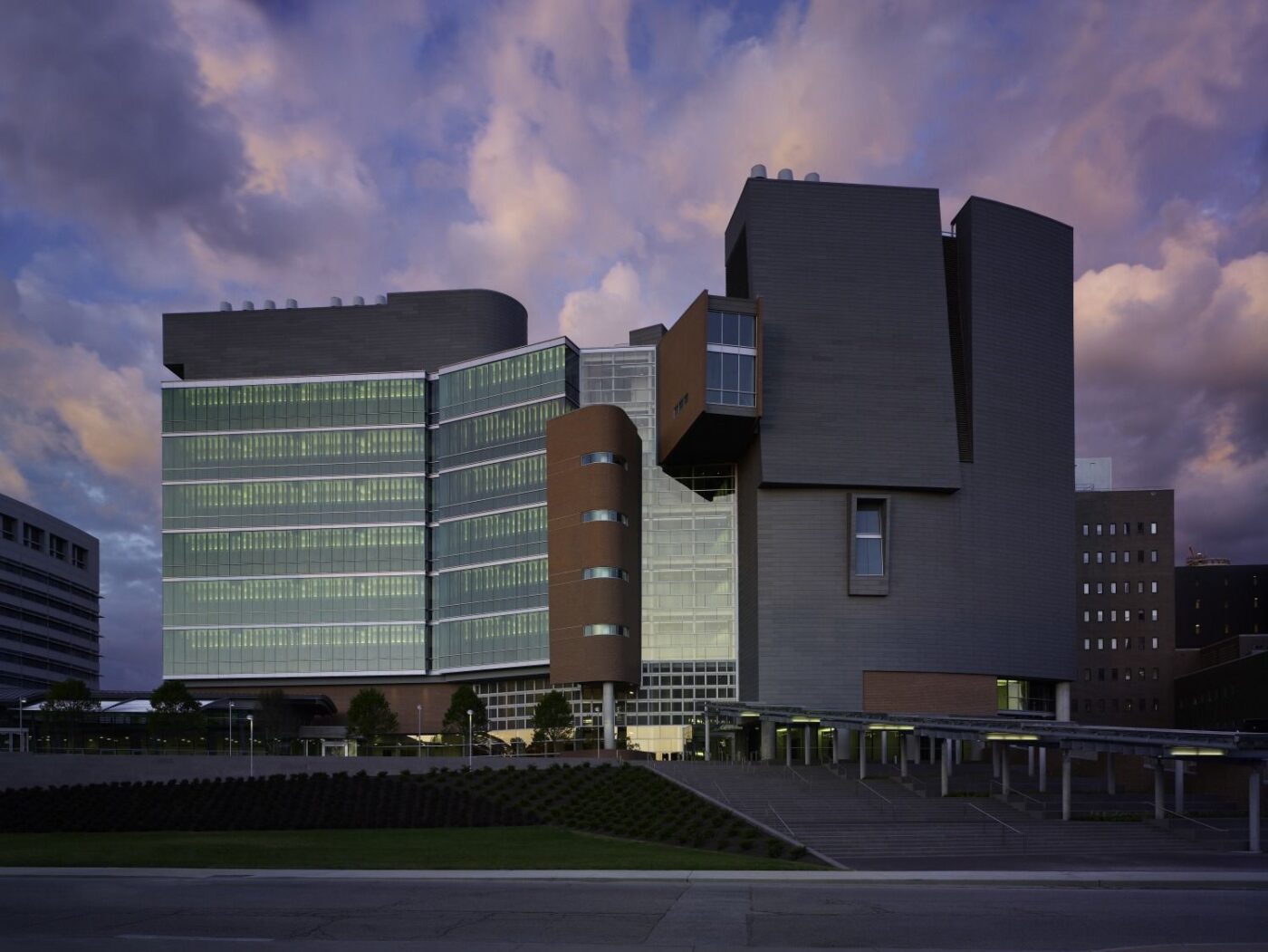
UC College of Medicine is located in Cincinnati. It was founded on January 19, 1819, when frontier physician Daniel Drake received a charter from the Ohio legislature to establish the Medical College of Ohio, and it became the oldest medical school west of the Allegheny Mountains. The LCME directory lists it as fully accredited, with its next survey in 2027-28.
Medical Degrees
- Four-year MD
- MD/MBA
- MD/PhD (Medical Scientist Training Program)
- MD/MPH
UCCOM Highlights
Here is what makes the University of Cincinnati College of Medicine unique among Ohio medical schools.
More than 200 years of medical education. UCCOM is Ohio’s first medical college and the nation’s second-oldest public college of medicine. The college has two centuries of commitment to educating the future physicians of Ohio, and University of Cincinnati Medical Center was founded in 1821 as its first teaching hospital.
A strong, mostly Ohio class. The 2026 entering class posted a class GPA of 3.89, the highest in the state, and an MCAT composite of 515, and 67% of the class were Ohio residents.
UCCOM Selection Factors
The values that UCCOM holds most important are described in detail in its Technical and Health Standards on the college’s website. Every MD student must meet them, with or without reasonable accommodation. Here is an overview of the abilities applicants to UC College of Medicine should have:
- Intellectual, conceptual, integrative and quantitative skills
- Communication skills
- Social and behavioral skills
- Motor coordination and sensory skills
UCCOM considers only U.S. citizens and permanent residents, and permanent residents include a copy of their permanent residency card with the secondary. For the 2027 entering class, you must submit scores from a 2023, 2024, 2025 or 2026 MCAT administration. The college also runs an Early Decision Program for applicants with a compelling reason to attend; for this cycle its deadline was August 3, 2026, and applicants not accepted through Early Decision are deferred to the regular pool.
How Competitive is UCCOM?
UC College of Medicine is very competitive. If you want to be accepted into the school’s MD program, here is the profile of the 2026 entering class:
- Applications: 6,782 (930 Ohio residents; 5,833 nonresidents)
- Applicants interviewed: 576
- Acceptances: 380
- New matriculants: 174
- Class GPA: 3.89 (science GPA 3.87)
- MCAT composite: 515
- Ohio residents: 67%
With 380 acceptances on 6,782 applications, about 5.6% of applicants were accepted. For 2026-27, tuition and fees are $18,654 per semester for Ohio residents and $28,837 for nonresidents, and the first-year cost of attendance is $64,217 for Ohio residents and $84,583 for nonresidents. The regular secondary deadline is December 1, 2026. For more information about UCCOM, check out our definitive guide on how to get into UCCOM.
University of Toledo College of Medicine and Life Sciences
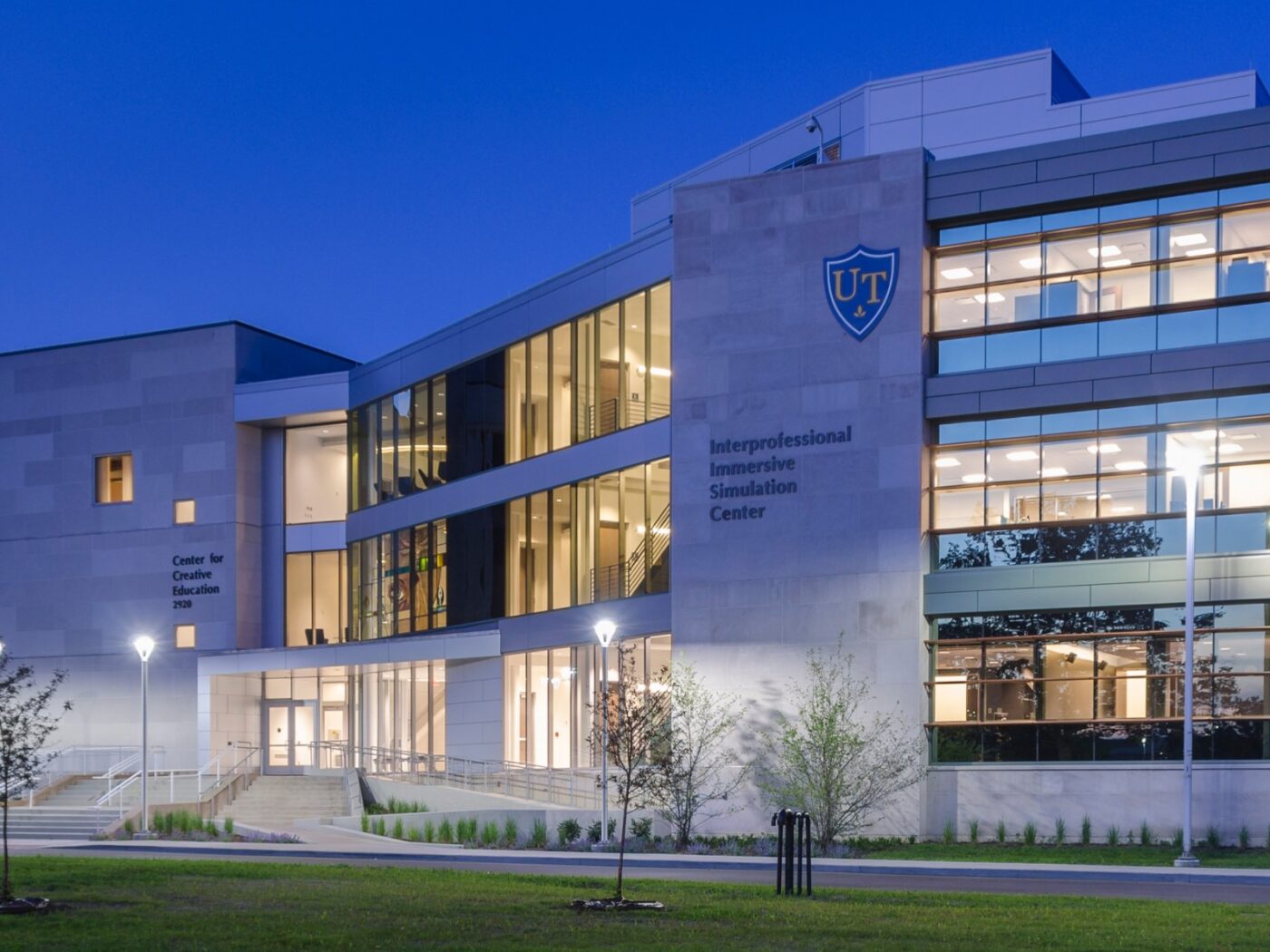
Founded in 1964 and located in Toledo, Ohio, the University of Toledo College of Medicine and Life Sciences began as the Toledo State College of Medicine, a freestanding, state-supported school. It was renamed the Medical College of Ohio in 1967, enrolled its first class of 32 students in 1969 and merged with The University of Toledo in July 2006. Today it is one of seven Ohio medical schools students can choose from, and the LCME directory lists it as fully accredited, with its next survey in 2028-29.
Medical Degrees
- Four-year MD
- MD/MBA
- MD/JD
- MD/PhD, with tracks in cell and cancer biology, molecular medicine, and medical microbiology and immunology
- MD/MPH
- Master of Science in Biomedical Sciences (M.S.B.S.), a one-year graduate pathway for students preparing for medical school
University of Toledo Highlights
What sets this medical school apart from the rest?
Health Science Campus. The medical school sits on the university’s Health Science Campus in south Toledo, three miles from the Main Campus. The University of Toledo Medical Center, the university’s own hospital, is on the same campus.
A residency pipeline at home. The University of Toledo Medical Center and the college’s affiliated programs are a nearby choice for residency. On Match Day 2026, 164 fourth-year students matched in 24 specialties; 21 of them (13%) matched at UToledo, and 64 (39%) matched in Ohio.
Early assurance routes. MedStart lets strong college juniors at any accredited U.S. college reserve a seat in the next year’s MD class, and the BACC2MD program links UToledo undergraduates to the MD program. The M.S.B.S. accepts about 50 students a year, and historically 65 to 80 percent go on to matriculate into medical school the following year.
University of Toledo College of Medicine and Life Sciences Selection Factors
The university reviews applicants holistically. Applications first go through a preliminary screen of academic record and MCAT, and only applicants who pass receive the secondary; there is no fee for the screen. With most schools that take a holistic approach, it is crucial to submit a well-rounded application that showcases your clinical, work and volunteer experiences.
The basic requirements for the 2027 cycle are U.S. citizenship or permanent residency (with the green card held at the time of application), a bachelor’s degree from an accredited U.S. college or university, MCAT scores taken within five years of the anticipated matriculation year, a UToledo secondary and at least three letters of recommendation. Interviews use the multiple mini interview (MMI) format, and acceptances are offered on a rolling basis beginning after October 15.
How Competitive is the University of Toledo?
All academic benchmarks for the university come from the latest class profile. Here are the admission statistics for the 2026 entering class:
- Applications: 7,051 (1,217 Ohio residents; 5,834 non-Ohio residents)
- Students enrolled: 175
- Ohio residents: 109 (62%), including 40 from Northwest Ohio
- Non-Ohio residents: 66 (38%)
- Average total GPA: 3.81 (science GPA 3.75)
- Average total MCAT: 510 (79th percentile)
Toledo publishes applications and enrollment but not the number of offers, so its acceptance rate cannot be calculated from its own figures. Its 2025-26 first-year budget, the newest posted, was $68,352.80 for Ohio residents and $104,181.68 for nonresidents. AMCAS applications are accepted from June 30 through November 15, and the secondary deadline is December 15. Students who want to know more about how to prepare a competitive application should check out How to Get Into University of Toledo College of Medicine: The Definitive Guide.
Wright State University Boonshoft School of Medicine (WSU)
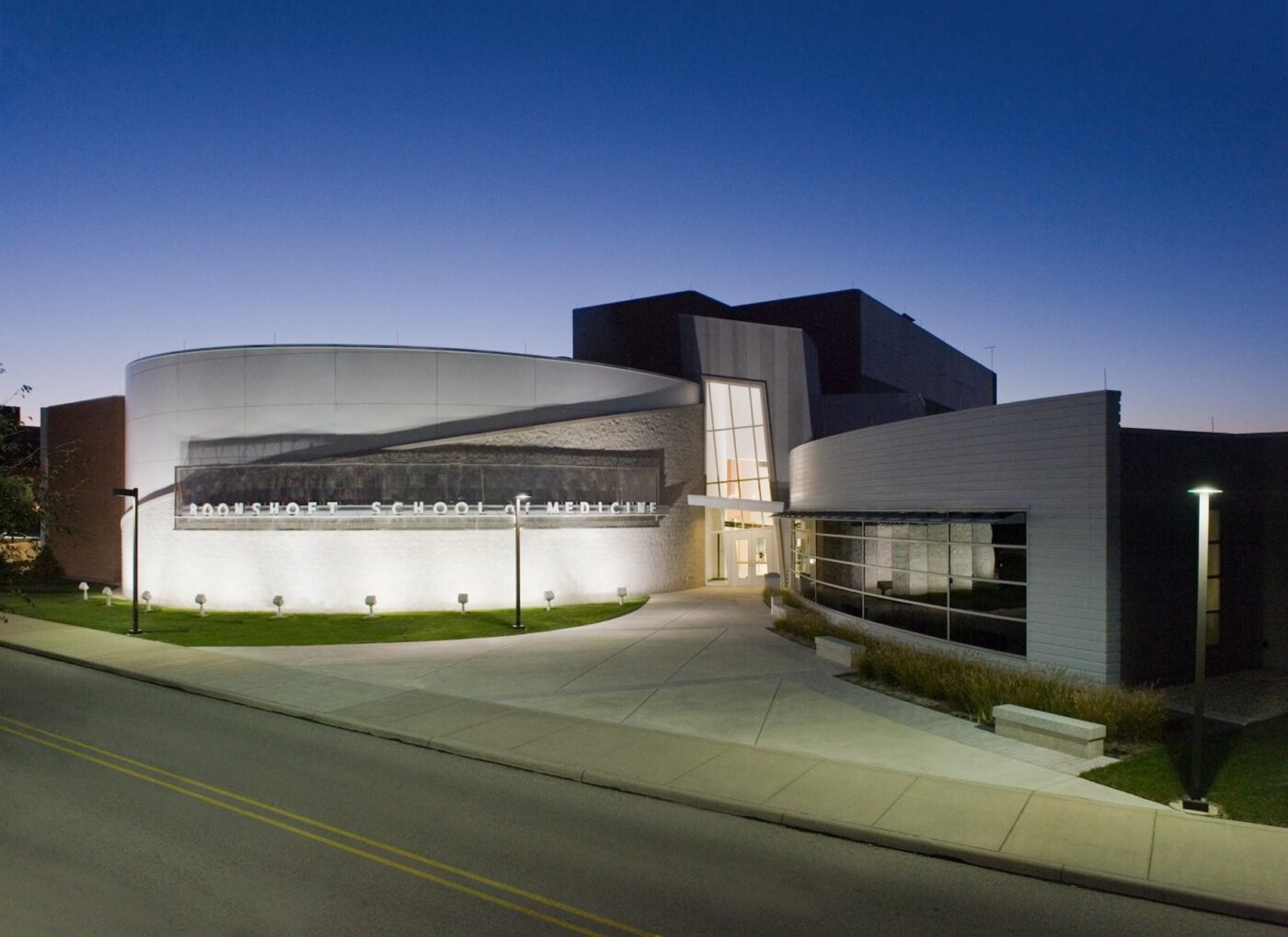
Wright State University Boonshoft School of Medicine is a public, community-based medical school in Dayton, Ohio. Like about one fifth of the nation’s MD schools, it does not own or operate a university hospital; instead it partners with six major teaching hospitals and two federal institutions for clinical training. The LCME has accredited the school since 1976, and in July 2026 it welcomed 130 new medical students at its 51st Convocation and White Coat Ceremony. The school prides itself on its social mission: a 2010 study in the Annals of Internal Medicine ranked it fourth in the nation for social mission, and in the 2026 U.S. News & World Report Best Graduate Schools rankings it was No. 1 in Ohio for producing primary care physicians.
Medical Degrees
- Four-year MD
- MD/PhD
- MD/MBA
- MD/MPH
- M.D. in Three
WSU Highlights
There are a few things that make Wright State University Boonshoft School of Medicine unique.
M.D. in Three. One of the few fast-track MD programs in Ohio, the M.D. in Three follows the WrightCurriculum in a condensed format and offers direct progression into a Boonshoft School of Medicine residency in family medicine, rural family medicine or pediatrics. Up to 10 students per cohort are admitted.
WrightCurriculum. The college’s MD curriculum has two phases: Foundations of Clinical Practice (73 weeks) and the Doctoring Phase (102 weeks).
A pioneer in emergency medicine. Wright State created the fourth academic Department of Emergency Medicine in the United States and started one of the first 10 emergency medicine residency programs, which graduated its first class in 1980.
WSU Selection Factors
When reviewing applicants, the admissions committee at Wright State looks for applicants who meet the Boonshoft School of Medicine mission. That includes evidence of:
- Intellectual ability
- Dedication to human concerns
- Communication skills
- Maturity
- Motivation
- Potential for medical service in an underserved area of Ohio
Strong interpersonal skills, work with diverse groups, leadership, research literacy and volunteer service all fit within these qualities, so describe them fully in your application. Applicants must be U.S. citizens, permanent residents or non-citizens with an I-94 showing refugee or asylum granted status.
How Competitive is Wright State University Boonshoft School of Medicine?
The university requires applicants to have a minimum MCAT score of 495. The MCAT must be taken no more than three years before you apply and no later than September of the application year, which for this cycle means September 2026. While there is a strict minimum MCAT score, there is no published minimum GPA. Here are the admission statistics from the Class of 2028, the newest class profile the school has posted:
- Applicants: 6,338
- Interviews granted: 468
- Matriculated: 130
- From Ohio: 66% (30% from Raider Country)
- Average highest MCAT: 508.76
- Average undergraduate science (BCPM) GPA: 3.68
Wright State publishes applicants and interviews but not offers, so its acceptance rate cannot be calculated from its own figures. For 2026-27, first-year tuition and fees are $54,671 for Ohio residents and $87,263 for nonresidents. Ohio residents can apply through Early Decision by August 1; Regular Decision applicants submit AMCAS by November 1 and the secondary by December 1. If you’d like more information about WSU’s selection factors, check out How to Get Into Wright State University Boonshoft School of Medicine: The Definitive Guide.
Good Luck!
We hope this article gives you a clear picture of the Ohio medical school admissions process, from the research-heavy programs in Cleveland to the community-based school in Dayton and the osteopathic college in Athens, Cleveland and Dublin. If you are still asking yourself, “What are the best medical schools near me?”, check out our other medical school guides for further tips and advice.
Don’t hesitate to reach out to IMA for medical school admissions consulting or to learn more about the clinical internships described below.
Frequently Asked Questions
How many medical schools are in Ohio?
Ohio has seven medical schools. Six grant the MD: Case Western Reserve University School of Medicine, Northeast Ohio Medical University, The Ohio State University College of Medicine, the University of Cincinnati College of Medicine, the University of Toledo College of Medicine and Life Sciences and Wright State University Boonshoft School of Medicine. The seventh, the Ohio University Heritage College of Osteopathic Medicine, grants the DO. Counting Case Western’s Cleveland Clinic Lerner College of Medicine as its own program, applicants have eight programs to choose from.
Is there a new medical school opening in Ohio?
Not as of October 2026. The LCME directory lists six Ohio MD schools, all fully accredited, and the only proposed osteopathic college holding candidate status nationwide is in Kansas. The Heritage College remains Ohio’s only DO school, with campuses in Athens, Cleveland and Dublin.
What is the easiest medical school to get into in Ohio?
No Ohio medical school is easy to get into. Among schools that publish both applicants and acceptances, NEOMED accepted about 11.6% of applicants for Fall 2026, compared with about 5.6% at the University of Cincinnati and about 4.0% at Ohio State. The Heritage College has the lowest published class MCAT average in the state, 505.08, and it sends a secondary to every Ohio resident who applies.
Which medical schools in Ohio accept out-of-state students?
All of them. Case Western Reserve and the Lerner College Program give no preference to Ohio residents, and 86% of Case Western’s 2026 class came from outside Ohio. Ohio State (44% nonresidents), Toledo (38%) and Cincinnati (33%) enroll large numbers of nonresidents. NEOMED (23.5%), Wright State (about 20%) and the Heritage College (8.5%) enroll mostly Ohio residents.
What MCAT score do I need for medical school in Ohio?
It depends on the school. The latest class averages are 518 at Case Western Reserve, 515 at Cincinnati, 513 at Ohio State, 511 at NEOMED, 510 at Toledo, 508.76 at Wright State (Class of 2028) and 505.08 at the Heritage College. Screening rules differ too: Case Western requires at least 502 to send a secondary, Wright State sets a minimum of 495, and the Heritage College requires 495 for nonresidents and rarely interviews applicants below 500.
What GPA do I need for medical school in Ohio?
The latest average GPAs are 3.89 at Cincinnati, 3.87 at Case Western Reserve, 3.86 at Ohio State, 3.81 at Toledo, 3.76 at NEOMED and 3.67 at the Heritage College. Wright State reports an average science GPA of 3.68 for its Class of 2028. None of the MD schools publishes a minimum GPA for traditional applicants; the Heritage College requires a 3.0 science GPA for nonresidents to receive a secondary.
Which is the cheapest medical school in Ohio?
For Ohio residents, the University of Cincinnati lists the lowest 2026-27 first-year cost of attendance among the schools that publish one, $64,217, with tuition and fees of $18,654 per semester. Ohio State charges per credit hour, about $33,185 for two semesters for Ohio residents by IMA’s estimate. For nonresidents, Cincinnati’s first-year cost of attendance is $84,583. The Lerner College Program covers tuition for every student with a full-tuition scholarship.
Do Ohio medical schools accept international students?
Case Western Reserve’s University Program and the Lerner College Program accept international applicants, including Canadians, and DACA applicants, and evaluate them the same way as U.S. citizens. Case Western’s MSTP, NEOMED, Cincinnati, Toledo and the Heritage College consider only U.S. citizens and permanent residents, and Wright State also considers refugees and asylees. IMA’s list of medical schools that accept international students covers options in other states.
Is Cleveland Clinic Lerner College of Medicine part of Case Western?
Yes. It is one of three MD programs of Case Western Reserve University School of Medicine, alongside the four-year University Program and MSTP. It shares the CWRU secondary and deadlines but has its own class of 32, a five-year research curriculum and a full-tuition scholarship for every student.
Does the Heritage College have one campus or three?
Three. The Heritage College is one college with locations in Athens, Cleveland (Warrensville Heights) and Dublin. Admission requirements and curriculum are the same at every campus. In years 3 and 4, Cleveland students generally complete clinical rotations in Northeast Ohio, Dublin students in central Ohio and Athens students throughout the rest of the state.
How much clinical experience do Ohio medical schools want?
Ohio’s MD schools do not set an hour count for traditional applicants, but all of them look for meaningful patient contact, and the Heritage College lists clinical experience first among the factors it weighs beyond grades. Supervised programs such as IMA’s pre-health internships can add hands-on hours alongside the clinical work you do in Ohio.
When should I apply to medical schools in Ohio?
Apply early in the AMCAS or AACOMAS cycle, because Ohio schools review on a rolling basis. For the 2026-2027 cycle, Case Western’s AMCAS deadline was October 15, 2026, NEOMED’s and Wright State’s are November 1, Ohio State’s is November 2 and Toledo’s window closes November 15. Most secondary deadlines fall between November 15 and December 15. The Heritage College accepts AACOMAS applications until February 1, 2027, but it offers seats weekly once interviews begin in September.
Do Ohio medical schools offer early decision or early assurance?
Several do. NEOMED, Cincinnati and Wright State run Early Decision programs, and Wright State’s is limited to Ohio residents. Case Western and the Lerner College Program do not offer early decision. For early assurance, NEOMED partners with ten Ohio colleges, Toledo runs MedStart for college juniors and BACC2MD for UToledo undergraduates, and the Heritage College’s Early Assurance Program admits Ohio high school seniors.
IMA Resources
International Medical Aid (IMA) offers useful tools and memorable experiences to pre-health students, medical students and clinicians. Our global internship opportunities give participants experiences that shape them as future doctors and as people.
IMA’s pre-med internships give students the opportunity to work with patients who live in underserved parts of the world and lack access to consistent, quality medical care. These internships for pre-med students run in teaching hospitals in Mombasa, Kenya and Cusco, Peru, where interns take vitals, do intake and triage and help with direct care under supervision, and they never perform tasks that would require a medical license in the United States. IMA’s medical internships abroad also include programs for nursing, pre-PA, mental health and other health careers. This clinical experience can stand out to the admissions committees of medical schools in Ohio.
IMA also offers medical school admissions consulting to help applicants gain acceptance to the medical school of their choice. Our experts provide one-on-one, personalized guidance, tips and coaching throughout the process, and guidance on essay writing and mock interviews goes a long way.
Another IMA resource you may find useful is our Medical School Secondary Essay Prompts Database. Take the secondary essay section seriously. It is a big part of how admissions committees make their decisions, because it gives them a glimpse of what makes you unique, how you will contribute on campus and what kind of physician you are likely to become.
Sources
- Case Western Reserve University School of Medicine: MCAT requirements (2026-2027, entering class of 2026); Admission Requirements; Letters of Recommendation; 2026-2027 Admissions Timeline; Entering Class 2026 profile; Estimated Cost of Attendance 2026-27; MD Admissions FAQs; Dual Degrees; Pathways Programs; About the University Program; About; History. Checked October 17, 2026.
- Cleveland Clinic Lerner College of Medicine: About; Admissions FAQ; Criteria and Requirements; Estimated Cost of Attendance 2026-2027; Tuition and Financial Aid. Checked October 17, 2026.
- Northeast Ohio Medical University: Fall 2026 Entering Student Profile; Tuition and Fees 2026-27; Cost of Attendance 2026-27; How to Apply; Traditional Admission (2026-27 important dates); Early Assurance; College of Medicine home; University History and Mission; Match Day 2026. Checked October 17, 2026.
- The Ohio State University College of Medicine: 2026 Entering Class Profile; Deadlines (2026-2027 cycle); How to Apply; Admission Requirements; Technical Standards; Three-Year Primary Care Track; Community Medicine MD Track; LSI Curriculum; Dual Degree Programs; History. The Ohio State University Registrar, Professional Tuition and Fees 2026-2027. Checked October 17, 2026.
- Ohio University Heritage College of Osteopathic Medicine: Admission Requirements; Admissions FAQ; Student and Alumni Facts; Apply; Early Assurance Program; Dual-Degree Programs; Accreditation; Financing Medical School. Ohio University Bursar, College of Medicine Tuition and Fees 2026-27. AACOM Choose DO Explorer, Ohio University Heritage College of Osteopathic Medicine (2026-2027 cycle). Checked October 17, 2026.
- University of Cincinnati College of Medicine: Class Profile (2026 entering class); Tuition 2026-27; First-Year Cost of Attendance 2026-27; Admissions FAQs; Application Requirements; Regular Admissions Timeline; Early Decision Program; Technical and Health Standards; MD/MBA, MD-MPH and MSTP pages; About; History. Checked October 17, 2026.
- University of Toledo College of Medicine and Life Sciences: 2026 Entering Class Profile; MD Admissions; MD Admissions FAQ; Pathways to Admission; MD Financial Aid and 2025-26 Year One Cost of Attendance; MD Dual Degrees; MD Program Overview; History; Match Day 2026. Checked October 17, 2026.
- Wright State University Boonshoft School of Medicine: Prerequisites and Application (Profile of the Class of 2028); Admissions Policies and Procedures; Financial Aid (2026-2027 tuition and fees); Cost of Attendance 2026-27 budget; About; Accreditation; WrightCurriculum; M.D. in Three; Dual Degree Programs; Newsroom, July 22, 2026 and April 9, 2026. Checked October 17, 2026.
- Liaison Committee on Medical Education, Directory of Accredited Programs (updated October 14, 2026).
- American Osteopathic Association, Commission on Osteopathic College Accreditation: Colleges of Osteopathic Medicine directory (September 2026) and Candidate Status list. Checked October 17, 2026.