Oral health is a global health issue, and it is one of the most underrecognized ones. The World Health Organization estimates that oral diseases affect nearly 3.5 billion people worldwide, making dental caries the single most common health condition on the planet. For pre-dental students, that number should be impossible to ignore. Yet the typical path to dental school in the United States rarely requires students to reckon with what oral health looks like outside well-resourced clinical settings. The result is a gap, not in technical skill, but in perspective, adaptability, and understanding of the forces that shape oral health outcomes across populations.
This is not an argument against domestic training. Strong clinical foundations matter, and U.S. dental education programs are rigorous for good reason. But if your professional development has only exposed you to patients who have insurance, access to fluoridated water, routine preventive care, and a functioning referral system, you are seeing a narrow slice of the global oral health picture. That narrowness has consequences for how you think about disease, prevention, public health, and your own career. This article lays out what the global oral health landscape actually looks like, where the gaps in domestic-only training tend to show up, and how structured international experience can fill those gaps responsibly.
The Scale of Global Oral Health Disparities
The numbers alone tell a story that most pre-dental students have not been asked to sit with. According to the WHO’s oral health fact sheet, oral diseases affect an estimated 3.5 billion people, with untreated dental caries in permanent teeth being the most prevalent condition worldwide. Roughly 40% of children aged five to nine have caries in their primary teeth. In low- and middle-income countries, the majority of those cases go untreated.
The reasons behind those numbers are structural, not individual. In many parts of sub-Saharan Africa, South America, and Southeast Asia, the dentist-to-population ratio is a fraction of what it is in the United States. Public health systems in these regions are typically underfunded and understaffed. Patients may travel hours to reach a clinic, only to find that the available care is limited to emergency extractions because there is no equipment or workforce for restorative work. Preventive measures that U.S. students take for granted, like community water fluoridation and affordable fluoridated toothpaste, are inconsistent or absent in many countries.
These disparities do not exist in a vacuum. Poverty, malnutrition, limited education, and lack of clean water all compound oral health outcomes. In some regions, conditions like noma, a severe gangrenous disease affecting the face, still occur. Noma is linked to extreme malnutrition and poor hygiene and is almost unheard of in high-income countries. The point is not to catalog suffering. It is to recognize that the oral health challenges affecting most of the world’s population are fundamentally different from what you will encounter in a domestic predoctoral clinic.
What Domestic Training Covers Well, and What It Leaves Out
U.S. dental education is built around a specific clinical reality. Students train in settings with reliable sterilization equipment, digital imaging, a full range of restorative materials, and patients who, for the most part, present before disease has reached its most advanced stages. This training produces technically skilled clinicians. That is its purpose, and it succeeds at it.
What it does not reliably produce is an understanding of how oral health operates as a public health problem. Most pre-dental students complete their undergraduate years with strong science GPAs and competitive DAT scores. If you are preparing for the DAT, resources like the IMA’s definitive guide to the Dental Admission Test can help you approach that milestone with confidence. But academic preparation for the admissions process and professional preparation for the realities of oral healthcare are two different things.
The Clinical Comfort Zone
In a well-equipped domestic clinic, the most common procedures are cleanings, fillings, crowns, and cosmetic work. Patients generally have some baseline level of oral health literacy. They understand what a cavity is, why flossing matters, and when to seek care. The clinician’s job is to diagnose, treat, and maintain.
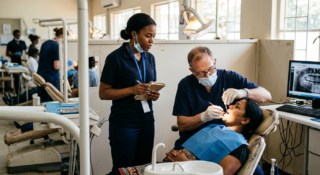
In resource-limited settings, the clinical picture changes dramatically. Advanced dental caries is the norm, not the exception. Periodontal disease progresses unchecked for years. Oral infections that would be caught early in the U.S. present as emergencies. Patients may have never seen a dentist before. The tools available might be limited to extraction forceps, a basic examination kit, and whatever supplies a mobile clinic can carry. Working in or even observing these settings forces a fundamentally different kind of clinical thinking, one centered on triage, prevention at the population level, and creative problem-solving within real constraints.
The Social Determinants Gap
Dental schools are increasingly incorporating social determinants of health into their curricula. That is a positive trend. But reading about the relationship between poverty and oral disease is not the same as observing it firsthand. When you see a seven-year-old with severely decayed primary teeth in a community where sugar-sweetened beverages are more accessible than clean water, the concept of “social determinants” stops being abstract. It becomes a clinical reality that you have to factor into every assessment and recommendation.
The connection between oral health and systemic health adds another layer. Research documented by the NIH’s National Institute of Dental and Craniofacial Research has established links between periodontal disease and conditions including diabetes, cardiovascular disease, and adverse pregnancy outcomes. In settings where patients lack access to both dental and general medical care, these connections play out in ways that are difficult to appreciate from inside a domestic training environment.
How International Experience Builds a Different Kind of Readiness
Structured international experience does not replace dental school training. It is not meant to. What it does is expose pre-dental students to clinical realities, public health frameworks, and interpersonal challenges that domestic settings rarely provide. When that exposure is well-supervised, ethically grounded, and intentionally reflective, it builds professional readiness in ways that admissions committees and future patients both benefit from.
Observing and Supporting in Resource-Limited Clinics
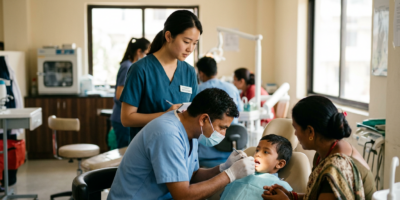
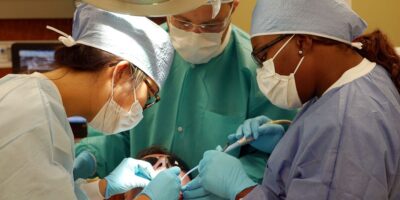
In a structured program, students typically observe licensed dental professionals and support clinical work within clearly defined limits. That might mean assisting with oral health screenings, helping set up a mobile clinic in a rural school, or providing oral hygiene education to children and families. In some programs, students may assist with basic procedures like fluoride application under direct supervision, depending on their training level and local regulations.
The key word is “observe and support.” Ethical programs do not put untrained students in the position of providing unsupervised care. The value of the experience comes from watching how experienced clinicians adapt to limited resources, how they communicate across language and cultural barriers, and how they make difficult triage decisions when they cannot treat every patient who shows up. These are lessons you absorb through proximity and reflection, not through performing procedures you are not yet qualified to do.
Developing Cultural Competence That Actually Means Something
Cultural competence is a requirement in dental education, and most students can articulate its importance. But competence is built through experience, not just coursework. Working in a community where patients may rely on traditional remedies that affect oral health, where communication styles differ from what you are used to, or where attitudes toward dental care are shaped by decades of limited access requires you to listen more carefully, adapt your communication, and check your assumptions.
This kind of learning is difficult to simulate in a classroom. It requires real interaction with real people in real settings. When students describe these experiences in dental school applications, the specificity matters. Saying “I developed cultural competence” is vague. Saying “I worked alongside a clinical officer in a rural Kenyan health center and learned how limited dental workforce capacity shapes the kind of care that communities actually receive” is concrete and meaningful.
What This Means for Dental School Applications
Admissions committees at dental schools are evaluating more than grades and test scores. They want evidence of commitment to service, adaptability, ethical awareness, and an understanding of healthcare delivery beyond the walls of a private practice. International experience, when it is genuine and well-structured, provides material for all of those criteria.
Personal Statements and Interviews
A strong personal statement draws on specific moments, not general claims. If you participated in a structured dental program abroad, you might write about a particular patient interaction that challenged your understanding of access to care. You might describe the process of adapting oral health education materials for a community with low literacy rates. You might reflect on what it meant to observe a dentist perform an extraction as the only available treatment for a condition that, in the U.S., would have been caught and treated years earlier.
In interviews, dental schools often ask about ethical dilemmas, teamwork in unfamiliar environments, and your understanding of health disparities. International experience gives you real stories to draw on, not hypothetical answers. The specificity of those stories matters more than the dramatic impact. An honest, reflective account of what you observed and what it taught you about oral health systems will resonate more than a polished narrative about “making a difference.”
Building a Well-Rounded Experiences Section
Quantifiable details help. If you provided oral health education to a specific number of children, assisted in a certain number of clinic days, or worked within a particular community health structure, include those details. Frame the experience in terms of skills developed: communication across language barriers, teamwork in resource-constrained settings, understanding of public health infrastructure, and adaptability to unfamiliar clinical environments.
If you are building your broader pre-dental experience profile, it helps to understand how dental internships fit into the larger picture. The IMA blog covers this topic in a post on whether dental students do internships, which is worth reviewing as you plan your timeline.
Ethical Responsibilities Pre-Dental Students Cannot Afford to Overlook
Any time a student participates in clinical work abroad, ethics must be front and center. This is not a box to check. It is a professional obligation that starts before you board a plane and continues long after you return.
Scope of Practice and Supervision
Pre-dental students are not licensed clinicians. In any international setting, students must operate within the boundaries of their training and under direct supervision by licensed professionals. This means no unsupervised patient care, no procedures beyond your competence, and no exceptions. Programs that blur these lines are not preparing you for a professional career; they are putting patients and students at risk.
Strong programs make supervision structures explicit. They clarify what students will and will not do before the experience begins. If a program cannot clearly articulate its supervision model, that is a serious red flag.
Patient Autonomy, Consent, and Privacy
Respecting patient autonomy means accepting that patients in other countries may make health decisions that differ from what you would recommend. It means obtaining informed consent before any interaction, including photography. It means never posting images of patients on social media without explicit permission, and even then, considering whether doing so serves the patient’s dignity or your own narrative. These are professional standards, not optional courtesies.
Avoiding the Voluntourism Trap
There is a meaningful difference between structured, supervised learning experiences and voluntourism. Voluntourism often prioritizes the participant’s feelings over the community’s needs. It can create dependency, undermine local healthcare providers, and produce more harm than good. Ethical programs are designed around the needs of the host community, incorporate local professionals in leadership roles, and treat students as learners, not saviors.
If you want to go deeper on how to evaluate programs and think critically about global health ethics, the IMA’s guide to global health books and podcasts is a practical place to start building that foundation before you commit to any program.
Dental Public Health as a Career Lens, Not Just an Elective
For some pre-dental students, international experience confirms a career direction they had already been considering. Dental public health is a recognized specialty, and the ADEA’s resources on dental education programs describe it as focused on preventing and controlling dental disease at the community and population level. It is a field that requires exactly the kind of systems-level thinking that international experience cultivates.
You do not need to commit to a public health career to benefit from this perspective. Even if you ultimately practice in a private domestic setting, understanding how oral health functions as a public health issue makes you a more informed clinician. You will be better equipped to treat patients from diverse backgrounds, advocate for community health initiatives, and contribute to policy conversations about access to care. Dentistry does not exist in isolation from the systems that determine who gets care and who does not. The sooner you understand those systems, the more effective you will be, regardless of where you practice.
Choosing an International Dental Experience That Respects Your Goals and Your Ethics
Not all international programs are created equal. As a pre-dental student, you should evaluate any program based on a clear set of criteria: Is the supervision model explicit and enforced? Are local professionals involved in program design and delivery? Does the program clearly define what students will and will not do clinically? Is there a structured reflection component? Is the host community’s well-being centered, not just the student’s experience?
You should also think about timing and fit. An international experience is most valuable when you have enough baseline knowledge to understand what you are observing, but early enough in your training that it can shape your thinking about career direction, application strategy, and professional development. For most pre-dental students, that sweet spot is during the undergraduate years, after completing foundational science coursework.
Ask hard questions before committing. What does a typical day look like? Who supervises clinical activities, and what are their credentials? How does the program handle emergencies? What orientation and cultural preparation are provided? How does the program ensure that its presence benefits the host community over time, not just during your visit?
The answers to these questions will tell you whether a program is serious about ethics, safety, and education, or whether it is primarily selling an experience. Trust your judgment. If something feels off, it probably is.
Frequently Asked Questions
Will international dental experience count toward dental school admission requirements?
International experience is not a substitute for required coursework, DAT scores, or specific prerequisite hours. However, it can strengthen your application by demonstrating commitment to underserved populations, cultural competence, and adaptability. Admissions committees value concrete, well-reflected experiences, and a structured international program can provide meaningful material for your personal statement, interviews, and experiences section.
What clinical tasks can pre-dental students perform during an international program?
Pre-dental students are not licensed to practice dentistry. In ethical, structured programs, students observe licensed dental professionals, assist with tasks like oral health screenings and education, and may support basic procedures such as fluoride application under direct supervision. The emphasis is on learning through observation, reflection, and supervised support, not on performing clinical procedures independently.
How do I tell the difference between a legitimate program and voluntourism?
Legitimate programs have explicit supervision structures led by licensed professionals, clearly defined student roles, partnerships with local healthcare providers, and a long-term relationship with the host community. Voluntourism programs tend to emphasize the participant’s experience over community needs, may lack qualified supervision, and often have vague descriptions of clinical involvement. Ask specific questions about supervision, scope of practice, and community benefit before enrolling.