The PA role in global health scope of practice looks different depending on which country you are standing in. For pre-PA students, that difference is not just academic trivia. It shapes how you understand your future profession, how you talk about healthcare systems in interviews, and how you think about the relationship between training, autonomy, regulation, and patient outcomes. If you are considering a structured international health experience as part of your preparation for PA school, understanding these differences before you go will make the experience far more valuable once you are there.
In the United States, physician assistants practice medicine under a defined relationship with a supervising physician, though the degree of oversight varies by state. In Kenya, a different kind of mid-level provider, the Clinical Officer, fills a similar but distinct role under very different conditions. These two professions share a common thread: both exist because healthcare systems need well-trained providers who can extend the reach of physicians and serve patients who might otherwise go without care. But the training pathways, legal frameworks, and day-to-day responsibilities differ in important ways. Programs like those offered by International Medical Aid (IMA) give pre-PA students a structured setting to observe those differences firsthand, with professional supervision and guided reflection built into the experience.
How Scope of Practice Shapes the PA Profession in the U.S.
Scope of practice is the legal and professional boundary that defines what a healthcare provider can and cannot do. For PAs in the United States, this includes diagnosing illness, developing treatment plans, prescribing medications, and assisting in surgery. According to the Bureau of Labor Statistics occupational outlook for PAs, the profession is projected to grow by 27% from 2022 to 2032, reflecting a healthcare system that increasingly depends on PAs to deliver care across specialties and settings.
But scope of practice is not uniform across the country. Some states grant PAs significant prescriptive authority and reduced supervisory requirements. Others maintain stricter oversight rules. This variability means that even within one country, the daily reality of being a PA can look quite different from one state to the next. Understanding this variation at home is important groundwork before you start looking at how mid-level providers operate in other countries.
For pre-PA students, scope of practice is also a concept that comes up in applications. Admissions committees want to know that you understand what a PA actually does, not just in theory, but in practice. They want to see that you can articulate why the profession appeals to you specifically, and that you have observed enough clinical work to speak credibly about the role. This is where a comparison between the U.S. PA model and international equivalents becomes more than an interesting topic. It becomes a way to demonstrate genuine professional awareness.
If you are still clarifying where the PA role fits relative to other healthcare professions, a useful starting point is this comparison of how physician assistants and physicians differ in scope and training, which breaks down the key distinctions in education length, clinical authority, and team-based care.
Clinical Officers in Kenya: A Different Model for Mid-Level Care
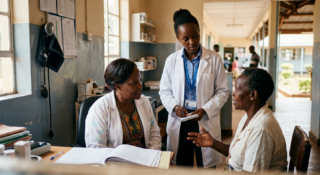
Kenya’s healthcare system relies heavily on a cadre of providers called Clinical Officers. These professionals occupy a space in the healthcare workforce that has some structural similarities to the PA role in the U.S., but the context, training, and regulatory framework are different enough to make a direct equivalence misleading.
Training and Education
Clinical Officers in Kenya complete a diploma or degree program that typically lasts three to four years. The curriculum covers a broad range of clinical topics: diagnostics, pharmacology, treatment protocols, and minor surgical procedures. Some Clinical Officers go on to specialize in areas such as anesthesia, ophthalmology, or reproductive health through additional postgraduate training.
By comparison, PA programs in the U.S. require a master’s degree, generally completed over 27 to 28 months of intensive didactic and clinical education. Most applicants enter PA school with a bachelor’s degree and thousands of hours of direct patient care experience. The depth and duration of training differ substantially, which matters when comparing what each provider is prepared to do.
Scope of Practice and Autonomy
Clinical Officers in Kenya can diagnose and treat common illnesses, prescribe medications, perform minor surgeries, and manage health programs at the facility level. In rural and underserved areas, they often serve as the highest-trained provider available, functioning with a level of independence that most U.S.-based PAs would not experience in a typical clinical setting.
This autonomy is not a regulatory preference; it is a response to physician shortages. The WHO global health workforce statistics document persistent gaps in the healthcare workforce, particularly in low- and middle-income countries. Kenya faces a significant shortfall of physicians, especially outside major urban centers like Nairobi and Mombasa. Clinical Officers fill that gap by providing essential services to communities that would otherwise have extremely limited access to trained medical professionals.
In the U.S., PAs practice under a collaborative or supervisory agreement with a physician. The nature of that agreement varies by state, and the profession has been moving toward greater practice authority in recent years. But the legal and regulatory infrastructure in the U.S. still assumes that physician oversight is part of the model, even when day-to-day supervision may be relatively light in certain practice settings.
What the Comparison Teaches Pre-PA Students
The point of comparing these two roles is not to decide which is better. It is to understand how workforce needs, regulatory environments, educational infrastructure, and resource availability shape the way healthcare is delivered. A Clinical Officer working independently in a rural Kenyan health center is not doing something wrong by practicing without a physician on site. That provider is operating within a system designed to meet the population’s needs with available resources. A PA in the U.S. working under a collaborative agreement is operating within a different system, with different resources, different legal structures, and different expectations.
For pre-PA students, sitting with that comparison and thinking critically about it builds exactly the kind of professional judgment that PA programs value. It moves you past the surface-level understanding of “PAs work with doctors” and into a more mature awareness of how healthcare systems allocate responsibility, manage risk, and serve populations.
What Pre-PA Students Actually Do in an IMA Program
IMA programs are structured global health experiences, not clinical rotations and not volunteer projects. This distinction matters, because the expectations you bring into an international health experience should match what the program is designed to provide.
In an IMA program, students observe and shadow healthcare professionals in hospitals, clinics, and community health settings. Depending on the site and the student’s level of training, there may be limited, supervised opportunities to assist with basic clinical tasks such as taking vital signs or supporting health education efforts. But the core of the experience is observation, professional exposure, and guided reflection.
This is appropriate for pre-PA students, and here is why: you are not yet a licensed provider. You are building the foundation of clinical awareness that will serve you in PA school and beyond. Watching a Clinical Officer manage a patient load in a Kenyan district hospital, or observing how a team of providers triages cases with limited diagnostic tools, gives you context that cannot be replicated in a U.S. classroom. It does not replace the direct patient care hours you need for your application, but it adds a layer of perspective that strengthens your understanding of medicine as a global endeavor.
Students interested in building structured clinical exposure before PA school may also want to look at how pre-PA internships work and where to find them, which covers domestic options for gaining hands-on patient care hours alongside international experiences.
Supervision, Ethics, and Professional Boundaries
IMA programs operate with professional supervision and clear boundaries. Students do not practice medicine. They do not make clinical decisions. They do not provide unsupervised care. These are not limitations born out of excessive caution; they are ethical requirements that reflect the reality of working in someone else’s healthcare system as an unlicensed visitor.
Respecting these boundaries is itself a professional skill. Learning to observe carefully, ask thoughtful questions at appropriate moments, and reflect honestly on what you are seeing builds the kind of clinical maturity that PA programs and future employers value. It also models the ethical stance that should guide any healthcare professional working in a setting outside their primary training environment.
Students are supervised by program staff and local healthcare professionals throughout the experience. Structured debriefing sessions provide time to process what has been observed, ask questions, and connect the day’s experiences to broader concepts in healthcare delivery and global health.
How Global Health Exposure Strengthens a PA School Application
PA school admissions are competitive. The Physician Assistant Education Association (PAEA program data and resources) reports that acceptance rates for PA programs average around 7%. With that level of competition, every element of your application needs to serve a clear purpose. A global health experience can strengthen your candidacy, but only if you approach it with intention and reflect on it honestly.
What Admissions Committees Are Looking For
PA programs want applicants who understand what the profession involves, who have spent time in clinical environments, and who can demonstrate empathy, adaptability, and a commitment to serving patients. They also value cultural competency, which is increasingly important in a U.S. healthcare system that serves diverse populations with varied health beliefs, communication styles, and access barriers.
A structured international experience gives you material to address all of these areas in your personal statement and interviews. But the key word is structured. Admissions committees can distinguish between a thoughtfully designed program with supervision and reflection, and a loosely organized trip that amounts to little more than medical tourism. The structure of an IMA program, with its emphasis on observation, mentorship, and guided learning, aligns with what admissions committees expect to see.
Writing and Talking About the Experience
When you write about a global health experience in your personal statement or discuss it in an interview, specificity matters. Saying “I observed healthcare in Kenya and it broadened my perspective” does very little. Describing how watching a Clinical Officer manage a complicated obstetric case in a district hospital with limited ultrasound access made you think differently about diagnostic reasoning does much more.
Focus on concrete observations. What did you see? What questions did it raise? How did it change or confirm your understanding of the PA role? How does what you observed in a resource-limited setting connect to the challenges you expect to encounter as a PA in the U.S., whether in rural primary care, urban emergency medicine, or community health?
Be honest about the limitations of the experience. You were observing, not treating. You were a guest in someone else’s system. That honesty is not a weakness; it signals maturity and self-awareness, qualities that every PA program wants to see in its applicants.
What the Experience Does Not Replace
A global health experience through IMA does not replace the direct patient care hours that PA programs require. It does not guarantee admission. It does not confer academic credit unless your home institution has a specific arrangement for that. And it is not a shortcut around the foundational work of getting strong grades in prerequisite courses, earning your patient care hours through roles like medical assistant, EMT, or CNA, and scoring well on the GRE if required.
What it does is add depth. It gives you a frame of reference that many applicants lack. And if you engage with it seriously, it gives you something genuine and specific to say about why you want to be a PA and what kind of PA you want to become.
Comparing Healthcare Delivery Models: What You See and What You Carry Forward
One of the most valuable aspects of observing healthcare in a different system is the way it sharpens your thinking about your own system. Pre-PA students who spend time in Kenya often come back with a clearer sense of what they previously took for granted: reliable electricity in operating rooms, electronic health records, access to advanced imaging, established referral networks, and standardized protocols.
They also come back with questions. Why does the U.S. spend more per capita on healthcare than almost any other country but still have significant gaps in access? How do workforce models like Kenya’s Clinical Officer system manage to deliver care in places with severe physician shortages? What can the U.S. learn from the way other countries train and deploy mid-level providers?
These questions do not have simple answers, and they are not questions you need to resolve before applying to PA school. But the fact that you are asking them, and that you can ground them in specific observations from a real clinical setting, demonstrates the kind of critical thinking that serves PA students and practicing PAs throughout their careers.
Understanding how the PA role fits within a broader team is also relevant here. For students still comparing career paths, this breakdown of how the physician associate role compares to the physician role in modern care teams provides useful context about how responsibilities are divided and why team-based care models are expanding.
Preparing for an International Health Experience as a Pre-PA Student
If you are considering an IMA program, preparation matters. The students who get the most out of these experiences are the ones who arrive with a clear sense of what they want to observe, an understanding of the healthcare system they will be entering, and a willingness to sit with discomfort when things look different from what they expected.
Before departure, read about Kenya’s healthcare structure, the role of Clinical Officers, and the common health conditions you may encounter in clinical settings, including infectious diseases like HIV, tuberculosis, and malaria, as well as maternal health complications and malnutrition. You do not need to become an expert, but arriving with foundational knowledge allows you to ask better questions and absorb more from what you observe.
Think about the ethical dimensions of international health work before you go. You are entering a healthcare system as a guest. The providers you observe have years of training and experience in their context. Your role is to watch, learn, and support within approved limits, not to critique or attempt to fix things. This is not passive; it is respectful and appropriate.
Make sure your logistical preparation is solid as well. Confirm that you have appropriate vaccinations and any recommended prophylactic medications. Verify your travel and health insurance coverage. Understand the emergency procedures and communication protocols that IMA has in place. These details may seem mundane compared to the clinical aspects of the experience, but they are the foundation that allows you to focus on learning once you are on site.
Finally, plan for how you will reflect on the experience during and after the program. Keep a journal. Write down specific observations, conversations, and questions each day. These notes will be invaluable when you sit down to write your personal statement or prepare for interviews months later. Memory fades; specifics are what make your application stand out.
Frequently Asked Questions
Do IMA programs provide direct patient care experience that counts toward PA school prerequisites?
IMA programs are primarily observational and educational. While students may assist with basic supervised tasks, the experience should not be counted as direct patient care hours unless your specific PA program of interest states otherwise. Most PA programs require hands-on patient care experience through roles such as medical assistant, EMT, or CNA. An IMA experience adds depth and global perspective to your application, but it is not a substitute for accumulating required clinical hours.
How does the Clinical Officer role in Kenya differ from the PA role in the United States?
Clinical Officers in Kenya complete a three- to four-year diploma or degree program and often practice with significant autonomy, especially in rural areas with limited physician availability. U.S. PAs complete a master’s degree program and practice under a collaborative or supervisory relationship with a physician. Both roles involve diagnosing, treating, and prescribing, but the training duration, educational requirements, regulatory frameworks, and levels of independence differ substantially. The comparison is useful for understanding how different systems address healthcare workforce needs.
Will a global health experience through IMA help me get into PA school?
A structured global health experience can strengthen your application by demonstrating cultural competency, adaptability, and a genuine interest in healthcare delivery. However, it does not guarantee admission. PA programs evaluate applicants based on a combination of academic performance, patient care hours, standardized test scores, letters of recommendation, and personal statements. The value of an IMA experience depends largely on how thoughtfully you engage with it and how specifically you can articulate what you observed and learned.