If your teenager has expressed interest in a medical internship for high school students that involves high-acuity settings like oncology wards, palliative care units, or emergency departments, your instinct to ask hard questions is the right one. A parent guide to high-impact clinical settings starts with a simple truth: these programs are not all built the same, and the difference between a well-structured experience and a poorly managed one matters enormously when the patients are seriously ill and the observers are still in high school. Your child’s enthusiasm is a good sign. Your caution is, too. Both deserve to be taken seriously.
Many families begin researching these opportunities after a student has already done some local volunteering or shadowing and wants something more intensive. Some students search for paid medical internships for high school students, while others are drawn specifically to oncology or another specialty because of a personal connection, a class that sparked their interest, or a desire to understand what healthcare looks like under pressure. Whatever the motivation, the parent’s role here is to help evaluate fit, safety, and realism. This article is written for you, the parent, and for your student. It covers what high-impact clinical settings actually involve, what your teen will and will not do, how to assess emotional readiness, and what separates a responsible program from one that is not.
What “High-Impact Clinical” Actually Means for a High School Student
The phrase “high-impact clinical setting” refers to environments where patients face serious, complex, or life-threatening conditions. Oncology is a clear example: patients may be undergoing chemotherapy, receiving palliative care, or managing a late-stage diagnosis. Other examples include trauma units, neonatal intensive care, and infectious disease wards. These settings carry a weight that routine primary care clinics do not.
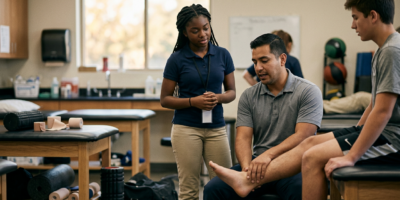
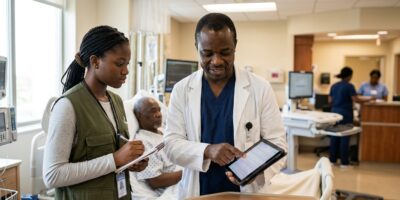
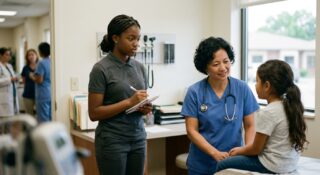
For a high school student, being in these environments means observing. It does not mean participating in treatment, handling medications, or making any clinical decisions. A responsible program will be explicit about this boundary. Students may watch patient consultations, see how care teams coordinate, observe educational sessions about cancer prevention and screening, and participate in structured reflection afterward. They do not administer care. They do not access patient records. They do not handle hazardous materials such as chemotherapy drugs.
The value of these settings lies in what students witness and process, not in what they do with their hands. Watching a physician explain a diagnosis to a family, seeing how a nurse manages pain with compassion, or observing the logistics of a referral system in a resource-limited hospital gives students a kind of understanding that textbooks and YouTube videos cannot replicate. According to the WHO’s overview of the global cancer burden, approximately 70% of cancer deaths occur in low- and middle-income countries, where late-stage presentations are common due to limited screening infrastructure. A student observing oncology care in one of these settings will encounter realities that most American teenagers have never seen.
How to Evaluate Whether a Program Is Responsible
Not every program that places students in clinical settings has earned the right to do so. As a parent, you need to ask specific questions before committing your family’s trust, time, and money. Here is what to look for.
Supervision Structure and Ratios
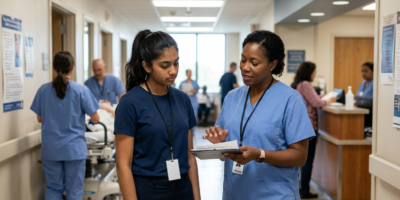
Ask who supervises your child in the clinical setting and what their qualifications are. Licensed medical professionals should be present at all times during any patient-facing observation. The program should be able to tell you, clearly, how many students are assigned per supervisor. If they cannot answer this question or give you vague language about “mentorship,” that is a concern. You should also ask whether there is a designated point of contact for parents during the program, and how communication works if something goes wrong.
Boundaries Around Student Roles
A trustworthy program will clearly define what students are permitted to do and, just as importantly, what they are not permitted to do. If a program’s marketing implies that high schoolers will be “treating patients,” “assisting in surgery,” or “providing care,” treat that as a red flag. Responsible language describes observation, supported learning, and participation in non-clinical tasks like community health education. IMA, for example, structures its programs so that students observe and support within approved limits, always under professional guidance.
Emotional Preparation and Support
Oncology and other high-acuity settings expose students to suffering, grief, and death. This is not something to gloss over in a brochure. Ask whether the program provides pre-departure preparation about what students may see, daily debriefing or reflection sessions, and access to emotional support during and after the program. A student who watches a young cancer patient receive palliative care needs structured space to process that experience. Programs that skip this step are not ready to work with teenagers.
Housing, Safety, and Daily Logistics
For international programs, ask about housing arrangements, meal plans, transportation between the housing site and the clinical setting, emergency protocols, and insurance. Ask whether students are housed with other program participants and whether there is adult supervision at the housing site outside of clinical hours. These are not unreasonable questions. Any program that treats them as such is not one you should trust with your child.
Oncology as a Specific Case: What Parents Should Know
Oncology is among the most emotionally demanding clinical specialties for observers of any age. For a teenager, it raises particular considerations that parents should weigh carefully.
Cancer care involves the full spectrum of human experience: hope, fear, resilience, loss, family strain, and medical complexity. According to the National Cancer Institute’s statistical overview, roughly 39.5% of Americans will receive a cancer diagnosis at some point in their lives. Cancer touches nearly every family eventually, and many students who are drawn to oncology have a personal reason for that interest. That personal connection can be a source of motivation, but it can also make the experience more intense than they expect.
If your student is specifically interested in oncology exposure, our guide to oncology internships for high school students covers the topic in more detail, including what observation typically involves in international oncology settings, common conditions students may encounter, and how to think about fit. It is worth reading alongside this article if oncology is the focus.
In international settings, students observing oncology care may see more advanced cases than they would in the United States, because diagnostic delays are common where screening infrastructure is limited. Cervical cancer, breast cancer, and liver cancer are among the most prevalent cancers in sub-Saharan Africa, while stomach cancer rates are notably higher in parts of Latin America. Seeing these conditions up close, in the context of real health systems with real constraints, gives students a grounded view of global health inequity. It also requires emotional readiness that not every 16-year-old has, and that is okay.
Assessing Your Teen’s Emotional and Practical Readiness
This is one of the most important sections of this guide, because readiness is not just about grades, ambition, or interest. It is about maturity, self-awareness, and the ability to handle discomfort without shutting down or acting out.
Signs Your Teen May Be Ready
They can talk about difficult topics, including death, without deflecting or dramatizing. They have demonstrated the ability to follow rules in structured environments, even when those rules feel inconvenient. They can express when they are overwhelmed and ask for help. They have some prior exposure to healthcare settings, even if it is limited to a local volunteer shift or a family member’s illness. They understand that the purpose of the experience is to learn, not to perform heroics.
Signs It Might Be Worth Waiting
They are motivated primarily by how the experience will look on a college application. They have not yet developed coping skills for stress or emotional difficulty. They struggle with authority or structured environments. They have not had any conversations with you, a counselor, or a mentor about what they might see. They are unable to articulate why they want to be in a clinical setting beyond vague excitement.
Waiting a year does not mean your student lacks potential. It may simply mean they will benefit more from the experience after another year of growth. Students pursuing healthcare careers have many years of clinical exposure ahead. There is no advantage to rushing into a high-acuity setting before they are ready. The IB vs. AP comparison for college admissions that many families are sorting through at this stage is a good reminder: the best decision is the one that fits the student, not the one that looks most impressive on paper.
What This Experience Can (and Cannot) Do for a College Application
Parents and students alike often want to know how a clinical experience will factor into college or pre-health admissions. Here is a realistic picture.
Exposure to oncology or other high-impact settings can help a student develop genuine perspective on healthcare, empathy, and resilience. It can give them something specific and honest to write about in a personal statement. Admissions committees at medical schools value evidence of emotional maturity, an understanding of healthcare team dynamics, and reflection on healthcare inequities, according to guidance from the AAMC on what medical schools look for in applicants. A well-processed clinical experience can contribute to all of those areas.
What it cannot do is guarantee admission to any school. No single summer experience, regardless of intensity, replaces a strong academic record, consistent involvement, and genuine reflection. Programs that imply otherwise are overselling. The value of a clinical experience lies in what it teaches your student about themselves, about healthcare, and about the world, not in a line on a resume. If your student eventually applies to PA school, the highest-paid specialties for physician assistants may be interesting context down the road, but the immediate question is simpler: will this experience help my teen grow?
Questions Every Parent Should Ask Before Saying Yes
Rather than provide a checklist you will forget, here are the categories of questions that matter most, organized by what they reveal about a program’s quality.
Ask about accountability. Who is responsible if something goes wrong? Is there a local program coordinator on site at all times? What is the escalation process if a student feels unsafe or overwhelmed?
Ask about boundaries. What exactly will my child observe? What will they not be permitted to do? How are these limits enforced in real time? What happens if a student crosses a boundary, intentionally or not?
Ask about emotional infrastructure. What kind of preparation happens before the clinical component? Are there daily reflection sessions? Who facilitates them? What training do facilitators have? Is there a protocol for removing a student from a setting if they are in distress?
Ask about communication. How will I stay in contact with my child? How will the program contact me in an emergency? Will I receive updates during the program?
Ask about outcomes, honestly. What do former participants say about the experience? Can I speak with a parent whose child has completed the program? What do students typically take away? Programs that are confident in their structure will welcome these questions. Programs that deflect them are telling you something.
If your student is also weighing how this fits with their broader academic strategy, including standardized admissions processes, the guide to the CASPer exam and its role in admissions offers useful context on how situational judgment and ethical reasoning are increasingly assessed. The skills students develop through structured clinical observation, including reflection, ethical awareness, and emotional regulation, align closely with what these newer admissions tools measure.
Making the Decision Together
The best outcomes happen when the parent and student make this decision as a team. That means having honest conversations about motivation, expectations, fear, and logistics. It means the student can explain, in their own words, why they want this and what they expect to gain. It means the parent has done enough research to feel confident in the program’s structure and values.
If your teen is drawn to a high-impact clinical setting, that impulse is worth honoring, but it is also worth examining. The Bureau of Labor Statistics’ overview of healthcare occupations can help put career possibilities in perspective, but the more immediate question is whether this particular experience, at this particular time, is the right fit for your particular child. There is no universal answer. There is only the answer that comes from asking the right questions, listening carefully, and trusting your judgment alongside your teen’s growing sense of direction.
Frequently Asked Questions
Will my teenager be providing medical care or performing clinical procedures?
No. In responsible programs, high school students observe clinical settings under professional supervision. They do not administer treatment, handle medications, perform procedures, or access patient records. Their role is to watch, learn, ask questions in appropriate contexts, and reflect on what they see. Any program that suggests otherwise should be scrutinized carefully.
How do programs handle the emotional difficulty of oncology settings for teenagers?
Well-structured programs address this through pre-departure preparation about what students may encounter, daily debriefing or reflection sessions led by trained staff, clear protocols for stepping away from a setting when needed, and access to emotional support during and after the program. Before enrolling your teen, ask the program directly about each of these elements and how they are implemented.
Is a high-impact clinical experience necessary for getting into medical school?
No single experience is necessary for medical school admission. What admissions committees look for is evidence of sustained interest, emotional maturity, self-awareness, and the ability to reflect meaningfully on experiences. A well-processed clinical observation can contribute to these qualities, but it is not a prerequisite, and it does not replace strong academics, consistent involvement, or honest self-reflection.