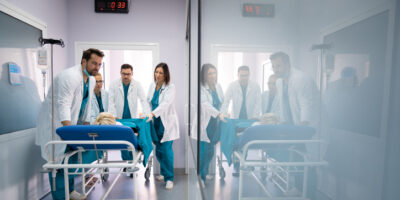
Patient privacy needs in a clinical observation context arise from several distinct situations. Physical examinations that require exposure of the body, pelvic examinations, breast examinations, wound care involving intimate areas, and many other examination types require the exit of non-essential observers as a fundamental standard of dignified care. Sensitive disclosures, a patient discussing domestic violence, a terminal diagnosis conversation, and a mental health assessment require the same.
Key Highlights
- Knowing when to leave is as important as knowing how to observe. A pre-health observer who stays in a room when a patient needs privacy is causing harm, regardless of intent.
- The signals that a patient needs privacy are not always verbal. Learning to read non-verbal cues from both patients and clinical staff is a foundational observational skill with direct clinical training value.
- The exit should be immediate, quiet, and without disruption. It should not require explanation, apology, or a conversation about why you are leaving.
- In international clinical settings, modesty norms and cultural expectations around privacy may differ significantly from what you expect, and the margin for error is narrower, not wider, because patients may be less comfortable explicitly telling a foreign observer to leave.
- The moment of exit, handled with composure and professional instinct, is visible to the clinical team and shapes their assessment of your professional maturity, overriding most other behavioral signals.
When a Patient Needs Privacy and What That Looks Like
Less formally, patients in many clinical environments signal discomfort with the presence of observers in ways that stop short of a direct verbal request. A patient who turns their face away from you, who pulls their gown or covering tighter as you enter the room, who makes eye contact with the clinician rather than looking toward you, or who appears visibly tense when you are present, is communicating something you are obligated to read and respond to correctly.
The ethical framework around this is clear: a patient’s right to dignity and privacy in clinical encounters is not conditional on their ability to articulate a preference directly to an observer. AMA guidance on patient privacy and outside observers in clinical encounters specifies that the presence of an observer must not compromise care and that the patient must have explicitly agreed to the observer’s presence. In practice, individual patient discomfort during an encounter overrides any program-level agreement and requires your exit.
Reading the Signals
Verbal Signals From Clinical Staff
The clearest signal is a direct request from the clinician or nurse: Could you step outside for a moment? This should be acted on immediately and without requiring clarification. You leave, you close the door quietly behind you, and you wait in the corridor or the appropriate waiting area until invited back in.
Non-Verbal Signals From Clinical Staff
Clinical staff also communicate exit signals non-verbally, and learning to read these signals is a clinically valuable observational skill. A clinician who glances toward the door while initiating a specific examination type communicates an expectation of an exit. A nurse who positions their body between you and the patient during a sensitive procedure is doing the same. A staff member who lowers their voice or shifts the conversation to a more private register is signaling that the encounter has moved beyond what is appropriate for observer presence.
Signals From the Patient
Patients are less likely to make direct verbal requests of observers than clinical staff are, particularly in international settings where power differentials between foreign visitors and local patients can make direct communication feel unavailable to the patient. Research on patient privacy and dignity in clinical care documents that patients in hierarchical clinical environments frequently do not verbalize preferences around observer presence, even when those preferences exist and are strong. This means the observational burden is entirely on you: if a patient shows signs of discomfort with your presence, you exit, without requiring them to ask you to.
The specific non-verbal signals to watch for: direct avoidance of eye contact with you specifically, covering or shielding behavior, reduced willingness to answer questions from the clinician when you are present, and a visible physical tension that was not present before you entered.
How to Exit: The Practical Mechanics
The exit should be immediate, quiet, and efficient. When you recognize a signal, verbal or non-verbal, you move toward the door, make brief eye contact with the clinician or the nearest staff member to signal that you are stepping out voluntarily, and exit without speaking unless a brief acknowledgment is genuinely necessary. I will step outside is six words. Anything longer draws attention to the exit in a way that extends rather than resolves the moment.
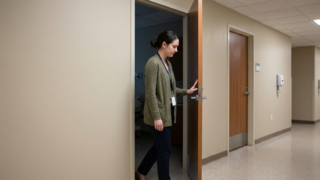
Close the door quietly behind you. Do not hover in the doorway. Do not pause to ask what to do next or where to wait. Move to the corridor or the designated waiting area, remain there, and wait for an explicit invitation to return or for the clinical team to move to the next patient encounter.
Do not take notes while waiting in the corridor immediately after an exit. Do not use your phone. The appropriate posture while waiting is composed and attentive to the environment. A student who exits a room and immediately disappears into their phone has not demonstrated professional discretion.
In International Settings: Additional Considerations
Modesty norms and expectations around the presence of observers during physical examinations vary significantly across cultural contexts. In many East African clinical settings, expectations around physical privacy during examination differ from North American norms, sometimes more formal and sometimes involving different norms about who is permitted to be present during particular examination types.
As a foreign observer, you are also navigating an additional layer of power differential. A patient who is uncomfortable with your presence may be even less likely to communicate that directly to you than to a local observer, because of language barriers, cultural expectations around hospitality toward foreign visitors, and uncertainty about whether you can or should be asked to leave.
The correct posture in international settings is therefore more conservative rather than less. When in doubt, you step out. You do not wait to be explicitly asked. Understanding the cultural dimensions of clinical placement in East African settings includes preparing for these kinds of moments before you arrive at the clinical site, rather than discovering in the moment that you have stayed too long.
After the Exit: What to Do While Waiting
Use the time in the corridor constructively. Review your mental notes from the encounter so far. Frame a specific question for the clinician when the encounter concludes. If you have your journal, make a brief note about the nature of the encounter in de-identified terms and the clinical considerations it raises.
When the clinical team finishes the encounter, re-enter the room or follow the team to the next encounter as appropriate. Do not ask what happened during the portion of the encounter you were absent for unless the clinician volunteers to explain. The exit was for the patient’s dignity, not for your learning schedule.
Students reflecting on how these professional moments shape their placement experience and their application materials should read about how the skills built during clinical observation translate into standout application narratives. The moments that demonstrate professional discretion are precisely the moments that experienced clinicians remember when they write reference letters.
Frequently Asked Questions
How do I know if I am supposed to exit or stay?
If you are uncertain, exit. The cost of an unnecessary exit, briefly missing a clinical encounter, is far lower than the cost of staying when a patient needed you to leave. Erring toward patient dignity is always the correct direction.
What if the clinician does not give me a signal and I am unsure whether to stay?
For examination types that routinely require privacy, pelvic examinations, sensitive disclosures, and wound care in intimate areas, exit proactively before the examination begins rather than waiting for a signal. Position yourself to observe the clinical reasoning and discussion, then exit before the physical exposure begins.
Should I apologize to the patient before exiting?
Not typically. A brief, composed exit without extensive commentary is more professional than an apology that draws attention to the moment. If direct eye contact with the patient occurs as you move toward the door, a quiet nod is appropriate.
What if I exit and the clinician later seems surprised that I left?
Explain briefly that you read the situation as calling for privacy and exited accordingly. A clinician who is surprised by your exit may simply be noting that the exit was unnecessary in that particular case. Use the moment to ask what signals they find most useful to communicate exit expectations.
Can I ask the clinician before the encounter begins whether I should plan to exit?
Yes, and this is a strong professional move. Before entering a room for an examination type that you know routinely requires privacy, ask the clinician a brief question: Should I plan to step out for any portion of this encounter? , demonstrates that you understand the relevant considerations and are thinking ahead.
What about encounters involving pediatric patients?
Pediatric encounters often involve parents or guardians, and the family’s comfort with observer presence is as relevant as the patient’s. A parent who appears uncomfortable with your presence is communicating a signal that requires the same response as a patient signal.
What if the patient seems fine with me being there but the nurse signals that I should leave?
Follow the nurse’s signal. The clinical staff is responsible for the conduct of the encounter, and their assessment of what the patient needs takes precedence over your interpretation of the patient’s apparent comfort.
How does this skill connect to my clinical training if I become a physician?
Knowing when to create privacy for patients, how to read their non-verbal signals, and how to manage the presence of trainees and observers in clinical encounters are all skills that attending physicians exercise throughout their careers. Developing the instinct as a pre-health observer builds the habit that clinical training will formalize.