Safety protocols in high-risk clinical units exist because the stakes in these environments are genuinely high. Patients are critically ill, equipment is complex, infections spread more easily, and split-second decisions carry real consequences. For high school students considering medical summer internships for high school students, understanding how these protocols work is not optional background reading. It is the foundation for deciding whether this kind of experience is the right fit, whether the timing makes sense, and whether the program in question takes safety seriously enough to earn your trust.
That matters because not every program handles high-acuity clinical settings with the same level of care. The best medical internships for high school students are the ones that make safety protocols visible, enforce clear boundaries, and prepare students and families for what the experience will actually look like. According to the CDC’s healthcare-associated infection data, 5 to 10 percent of ICU patients acquire an infection during their stay, and healthcare workers face workplace injuries at roughly twice the rate of workers in other industries, per the Bureau of Labor Statistics. Those numbers are not meant to scare anyone. They are meant to underscore why structured protocols matter so much, and why the rules around student observers in these units need to be taken at face value.
Why High-Risk Units Require a Different Standard of Safety
A general outpatient clinic and an intensive care unit are not the same environment. In an ICU, patients may be on mechanical ventilation, receiving continuous medication infusions, or recovering from emergency surgery. The margin for error is small. The WHO’s patient safety framework identifies ICUs as among the highest-risk hospital settings for adverse events, including medication errors, procedural complications, and infections.
For any observer, and especially for a high school student, this means the rules are stricter by necessity. Students do not touch sterile equipment. They do not administer medications. They do not enter isolation rooms without proper protective gear and explicit permission. They do not make entries in patient records. These are not arbitrary restrictions. They protect the patient, the student, and the clinical team.
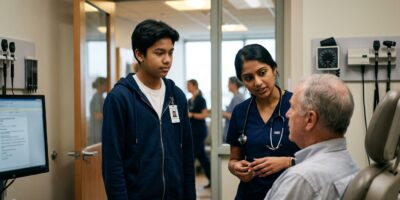
What high school students can do in these settings is observe with intention. That means watching how a care team communicates during rounds, noticing how nurses monitor vital signs in real time, and learning how physicians make decisions when resources are limited. Observation, done well and with proper framing, builds genuine clinical awareness. But it only works when the safety structure around it is solid.
Supervision, Ratios, and Who Is Responsible for the Student
One of the first questions a parent should ask about any clinical observation program is: who is supervising my child, how many students are they responsible for, and what happens if something goes wrong? These are fair, important questions, and any credible program should answer them clearly.
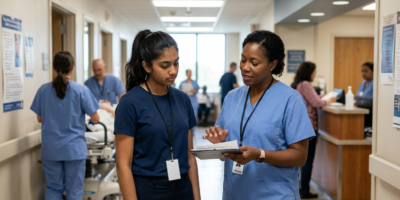
In a well-structured program, a licensed healthcare provider is present at all times when students are in clinical areas. Supervisor-to-student ratios are kept small, particularly in high-acuity settings. Students are never left alone in a unit. There is a designated point of contact available around the clock for emergencies, and the communication chain between the student, the on-site supervisor, the program staff, and the family is established before the student ever sets foot in a hospital.
For high school students, this structure is not just recommended; it is non-negotiable. Minors are not medical professionals, and they are not treated as such. They observe, they support within clearly approved limits, and they learn under direct supervision. Programs that blur these boundaries, or that leave students to figure things out on their own in a critical care unit, are not meeting a responsible standard. If a student or parent has questions about what realistic ICU observation looks like for younger participants, our discussion on ICU exposure for high school students and what’s actually realistic addresses this in detail.
Infection Control: What Students Must Know Before Entering a Unit
Infection control is one of the most concrete, non-negotiable elements of safety in any clinical setting, and it matters even more in high-risk units where patients have weakened immune systems and open surgical sites.
Pre-Travel Vaccination and Health Clearance
Before participating in any clinical observation program abroad, students should be up to date on all recommended vaccinations. Depending on the destination, this may include hepatitis B, typhoid, yellow fever, and others as recommended by a healthcare provider. Vaccination is not just about the student’s own protection. It also protects the patients and staff in the facility.
Personal Protective Equipment and Hand Hygiene
Students should receive training in proper use of personal protective equipment, commonly called PPE, before entering clinical areas. This includes gloves, masks, gowns, and eye protection as appropriate. Hand hygiene protocols are taught with demonstration and reinforced through ongoing monitoring. According to the BLS data on healthcare worker injuries, a significant share of workplace injuries in healthcare involve exposure to infectious diseases or bodily fluids. Proper PPE use and hand hygiene are the first line of defense.
Exposure Reporting
Every responsible program has a clear, immediate procedure for what happens if a student is exposed to blood, bodily fluids, or an infectious agent. Students should know this protocol before their first day in a clinical unit. The steps should be specific: who to tell, what to do in the first few minutes, and where to go for medical evaluation. Vague assurances are not enough.
Emotional Readiness and Psychological Safety in Critical Care
Safety in a high-risk clinical unit is not only about physical hazards. The emotional weight of what students may witness in an ICU, including serious illness, suffering, and death, is real and should not be minimized.
Why Pre-Departure Preparation Matters
A student who has never been in a hospital may not know how they will react to seeing a critically ill patient on a ventilator, or to hearing a family receive difficult news. That uncertainty is normal, and it does not mean the student is unready. But it does mean that preparation before the experience matters. Quality programs address this directly, with pre-departure conversations about what students may see, how they might feel, and what support is available.
Daily Debriefs and Peer Support
Daily debrief sessions, led by someone trained to facilitate reflection, give students a structured space to process what they observed. This is not a formality. It is a core part of the safety infrastructure. Students should also have a peer support system, such as a buddy assignment or small group check-ins, so that no one is processing difficult experiences alone.
If a student becomes overwhelmed during a clinical session, the expectation in a well-run program is straightforward: they are removed from the situation, supported, and given time. There is no pressure to “tough it out.” Recognizing your own limits is not a weakness; it is a sign of maturity, and it is one of the things that sets a serious program apart from a careless one.
Maturity and Readiness Are Real Factors
Not every high school student is ready for ICU observation, and that is perfectly fine. Readiness depends on the individual, not just their age. A student who has volunteered in a local hospital or has spent time around healthcare settings may feel more prepared than someone with no prior exposure. Parents and students should have an honest conversation about this before committing. If a student is interested in healthcare but not yet sure they are ready for high-acuity settings, there are other kinds of clinical observation, such as outpatient clinics or public health programs, that offer meaningful exposure with less intensity. Knowing the career paths and benefits of working in healthcare can help students weigh what level of clinical exposure makes sense for where they are right now.
What Parents Should Look for in a Program’s Safety Framework
Parents are right to ask hard questions. A program that is genuinely committed to student safety will not be defensive about those questions; it will welcome them.
Specific Questions Worth Asking
Before enrolling a minor in any clinical observation program, parents should ask: What is the supervisor-to-student ratio in clinical settings? Is there a licensed healthcare provider present at all times? What PPE training do students receive? What is the protocol if a student is exposed to an infectious agent? Who is the 24/7 emergency contact? How are students housed, and who oversees housing? What mental health support is available on-site? How is the experience structured to ensure students observe rather than perform clinical tasks?
The answers should be specific, not vague. If a program cannot clearly explain its safety structure, that is a red flag.
Housing, Communication, and Daily Structure
For international programs, housing and communication matter as much as what happens inside the hospital. Students should be in supervised, secure housing with reliable communication access. Parents should know where their child is staying, how to reach them, and how the program communicates updates. A clear daily structure, with set times for clinical observation, meals, reflection, and rest, is a sign that the program is well organized and takes the student’s overall well-being seriously.
Understanding the global context of healthcare, including where the demand for medical professionals is greatest, can also help families appreciate why clinical observation programs in certain countries operate the way they do. An article on which countries have the highest demand for doctors offers useful background on healthcare workforce gaps that shape the clinical settings students may encounter.
What Students Actually Gain from Properly Supervised ICU Observation
When the safety structure is in place, what a high school student takes away from observing in a high-risk clinical unit can be genuinely valuable. Not because it guarantees anything about future admissions or career outcomes, but because it builds a kind of perspective that is hard to get elsewhere.
Students who observe in ICUs with proper supervision and debriefing often develop a more grounded understanding of what healthcare work actually involves. They see that medicine is not glamorous; it is precise, tiring, emotionally demanding, and deeply human. They learn to notice how a care team communicates under pressure, how resources are allocated when there are not enough to go around, and how cultural context shapes the way families and providers interact.
That perspective matters, whether a student goes on to apply to medical school, PA school, nursing programs, or decides that healthcare is not the right path after all. Either outcome is a good one if it is based on real information rather than assumptions. The goal of a structured observation program is not to impress anyone. It is to give the student enough honest exposure to make a well-informed decision about their future.
Frequently Asked Questions
Do high school students perform any medical tasks in ICU observation programs?
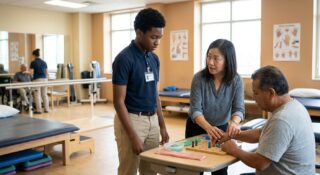
No. High school students in properly structured programs observe and support within clearly approved limits, always under direct supervision by a licensed healthcare provider. They do not administer medications, handle needles or sterile equipment, perform procedures, or make entries in patient records. The role is strictly observational, and any program that implies otherwise is not meeting a responsible standard.
How should parents evaluate whether a program’s safety protocols are adequate?
Ask for specifics. A credible program will clearly explain its supervisor-to-student ratios, PPE training process, infection exposure reporting procedure, housing supervision, 24/7 emergency contact system, and mental health support structure. If the answers are vague or the program is reluctant to provide details, consider that a significant warning sign. The program should also make it explicit that minors observe rather than practice medicine.
What if a student becomes emotionally overwhelmed during ICU observation?
A well-run program will have a plan for this. Students should be immediately removed from the clinical setting if they experience distress, with access to a trained supervisor or counselor for support. Daily debrief sessions and peer support systems help students process what they observe in a structured way. Feeling overwhelmed does not mean a student has failed; it means the experience is real, and recognizing personal limits is an important part of clinical readiness.