Any family considering a medical internship for high school students abroad deserves a clear, honest breakdown of what safety should actually look like. Safety standards in global health programs for teens are not abstract ideals. They are specific, measurable commitments that a program either meets or does not: supervision ratios, vetted housing, written emergency action plans, mandatory insurance, structured daily schedules, and trained on-site staff. When those standards are in place, a high school student can gain meaningful exposure to healthcare in a different context, observe professionals at work, and start building the kind of perspective that matters for both personal growth and future applications. When those standards are missing or vague, the risks are real and avoidable.
Many families begin their search by looking for paid medical internships for high school students, summer programs, or global health experiences, and the range of options can feel overwhelming. Some programs invest heavily in safety infrastructure; others lean on enthusiasm and good intentions without much structure underneath. The difference is not always visible from a website or brochure. This article is designed to help both students and parents identify what to look for, what questions to ask, and what red flags should stop a conversation in its tracks. These are the concrete safety standards high school global health programs should meet before any student enrolls.
Supervision Ratios and On-Site Staffing
The single most important safety factor for any program involving minors abroad is who is physically present and responsible. A reputable program will publish or share its staff-to-student ratio. For high school students in international clinical settings, a ratio of roughly 1:6 to 1:8 (one dedicated staff member for every six to eight students) is a reasonable benchmark. Smaller ratios offer more individualized attention, and any program that cannot tell you its ratio, or that seems to be assigning a single staff member to a group of 20, should raise serious concern.
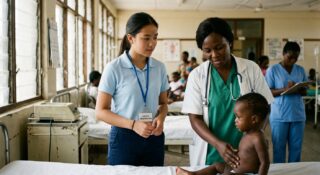
On-site staffing should include people who speak the local language fluently, know the local healthcare system, and are trained in both program logistics and emergency response. These are not volunteers or fellow students filling supervisory roles. They are adults whose full-time job during the program is to manage the students’ safety, answer questions, handle problems, and maintain communication with families back home. In clinical settings, students should also be assigned to a local healthcare professional who understands that high school interns observe and support within approved limits. They do not practice medicine.
It is worth asking directly: Who will be with my child during clinical hours? Who supervises them at night? Who handles a medical emergency at 2 a.m.? A well-run program will have clear answers to all three.
Vetted Housing and Transportation
Where students sleep and how they get around are not minor logistical details. They are core safety considerations. For minors, housing should be pre-vetted by the program, physically secure, and staffed around the clock. That might mean a dedicated group residence, a guesthouse with program staff on-site, or another arrangement with controlled entry and exit, curfew enforcement, and enough space for students to rest and recharge. Students should never be placed in housing that the program has not personally inspected and approved.
Transportation is just as important. All travel between housing and clinical sites, as well as any weekend excursions, should be pre-arranged, use reputable local providers, and be supervised by program staff. Students should not be arranging their own transportation, riding with strangers, or relying on unvetted drivers. This is especially critical in countries where road safety standards differ significantly from those in the United States. The CDC’s destination-specific health and safety guidance is a practical resource for families reviewing the health and logistical considerations of a specific country before committing to a program.
Parents should feel comfortable asking: What is the exact housing arrangement? Has the program used this housing before? Is there a staff member sleeping on-site? How does transportation work day to day?
Emergency Action Plans and Insurance Requirements
A written emergency action plan is not optional. It is a baseline requirement for any program that takes minors overseas. This plan should cover medical emergencies, natural disasters, security incidents, and evacuation procedures. It should include local emergency contacts, the nearest hospital or clinic with appropriate capacity, communication protocols for reaching parents, and a clear chain of command among staff.
Insurance is the other non-negotiable. Every participant should carry comprehensive travel and medical insurance that includes emergency medical evacuation. Some programs include this in their fees; others require families to arrange it separately. Either way, it should be confirmed in writing before departure. Medical evacuation coverage matters because in some program locations, the nearest facility equipped for serious emergencies may be hours away, and evacuation by air can cost tens of thousands of dollars without insurance.
Pre-departure preparation is part of this safety infrastructure, too. A responsible program will provide orientation materials covering health precautions (food and water safety, sun protection, insect-borne illness prevention), cultural norms, behavioral expectations, and a clear overview of what to do if something goes wrong. The U.S. Department of State’s country-specific travel information is another resource families can use to understand destination-level risks before making a decision.
Communication Between Programs and Parents
Parents of high school students should expect regular, structured communication from the program. This means designated check-in times, a reliable way to reach program staff in an emergency, and updates if anything significant changes during the program. A good program will outline its communication plan in writing before departure, including time zone considerations and backup methods if phone or internet service is intermittent.
Students should also know who to contact and how if they feel unsafe, uncomfortable, or unwell. This communication infrastructure is not a luxury. It is a basic expectation for any organization responsible for minors in an international setting. For a detailed look at how parents can evaluate these structures, IMA’s guide on safety and support in high school medical internships addresses many of the specific concerns families raise most often.
What “Clinical Experience” Actually Means for High School Students
One of the most important safety standards is also an ethical one: clarity about what students will and will not do in clinical settings. High school students in global health programs observe. They shadow doctors, nurses, clinical officers, and other professionals. They watch rounds, sit in on outpatient consultations, and may observe surgical procedures from an appropriate distance when the clinical site allows it. They ask questions, take notes, and reflect on what they see.
They do not examine patients, administer medications, take independent patient histories, or perform any invasive procedure. This is not a limitation of any particular program; it is the appropriate ethical standard for minors in clinical environments. Programs that suggest otherwise, or that are vague about what students will be doing, are not meeting a basic safety and ethics threshold.
Within the observation framework, students still gain significant exposure. They see how healthcare professionals make decisions with limited resources, how different diseases present in different populations, and how cultural context shapes patient care. They begin to understand the realities of healthcare systems that look very different from what they know at home. For students considering careers in medicine, nursing, dentistry, physician assisting, or occupational therapy, this kind of structured observation can inform their thinking in ways that reading about global health simply cannot.
IMA’s overview of clinical ethics for high school students in medical settings offers a more detailed look at the boundaries and responsibilities that apply in these environments.
Maturity, Readiness, and Honest Self-Assessment
Not every high school student is ready for an international clinical program, and that is completely fine. Maturity and readiness are real factors, not marketing talking points. A responsible program will ask about them during the application process, and families should ask about them at home, too.
Readiness for this kind of experience involves several things: the ability to follow rules and respect authority in an unfamiliar setting; emotional resilience when faced with difficult realities like poverty, serious illness, or death; comfort with being away from home and family for an extended period; willingness to adapt to different food, schedules, cultural norms, and communication styles; and the maturity to understand that one’s role is to observe and learn, not to intervene or lead.
Students who are genuinely interested in healthcare, who can handle being uncomfortable without becoming disruptive, and who are motivated by curiosity rather than resume padding tend to get the most out of these programs. Parents know their children best, and a candid conversation about these factors before applying is more valuable than any brochure. Programs that accept every applicant without asking about readiness are not doing their job.
How This Experience Fits into a Longer Path
It is worth setting expectations clearly: a global health observation program during high school is one piece of a much longer journey. It will not guarantee admission to medical school or any other health professions program. What it can do, when structured safely and ethically, is give a student a foundation of perspective that they can build on through college coursework, continued clinical exposure, and reflection.
The AAMC’s core competencies for entering medical students include qualities like cultural competence, ethical responsibility, and critical thinking. A well-run global health program can begin to develop those qualities in a high school student, but only when safety, supervision, and appropriate boundaries are firmly in place.
How to Vet a Program Before You Commit
Families should approach vetting with the same rigor they would apply to any major decision involving their child’s safety. Here are the specific areas to investigate before enrolling.
Ask for the program’s staff-to-student ratio, and ask whether those staff members are trained, full-time program employees or volunteers. Ask where students will sleep, who else will be in the housing, and whether program staff are on-site overnight. Ask to see the emergency action plan, or at least a summary of it. Ask about insurance requirements and whether evacuation coverage is included. Ask what a typical day looks like, from morning to curfew.
Ask how the program handles a student who gets sick, a student who wants to leave early, or a security incident. Ask whether clinical sites have been vetted and whether local mentors understand the student’s observation-only role. Ask about pre-departure orientation, required vaccinations, and any health precautions specific to the destination.
If a program cannot answer these questions clearly and specifically, or if the answers feel vague, that is useful information. Strong programs welcome these questions because they have invested in the answers. IMA’s blog post on how to succeed as a high school medical intern also provides context for students who want to understand what preparation looks like from the student side.
What Parents Should Expect from a Responsible Organization
Parents are not just writing checks. They are entrusting their child to an organization in a foreign country, and they deserve transparency at every stage. A responsible program will proactively share its safety protocols, not wait to be asked. It will provide a clear pre-departure timeline, a packing list grounded in the actual destination, orientation materials that cover real risks and real expectations, and a parent handbook or equivalent document that answers the most common concerns.
During the program, parents should expect regular updates, a reliable emergency contact, and honest communication if something goes wrong. After the program, parents should expect that their child returns with a realistic understanding of what they observed, not inflated stories about performing procedures or saving lives.
The best programs treat parents as partners. They understand that a parent’s concern about safety is not an inconvenience; it is a sign of good judgment. Programs that dismiss parent questions, rush through safety information, or promise things that sound too good to be true are telling you something important about how they operate.
Frequently Asked Questions
What supervision ratio should I expect for a high school global health program?
A reasonable benchmark is one dedicated staff member for every six to eight students. Some programs offer smaller ratios, which allow for more individualized attention. The key is that supervisors are trained adults employed by the program, not fellow students or short-term volunteers. Ask the program directly for their ratio and who those supervisors are.
Will my high school student be performing medical procedures during the program?
No. In a responsibly run program, high school students observe and learn. They shadow healthcare professionals, watch consultations and procedures from an appropriate distance, and ask questions under supervision. They do not examine patients, administer treatments, or perform any clinical tasks. Any program that suggests otherwise is not meeting appropriate ethical or safety standards.
What kind of insurance should my child have for an international health program?
Every participant should have comprehensive travel and medical insurance that includes emergency medical evacuation coverage. Some programs include this in their fees; others require families to purchase it independently. Confirm the details in writing before departure, and make sure the policy covers the specific destination and activities involved.