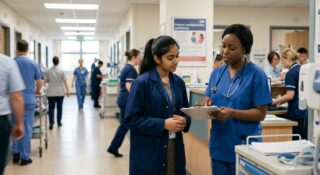
Cancer care is one of the most team-dependent areas of medicine. Oncologists, nurses, social workers, pharmacists, patient navigators, and family advocates all contribute to treatment and quality of life for patients facing difficult diagnoses. For high school students interested in healthcare, supporting that team in a structured, supervised setting can offer early and honest exposure to what cancer care actually requires. Programs that offer summer medical internships for high school students in oncology settings are designed around observation, approved support tasks, and guided reflection, not clinical practice.
That distinction matters, especially for parents. A teenager is not going to administer chemotherapy or interpret lab results. But teens support cancer care teams in ways that are real and genuinely useful: helping with patient comfort, assisting families in waiting areas, supporting recreational or therapeutic activities, and learning by watching how experienced professionals coordinate treatment across disciplines. Structured internships for high school students medical programs set clear boundaries around what minors can and cannot do, and the best ones treat those boundaries as a feature, not a limitation. That framework is what allows students to be present in a meaningful clinical environment without compromising patient safety or their own wellbeing.
What Teens Actually Do on a Cancer Care Team
The word “support” is doing important work in this context. When we talk about how high school students contribute to oncology care teams, we’re describing a set of carefully defined, non-clinical roles that exist alongside professional medical staff. Students do not make treatment decisions, handle medications, or access patient records.
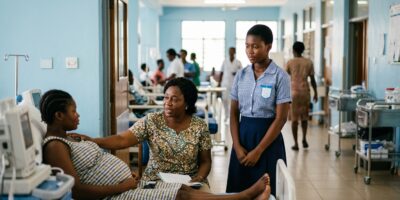
What they do includes assisting with comfort measures such as bringing water or adjusting pillows under staff direction. They may help facilitate recreational activities like art therapy sessions or reading programs for patients who are between treatments. In waiting rooms, students can be an additional source of calm presence for family members who may be spending long hours at the hospital. Some programs also allow students to assist with meal distribution, organize patient education materials, or help with basic logistics like patient transport within the facility.
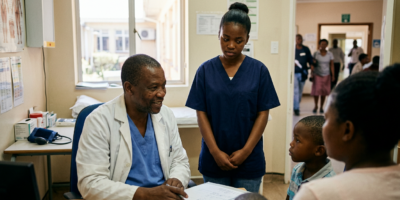
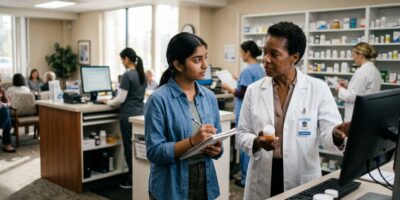
On the observation side, students shadow oncology nurses, physicians, and social workers during their rounds. They may sit in on multidisciplinary team meetings where treatment plans are discussed, observing how different specialties contribute to a single patient’s care. In some settings, students watch chemotherapy preparation from a safe and designated distance, learning what goes into administering treatments without being anywhere near the drugs themselves. The evolving structure of healthcare teams reflects just how many roles contribute to patient outcomes, and oncology is one of the clearest examples of that complexity.
A typical day might begin with a morning briefing where a supervisor reviews safety protocols and the day’s plan. Mornings often focus on clinical observation during patient rounds. Afternoons shift toward support activities, reflection, and journaling. The day ends with a debrief where students can ask questions and process what they’ve seen. That rhythm of observation, contribution, and reflection is what separates a structured program from simply showing up.
Why Oncology Exposure Matters for Future Healthcare Professionals
Oncology sits at an intersection that few other specialties match. It involves long-term patient relationships, difficult conversations about prognosis and goals of care, coordination across multiple treatment modalities, and a constant need for compassion alongside technical precision. For a high school student considering a career in medicine, nursing, social work, or allied health, spending time in an oncology setting reveals dimensions of healthcare that are hard to understand from a textbook.
The numbers underscore why this matters from a workforce perspective. According to the WHO’s cancer fact sheet, there were 20 million new cancer cases worldwide in 2022, and that number is projected to keep rising. In the United States alone, approximately 1.9 million new cancer cases are diagnosed each year. The AAMC has projected that cancer incidence could increase by 48% by 2030, while the oncology workforce is expected to grow by only about 28%. That gap means the field needs more people, and it needs people who understand what the work actually involves before they commit years of training to it.
Students who have observed oncology care firsthand tend to write more specific, reflective application essays when they eventually apply to medical school or other health professions programs. Admissions committees at medical schools value evidence of emotional maturity, ethical awareness, and genuine understanding of patient-centered care. Those qualities are hard to fake, and they tend to develop through real exposure rather than abstract interest. For students thinking about how early clinical exposure fits into their broader preparation, IMA’s guide to oncology internships for high school students provides a detailed look at what to expect and how to evaluate your readiness.
Safety, Supervision, and What Parents Need to Know
If you’re a parent reading this, your first questions are probably about safety and emotional readiness. Those are exactly the right questions. Cancer care environments involve sick patients, complex emotions, and occasionally, loss. A well-structured program accounts for all of that, and is transparent about how it protects minors.
Supervision in oncology-focused internships for high school students should include clear ratios of staff to students, with small group sizes in clinical areas. Students should never be left alone with patients. Confidentiality agreements are standard, and no-photography policies in clinical spaces are non-negotiable. Students do not access patient records, and all interactions with patients happen under direct staff oversight.
Physical safety is another concern parents raise, and it’s a valid one. High school interns are not exposed to chemotherapy drugs, radiation equipment, or hazardous materials. Their observation of treatment administration happens from designated safe distances, and they are briefed on these boundaries before entering any clinical space.
Emotional safety deserves equal attention. Spending time around seriously ill patients, some of whom may not recover, requires a level of maturity that not every teenager has reached, and that’s okay. Good programs screen for readiness, provide pre-departure preparation that includes honest discussion of what students will encounter, and make professional counseling available throughout the experience. Daily debriefs give students a structured way to process difficult moments rather than carrying them silently. After the program ends, follow-up reflection and support should also be part of the package.
Communication with families during the program is another baseline expectation. Parents should be able to reach program coordinators and should receive regular updates. Housing should be supervised, with clear rules and adult oversight. If a program is vague about any of these details, that’s a reason to ask more questions before committing.
How This Experience Builds Real Perspective
One of the most common misconceptions students bring to oncology settings is the idea that all cancer patients are dying. In reality, many patients are in active treatment, in remission, or managing cancer as a chronic condition. Seeing that range of experiences helps students develop a more accurate understanding of what oncology care involves. It’s not only about end-of-life conversations; it’s also about hope, persistence, and the everyday logistics of long-term treatment.
Students also gain exposure to the psychosocial dimensions of cancer care. They see how social workers coordinate resources for families, how nutritionists support patients during treatment, and how the emotional labor of care is distributed across a team. These observations can shape a student’s sense of what role they might want to play in healthcare, sometimes in unexpected ways. A student who arrives interested in surgery might leave with a strong pull toward medical social work or patient advocacy.
For students considering international programs, the perspective broadens further. Cancer care looks different depending on resources, infrastructure, and cultural context. In some low- and middle-income settings, the focus may lean more toward palliative care, community education, and early detection rather than the aggressive treatment protocols common in well-resourced hospitals. According to WHO data, 70% of cancer deaths occur in low- and middle-income countries, and only about 35% of low-income countries have adequate treatment facilities. Seeing those disparities firsthand gives students a grounded understanding of global health equity that no classroom lecture can fully replicate.
Understanding how different healthcare systems approach the same disease also builds cultural competency. Students observe how family involvement varies across cultures, how traditional and modern healing practices sometimes intersect, and how communication about illness and death differs depending on context. These are lessons that stay with students long after the internship ends. For those interested in how cultural adaptation factors into healthcare experiences, the IMA blog offers a useful perspective on what psychology internships can offer students preparing for people-centered clinical work.
How to Evaluate Whether This Is the Right Fit
Not every student is ready for oncology exposure, and not every oncology-adjacent program is equally well-structured. Both students and parents should approach this decision with honesty and specific criteria.
For students, the first question is about emotional readiness. Ask yourself whether you can sit with someone else’s pain without needing to fix it or look away. That’s not a test with a pass or fail. It’s a reflection prompt that can reveal where you are right now. If you’re unsure, that doesn’t disqualify you, but it does mean you should look for programs with especially strong emotional support structures.
Maturity also shows up in smaller ways: following instructions from supervisors without pushback, respecting confidentiality without being reminded, staying professional when you’re tired or uncomfortable, and being honest about your own limits. These qualities matter more than GPA or science knowledge in an oncology support setting.
For parents, the evaluation should focus on the program itself. Look for clear documentation of supervision protocols, staff qualifications, safety policies, and communication plans. Ask what happens if your child becomes emotionally overwhelmed. Ask about housing arrangements, daily schedules, and emergency procedures. A program worth its cost will answer these questions directly and without hesitation. The Bureau of Labor Statistics healthcare occupations overview can help families understand the broader career landscape and where oncology support fits within the spectrum of healthcare roles.
Parents should also consider timing. A student who is already managing significant academic pressure or personal stress may benefit from waiting a semester or a year. There is no penalty for choosing to participate later, and a student who is ready will get far more out of the experience.
Finally, both students and parents should be clear about what this experience is and what it is not. It is a structured, supervised learning opportunity. It is not medical training, it does not guarantee admission to any program, and it does not replace the formal prerequisites for any health profession. What it does is help a young person understand the realities of a demanding, deeply human field, and decide whether that’s a path they want to pursue with full awareness. For students who want to make their early experiences count in future applications, understanding how your broader profile shapes admissions decisions is worth thinking about early.
Frequently Asked Questions
Do high school students perform any medical procedures in oncology internships?
No. High school students in structured oncology programs observe clinical care and provide non-clinical support under direct supervision. They do not administer medication, perform procedures, handle hazardous materials, or access patient records. Their role is to learn through observation and assist with comfort and logistical tasks approved by supervising staff.
Is it emotionally safe for a teenager to spend time in a cancer care setting?
It can be, when the program is designed with emotional support in mind. Strong programs include pre-departure preparation about what students will encounter, daily debriefs with supervisors, access to professional counselors, and post-program reflection. Parents should ask directly about these support structures before enrolling their child, and students should be honest with themselves about their current readiness.
Will an oncology internship help my child get into medical school?
No program can guarantee admission to medical school or any other health professions program. However, early structured exposure to oncology care can help students develop qualities that admissions committees value, including emotional maturity, ethical awareness, and a realistic understanding of patient-centered care. The experience is most valuable when the student reflects on it honestly and can articulate what they learned about themselves and about medicine.