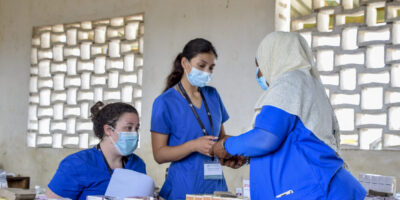

Good pre-nursing patient communication comes down to six habits: listen actively, use plain language, protect privacy, respect culture, show empathy without making promises, and ask your supervising nurse for feedback. Practice them from your first shift, check understanding with teach-back, and always introduce yourself as a student.
Indeed, nurses are among the true heroes of healthcare. They work tirelessly to make sure their patients get the best care possible, and much of that care happens through conversation: explaining, reassuring, checking in and noticing when something is wrong. Before you start, it helps to know what to expect during a pre-nursing internship.
Why Communication Matters So Much in Nursing
The demand for nurses shows how important they are. The U.S. Bureau of Labor Statistics counted about 3.5 million registered nurse jobs in 2025 and projects 6% growth from 2025 to 2035, with about 180,800 openings a year. The same profile lists communication skills and compassion among the most important qualities a nurse can have.
Now you’re pursuing the same career, and completing your pre-nursing internship is an exciting next step. It’s a great chance to apply your knowledge in real situations and gain lessons that just can’t be learned in textbooks.
One of the most important skills you’ll need to develop is communicating effectively with patients. It’s at the heart of the nursing profession, and building this skill early will set you up for success in nursing school and beyond. Below are six tips for handling patient interactions during your pre-nursing internship, followed by scripts, language-access guidance and a short self-check you can use after every shift.
Key Points
- Active listening and open questions help patients feel heard.
- Plain language and teach-back confirm that patients understood what they were told.
- Privacy rules apply to conversations, notes and photos.
- Cultural sensitivity starts with respectful questions and following the lead of local staff.
- Empathy matters, but never promise an outcome you can’t guarantee.
- Feedback from your supervising nurse is the fastest way to improve.
Six Tips for Respectful Patient Communication
1. Establish Trust Through Active Listening
Building trust with patients begins with active listening. They’re likely feeling a mix of emotions: anxiety, fear or plain discomfort. One of the best things you can offer is your undivided attention. It might sound like common advice, but its importance can’t be overstated.
Active listening goes beyond simply hearing what someone says. It’s about tuning in to what the patient is saying, how they’re saying it and even their body language. Make eye contact (when appropriate), nod occasionally to show you’re engaged and avoid interrupting.
Moreover, while yes-or-no questions are useful, questions such as “Can you tell me more about how you’re feeling?” and “How did your symptoms start?” invite patients to explain in their own words and show that you care. Many patients simply need someone to talk to and listen to them.
A simple way to practice is to summarize before you respond: “So the pain started two days ago and gets worse at night. Did I get that right?” A summary shows you were listening and gives the patient a chance to correct you.
2. Use Clear and Simple Language
Medical jargon can be confusing. As a pre-nursing intern, it’s important to meet patients where they are in terms of understanding. Use clear, everyday language when talking about a patient’s procedures, diagnoses or treatment plans.
For example, instead of using a word like “tachycardia,” you could simply say their heart rate is a bit faster than usual. That opens the way to a more open and effective conversation about their health.
Plain language matters because understanding is not the same as hearing. The CDC defines personal health literacy as the degree to which people can find, understand and use health information to make decisions for themselves and others. A patient can nod along and still leave unsure of what to do.
| Instead of | Try |
|---|---|
| Hypertension | High blood pressure |
| Ambulate | Walk |
| NPO | Nothing to eat or drink |
| Edema | Swelling |
| Analgesic | Pain medicine |
How Do You Use Teach-Back?
The Agency for Healthcare Research and Quality describes the teach-back method as a way of checking understanding by asking patients to state in their own words what they need to know or do. Its related “show-me” method asks the patient to demonstrate a task, such as using an inhaler. AHRQ says these methods can improve understanding and adherence and raise patient satisfaction.
As an intern, you won’t be the one explaining a treatment plan, but you will watch nurses do it and may help reinforce simple instructions they have already given. Frame teach-back as a check on your own explanation, never as a test: “I want to make sure I explained that clearly. Can you tell me how you’ll take this at home?”
3. Respect Privacy and Confidentiality
Privacy and confidentiality are non-negotiable, and they need to be honored and protected at all costs. Make it a routine to knock before entering a patient’s room, make sure the door or curtain is closed for private conversations, and never discuss patient cases in public areas where others can overhear.
Your responsibility is to create an environment where patients feel safe to open up and seek the care they need without fear of judgment or a breach of privacy. That includes what you write and share later. Keep names and identifying details out of your notes, and read our guide to clinic photos and patient privacy before you post anything from your placement.
4. Practice Cultural Sensitivity
As a pre-nursing intern, you’ll be interacting with patients from all walks of life. To provide exceptional care for each individual, developing cultural sensitivity is essential. This goes beyond simply respecting religious beliefs and dietary restrictions. It’s about building trust and making sure care fits each patient by understanding their background and traditions.
Building rapport with patients and practicing cultural sensitivity starts with open communication. Actively listen to your patients, and don’t hesitate to ask respectful questions to understand their cultural background. This open dialogue creates a safe space for patients to share their needs and preferences.
The U.S. Department of Health and Human Services sets out this goal in its National CLAS Standards, whose principal standard calls for care that is “effective, understandable, and respectful” and responds to cultural health beliefs, languages, health literacy and other communication needs. The standards were written for U.S. organizations, but the principle travels well.
5. Show Empathy and Compassion
Patients facing health concerns often feel vulnerable and scared. In a 2022 PatientPoint survey of 2,005 Americans, about two in five (39%) said they had felt anxious before a doctor’s appointment, and 69% worried they would not understand the terminology their provider used. This anxiety highlights the importance of empathy in healthcare settings.
Step into their shoes, acknowledge their emotions and offer words of comfort and support. This can go a long way in easing their pain or worries. Even so, it’s vital not to make promises that can’t be kept. That means not saying anything you’re not sure about, such as claiming a condition is curable when the outcome is uncertain.
You can also offer practical help, such as making sure a patient’s questions reach the nurse or connecting them with someone who can answer their concerns. Genuine care built on empathy and compassion can make a world of difference to a patient’s experience and outlook.
6. Seek Guidance When Needed
Every interaction with a patient is a valuable learning experience. Don’t be afraid to ask your mentors or supervisors for tips on how to communicate effectively with patients. Ask for feedback too, and take constructive criticism gracefully, using it as an opportunity to grow as a future nurse. Ultimately, this feedback will help you improve your interactions with patients and become a more effective caregiver.
A good time to ask is right after a conversation you found hard: “How would you have handled that question about her test results?” Write down the answer that evening, alongside the clinical goals for nursing students you set before your placement.
Scripts You Can Use on the Ward
Having a few phrases ready makes the first days easier. Adapt them to your own voice and to the unit’s routines.
How Should You Introduce Yourself to a Patient?
Say your name, your role and who you are working with: “Good morning, my name is Jordan. I’m a pre-nursing student working with Nurse Achieng today. Is it all right if I stay while she checks on you?” Always make clear that you are a student, and never let a patient assume you are a nurse.
What Should You Say When a Patient Declines a Student?
Thank them and step out without fuss: “Of course. Thank you for letting me know.” A patient can always decline to have a student present, and respecting that choice is part of professional behavior. Tell your supervising nurse so the care team knows.
What If You Don’t Understand What the Patient Said?
Ask again rather than guess: “I’m sorry, I didn’t catch that. Could you say it another way?” If language is the barrier, ask the nurse or an interpreter for help instead of relying on gestures for anything important.
Communicating Across a Language Barrier
Language differences are one of the biggest challenges in a placement abroad. The CLAS Standards say language help should come from trained, competent people, and that using untrained individuals or minors as interpreters “should be avoided and discouraged.” On the ward, that means relying on staff, not a patient’s child, for anything clinical.
IMA builds language support into its placements. Every program includes clinical lessons in the local language: medical Swahili in Mombasa, and in Cusco, where the wards run in Spanish, you may pick up some Quechua. Cusco applicants need at least two years of Spanish study. Our list of medical Spanish phrases for Peru gives you a head start, and our guide to staying engaged across a language barrier helps on days when you understand only part of what is said.
Communicating Respectfully in Mombasa and Cusco
Hospital culture differs from place to place, and the people who know it best are the local nurses you work with. A few habits help anywhere:
- Greet patients and staff before you start any task, using the local greeting you learned in your language lessons.
- Use titles and surnames for staff unless they ask you to do otherwise.
- Watch how nurses speak with older patients and families, and follow their lead.
- Ask a nurse before touching a patient or their belongings, even to help.
- Learn “thank you” in the local language: “asante” in Swahili and “gracias” in Spanish.
What Pre-Nursing Interns Do at IMA
Under the supervision of licensed clinicians and within their training level, IMA interns take part in direct patient care. They take vital signs, help with patient intake and triage, conduct basic patient interviews and assist with noninvasive tasks, alongside ward rounds, department rotations, clinical simulations and community outreach. They do not diagnose, prescribe or perform invasive procedures. IMA has maintained a 100% safety record for all high school and pre-health interns.
Every one of those tasks involves talking with patients, which is why communication skills matter from the first day. If you are unsure how this kind of placement differs from the clinicals inside a nursing program, read our guide to nursing shadowing vs clinical placement.
A Quick Self-Check After Each Shift
- Did I introduce myself as a student every time?
- Did I use at least one open question with each patient I spoke to?
- Did I replace jargon with plain words?
- Did I keep names and identifying details out of my notes?
- Did I ask my supervising nurse for feedback on one conversation?
Final Thoughts
Your pre-nursing internship is just the start of an exciting journey into the nursing field. The main thing is that each patient interaction gives you a chance to make a positive difference in someone’s health journey. That’s what nursing is all about.
If you’re searching for an organization to start your nursing career with, explore our nursing internships abroad today. Our internship program gives aspiring nurses invaluable hands-on training in a supportive, nurturing environment. Be one of our interns and start your journey toward becoming a compassionate and skilled nurse.
Frequently Asked Questions
What Is the Most Important Communication Skill for a Pre-Nursing Intern?
Active listening. Giving patients your full attention, asking open questions and summarizing what they said builds trust faster than anything else, and it supports every other skill on this list.
Should I Tell Patients I Am a Student?
Yes, every time. Introduce yourself by name and role, say which nurse you are working with and ask whether the patient is comfortable with you being there. A patient can always decline to have a student present.
What Is Teach-Back?
Teach-back is a way of checking understanding by asking patients to say in their own words what they need to know or do. AHRQ recommends framing it as a check on your own explanation, not a test of the patient.
Do I Need to Speak the Local Language for an IMA Nursing Internship?
Mombasa placements run in English, and every program includes clinical lessons in the local language. Cusco wards run in Spanish, so applicants need at least two years of Spanish study.
Can a Patient’s Family Member Interpret for Me?
Not for anything clinical. The National CLAS Standards say untrained individuals and minors should not be used as interpreters. Ask your supervising nurse or a trained interpreter instead.
What Should I Do If a Patient Asks Me About Their Diagnosis?
Don’t guess or reassure them about an outcome. Tell the patient you will make sure their nurse or doctor knows they have a question, and pass it on right away.