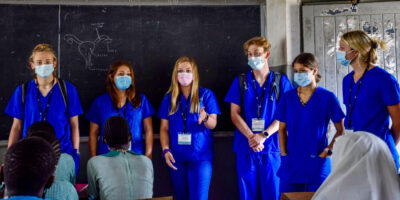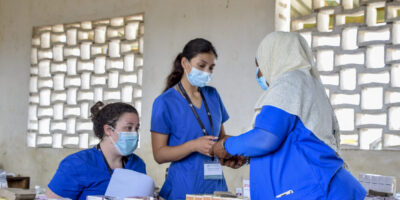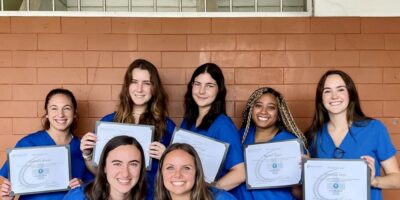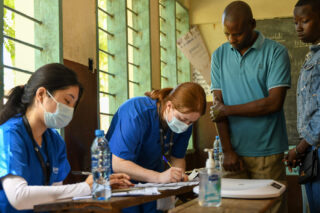

During a pre-nursing internship you mainly observe. You shadow registered nurses as they assess patients, give medications, plan care and teach families, and you learn how a hospital unit runs. In IMA’s programs that means six to eight hours a weekday on the wards, usually in a new unit each week, for stays from two weeks.
Knowing what the role includes, and what it does not, helps you arrive ready to learn. If you are still comparing options across health careers, our guide to what internships pre-health students should pursue can help you set priorities first.
Pre-Nursing Observation, Nursing Student Placements and Licensed Roles
The people on a nursing internship are not all doing the same thing. Your role depends on your training, the host hospital’s rules and the nurse who supervises you.
| Your stage | What you do | Who sets the limits | Not part of your role |
|---|---|---|---|
| Pre-nursing student | Mainly observe; where the unit allows it, help with simple non-invasive tasks such as recording vital signs | The supervising nurse and the host hospital | Giving medications, procedures, independent patient care |
| Enrolled nursing student | Work within the scope your nursing program has trained you for | Licensed staff, your school’s rules and the host site | Anything beyond your current training |
| Licensed nurse | An educational and observational role in a new health system | The host hospital and local licensing rules | Practicing as a nurse without local authorization |
IMA follows the AAMC’s Guidelines for Premedical and Medical Students Providing Patient Care During Clinical Experiences Abroad. The rule behind them is simple: you never do anything abroad that you could not do at home. A patient can always decline to have a student present, and you do not diagnose, prescribe or stand in for local staff.
Why Pre-Nursing Experience Matters
Nursing remains a large and growing field. According to the Bureau of Labor Statistics, registered nurses held about 3,465,400 jobs in 2025, and employment is projected to grow 6% from 2025 to 2035, with about 180,800 openings each year. The median annual wage was $97,550 in May 2025.
Turnover remains a real challenge. The 2025 NSI National Health Care Retention and RN Staffing Report found a national RN turnover rate of 16.4% in 2024, with about 287,300 staff RNs leaving their positions that year, and put the average cost of replacing a single staff RN at $61,110.
The need is global as well. The World Health Organization estimates there were 29.8 million nurses worldwide in 2023, up from 27.9 million in 2018, and projects a shortage of 4.1 million nurses by 2030 if current trends continue. About 70% of that shortage is expected in WHO’s African and Eastern Mediterranean regions, which is part of why observing nursing in a hospital such as Mombasa’s teaches you about the profession’s real constraints.
A pre-nursing internship will not make you a nurse, but it gives you an honest early look at the work. You see the pace of a ward, the judgment behind routine tasks and the communication that holds a shift together. That picture helps you decide whether nursing fits you before you commit years of study to it.
Nursing School Enrollment Trends You Should Know
Interest in nursing is rising, and so is competition for seats. AACN reported in May 2026 that enrollment in BSN programs rose 7.6%, or 19,830 students, bringing entry-level BSN enrollment to 283,303. In 2025, 93,176 qualified applications were not accepted, and AACN names insufficient clinical placement sites as the primary barrier.
Those numbers mean qualified applicants are still turned away. Admissions committees look for evidence that you understand what nurses actually do, and time spent beside working nurses gives you specific examples to write about. When you describe your experience, be precise about your role: observation and supervised support, not independent care.
Our guide on how to apply for pre-nursing internships covers the practical steps of getting a placement.
Observing and Shadowing Registered Nurses
Most of your day is spent beside a nurse in your assigned unit. You watch nurses assess patients, give medications, plan care and teach patients and families. Over a shift you begin to see how they balance technical tasks with judgment, communication and advocacy.
What Should You Watch for During a Shift?
- How the nurse prioritizes several patients at the start of a shift
- What changes after a new finding, and who is told about it
- How medications are checked before they are given
- How the nurse explains a plan to a worried family member
- How information passes between shifts and between team members
Save your questions for a quiet moment, and ask plenty of them. A specific question, such as why one patient was seen first, teaches you more than a general one.
Rotating Through Different Units
On IMA’s nursing programs you usually move to a new unit each week, so a longer stay lets you see more of the hospital. Nursing areas across IMA’s partner hospitals include medical-surgical nursing, pediatrics, obstetrics, critical care and community health. You list the units you prefer on your enrollment form, and your placement depends on the hospital, the cohort and your level of training.
In Mombasa, Coast General Teaching and Referral Hospital has an emergency ward, an ICU, operating theaters and a maternity theater. In Cusco, the main hospital covers internal medicine, pediatrics, OB/GYN and geriatrics. An optional night shift once a week may also be possible; ask your Program Mentor what your placement allows.
Each unit shows you a different side of nursing. Notice how priorities, pace and communication change between a maternity ward and a medical ward, and write down which environments hold your attention.
High-intensity areas such as emergency care and critical care are worth seeing even if they intimidate you. Pay attention to how nurses there manage workload, hand off information and support each other after a hard case. A unit that looks unappealing on paper sometimes turns out to be the one you keep thinking about, and a unit you expected to love may teach you what you do not want.
Seeing several settings can also shape how committed you feel to nursing. A 2025 systematic review of factors related to nursing students’ professional commitment in BMC Medical Education synthesized 16 studies and grouped those factors into individual, educational and family or social themes. Clinical experience and the learning environment were among the educational factors, and the review found that perceived stress worked against commitment. Those studies involved students already enrolled in nursing programs, but the lesson carries over: the quality of the environment you learn in matters as much as the hours you log.
Supervised Tasks and Their Limits
Some descriptions of pre-nursing internships list bathing, dressing and feeding patients. That overstates the role for a student who has not started nursing school. On IMA’s programs, pre-nursing students mainly observe. Where the unit allows it, you may help with simple, non-invasive tasks such as recording vital signs, always with a nurse supervising you.
Can Pre-Nursing Interns Give Medications?
No. Watching how nurses check, prepare and give medications is one of the most useful things you can observe, but giving medications is outside a pre-nursing student’s role at home and abroad.
Why Does Bedside Observation Still Matter?
Even without performing care, you learn a great deal from watching how nurses talk to patients, respond to discomfort and involve families. Bedside manner is learned by example long before it is practiced.
Research on nursing students points the same way. A 2024 study in BMC Nursing followed 46 senior undergraduate nursing students through an internship program and found that their caring behaviors improved over five months, while their critical thinking disposition and professional commitment scores did not change significantly. Those students were further along than a pre-nursing intern, and the study had no control group, so treat it as a signal rather than proof. Still, it suggests that time in real clinical settings shapes how students think about caring, which is one of the most useful things you can bring to a nursing school interview.
Communication, Language and Culture
Every IMA program includes clinical lessons in the local language. In Mombasa that means medical Swahili. In Cusco the wards run in Spanish, and you may pick up some Quechua. These lessons help you greet patients and talk with families, and Cusco requires at least two years of Spanish study.
Working in another health system also shows how culture shapes care: who makes decisions, how pain is described and how families take part. Our article on cultural competence in nursing explains why this matters in every setting. When language limits what you can follow, our guide to staying engaged during observation across a language barrier offers practical techniques.
Professionalism and Ethics
Pre-nursing internships reinforce the habits that make nurses trusted: protecting confidentiality, safeguarding dignity and respecting a patient’s right to decline. Never photograph patients or record identifying details in your notes.
You may also see situations that are hard to watch, such as end-of-life care or decisions shaped by limited resources. Ask your mentor to talk them through with you. Debriefing after a difficult day is part of learning, not a sign that you are struggling.
These situations affect students further along in training too. A 2025 study in Nursing Ethics surveyed 372 nursing students in clinical internships at a teaching hospital in China and mapped which situations caused the most moral distress. Among the most central were declines in care quality caused by poor team communication and situations lacking adequate information for informed consent. Watching how experienced nurses handle communication breakdowns and consent conversations is part of what an observer learns.
You will also learn the everyday ethics of the role. Introduce yourself to patients, accept it gracefully when someone prefers not to have a student present and keep anything you see on the ward out of your social media. Our guide to ethical engagement in global health explains how these principles apply when you learn in another country.
Managing Stress During Your Internship
Clinical environments are demanding, even for observers. Long days on your feet, unfamiliar routines, a new language and emotionally difficult cases can add up quickly. Burnout is a real concern in nursing education, and stress can wear down a student’s commitment to the profession, as the review above found. Preparing for it is part of preparing for the work.
Practical habits help:
- Protect your sleep. Keep a consistent bedtime, especially in your first week while you adjust to the schedule.
- Eat and hydrate. Use the meals provided and carry water on the ward.
- Name what you saw. A short written reflection each evening helps you process a hard case instead of carrying it around.
- Use your people. Talk to your Program Mentor if you feel overwhelmed, and lean on the other interns in your residence.
- Notice the warning signs. Dreading every shift, numbness after difficult cases or trouble sleeping are signals to ask for support, not to push through alone.
A good program builds support into its structure, and you should look for that when you choose where to intern. Learning your limits and managing stress are professional skills. Nurses use them for their entire careers.
Mentorship and Support
You are matched with a Program Mentor before you leave home. On site, a program coordinator handles daily life, and licensed nurses and other clinicians guide you on the wards. Mentors check in with every intern often and meet with you one-on-one. Our guide to housing and support systems abroad explains why that structure shapes what you learn.
Your internship also widens your professional circle. You work around nurses, physicians, technicians and allied health staff, and each of them can show you a different part of patient care. Ask how they chose their field and what they wish they had known as students. Those conversations often stay useful long after the program ends.
A strong supervising relationship matters too. If a nurse has watched you show up prepared, ask thoughtful questions and respect boundaries, ask before you leave whether they would be comfortable writing about what they observed. Nursing programs give weight to a recommendation from someone who has seen you in a clinical setting.
Male students in particular may find that mentorship makes a difference. According to WHO, about 85% of nurses worldwide are women, so men often train in settings where they are underrepresented. A mentor who helps you find your footing on the ward can make it easier to build confidence and a professional identity.
Weekly Global Health Lecture Series sessions cover health policy, health disparities and public health programs in the host country, and simulation sessions let you practice clinical scenarios away from real patients. Community clinics and school health education sessions give you a chance to practice patient education, a core nursing skill.
Hours, Certificates and Credit
Your hours are logged by date, unit and shift, and IMA’s U.S.-based Medical Director validates the record. Each nursing school decides how to count those hours, and academic credit is your own school’s decision. Every intern who completes the program receives a certificate of completion; it is not a nursing license or clinical credential. Interns who show professionalism and commitment can also request a letter of recommendation. If you hope those hours will count toward a degree, read our guide on nursing school credit for experience abroad before you enroll.
Looking Ahead to Advanced Practice
Some students already know they want to go beyond the RN credential. According to the BLS, nurse anesthetists, nurse midwives and nurse practitioners held about 399,000 jobs in 2025, and employment is projected to grow 36% from 2025 to 2035. These roles require at least a master’s degree. If midwifery interests you, our guide to certified nurse-midwife salaries is a good next read.
Nursing offers a long career runway. An RN license can lead to specialty certification, leadership, education, research or advanced clinical practice. The exposure you gain now, from comparing units to building relationships with mentors, feeds the decisions you will make later about graduate study. If a particular unit excites you during your internship, ask the nurses there what additional training their roles required.
How to Get the Most Out of Your Pre-Nursing Internship
- Ask specific questions. “Why did you check that first?” teaches you more than “What do you do?”
- Treat every unit as useful. A unit you expected to dislike can reveal an interest.
- Keep a daily log. Record what you observed, what you learned and what you still wonder about.
- Ask for feedback. Do not wait for the end of the program to learn how you are doing.
- Respect supervision at all times. Asking before acting is a sign of maturity.
For strategies that apply across disciplines, see our guide on making the most of an internship abroad, and when you start applications, read how to build a standout internship application.
Choosing a Pre-Nursing Program
Look for a program that defines the pre-nursing role clearly, names its supervisors, explains how hours are recorded and offers rotations through more than one unit. If you want hospital-based nurse shadowing with community health education, explore IMA’s nursing internships abroad, and compare session options on the program dates page.
Setting Yourself Apart as a Future Nurse
A pre-nursing internship bridges the gap between what you read about nursing and what nurses actually do. It gives you a realistic view of the work, specific examples for your applications and early relationships with people already in the field. With nursing programs still turning away qualified applicants, that experience shows initiative and seriousness of purpose.
What sets you apart is not the length of your hour log. It is what you can explain: why a nurse prioritized one patient over another, how a family was brought into a care decision and what you learned about yourself on a difficult day. Nursing needs people who are academically prepared, clinically aware and steady under pressure, and a well-run internship helps you start building all three.
Frequently Asked Questions
What Do You Do During a Pre-Nursing Internship?
You mainly observe registered nurses as they assess patients, give medications, plan care and teach families. Where the unit allows it, you may help with simple non-invasive tasks such as recording vital signs, with a nurse supervising you.
Can Pre-Nursing Students Provide Patient Care Abroad?
Only within very narrow limits. You never do anything abroad that you could not do at home, and you do not diagnose, prescribe, give medications or stand in for local staff.
How Long Is a Pre-Nursing Internship?
IMA’s nursing programs start at two weeks. Kenya runs year-round for two to 12 weeks, and Cusco runs fixed sessions of two to four weeks.
Which Units Will I Rotate Through?
Interns usually move to a new unit each week. Areas across IMA’s partner hospitals include medical-surgical nursing, pediatrics, obstetrics, critical care and community health, depending on the hospital, the cohort and your training.
Do Pre-Nursing Internship Hours Count for Nursing School?
IMA logs hours by date, unit and shift, and its U.S.-based Medical Director validates the record. Each nursing school decides how to count those hours, so check with the programs you plan to apply to.
Can Licensed Nurses Join a Nursing Internship Abroad?
Yes. Licensed nurses can apply, and for them the role is educational and observational, because practicing in another country requires local authorization.