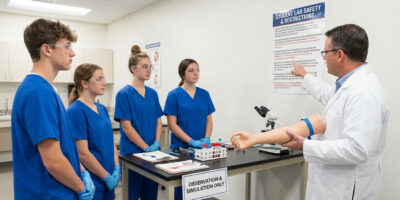
Trauma-informed care is a framework that has become standard across healthcare settings, social services, and educational institutions over the past two decades. For high school students beginning to explore clinical environments, understanding what trauma-informed care means, how it influences clinical behavior, and why it matters gives them a more accurate picture of how skilled providers actually work. Students participating in medical internship opportunities for high school students who have this foundational knowledge observe clinical interactions with significantly more analytical depth than those encountering the concept for the first time at the bedside.
Here, we will examine the core principles of trauma-informed care in plain terms, describe what it looks like in clinical practice, and outline how teen interns can apply this framework to their own conduct and observations. Students preparing for any form of clinical observation can also benefit from reviewing this early healthcare exploration, which covers the practical expectations for minors across clinical environments.
What Trauma-Informed Care Means
Trauma-informed care is not a specific clinical technique. It is an orientation toward patients that recognizes the high prevalence of trauma exposure in the general population and the ways that unaddressed trauma affects health behavior, healthcare engagement, and clinical outcomes.
The core assumption of a trauma-informed approach is that a significant proportion of the patients a clinical professional encounters have experienced adverse events, whether in childhood or adulthood, that affect how they respond to clinical environments, authority figures, physical examination, and medical procedures. A patient who becomes agitated during a routine physical exam may have a trauma history that makes being touched by a stranger in a position of authority genuinely distressing. A patient who repeatedly misses follow-up appointments may be navigating circumstances that make consistent healthcare engagement practically difficult rather than simply unmotivated.
Trauma-informed care does not require clinical professionals to know or address a patient’s trauma history directly. It requires them to behave in ways that do not inadvertently re-traumatize patients and that support the patient’s sense of safety, control, and dignity throughout the clinical encounter.
The Six Core Principles in Practice
The Substance Abuse and Mental Health Services Administration identifies six core principles of trauma-informed approaches that are widely used as a practical framework in clinical training. Teen interns who understand these principles will recognize them in the behavior of skilled clinicians during observation.
Safety. Clinical environments should be physically and emotionally safe for patients. This includes the physical layout and privacy of examination spaces, the language used by staff, the way staff announce themselves before entering, and the consistency of the clinical environment from visit to visit. Teen interns should notice how clinical professionals create a sense of safety before beginning any clinical interaction.
Trustworthiness and transparency. Trauma-informed providers explain what they are about to do before they do it, seek explicit consent for each component of an examination, and are honest with patients about what they know and do not know. This predictability reduces anxiety and supports patient cooperation.
Peer support. In community and behavioral health settings, peer support workers, individuals with lived experience of health challenges who are trained to support other patients, are increasingly recognized as a component of trauma-informed care. Teen interns observing in community clinics or mental health outreach settings may encounter this role.
Collaboration and mutuality. Trauma-informed care recognizes that power imbalances in clinical relationships can be retraumatizing, and works to flatten those imbalances wherever possible. This includes involving patients in clinical decisions, offering choices where choices exist, and treating the patient as an active participant in their own care rather than a passive recipient.
Empowerment, voice, and choice. Skilled providers in trauma-informed settings consistently look for opportunities to give patients a sense of control over their clinical experience. This might be as simple as offering a patient a choice between two equivalent approaches to an examination or explaining the purpose of a procedure in a way that allows the patient to ask questions before consenting.
Cultural, historical, and gender considerations. Trauma-informed care recognizes that trauma is not distributed equally across populations and that historical experiences of healthcare institutions, including histories of medical experimentation, forced sterilization, and discriminatory treatment, affect how some communities relate to clinical care. Providers in trauma-informed settings are trained to recognize these contexts and to practice accordingly.
What This Looks Like for a Teen Intern
Teen interns in clinical settings are not responsible for applying trauma-informed care principles. They are observers. But understanding these principles changes what they are able to see.
A student who knows that trauma-informed care requires providers to announce themselves before entering, to explain each component of an examination before beginning, and to offer patients explicit choices during the clinical encounter will notice when these practices are present and when they are absent. They will observe that the most skilled clinicians they encounter tend to do these things consistently, almost automatically, in ways that are invisible to an observer who does not know what to look for.
Teen interns should also apply the principles of safety and respect to their own conduct in clinical environments. Their presence in a clinical setting should not increase any patient’s sense of uncertainty, discomfort, or vulnerability. This means maintaining a calm and quiet presence, staying in the background of clinical interactions, and never commenting on or reacting visibly to patient behavior or history in any patient-accessible area.
The Substance Abuse and Mental Health Services Administration publishes foundational resources on trauma-informed approaches that provide a more detailed theoretical grounding for students who want to understand the evidence base behind this framework.
Trauma-Informed Principles in Global Health Settings
In international clinical settings, trauma-informed awareness takes on additional dimensions. Patients in resource-limited healthcare environments may have experienced collective or structural trauma, including displacement, political violence, food insecurity, or systematic exclusion from healthcare, that shapes their engagement with clinical services in ways that individually-focused trauma frameworks do not fully capture.
Teen interns in global health programs who understand this context are better prepared to observe clinical interactions accurately. They are less likely to misinterpret patient hesitancy, inconsistent follow-through on clinical recommendations, or resistance to certain clinical procedures as lack of motivation or understanding, and more likely to recognize these behaviors as rational responses to experiences that have not been shared or disclosed in the clinical encounter.
The World Health Organization’s resources on trauma and health provide context for understanding mental health and trauma in global settings, which is directly relevant for students preparing for international clinical programs.
Building Trauma-Informed Habits as a Student
Students who want to develop trauma-informed habits early in their professional development can begin with practices that are fully appropriate at the high school level and that will serve them throughout any healthcare career.
Consistently asking for permission before acting. In any interaction, even nonclinical ones, the habit of asking before doing, whether that means moving a piece of equipment, entering a patient area, or asking a question, builds the reflexive respect for patient autonomy that trauma-informed care requires.
Keeping reactions internal. In clinical settings, visible surprise, discomfort, or judgment on the part of an observer can affect a patient’s willingness to disclose or engage. Practicing neutral, attentive presence regardless of what is being observed is a professional skill that takes deliberate effort to develop.
Reflecting honestly on assumptions. After each clinical observation session, students who ask themselves what assumptions they brought to the observation and whether those assumptions held up are developing the self-awareness that trauma-informed practice requires at every level.
Frequently Asked Questions
What is trauma-informed care and why does it matter for high school interns?
Trauma-informed care is a clinical framework that recognizes the high prevalence of trauma exposure in the general population and the ways that unaddressed trauma affects health behavior, healthcare engagement, and clinical outcomes. It does not require providers to know or address a patient’s trauma history directly. It requires them to behave in ways that support patient safety, dignity, and control throughout the clinical encounter. For high school interns, understanding this framework changes what they are able to observe, because they can recognize specific clinical behaviors as deliberate professional choices rather than routine actions.
What are the six core principles of trauma-informed care?
The six core principles identified by the Substance Abuse and Mental Health Services Administration are safety, trustworthiness and transparency, peer support, collaboration and mutuality, empowerment and choice, and cultural and historical considerations. Safety refers to creating physically and emotionally safe clinical environments. Trustworthiness means explaining actions before taking them and seeking explicit consent. Peer support recognizes individuals with lived experience as a component of care. Collaboration works to flatten power imbalances between providers and patients. Empowerment offers patients meaningful choices within clinical encounters. Cultural considerations acknowledge that historical experiences of healthcare institutions affect how communities engage with clinical care.
How can a teen intern apply trauma-informed principles during clinical observation?
Teen interns apply trauma-informed principles primarily through their own conduct in clinical spaces. This means maintaining a calm, neutral, and quiet presence in patient areas, staying in the background of clinical interactions, avoiding any visible reaction to patient history or behavior, asking for permission before moving or acting in any clinical context, and never commenting on patient information in any patient-accessible space. These behaviors reflect the same respect for patient safety and dignity that trauma-informed care requires of licensed providers, adapted to the observational role appropriate for a minor.
Does trauma-informed care apply differently in global health settings?
Yes, with additional dimensions. In international clinical settings, patients may have experienced collective or structural trauma, including displacement, political violence, food insecurity, or systematic exclusion from healthcare systems, that shapes their engagement with clinical services in ways that individually-focused trauma frameworks do not fully capture. Teen interns in global health programs who understand this context are less likely to misinterpret patient hesitancy or resistance to clinical recommendations as lack of motivation, and more likely to recognize these responses as rational reactions to experiences that have not been shared in the clinical encounter.
Why do trauma-informed providers explain actions before performing them?
Explaining actions before performing them is a core component of the trustworthiness principle in trauma-informed care. For patients with trauma histories, unexpected physical contact, sudden movements, or unexplained procedures can trigger distress responses that are not proportionate to the clinical situation. Providers who announce what they are about to do, seek explicit consent for each step of an examination, and proceed at a pace the patient can follow are reducing the likelihood of inadvertent re-traumatization. Teen interns who observe this behavior consistently in skilled clinicians should understand it as a deliberate professional choice, not a conversational courtesy.
How does understanding trauma-informed care help in a medical school interview?
Medical school interviews frequently include scenarios that test how applicants think about patient behavior, clinical communication, and professional responsibility. A student who understands trauma-informed care can speak specifically about how trauma history affects patient engagement, why certain clinical behaviors are designed to support patient safety rather than simply comply with protocol, and how self-awareness relates to effective clinical practice. This level of clinical literacy, grounded in observed experience rather than abstract study, is the kind of response that distinguishes genuinely prepared applicants from those who have memorized talking points.
What habits can a high school student develop now that reflect trauma-informed principles?
Students can begin developing trauma-informed habits at the high school level by consistently asking for permission before acting in any context that affects another person, maintaining neutral and non-reactive expressions in emotionally charged environments, reflecting honestly after clinical observations on assumptions they brought and whether those assumptions held, and treating all information encountered in clinical contexts as confidential regardless of whether it is formally protected. These habits are appropriate at the student’s current level and directly transferable to every clinical role the student may hold in the future.