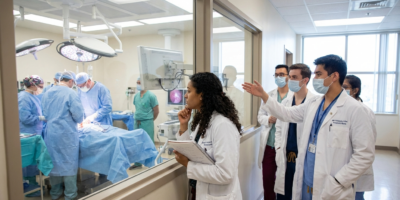
The UCSF acceptance rate for the School of Medicine hovers around 1.7% to 2.5% in recent admissions cycles, placing it among the most selective MD programs in the United States. For the entering class of 2023, roughly 9,700 applicants competed for approximately 165 seats in the MD program. Those numbers are stark, and they should be taken seriously. But selectivity alone does not tell you whether UCSF is a realistic target or how to build a competitive application. This article breaks down the actual data, explains what UCSF values in its holistic review, and offers practical steps you can take well before you submit your primary application.
This piece focuses specifically on the UCSF School of Medicine MD program, not the UCSF School of Dentistry or other professional schools housed on the same campus. The statistics and advice here are drawn from the most recent publicly available admissions data and from published UCSF admissions resources. Where projections are made for the 2025-2026 cycle (entering class of 2026), they are based on consistent historical trends, not guarantees.
UCSF Medical School Acceptance Rate and Class Profile
The raw acceptance rate is the number that gets attention, and at UCSF it tells a clear story: this is an extraordinarily competitive program. Based on recent entering classes, the MD program receives between 8,000 and 10,000 applications each cycle and matriculates around 165 students. An additional 20 to 25 students enter through the MD/PhD program. Simple math puts the overall acceptance rate in the neighborhood of 1.7% to 2%.
For context, the national average acceptance rate across all US MD-granting medical schools typically falls between 40% and 45% when measured by total applicants versus total acceptees. UCSF is well below that average, and the competition is concentrated among already strong applicants. Most people applying to UCSF have high academic credentials and substantial extracurricular profiles.
Average MCAT and GPA for Accepted Students
For the most recent entering classes, accepted students at UCSF have reported average MCAT scores in the range of 517 to 520 and average GPAs in the range of 3.85 to 3.95. These are among the highest averages at any US medical school. The AAMC’s Medical School Admission Requirements database is the most reliable source for specific, year-by-year breakdowns of these figures, and it is worth consulting before you finalize your school list.
It is important to understand what these averages mean in practice. They are not cutoffs. UCSF does not publish a minimum MCAT or GPA requirement. Some accepted applicants fall below the average in one metric and compensate with exceptional strength elsewhere. But falling significantly below both averages without a compelling story and strong non-academic credentials makes an already difficult application substantially harder.
The California Residency Advantage
UCSF is a public university, and California residents receive meaningful preference in admissions. Historically, 75% to 80% of each matriculating class consists of California residents. Because a large share of applicants come from out of state, the effective acceptance rate for non-California residents is notably lower than the already slim overall figure.
If you are an out-of-state applicant, this does not mean UCSF is off limits. It means your application needs to be particularly strong, and you should have a clear, honest reason for wanting to attend a California public medical school. Admissions committees can tell when someone has added UCSF to a list simply because of its ranking.
What UCSF Holistic Review Actually Means
UCSF uses a holistic review process, and that phrase gets used so often across medical school websites that it can start to sound like marketing language. At UCSF, it carries specific weight. The admissions committee evaluates academic metrics alongside research experience, clinical exposure, leadership, service, life experiences, and a demonstrated commitment to UCSF’s institutional priorities: serving diverse and underserved populations, advancing health equity, and contributing to scientific discovery.
This means that a 520 MCAT alone will not earn you an interview if the rest of your application is thin or unfocused. It also means that a slightly lower score paired with sustained, meaningful engagement in research, clinical settings, and community work can still result in an invitation to interview. The key word is “meaningful.” Admissions reviewers at schools like UCSF are experienced at distinguishing between genuine engagement and resume padding.
Research Matters More Here Than at Most Schools
UCSF is one of the top biomedical research institutions in the world, and its admissions process reflects that identity. While research experience is encouraged at most medical schools, at UCSF it carries particular importance. This is especially true for the MD/PhD program, but even MD-only applicants benefit from demonstrating intellectual curiosity through research.
Research does not have to be bench science. Clinical research, public health investigations, community-based participatory research, and health policy work all count. What matters is that you can articulate what you did, what you found (or tried to find), and what the experience taught you about inquiry and evidence.
Clinical Experience and the Role of Observation
Every serious medical school application requires clinical experience, and UCSF is no exception. The committee wants to see that you have spent real time in clinical environments, observing patient care, understanding the daily realities of medicine, and reflecting on what you witnessed. Shadowing, volunteering in clinical settings, and working as a scribe or medical assistant are all common pathways.
What distinguishes a strong clinical narrative from a weak one is depth of reflection. It is not enough to list hours. You need to be able to describe specific moments, patients (without identifying information), or clinical situations that shaped your understanding of medicine. This applies whether your clinical experience was gained at a teaching hospital in San Francisco or through a structured program abroad. The AAMC’s overview of the medical school application process outlines how clinical experience fits into the broader application, and it is a useful reference for mapping out your timeline.
MD vs. MD/PhD: Understanding the Two Tracks
UCSF offers both an MD program and a combined MD/PhD program, and the admissions processes, while related, are distinct. The MD/PhD program typically matriculates 20 to 25 students per cycle and is designed for applicants who intend to pursue careers as physician-scientists. Applicants to this track need strong research backgrounds, usually including at least one to two years of dedicated research experience and, in many cases, a published or submitted manuscript.
The MD program is broader in scope. While research is valued, the committee also places significant emphasis on clinical commitment, leadership, community engagement, and alignment with UCSF’s mission around health equity and public service. If you are unsure which track is right for you, consider whether your long-term career vision centers on running a research lab, practicing clinical medicine, or blending both. The MD/PhD track is a serious commitment, adding several years to your training, and should not be chosen solely because you think it improves your odds.
Building an Application That Fits UCSF’s Mission
UCSF’s admissions materials consistently emphasize a few themes: commitment to underserved populations, interest in health disparities, cultural humility, scientific rigor, and collaborative spirit. If your experiences genuinely align with these themes, your application will naturally speak to the committee. If they do not, forcing the connection will not help.
Writing About Clinical and Global Health Experiences
One of the most common application missteps is describing clinical or service experiences in vague, self-congratulatory terms. Admissions readers at UCSF have seen thousands of essays about “learning the importance of empathy.” What they respond to is specificity: a particular interaction, a specific challenge, a concrete observation that led to genuine reflection.
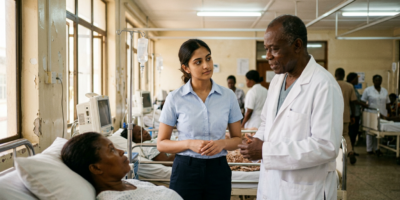
If you have participated in a structured global health program, such as those offered by organizations like International Medical Aid, the same standard applies. The value of observing healthcare delivery in a resource-limited setting is real, but only if you can articulate what you actually learned, how it changed your understanding of healthcare systems, and how it connects to your goals. Experiences in settings where clinical officers, community health workers, and nurses carry a broader scope of responsibility can offer valuable perspective on healthcare delivery models, workforce challenges, and the social determinants of health. What matters is that you engaged ethically, observed carefully, and reflected honestly.
UCSF’s secondary application often includes prompts about diversity, challenges, and teamwork. These prompts reward genuine stories over polished performances. If you have worked across cultural or linguistic barriers, confronted your own assumptions, or observed how structural inequity affects patient outcomes, those experiences belong in your application, provided you write about them with honesty and nuance.
Letters of Recommendation and Timing
Strong letters from faculty or clinicians who know you well carry more weight than generic letters from prominent names. UCSF does not publish a unique letter requirement that differs drastically from other schools, but the expectation is clear: your recommenders should be able to speak in detail about your abilities, character, and potential.
Timing also matters. UCSF participates in the AMCAS application system, and applications open in late May each year. Submitting a complete, polished application early in the cycle is advantageous. This does not mean you should rush a weak application to meet an early submission date. A complete, well-written application submitted in June or July is better than a careless one submitted on day one. The UCSF School of Medicine admissions page provides the most current deadlines and requirements, and you should check it directly rather than relying on third-party summaries.
Realistic Expectations and What to Do If UCSF Is Your Reach
For most applicants, UCSF is a reach school. That is not a discouraging statement; it is a factual one. With an acceptance rate near 2%, even applicants with strong credentials face long odds. The practical response is to build a balanced school list that includes programs where your stats fall at or above the median, programs where your mission and interests align closely, and a handful of aspirational targets like UCSF.
If UCSF is on your list, treat the secondary application with particular care. Many applicants invest heavily in the primary AMCAS application and then treat secondaries as afterthoughts. At a school with this level of competition, a thoughtful, specific secondary essay can be the difference between an interview invitation and a quiet rejection.
Rejection from UCSF is not a reflection of your potential as a physician. Many outstanding doctors trained at schools that are less selective but equally rigorous in their clinical and scientific preparation. The goal of the application process is not to attend the most prestigious school possible; it is to find the program where you will train well, grow as a clinician and person, and be supported in pursuing the kind of medicine you want to practice.
Frequently Asked Questions
Does UCSF accept many out-of-state medical school applicants?
UCSF does accept out-of-state applicants, but California residents make up roughly 75% to 80% of each entering class. This means the effective acceptance rate for non-residents is considerably lower than the overall rate of approximately 2%. Out-of-state applicants should have strong credentials and a genuine, articulated reason for wanting to train at UCSF specifically.
What MCAT score do I need to be competitive at UCSF?
Recent entering classes have reported average MCAT scores in the 517 to 520 range. There is no published minimum, and UCSF uses holistic review, so a slightly lower score can be offset by exceptional experiences and a compelling narrative. However, scores significantly below this range will make an already competitive process harder.
How important is research for getting into UCSF School of Medicine?
Research is highly valued at UCSF, particularly given the institution’s identity as a leading biomedical research center. For the MD/PhD program, extensive research experience is essentially required. For the MD program, research is not mandatory in the same way, but meaningful involvement in research, whether clinical, basic science, or public health, strengthens an application considerably and signals alignment with UCSF’s institutional priorities.