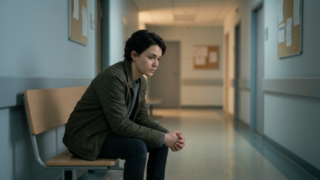
There are clinical experiences that pre-health students are prepared for, and those that they are not. Most pre-health preparation covers the clinical content of medicine: anatomy, physiology, pathology, and pharmacology. It does not typically prepare students for the experience of watching a patient in pain that is not being managed, a procedure that is harder to observe than anticipated, a resource limitation so stark that the gap between care needed and care available is visible and irreducible. Or for the particular disorientation of witnessing a death for the first time and not knowing what to do with yourself afterward.
The first time you witness something that upsets you in a clinical setting, your response will probably surprise you in some way. You may feel more distressed than you expected. You may feel less. You may feel a detachment that you did not ask for and that unsettles you. You may feel anger at the clinical system, grief for a patient, helplessness at the gap between what medicine can do and what this patient needed. All of these responses are normal. None of them are warning signs about your fitness for medicine. All of them are worth taking seriously and handling well.
Want to know about what to do in the immediate aftermath of a difficult clinical experience? Here we present how to manage your response in the moment, what to do after the shift, how to process the experience in a way that fosters learning rather than avoidance, and how to recognize when a clinical experience has affected you more than your own coping strategies can address on their own.
In the Moment: What to Do Right Away
When something happens during a clinical shift that upsets you, your first obligation is to remain present in a way that does not disrupt clinical care. This means not leaving the clinical area without permission, not expressing your emotional response in ways that are visible to the clinical team or other patients, and not allowing your distress to become a situation the clinical team needs to manage in addition to everything else they are already managing.
This is not a requirement to suppress your response indefinitely. It is a requirement to contain it temporarily. There is a meaningful difference between the two. Containing a response means holding it until you are in an appropriate context to express and process it. Suppressing a response means denying its existence, which is neither healthy nor sustainable and tends to produce larger emotional consequences later.
If you feel that your response is becoming physically unmanageable, that you are lightheaded, that you need to sit down, that staying in the clinical area is genuinely not possible in that moment, step out quietly and find your program coordinator or a non-clinical area where you can collect yourself. Let someone on the clinical team know you are stepping out. Do not simply disappear. Returning to the shift after a brief break, if that is possible, is better than ending the shift early if the clinical content no longer poses an immediate difficulty.
Immediate Grounding Techniques That Work in Clinical Environments
Several grounding techniques can be used discreetly during a clinical shift without drawing attention or disrupting the environment. Slow, deliberate breathing, extending your exhale to be longer than your inhale, engages the parasympathetic nervous system and reduces the physiological arousal that accompanies acute distress. This can be done while standing still and requires no visible change in posture or position.
Directing your attention to a specific, non-clinical sensory anchor in the environment, the texture of the wall you are standing near, the sound of your own breathing, the weight of your feet on the floor, interrupts the cognitive loop of the distressing experience and returns your awareness to the immediate physical present. This technique is effective in environments where you cannot move freely and must remain present, while still regulating your nervous system.
If the clinical environment permits a brief step away, a minute of focused attention on a neutral environment, a corridor, an outdoor space, or a non-clinical waiting area is enough for most people to return to a functional baseline. The goal is not to feel fine. The goal is to feel steady enough to return to the shift and complete your commitment to the clinical team and to the learning opportunity the shift represents.
After the Shift: Processing What You Witnessed
Research on moral distress and emotional responses in health trainees consistently identifies post-shift processing as the most important factor in whether a difficult clinical experience produces growth or accumulates as an unprocessed psychological burden. The students who handle difficult clinical experiences best are not the ones who feel least affected. They are the ones who process their responses most thoroughly. Feeling less affected does not indicate greater resilience. Processed responses do.
Processing begins with naming what you witnessed and what you felt. The four-part reflective framework described in the article on reflective journaling applies directly here: what happened, what you felt and why, what it raised for you intellectually or ethically, and what you will do next. Writing this reflection within two hours of the end of the shift, while the details and the emotional content are still accessible, is significantly more effective than delaying it.
If you find that the reflective writing process is not bringing relief but is instead intensifying your distress, that is a signal to speak with someone rather than to continue writing alone. Your program coordinator, a counselor, a trusted mentor, or a fellow intern who was present during the same shift are all appropriate resources. The goal of processing is not to feel better immediately. It is to move the experience from raw and unprocessed to examined and integrated. Sometimes that movement requires another person.
Talking to Someone: When and How
Knowing when to talk to someone versus when to process alone is one of the more important judgment calls a pre-health student can make during a clinical placement. A useful heuristic is that solo processing is sufficient when the experience was difficult, but does not persist in your thinking beyond the immediate aftermath. When an experience stays with you, recurs in your thoughts without resolution, affects your sleep, your appetite, or your engagement with subsequent shifts, it is time to speak with someone.
Your program coordinator is your first point of contact for experiences that affected you professionally or that raised questions about your role in the clinical environment. A counselor or mental health professional is the appropriate resource for experiences that have had a significant personal psychological impact. These are not mutually exclusive, and seeking one does not prevent you from also seeking the other.
The AMA’s guidance on student well-being and psychological support emphasizes that help-seeking is a professional strength rather than a professional weakness. Physicians who learn early to recognize when their own coping resources are insufficient and to seek appropriate support are more resilient over the course of a career than those who treat every difficult experience as something to be handled alone. The habit of appropriate help-seeking is worth developing now, in the lower-stakes context of a pre-health placement, rather than during residency, when the stakes and volume are considerably higher.
Understanding Moral Distress and What It Means
Some clinical experiences upset students not because of their emotional intensity but because of the ethical conflict they present. Watching a clinical team make a resource allocation decision that leaves a patient without the care they need. Observing a procedure conducted without what appears to be adequate patient communication or consent. Witnessing an interaction between a clinician and a patient that seems disrespectful of the patient’s dignity. These experiences produce a specific kind of distress called moral distress, the discomfort of being in a situation where you can see clearly what you believe should happen and cannot make it happen.
Moral distress is common in clinical environments and increases in frequency and intensity as clinical training becomes more serious. Learning to recognize it as a distinct experience, separate from general emotional upset, is important because it requires a different kind of processing. Moral distress that is examined and integrated can become a source of professional clarity and ethical commitment. Moral distress that is suppressed or avoided tends to produce either cynicism or detachment, both of which are significant professional risks over the course of a clinical career.
When you experience what feels like moral distress during an observation shift, bring it explicitly into your reflective journal entry: what was the ethical conflict, whose interests were in tension, how did the clinical team navigate it, and what would you have needed to believe or to know in order to feel at peace with the resolution? You may not reach peace immediately. The goal is engagement, not resolution.
What This Experience Tells You About Your Readiness for Medicine
Being upset by something you witnessed in a clinical setting does not disqualify you from medicine. In many cases, it is evidence that you are paying close enough attention to be genuinely affected by what you are seeing, which is exactly the kind of engagement that clinical training is designed to deepen. Physicians who cannot be affected by their patients’ suffering are not better doctors. They are often less effective ones.
What matters is not whether you were affected but how you handled being affected. Did you manage your response in a way that maintained professionalism and protected the clinical environment? Did you process the experience thoroughly afterward? Did you extract learning from it rather than avoiding it? Did you seek support when your own resources were insufficient? Affirmative answers to those questions are what good professional development looks like.
Students who are considering how their responses to difficult clinical experiences will read in applications and interviews should understand that the most compelling application narratives are almost never about easy experiences. They are about the difficult ones, handled with honesty, professionalism, and genuine reflection. Understanding how to develop a standout application narrative starts with recognizing that your difficult clinical days are among your most valuable application assets when they are processed well and described with specificity.
Common Mistakes When Handling Difficult Clinical Experiences
The most common mistake is attempting to suppress the response entirely in the name of professionalism. Professionalism does not mean not having emotional responses to clinical experiences. It means managing them appropriately. Suppression does not produce professionalism. It produces delayed responses that often surface at more difficult moments.
A second mistake is discussing the experience in an unprocessed form with people who were not present and who do not have a clinical context, including friends and family. The impulse to decompress is understandable, but sharing raw clinical distress with people who cannot contextualize it often amplifies the distress rather than reducing it and can also produce patient privacy concerns if the discussion includes identifying details.
A third mistake is allowing a difficult experience to function as evidence against pursuing medicine. A difficult clinical day is not a signal that medicine is wrong for you. It is a signal that medicine is genuinely demanding and that you are taking that seriously. The students who never find anything in a clinical environment difficult are often the ones who are not paying close enough attention. The students who find things difficult and handle that difficulty well are the ones the profession is looking for.
What to Do Next
If you have had a recent difficult clinical experience that you have not yet processed, do that today. Use the four-part reflective framework. Write specifically about what you witnessed, what you felt, what it raised intellectually or ethically, and what you will do next. If writing is not producing movement, speak with your program coordinator or a counselor. If you have not yet had a difficult clinical experience, continuing to engage deeply with global health environments means it is a matter of time. Knowing what to do when it happens is preparation that matters.
Frequently Asked Questions
Is it normal to feel detached rather than upset after a difficult clinical experience?
Yes. Detachment is one of several normal responses to emotionally intense clinical experiences. It can be a protective mechanism that allows you to remain functional in a demanding environment. What matters is whether the detachment persists beyond the clinical context and whether it is accompanied by any other signs of avoidance or psychological burden. If you find yourself emotionally detached across multiple aspects of your life following a difficult clinical shift, that warrants attention and, if it persists, a conversation with a counselor.
Should I tell my program coordinator every time I am upset after a shift?
Not necessarily after every shift, but certainly when an experience is affecting you beyond the immediate aftermath. If a difficult experience recurs in your thinking, affects your sleep or appetite, or influences your engagement with subsequent shifts, informing your program coordinator is appropriate and often leads to support that makes a meaningful difference. Program coordinators are experienced with the range of student responses to clinical placements and can help you identify whether what you are experiencing is within the expected range or warrants additional resources.
How do I know if what I witnessed was actually problematic or just new and unfamiliar?
This distinction is worth sitting with carefully rather than resolving quickly. Not everything that upsets you in an international clinical setting reflects a genuine ethical problem. Some upsets reflect the disorientation of encountering clinical practices that are different from what you expected but that are appropriate given the local context and resource constraints. Others reflect genuine ethical problems that deserve to be examined. Bringing specific observations to your program coordinator and asking for their interpretation is the most reliable way to distinguish between the two.
What should I do if I witness something that seems like patient abuse or negligence?
Report it to your program coordinator immediately and specifically. Describe what you observed as factually and precisely as possible without editorializing. Your coordinator will assess the situation and determine the appropriate response within the institutional context. Do not attempt to intervene directly in a clinical situation you are not authorized to participate in, even if what you observed was genuinely problematic. Your role is to report. The response is the program’s and the institution’s responsibility.
Is it okay to cry or show emotion during or after a clinical shift?
During a shift, containing your emotional response for the duration of the clinical encounter is a professional requirement. After the shift, in an appropriate context, expressing emotion including crying is a healthy and normal part of processing difficult experiences. Seeking out a private space, a bathroom, an outdoor area, a quiet room, where you can release a response that has been contained is both healthy and appropriate. The goal is not to prevent emotional responses but to express them in contexts that do not disrupt clinical care or compromise patient dignity.
How do I go back to a placement after a very difficult experience?
Give yourself the time the evening after the shift to process the experience as thoroughly as possible. Then return. The return is important, not as an act of suppression but as an act of professional commitment and, more practically, because the placement continues to offer learning that avoidance forecloses. If returning feels genuinely impossible, speak with your program coordinator. In most cases, returning after a difficult shift with a processed response and a clear plan for the next shift is both possible and beneficial.
Does being affected by difficult clinical experiences mean I am not suited for medicine?
No. Physicians are affected by their patients’ suffering throughout their careers. The question is not whether you will be affected but how you will handle being affected. The students who process difficult experiences thoroughly, maintain their professional commitments, and seek support when needed are demonstrating exactly the kind of resilience and self-awareness that medical training is designed to develop. Those who feel nothing, by contrast, are often those paying insufficient attention.
How does managing this well help my application?
Admissions committees and interviewers look explicitly for evidence that applicants can handle the emotional demands of clinical practice without losing their professional effectiveness or their compassion. A student who can describe a genuinely difficult clinical experience, explain how they managed their response in the moment, describe the processing they did afterward, and articulate what they learned from it is demonstrating psychological maturity and professional readiness that cannot be demonstrated any other way.