Why Nursing Internships Matter in 2026
Nursing has always been a profession built on compassion, resilience, and skill. In 2026, it is also one of the most in-demand careers in healthcare. The United States has more than 3.4 million employed registered nurses, yet updated projections from the Health Resources and Services Administration (HRSA) show an estimated 8% national RN shortage, with a deficit of more than 183,000 full-time equivalent nurses. Globally, the World Health Organization reports a shortage of 5.8 million nurses, with nearly 70% of that deficit concentrated in Africa and the Eastern Mediterranean. Healthcare systems everywhere are stretched, and the need for qualified nurses continues to grow.
At International Medical Aid (IMA), we understand that the journey to becoming a nurse begins long before graduation. Classroom learning provides the foundation, but practical experience is what shapes a student into a confident, competent professional. That is why our nursing internships are designed to immerse students in real-world healthcare environments while providing structured mentorship and cultural engagement.
Whether you are enrolled in a pre nursing program or already pursuing your nursing degree, participating in a well-structured internship can give you the clinical exposure, cultural awareness, and professional connections you need to stand out in this competitive field.
The Growing Demand for Nurses in 2026
According to the U.S. Bureau of Labor Statistics, employment of registered nurses is projected to grow 5% between 2024 and 2034, faster than the average for all occupations. About 189,100 openings for registered nurses are projected each year, on average, over the decade. This demand is fueled by retiring nurses, an aging patient population, and expanded access to healthcare services. The BLS also reports that the median annual wage for registered nurses reached $93,600 as of May 2024, reflecting both the value and the demand for skilled nursing professionals.
The pipeline into nursing is under pressure as well. According to the American Association of Colleges of Nursing (AACN), more than 80,000 qualified applicants were turned away from nursing schools in 2024, largely due to insufficient faculty and limited clinical placement sites. For students who are accepted, finding ways to differentiate themselves early is more important than ever.
For students, this reality means two things: first, the opportunities in nursing are abundant, and second, competition for the most rewarding positions is intense. An internship with IMA ensures that you are not only academically prepared but also clinically and culturally experienced. When admissions committees and employers see that you have completed a structured nursing internship, they recognize that you have gone above and beyond the classroom.
The Global Nursing Shortage and Why Location Matters
The nursing shortage is not only an American problem. The WHO’s State of the World’s Nursing 2025 report, released in May 2025, documented a global nursing workforce of 29.8 million, up from 27.9 million in 2018. While progress has been made (the shortage has dropped from 6.2 million in 2020 to 5.8 million), the gap remains enormous and deeply unequal. Africa is projected to see only a 7% increase in its nursing workforce between 2023 and 2030, and as of 2023, the African region had approximately 1.7 million nurses, the second-lowest of any WHO region.
This context is important for understanding why IMA places interns in Africa and South America. These are not arbitrary locations. They are regions where healthcare needs are most acute, where nursing professionals are in critically short supply, and where structured clinical exposure provides learning opportunities that students simply cannot get in a well-resourced domestic setting. Working in these environments teaches interns how to observe, support, and learn within healthcare systems operating under genuine constraints. That experience builds perspective that nursing school admissions committees and future employers take seriously.
How International Medical Aid Structures Nursing Internships
Global Learning Environments
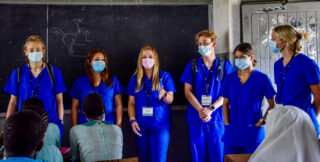
IMA offers nursing internships for nursing students across Africa and South America. Our programs are carefully designed to provide structured exposure in hospitals, clinics, and community health projects. Working in different healthcare settings teaches interns how social, economic, and cultural conditions influence care delivery.
For example, an intern placed in Kenya might spend mornings shadowing in a teaching hospital and afternoons assisting in rural outreach programs. In Peru, an intern may rotate between urban clinics and public health campaigns in underserved communities. These experiences go far beyond observation, offering opportunities to contribute meaningfully while learning under supervision.
Mentorship and Guidance
Every IMA intern is paired with experienced healthcare professionals who act as mentors. This ensures that tasks are assigned appropriately and that learning objectives are met. Mentorship is not only about teaching clinical skills but also about developing professional confidence and ethical decision-making. Students who want to understand how international nursing internships benefit their careers will find that the mentorship component is one of the most consistently valued parts of the experience.
Housing, Safety, and Support Abroad
A common concern for students and their families is what daily life looks like during an international placement. IMA provides structured housing, reliable transportation, and 24/7 on-site support for every intern. We know that students do their best learning when they feel safe and settled, and we take the logistics of housing and support seriously. For a closer look at how support systems work in our programs, our overview of how internship housing and support systems define your learning experience abroad covers the details.
Types of Nursing Internships We Offer
Summer Nursing Internships
For students who cannot commit to a long-term program, our summer nursing internships provide intensive exposure during academic breaks. These placements typically last two to eight weeks and are designed to maximize both clinical learning and cultural immersion. If you are weighing whether summer is the right time or if fall or winter might be a better fit for your schedule, we have written about timing options for pre-health internships that applies to nursing students as well.
Extended Placements
Students who wish to gain deeper experience can apply for longer placements of up to twelve weeks. These nursing student internships allow for more sustained mentorship, expanded clinical responsibilities within approved limits, and greater cultural integration.
Specialty-Focused Programs
Nursing has many specialties, and our internships reflect this diversity. Depending on your placement, you may gain exposure in pediatrics, oncology, emergency care, mental health, or maternal and child health. Early experience in these areas can help you decide which specialty you wish to pursue in the future.
Who Should Apply
Our programs are open to:
- Students in a nursing program for pre nursing coursework track.
- Undergraduate students pursuing a pre nursing program.
- Current nursing students seeking additional clinical exposure.
- Recent graduates preparing for advanced degrees in nursing or public health.
Successful applicants are adaptable, empathetic, and eager to learn. They understand that an internship for nursing students is not just about gaining experience for their résumé; it is about contributing to communities while developing into a well-rounded professional.
Application Process and Requirements
Applying for an IMA internship is competitive but straightforward. Applicants typically need to provide:
- Proof of enrollment in a pre nursing program or nursing degree.
- Academic transcripts and GPA documentation.
- A recommendation letter from a professor or clinical instructor.
- A personal statement outlining goals for the internship.
- Vaccination records and proof of health clearance.
Because our programs fill quickly, students interested in nursing internships near me or abroad are encouraged to apply at least six months before their desired start date.
Global Destinations
One of the most compelling aspects of joining IMA is the opportunity to work in regions where healthcare needs are most urgent. Our top overseas destinations include:
- Kenya: placements in teaching hospitals and rural clinics.
- Peru: rotations in both urban hospitals and public health outreach programs.
These environments challenge students to adapt and problem-solve, teaching lessons that will last throughout their careers. Given the WHO’s projection that Africa will account for a disproportionate share of the global nursing shortage through 2030, students who gain clinical exposure in these settings develop a perspective on healthcare delivery that few domestic-only experiences can match.
Benefits of a Nursing Internship with IMA
Academic Advantages
Students who complete internships for nursing students often use their experiences as the basis for capstone projects, research papers, or nursing school application essays. Admissions committees look favorably on applicants who demonstrate initiative and cross-cultural competence. With more than 80,000 qualified applicants turned away from U.S. nursing programs in 2024 alone, anything that helps you present a stronger, more distinctive application matters.
Professional Development
Participating in a nursing internship gives students a competitive edge when applying for jobs or advanced degree programs. Employers value candidates who have demonstrated resilience, adaptability, and hands-on experience in supervised clinical settings. With the BLS projecting 35% growth in nurse practitioner employment between 2024 and 2034, students who plan to pursue advanced practice roles will benefit from building a strong clinical foundation early.
Personal Growth
Living and working abroad builds independence, problem-solving skills, and cultural sensitivity. Interns return home not only as stronger students but also as more empathetic individuals ready to serve diverse communities. For students interested in the value of study abroad for pre-health students, the personal development component is often what makes the biggest long-term impression.
Letters of Recommendation and Professional References
A strong letter of recommendation from a clinical mentor who observed your work in a challenging, real-world setting carries weight. IMA’s mentorship structure means that the professionals guiding you have genuine insight into your abilities, your attitude, and your growth over the course of the program. For students applying to competitive BSN or MSN programs, or for those seeking their first nursing position, these references can set you apart. We have written about how to request letters after completing an internship, and the principles apply to nursing students at every level.
The Advanced Practice Pathway: Why Early Experience Matters
Many students who begin with a pre-nursing internship eventually pursue advanced practice roles such as nurse practitioner (NP), nurse midwife, or nurse anesthetist. The BLS projects 35% employment growth for these roles between 2024 and 2034, making them among the fastest-growing occupations in the country. For the second consecutive year, nurse practitioners are projected to be the single fastest-growing occupation in the United States.
What does this mean for students who are still early in their education? It means that the decisions you make now, including the clinical exposure you pursue, the mentors you learn from, and the settings you work in, all contribute to a foundation that will support you for years. Students who complete a structured international internship during their pre-nursing or undergraduate years enter graduate programs with a broader understanding of healthcare delivery, stronger clinical instincts, and a more grounded sense of what kind of nurse they want to become.
IMA does not guarantee admission to any advanced practice program, and no internship can substitute for the rigorous academic and clinical requirements those programs demand. But students who have already demonstrated initiative, cross-cultural competence, and the ability to learn in unfamiliar settings enter the application process with real substance to write and speak about.
Nursing Workforce Trends Students Should Understand
Making smart decisions about your nursing career starts with understanding the landscape. Here are several workforce realities that should inform how you plan your education and clinical experiences in 2026.
Turnover remains high. The 2025 NSI National Health Care Retention and RN Staffing Report estimates national RN turnover at approximately 16% in 2024, with more than 287,000 staff RNs leaving their positions. Hospitals hired roughly 385,000 RNs to backfill and grow staffing. This churn creates opportunity for new graduates, but it also means employers are looking carefully for candidates who show commitment, adaptability, and readiness to handle the demands of the role from day one.
Retirements are accelerating. An estimated one million nurses of all generations are expected to exit the workforce by 2030. When experienced nurses leave, the knowledge and mentorship they provided leave with them. Students who build strong clinical foundations early, including through structured internship experiences, are better positioned to step into roles that require more independence sooner than previous generations of new nurses might have expected.
Enrollment is rising, but not fast enough. AACN data released in June 2025 showed enrollment in BSN programs increased by 4.9%, or 12,434 students, in the most recent academic year. This is encouraging, but it does not yet close the gap created by faculty shortages, clinical site limitations, and the sheer scale of projected demand. The healthcare sector as a whole is projected to add more jobs than any other industry through 2034, with about 1.9 million annual openings across all healthcare occupations, according to BLS employment projections.
Post-pandemic stabilization is ongoing. The nursing workforce has largely stabilized since the acute disruptions of 2020 through 2022. According to the NCSBN’s 2024 National Workforce Study, 88% of licensed registered nurses are actively employed. The focus in 2026 has shifted from emergency recruitment to long-term retention and pipeline development. For students entering the field now, this means that the profession is no longer in crisis mode, but the structural shortages that existed before the pandemic are still very much present.
Challenges and Preparation
While the rewards of participating in one of IMA’s nursing internships are real, students must also prepare themselves for challenges. These programs are not designed as sightseeing opportunities. They are rigorous, immersive experiences that place you in hospitals, clinics, and communities where resources may be limited, cultural norms may differ significantly from what you are used to, and the expectations for professionalism are high. We believe that facing these challenges directly is what builds resilient, capable future nurses.
Financial Planning
One of the first considerations for prospective interns is cost. Program fees, international flights, and visa expenses are the responsibility of each student. While this can feel overwhelming, we encourage students to consider these costs an investment in their professional development. Many interns successfully offset expenses through fundraising campaigns, scholarships, or university-sponsored grants. IMA also provides detailed guidance on budgeting and offers suggestions for financial aid opportunities. By planning ahead, students can focus on their learning rather than on financial stress once abroad.
Working Across Cultural and Language Differences
Perhaps the most significant challenge for many interns is adapting to new cultural environments. In South America and Africa, local customs surrounding patient care, family involvement, and communication styles may differ from those in the United States. Language differences can add to the difficulty, particularly when understanding patient needs or following clinical instructions. IMA addresses this by providing pre-departure cultural training, basic language preparation, and on-site orientation. We remind interns that patience, humility, and a willingness to learn are the keys to overcoming these barriers.
Adjusting to Resource-Limited Settings
Another challenge comes from the reality of working in healthcare systems that may not have the same resources as those in wealthier nations. Students may encounter clinics with limited supplies, outdated equipment, or high patient-to-provider ratios. While this can be difficult to witness, it also provides a powerful learning opportunity. Interns gain a firsthand understanding of how nurses innovate, prioritize, and deliver effective care under constraints. These lessons often make students more adaptable and resourceful when they return home. Given that the WHO projects 70% of the global nursing deficit will remain concentrated in Africa and the Eastern Mediterranean through 2030, understanding resource-limited care is not an abstract exercise; it reflects the daily reality for millions of patients and healthcare workers worldwide.
Health and Safety Considerations
Traveling abroad for a nursing internship also requires attention to personal health and safety. Vaccinations, travel insurance, and adherence to health guidelines are essential. IMA ensures that every intern has access to safe housing, reliable transportation, and 24/7 on-site support. We also provide detailed guidance on personal safety, from local transportation to understanding regional health risks. Parents and family members who want to understand the full picture of how IMA handles safety and communication can find answers to the most common questions in our guide to what parents ask most about medical programs abroad. With preparation and vigilance, interns can remain safe while focusing on their work.
Emotional Preparedness
The emotional impact of working in underserved communities should not be underestimated. Interns may encounter patients facing severe illness, limited access to care, or preventable conditions that are rarely seen in more resourced settings. These experiences can be challenging, but they also instill a deep sense of empathy and purpose. We provide mentorship and debriefing opportunities so interns can process these encounters in a supportive environment.
The Importance of Preparation
At IMA, we emphasize preparation because we want every student to thrive. Our role is not only to place you in nursing internships in South America or Africa, but also to ensure you are ready to succeed in them. From the moment you apply, our team guides you through every step: preparing documents, planning travel, building cultural awareness, and ensuring you feel confident before departure.
When students commit to preparation as seriously as they commit to the internship itself, they enter the program ready to absorb, contribute, and grow. The challenges become stepping stones rather than obstacles, and the experience becomes not only smoother but far more meaningful. By the end of the program, most interns tell us that the very challenges they once worried about became the moments that shaped them most.
We emphasize preparation because we want every student to thrive, whether they are in nursing internships in South America or Africa.
How to Decide if an International Nursing Internship Is Right for You
Not every student needs an international internship, and not every student is ready for one at the same point in their education. Here are some honest questions to ask yourself before applying.
Where are you in your education? Students who have completed at least some foundational coursework in anatomy, physiology, or introductory nursing tend to get more out of a clinical placement than those who have not yet started any health-related classes. That said, pre-nursing students who are still early in their academic path can benefit significantly from the exposure, especially when it comes to confirming that nursing is the right career choice before committing further.
What do you want to learn? An international placement is most valuable when you approach it with specific learning goals. Do you want to see how community health education works in a low-resource setting? Are you interested in observing how nurses manage triage when specialists are hours away? Students with clear objectives tend to ask better questions, engage more fully with mentors, and leave with more useful material for applications and essays.
Can you handle discomfort? This is not about physical toughness. It is about emotional and intellectual flexibility. You will encounter situations where you do not know the answer, where you cannot communicate easily, and where the healthcare environment does not look like anything you have studied in a textbook. If you are the kind of person who responds to uncertainty with curiosity rather than frustration, you are likely a good fit.
Have you spoken with your academic advisor? Your pre-nursing or nursing program advisor can help you think about how an international internship fits into your overall academic plan, your timeline for applications, and your clinical hours strategy. We always encourage students to involve their advisors in the decision-making process.
What an IMA Internship Does Not Include
We believe in being straightforward about what our programs are and are not. An IMA nursing internship does not guarantee academic credit; students should check with their own institutions about whether credit may be arranged. It does not guarantee any specific number of clinical hours, and the scope of what interns can do varies by placement, by local regulations, and by each student’s level of training. Interns observe, support within approved limits, and learn under professional supervision. They do not practice independently, and they do not perform procedures outside their scope.
An IMA internship also does not guarantee admission to any nursing school, graduate program, or employer. What it does provide is structured, supervised exposure in a real clinical environment, mentorship from experienced professionals, and the kind of cross-cultural experience that strengthens both your application materials and your readiness for the profession.
Your Next Steps
The world needs nurses who are not only clinically competent but also culturally aware and globally minded. At International Medical Aid, we believe our nursing internships provide a strong foundation for this type of professional growth.
Whether you are considering a nursing program for pre nursing track, already engaged in a pre nursing program, or preparing for advanced studies, our programs are designed to prepare you for the realities of nursing in 2026 and beyond.
Placements are limited, and competition is strong. With the BLS projecting about 189,100 annual RN openings over the next decade, a growing need for advanced practice nurses, and a global shortage that will take years to resolve, the case for building clinical experience early is clear. If you are ready to move beyond theory and take on the challenges and rewards of learning in a global healthcare setting, now is the time to apply. Review the IMA nursing internship program page for full details on destinations, timelines, and application requirements.