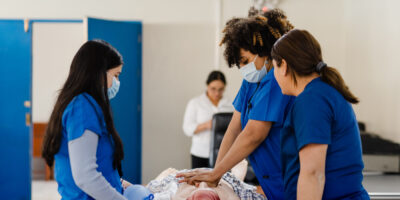
The Core Question: What Really Counts As Patient-Facing Experience?
For many pre-med students, “clinical experience” is a fuzzy requirement. It is not one single activity. It is a range of roles, and each one signals something slightly different to an admissions committee.
At its core, anything that is genuinely patient-facing can be considered clinical experience. That usually means you are delivering healthcare or related services, or you are having face-to-face interactions with patients as an employee, volunteer, or supervised trainee.
To build a competitive application, it helps to think of clinical experience in three main buckets.
Clinical Exposure
This category is mostly observation. The classic example is physician shadowing. You follow a doctor through their day and see the pace, decisions, and demands that define their work. Shadowing is important for understanding what you are signing up for, but on its own, it is not enough.
Clinical Volunteering
These are service-oriented roles that may or may not involve hands-on tasks. Common examples include hospice volunteering, helping as a patient escort, or volunteering in hospital departments where you spend time with patients and families. These roles show service orientation and comfort in patient spaces, even if your responsibilities are limited.
Direct Patient Care
Direct patient care is the highest value category. It means you are not simply near patients. You are actively doing things for them as part of the care process, under appropriate supervision.
Defining Direct Patient Care
Admissions committees pay particular attention to direct patient care. It is defined by hands on interaction and real responsibility.
A simple test, often echoed by the AAMC, is to ask whether you are in the room with the patient, interacting with them, and contributing to their care in a meaningful way.
Some examples make this clearer:
- Handing out water bottles to patients in the emergency department while talking with them is usually considered clinical.
- Scheduling appointments at the front desk, even in a clinic, is usually administrative. You are in a healthcare environment, but you are not truly engaged in patient care.
Typical direct patient care tasks include:
- Taking vitals
- Bathing patients
- Assisting with transfers, such as moving from bed to chair or to the bathroom
- Walking patients
- Drawing blood
- Administering prescribed treatments or therapy under supervision
Common roles that fall under direct patient care include:
- Emergency Medical Technician (EMT)
- Certified Nursing Assistant (CNA)
- Medical Assistant
- Physical Therapy Aide
These positions can be paid or volunteer. What matters is the hands-on, patient-facing component, not whether a paycheck is involved.
Why Admissions Committees Care About This
Clinical experience is not merely a means to fill a line on your application. Committees ask for it because they need proof that you understand what a medical career actually involves.
Their goal is straightforward. They want to see that you have:
- Spent time with real patients
- Watched genuine care being delivered
- Understood what that work demands from the people doing it
Medical school is expensive, time-consuming, and emotionally demanding. No one wants a student to become deeply invested in training only to discover that they do not enjoy caring for sick or injured people.
For you, clinical experience is a form of self-motivation. It is how you test whether your reasons for pursuing a career in medicine hold up in real life.
Do you still want this after seeing patients in pain and families in crisis? Can you handle the physical and emotional strain of direct patient care? Are you interested in the whole reality of the job, not just the prestige and the highlight moments?
The best patient-facing roles are the ones that convincingly show two things:
- You understand what the work really looks like.
- You still want to do it.
That combination, clear understanding plus sustained commitment, is exactly what admissions committees are looking for when they evaluate your clinical experience.
The New Admissions Paradigm: From Hours To Competencies
The Quality Over Quantity Mandate
One of the most common questions on pre-med forums is still, “How many hours do I need?” You will see numbers tossed around, like 150 to 200 hours as a minimum and 300 or more as a strong target. Those ranges can be useful for planning, but focusing on the number alone sends you in the wrong direction.
The AAMC is very clear in its AMCAS guidance: medical schools care about quality, not quantity. Admissions officers are not hunting for a perfect checklist. They are looking for depth and for a pattern of sustained involvement.
Quality here is not a fuzzy buzzword. It comes down to two things:
- how you reflect on your experiences
- how well you can tell the story of what those experiences taught you
The University of Washington School of Medicine says this directly in its admissions materials. The quality of your reflection tells the committee far more about your understanding of medicine than the raw total of hours.
From that perspective, the strongest patient-facing roles are the ones that produce rich reflections and memorable stories for your AMCAS Work and Activities section, especially your three Most Meaningful experiences. A student with thousands of hours in a repetitive role with almost no responsibility may have very little of substance to say. Another student with fewer hours in a unique, demanding role that pushed them to grow will often be far more compelling.
Admissions readers are quick to spot high-hour entries that feel empty. If a role appears to have been added late, involves little patient contact, and lacks real insight, it is often dismissed as fluff, even if the number beside it appears impressive.
The Real Metric: AAMC Pre-Professional Competencies
If hours are not the main metric, what is? The answer is the AAMC Premed Competencies for Entering Medical Students. This set of competencies is the framework that committees use to judge whether your entire portfolio shows readiness for medical training.
Schools talk about using holistic review, which simply means they look beyond GPA and MCAT to your personal attributes and experiences. Patient-facing roles are one of the primary ways they evaluate the professional side of that profile.
The smart question is not “Which role is the best one?” The smarter question is “Which role lets me demonstrate the specific competencies schools care about?”
Some of the key competencies that committees look for in clinical experiences include:
Service Orientation
A consistent desire to help others and respond to their needs, and a willingness to take responsibility for the well being of people and communities at the local, national, and global level.
Empathy And Compassion
The ability to recognize, understand, and acknowledge the experiences, feelings, and perspectives of patients and families, and a clear desire to ease their distress rather than simply working around it.
Ethical Responsibility To Self And Others
Honest behavior, respect for confidentiality and professional boundaries, resistance to pressure to cut corners or act unethically, and a habit of thinking through the moral side of decisions.
Cultural Humility And Cultural Awareness
An understanding that factors like culture, language, income, and social context shape health and access to care, along with a willingness to seek out different perspectives, examine your own biases, and adjust how you communicate and behave.
Reliability And Dependability
Showing up on time, following through on commitments, doing what you said you would do, and taking ownership when you make mistakes instead of deflecting or disappearing.
Teamwork
Working effectively with nurses, physicians, techs, volunteers, and other staff, sharing information appropriately, respecting each person’s role, and putting the needs of the patient and team above your ego.
A strong application does not rely on one single role to do everything. It uses a portfolio of clinical and service experiences to provide concrete, believable evidence that you live these competencies in real settings. The hours are simply the context. The competencies are what committees are actually scoring in their heads when they read your file.
The Domestic Portfolio: A Comparative Look At Common Patient-Facing Roles
Applying a competency lens lets you compare roles in a more strategic way. No single job is perfect. Each one gives you some strengths and leaves some gaps you will need to fill elsewhere.
High Acuity, High Autonomy Roles (EMT, Paramedic)
These roles place you in the pre-hospital setting as a certified first responder. You assess, stabilize, and transport sick or injured patients, often in unpredictable conditions. Certification requires a real investment of time and training.
Strengths
You get unmatched evidence of reliability under pressure. You work nights, weekends, and long shifts, and patients and colleagues depend on you to function when things are chaotic. You build resilience, teamwork, and leadership by making decisions in high acuity situations and taking real responsibility for what happens next.
Limitations
The barrier to entry is higher because of the certification process. Much of the experience centers on field care and the broader EMS system. You get less exposure to the physician’s role in diagnosis, inpatient management, and the dynamics of a hospital team. You will likely need additional shadowing or inpatient clinical work to see that side of medicine.
Direct Caregiving Roles (CNA, Patient Care Aide, Home Health Aide)
These roles focus on helping patients with activities of daily living such as bathing, transferring, toileting, and feeding in hospitals, nursing homes, or home care settings.
Strengths
This is some of the most powerful work you can do for building empathy and compassion. You are with patients during vulnerable, unglamorous moments. You see how illness affects dignity, mood, and family dynamics. The work is physically demanding and often emotionally draining, which demonstrates genuine commitment to patient care, not just interest in the exciting parts of medicine. You also see firsthand how much medicine relies on nursing and support staff, which deepens your understanding of teamwork.
Limitations
The focus is on ongoing care rather than diagnosis or treatment planning. You may have little insight into how physicians reason through complex cases or coordinate care across services. To round out your understanding of the physician role, you should pair this kind of work with shadowing or another role that brings you closer to clinical decision-making.
Physician Centered Roles (Medical Scribe)
Scribes work directly with physicians, documenting patient encounters in real time in the electronic medical record.
Strengths
This is one of the best ways to understand how physicians think. You listen to patient histories, physical exams, discussions of differential diagnoses, and treatment plans. You see how decisions are made, how physicians communicate with patients and teams, and how the hospital or clinic actually runs. You gain strong familiarity with medical terminology and documentation. Because you work so closely with providers, this role can also lead to detailed letters of recommendation.
Limitations
Scribing is usually more observational than hands-on. You are near the patient, but your primary duty is documentation, not direct care. That can leave a gap in demonstrating hands-on empathy, physical care, and service orientation at the bedside. Many students pair scribing with a more tactile role, such as CNA work or hospice volunteering, to cover both sides.
Foundational Roles (Hospital Volunteer, Hospice Volunteer)
These unpaid roles vary widely in patient contact. They are popular because they are relatively accessible and flexible.
Strengths
They are one of the clearest ways to show service orientation. Hospice work, in particular, can be deeply meaningful. You see end-of-life care up close, support families in grief, and develop maturity and perspective that are hard to gain elsewhere. Long-term hospital volunteering can also show that you show up consistently for patients and staff over time.
Limitations
These roles are the easiest for committees to dismiss if they are light on actual patient contact. Stocking shelves, delivering coffee, or sitting at a desk may be useful to the hospital, but they offer little evidence of core competencies if that is all you do. To be taken seriously, these roles should involve clear, recurrent patient interaction and should extend over many months rather than a last-minute push in the year before you apply.
Paid Versus Volunteer Roles
Admissions committees value both paid and volunteer work, but they read them slightly differently.
Paid roles like EMT, CNA, and scribe often carry an assumption of higher responsibility. You are part of the staffing model, you have defined duties, and others rely on you to be there. This can be a strong signal of professionalism and reliability.
Volunteer roles, on the other hand, are often the purest expression of service orientation. You are giving your time without financial incentive, which helps show that your interest in patient care is not purely transactional.
A well-balanced application usually includes both: at least one paid clinical role that demonstrates responsibility and professionalism, and one or more long-term volunteer commitments that highlight altruism and community focus.
Seeing The Competency Gap
When you line these roles up against the AAMC competencies, a pattern appears. Domestic roles do an excellent job of building empathy, reliability, teamwork, and service orientation. They are a solid foundation.
What they often lack is broad exposure to cultural humility, cultural awareness, and a clear global sense of service. Many students spend all of their time in familiar communities and systems. That can leave parts of the competency framework underdeveloped unless you intentionally seek out settings and populations that challenge your default perspective.
The Pre-Med Clinical Experience Matrix
Click on any role to view a detailed strategic analysis of its Pros, Cons, and Competency gaps.
| Role | Type | Patient Interaction | Physician Exposure | Analysis |
|---|
Strategic Insight: This analysis reveals a clear “competency gap.” While these domestic roles are excellent for building a foundation in empathy, reliability, and service, they typically offer few opportunities to demonstrate Cultural Humility, Cultural Awareness, or a Global Service Orientation—critical competencies explicitly named by the AAMC for future physicians.
The Global Health Dimension: Voluntourism And The AAMC Warning
When students identify a gap in their competencies, global health appears to be an easy solution. International programs offer work with diverse patients, immersion in new cultures, and access to healthcare systems that differ significantly from those at home. On paper, it sounds perfect: you gain cultural awareness, you serve underserved communities, and you come home with powerful stories.
The problem is that a lot of what is sold to pre-med students is not real service. Other programs present this as a product. Many short-term trips are built around the visitor’s desire for an experience, not the long-term needs of the host community. That is how you end up with what people call voluntourism: trips that center the visitor, not the patient, and encourage a quiet savior complex rather than genuine partnership.
What The AAMC Actually Warns About
The AAMC has been very clear about this. In surveys of admissions officers, they report serious concern about pre-med students doing clinical work abroad that they are not qualified to do.
The clearest red line is scope of practice. When undergraduates perform invasive or high-risk procedures in other countries, it is seen as a significant negative. Admissions officers specifically mention applicants who:
- Give vaccinations
- Suture wounds
- Pull teeth
- Help deliver babies
Almost half of surveyed admissions officers describe this kind of involvement as harmful to an application or of no value at all, even when students claim they were supervised by a local clinician.
From an ethics standpoint, this is not a minor misunderstanding. It is a direct hit to the competency of Ethical Responsibility to Self and Others. If you brag about procedures you are not trained or licensed to perform, you are telling a committee that you are willing to put patients at risk to pad your resume. You are also signaling that you do not respect laws, regulations, or the basic principle of medicine: do no harm.
The Problem With Short-Term Mission Trips
Even when no single procedure crosses the line, the bigger short-term mission model has real issues, and many people in academic medicine know it.
Common problems include:
- Lack of sustainability
Teams arrive for a week or two, provide short bursts of care, then leave. Follow-up is weak or nonexistent, and local systems are left to clean up the disruption. - Burden on host staff
Local clinicians have to supervise, orient, and correct groups of inexperienced visitors. That time is pulled away from their own patients and trainees. - Ethical concerns
Patients and communities can become backdrops for visiting students’ stories and social media posts. People in vulnerable situations are turned into learning tools and photo opportunities. - Legal and regulatory risk
Activities that would be clearly illegal at home may also violate laws and professional rules in the host country, even if enforcement is inconsistent.
Admissions committees see all of this. Many of them work with global health partners themselves and are acutely aware of the difference between responsible programs and resume-driven tourism.
This puts pre-med students in a bind. Schools value cultural humility, cultural awareness, and a genuine global service orientation. The AAMC names these explicitly as important qualities for future physicians. Yet the fastest, cheapest, most heavily advertised ways to “get global health experience” are often the exact ones that will hurt you.
The logical next question is obvious: how do you gain real global experience, build those competencies, and still stay on the right side of ethics and admissions expectations?
The International Medical Aid Model For Pre-Health Success
The way out of the global health trap is to reject voluntourism entirely and commit to programs that are ethical, structured, and centered on the needs of the host community. At International Medical Aid, this is the core of how we operate.
Structured, Ethical, And Sustainable Immersion
International Medical Aid is a 501(c)(3) non-profit organization, not a tour company. Our programs are community-based and grounded in values of integrity, mutual respect, and long-term partnership with the communities we serve.
We work through sustained relationships with hospitals, clinics, and universities rather than one-off trips. Our approach aligns with the fair trade education model endorsed by many AAMC-affiliated global health experts. Both our interns and our partners benefit, and the structure is designed to protect patients, staff, and students.
This ethical foundation is the key difference between what we offer and voluntourism. If a program is not built on local leadership, clear limits on student roles, and real accountability, it is not the right place to build your competency profile. We design our programs to meet that standard.
Solving The Scope Of Practice Problem
We take the scope of practice concerns raised by admissions committees and the AAMC very seriously. Our programs are explicitly designed to avoid them.
Our pre-med internships focus on physical shadowing and structured clinical rotations. The primary goal is learning, not performing procedures. As an intern, you:
- Shadow physicians on rounds and in clinics
- Observe surgeries and procedures from appropriate vantage points
- Participate in discussions with local teams as a learner, not as a provider
We typically provide from roughly 50 to 200 hours of immersive clinical shadowing, depending on the program and session. You do not administer vaccinations, perform sutures, extract teeth, or deliver babies. You are never placed in a position where you are asked to do something outside your training.
By keeping your role clearly within observation and education, we help you demonstrate mature judgment and respect for professional boundaries. That is exactly what Ethical Responsibility to Self and Others looks like in global health, and admissions committees notice the difference.
How Our Programs Map To AAMC Core Competencies
Our internships are not just trips to another country. They are structured academic programs designed to help you grow in the competencies that are hardest to build through standard domestic roles.
Cultural Humility And Cultural Awareness
We place interns in healthcare systems in East Africa, South America, and the Caribbean. You see how culture, language, economics, and policy shape who receives care and what that care looks like. Outside the hospital, we incorporate organized cultural experiences and community engagement to help you develop a deeper understanding of the people you are serving, not just their diagnoses.
Service Orientation At A Global Level
Our work is rooted in sustainable, community-based initiatives. Interns support ongoing outreach, health education, and local projects that continue after each cohort leaves. We do not run pop-up clinics that disappear in a week, leaving no lasting structure behind. This helps you show that your service is about strengthening existing systems, not collecting short-term experiences.
Ethical Responsibility To Self And Others
We build ethical responsibility into the program design. As a non-profit, we answer to our mission and our partners, not to a tour margin. We set clear policies on what interns can and cannot do, and we enforce a strict shadowing-only standard for pre-med and pre-health participants. Choosing to work within those limits and still fully engage is itself strong evidence of ethical judgment.
Commitment To Learning And Capacity For Improvement
Our internships include far more than standing in the corner of a clinic. We add:
- Global health lectures and discussions
- Clinical simulation sessions and skills labs within your scope
- Dedicated clinical mentorship with regular feedback
This structure compels you to process what you see, ask more insightful questions, and connect your experience to broader themes in medicine and public health. It gives you precisely the kind of reflective material that admissions committees want to see in your essays and interviews.
Reliability And Dependability
Completing one of our programs is not a casual drop-in. You go through an application and screening process, participate in physician-led orientations, and commit to a full schedule of clinical and community activities. Our in-country teams and physician mentors see you daily. That allows them to assess and later speak to your work ethic, maturity, and reliability in a detailed, credible way.
Beyond The Internship: Turning Experience Into Application Strength
We recognize that experience alone is insufficient. You also need to translate that experience into a precise, competitive application. That is why our support does not end when your time abroad comes to a close.
Admissions Focused Support
As an IMA alum, you have access to graduate school admissions support, including advising on overall strategy, timelines, and school selection. We provide resources, tools, and feedback to help you turn your global health work into strong AMCAS or AACOMAS entries, not just vague stories.
Mentorship And Letters Of Recommendation
Our model includes dedicated clinical mentorship from physicians with significant experience in both clinical practice and medical education. Because they work with you closely, they are well-positioned to write detailed letters of recommendation that speak to your performance in a demanding, cross-cultural clinical environment.
For many students, an IMA internship becomes a capstone experience. It provides the ethical, patient-centered, global exposure that is difficult to secure at home, and our advising and mentorship help you present that experience in a way that aligns with what admissions committees actually value.
Building Your Unique Clinical Narrative For Medical School
So which patient-facing roles matter most? The real answer is that no single role can carry your entire application. The strongest applicants build a deliberate mix of experiences that, together, cover the AAMC competencies instead of relying on one job to do everything.
In practice, that usually means becoming a hybrid applicant with three pillars.
Domestic Direct Patient Care
Roles like CNA, EMT, or medical assistant show that you can handle real, hands-on responsibility with patients in your own community. These positions are where you prove empathy, service orientation, reliability, and resilience in very concrete ways.
Domestic Clinical Exposure
Roles like medical scribe and structured physician shadowing give you insight into the physician’s work: how they think through diagnoses, make decisions, and communicate with patients and teams. This is where you build and show critical thinking, communication, and an understanding of what the job actually involves.
A Global Capstone Experience
A structured IMA internship abroad can then sit on top of this domestic foundation. It helps you demonstrate cultural humility, global service orientation, and ethical responsibility in settings that challenge your usual assumptions. That combination fills the competency gap that often remains when you only work in familiar environments.
When these three pieces are planned and executed well, they form a clinical narrative that is much stronger than any one role could provide on its own.
Articulating Your Journey
Even the best portfolio will fall flat if you cannot explain what it did for you. The experience is only half of the work. The other half is reflection and communication.
Your task is to show, through your AMCAS Work and Activities entries, your Most Meaningful essays, and your interviews, how you grew across the 15 AAMC competencies. That means:
- Naming specific situations, not just titles and hour counts.
- Describing what you actually did and how you responded.
- Connecting those moments to skills and values that matter in medicine.
- Explaining how your thinking changed over time.
The “best” clinical role for your application is the one that has clearly changed how you view patients, teams, and yourself, and that you can discuss with clarity and honesty.
Start Your Journey With International Medical Aid
At International Medical Aid, we exist to help you build that kind of record, not just collect hours.
As a non-profit organization, we provide structured, ethical, academically grounded pre-health internships in medicine, physician assistant studies, dentistry, and related fields. Our programs are designed to give you serious clinical and cultural exposure in a safe, well-supported, and ethical environment.
Alongside our internships, we offer admissions consulting to help you turn your experiences into a straightforward, competitive medical school narrative. If you are ready to build a true capstone for your application and develop the competencies schools are actively seeking, we invite you to start your journey with us.
Frequently Asked Questions
What actually counts as clinical experience for medical school?
Clinical experience is any role where you are regularly interacting with patients in a healthcare setting in a way that contributes to their care or experience. That can include taking vitals, helping with mobility, assisting with intake, serving as an interpreter during clinical encounters, or providing emotional support at the bedside. Simply being in a hospital building is not enough. Admissions committees look for evidence that you were face to face with patients, not just working at a desk in a clinical environment.
How do schools distinguish clinical exposure, clinical volunteering, and direct patient care?
You can think of these as three levels of engagement. Clinical exposure is primarily observational, such as shadowing a physician to gain an understanding of the realities of the job. Clinical volunteering typically involves service-oriented work in patient areas, such as hospice volunteering or escort roles, where you spend time with patients and their families, but may not provide hands-on care. Direct patient care is the highest level and involves performing specific tasks for patients under supervision, such as bathing, transferring, taking vital signs, or drawing blood. Committees value all three, but direct patient care usually carries the most weight.
How many clinical hours do I need to be competitive?
There is no single cutoff that guarantees admission, and committees do not admit by spreadsheet. That said, many advisors see 150 to 200 hours of clinical experience as a reasonable minimum for serious consideration, with 300 or more hours in sustained roles often seen in stronger applicants. What matters most is how those hours are distributed and what you did with them. Two years of consistent weekend shifts in one or two meaningful roles is far more compelling than a similar number of hours rushed in just before you apply.
Are paid clinical roles viewed differently than volunteer roles?
Both paid and volunteer work are valued, but they signal different things. Paid roles such as EMT, CNA, or medical scribe usually come with defined responsibilities and expectations from employers, which can highlight reliability, professionalism, and the ability to function as part of the staffing model. Volunteer roles are often the clearest signal of service orientation, since you are giving your time without pay. A strong application typically includes at least one paid clinical position and one or more long term volunteer commitments that show community focus and altruism.
How do EMT, CNA, scribe, and hospice volunteering compare in the eyes of admissions committees?
Each role strengthens a different part of your profile. EMT work shows reliability and decision-making in high acuity, unpredictable situations. CNA and similar caregiving roles show empathy, resilience, and comfort with the intimate realities of patient care. Medical scribing offers direct access to physician reasoning, documentation, and workflow, which is ideal for understanding the job you are pursuing. Hospice volunteering demonstrates maturity, emotional readiness, and service orientation in end-of-life care. Committees are not looking for one perfect role. They are looking at how your combination of roles covers the competencies they care about.
What kinds of experiences do admissions offices see as low value or “fluff”?
Experiences that involve little or no patient contact, are very short-term, or appear tacked on right before the application deadline, are often discounted. Typical examples include hospital roles that are purely stocking or clerical, short bursts of volunteering with no follow-up, and international trips where students talk more about travel than about patient care or ethical issues. If you cannot clearly describe how you helped patients, what you learned, or how you grew, committees will assume the role did very little for your development.
Do I need global health experience, and what should I avoid?
Global health experience is not mandatory for medical school admission, but when done well it can be powerful evidence of cultural humility and global service orientation. What you must avoid is voluntourism: short term trips that put students into clinical roles beyond their training or treat patients as photo opportunities. Admissions officers consistently view unqualified involvement in procedures such as vaccinations, suturing, dental extractions, or deliveries as a serious negative. Ethical programs keep pre-health students within a clear observational or support scope and work through long-term partnerships with local institutions.
How does an International Medical Aid internship fit into my clinical profile?
An International Medical Aid internship can serve as a global capstone that complements your domestic clinical work. Our model emphasizes supervised shadowing, academic structure, and community-based service rather than unregulated hands-on procedures. For a student who already has domestic direct patient care and clinical exposure, an IMA internship adds well-documented growth in cultural humility, ethical responsibility, and global service orientation. When described clearly in your application, it helps fill competency gaps that purely domestic roles often leave.
How can I show the AAMC premed competencies in my application materials?
You demonstrate competencies by telling specific, grounded stories about your experiences rather than listing tasks. In your Work and Activities entries and Most Meaningful essays, choose concrete situations that show how you acted, what you were thinking, and how you changed. Tie those moments to competencies such as empathy, service orientation, cultural awareness, teamwork, and reliability. Refer to patterns over time, not just isolated events. Admissions readers are asking one core question: Does this applicant understand what medical work demands, and have they already started to live the values the profession requires?