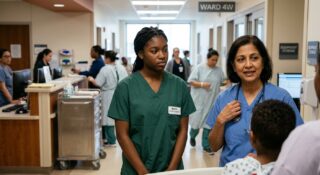
If you are a high school student interested in healthcare, or a parent helping one plan ahead, the search for medical internships for high school students near you can feel overwhelming. The good news is that real options exist, both locally and beyond your immediate area. The less obvious truth is that most programs marketed as “internships” for teens are actually structured observation, shadowing, or educational experiences, and understanding that distinction matters before you commit your time or money. This guide covers what is available across the U.S., what to expect from different types of programs, how to evaluate safety and structure, and how to think about fit for your specific goals and readiness level.
Many students begin searching for summer medical internships for high school students in the spring, but planning earlier gives you more options. Some hospital programs fill months in advance, and competitive research internships may have application deadlines in the fall or winter before the summer session. Whether you are looking at a local hospital volunteer position, a university-affiliated research program, or a structured international experience, the key factors are the same: supervision, educational value, age-appropriate expectations, and honest information about what you will and will not be doing.
What “Medical Internship” Actually Means for High School Students
The word “internship” carries a lot of weight, and it can mean very different things depending on the program. For high school students, a medical internship almost never involves practicing medicine. In most cases, you will be observing licensed professionals, participating in educational workshops, completing guided reflections, and supporting clinical environments in non-medical ways. This is not a limitation; it is appropriate and legally required. HIPAA regulations, state safety laws, and Joint Commission standards for healthcare organizations all place specific restrictions on what minors can do in clinical settings.
That means you should be skeptical of any program that promises you will “perform procedures,” “treat patients,” or “work alongside doctors as a team member” in a hands-on clinical capacity. Legitimate programs for students under 18 are upfront about the fact that observation, education, and supervised support are the core activities. That honesty is a good sign, not a red flag. Programs that overpromise are the ones to question.
Understanding this distinction also helps you set realistic expectations. You will not walk away from a single program knowing whether you want to be a doctor. Career exploration takes time. What a good program can do is give you a clearer sense of what healthcare environments feel like, what professionals actually do day to day, and whether the realities of the field match the version you have built in your head.
Types of Programs Available Near You
When you search for medical internships near you, several categories will come up. Each has different structures, requirements, and levels of educational depth.
Hospital Volunteer Programs
Most major hospitals and many community hospitals in the U.S. run volunteer programs for high school students. These programs typically accept students ages 14 to 16 and up, depending on the hospital and state regulations. You might help with patient transport, stock supplies, assist at information desks, or support administrative tasks. Some hospitals rotate volunteers through departments, giving you exposure to areas like emergency, pediatrics, or surgery, though always in a support or observation role.
The benefits here are proximity and accessibility. If you live near a hospital system, you can often participate during the school year or over the summer without significant travel costs. The limitation is that clinical exposure can be thin. Many hospital volunteer programs are primarily operational, meaning the hospital needs help, and your experience depends heavily on the department you are assigned to and the willingness of staff to explain what they are doing.
University-Affiliated Research and Enrichment Programs
Some universities and academic medical centers offer structured summer programs specifically for high school students. These may include biomedical research experiences, lab rotations, health career seminars, or simulation-based training. The National Institutes of Health runs several programs for high school students interested in biomedical research, and many state universities have similar offerings.
These programs tend to be more competitive and may require transcripts, essays, and letters of recommendation. They are a strong option if you are drawn to the science side of medicine, such as research, lab work, or public health analysis. They are less useful if your primary goal is clinical observation or understanding what it is like to interact with patients and families in a care setting.
Physician Shadowing
Shadowing is one of the simplest and most direct ways to see what a healthcare professional’s day looks like. Some students arrange shadowing through family connections, school counselors, or by contacting local physicians’ offices directly. Others participate in organized shadowing programs through schools or community organizations.
Shadowing is valuable but narrow. You are watching one person in one specialty for a limited time. It is a good complement to other experiences, not a substitute for a structured program with educational components, reflection, and mentorship.
Structured International Programs
For students who are ready for a more immersive experience, structured international programs offer exposure to healthcare systems outside the U.S. These programs place students in supervised clinical observation settings in countries where the healthcare challenges, resources, and community dynamics differ significantly from what most American students are used to. The educational value comes not just from watching medicine happen, but from understanding how geography, economics, culture, and infrastructure shape health outcomes.
International Medical Aid, for example, offers structured programs for high school students in several countries, with daily schedules that include clinical observation, educational discussions, community health activities, and guided reflection. Students in these programs observe, ask questions, and learn, but they do not perform medical procedures or provide unsupervised care. That boundary is maintained carefully and consistently.
How to Evaluate Any Program for Safety and Structure
Whether a program is down the street or in another country, the evaluation criteria for parents and students should be similar. Here is what to look for.
Supervision and Staff Ratios
Ask who is supervising students during clinical hours and during non-clinical time. Are supervisors licensed healthcare professionals? Are there dedicated program coordinators in addition to clinical mentors? For minors, continuous adult supervision is not optional; it is essential. Programs should be able to describe their supervision model clearly and specifically.
Clear Boundaries Around Student Roles
A well-run program will tell you, in writing and in orientation, exactly what students are and are not allowed to do. If a program cannot articulate those boundaries, or if its marketing implies students will be doing things that seem inappropriate for their age and training level, treat that as a warning sign.
Emergency Protocols and Communication
Parents should know how they will be contacted in an emergency, what insurance coverage is in place, and what procedures exist for medical or safety incidents. For international programs, ask about medical evacuation coverage, local emergency infrastructure, and 24/7 contact availability. Reputable programs will share this information proactively, not just when pressed.
Housing and Daily Structure
For residential or travel-based programs, ask about housing arrangements, transportation, meals, curfews, and daily schedules. A program that cannot describe a typical day in concrete terms may not have the structure a high school student needs.
Orientation and Cultural Preparation
International programs should include pre-departure orientation and on-the-ground cultural sensitivity training. Students need to understand local customs, dress codes, communication norms, and the specific healthcare context they will be entering. This preparation is not just nice to have; it directly affects safety, professionalism, and the quality of the learning experience.
What Admissions Committees Actually Value from Early Healthcare Exposure
One of the biggest motivators for seeking out a medical internship in high school is the belief that it will strengthen college or professional school applications. That belief is partially correct, but the details matter.
Medical school admissions committees, as described in AAMC resources on preparing for medical school, value service orientation, cultural competency, and evidence of mature reflection on healthcare experiences. They are not looking for a list of programs you attended. They want to see what you learned, how your perspective developed, and whether you engaged seriously with the ethical and human dimensions of healthcare.
This means a short but meaningful experience that you can reflect on thoughtfully is worth more than a long list of surface-level activities. When you write about your experience in a personal statement or essay years later, the strength of your reflection will matter far more than the prestige of the program name.
It also means that clinical exposure alone is not enough. Admissions committees, whether for medical school, PA programs, dental school, or nursing, want to see that you developed skills like communication, empathy, teamwork, and critical thinking. A program that includes mentorship, discussion, and guided reflection will serve your long-term goals better than one that simply puts you in a room where medicine is happening. For students already thinking about what different healthcare career paths require, early exposure helps you ask better questions sooner.
Maturity, Readiness, and Honest Self-Assessment
Not every high school student is ready for every type of program, and that is completely fine. Readiness is not about intelligence or ambition. It is about emotional maturity, comfort with unfamiliar environments, ability to follow rules and respect authority in a professional setting, and willingness to be a learner rather than a performer.
For parents, this is worth a direct conversation. Ask your student how they handle discomfort, uncertainty, and situations where they are not in control. Ask them how they respond to seeing illness or suffering. Ask them whether they can follow rules they do not fully understand, because clinical settings require that. These are not trick questions; they are practical ones that affect both safety and the quality of the experience.
For students, be honest with yourself. If you are excited but nervous, that is normal and healthy. If you are primarily motivated by how it will look on an application rather than genuine curiosity, that is worth examining. The students who get the most out of early healthcare exposure are the ones who show up with real questions, not the ones who show up with a checklist.
Students who are considering how to prepare for competitive health career paths often benefit from understanding that readiness is built over time. A local hospital volunteer position at age 15 can prepare you for a more intensive program at 17. There is no single right path and no reason to rush.
Comparing Local and International Options
Both local and international programs have genuine value, and the right choice depends on your goals, readiness, budget, and timeline.
Local programs are accessible, affordable (many hospital volunteer programs are free), and easy to fit around school schedules. They give you a window into the healthcare system you are most likely to train and practice in. They are also lower stakes emotionally, which can be an advantage for younger students or students who have not yet spent time away from home.
International programs offer a different kind of education. They expose you to healthcare systems with different resources, different disease burdens, and different cultural frameworks for health and healing. They require more independence and adaptability, and they create opportunities for the kind of reflection and perspective-building that admissions committees value. According to the Bureau of Labor Statistics overview of healthcare occupations, the healthcare field is growing and increasingly values professionals who understand diverse patient populations and global health dynamics.
The honest answer is that both types of programs can contribute meaningfully to your development, and neither is inherently better. What matters is the quality of the program, the strength of the supervision and educational framework, and your readiness to engage with the experience seriously.
Practical Steps for Finding and Choosing a Program
Start your search early. If you want a summer program, begin looking in the fall or early winter of the preceding school year. Here is a practical way to organize your search.
First, check with your school counselor or pre-health advisor. Many schools maintain lists of local opportunities or have relationships with hospitals and universities that accept student volunteers. Second, contact hospitals and health systems in your area directly. Most have a volunteer services department with information about eligibility, application timelines, and available roles. Third, look at university websites for summer enrichment or research programs open to high school students. Fourth, if you are considering a structured program with a specific organization, ask for detailed information about supervision, daily structure, student roles, safety protocols, and what former participants have said about the experience.
For parents, request a conversation with a program representative before committing. Ask the hard questions: What happens if my child gets sick? Who supervises them at night? What are the boundaries around clinical activities? What training do supervisors receive? A program that welcomes these questions, rather than deflecting them, is one that takes your child’s safety seriously.
Students who are interested in understanding how early career exploration connects to long-term medical education goals should also think about what they want to learn, not just where they want to go. The best program for you is the one that matches your current questions, your current maturity level, and your family’s comfort with the structure and supervision provided.
Making the Experience Count After It Ends
The internship itself is only part of the value. What you do with the experience afterward matters just as much. Keep a journal during the program, even if it is just a few sentences each day about what you observed, what surprised you, what confused you, and what you want to learn more about. These notes will become the raw material for future essays, interviews, and personal statements.
After the program, take time to reflect on what you learned about yourself, not just about medicine. Did you enjoy being in a clinical environment? Were you drawn to patient interaction, research, public health, or something else entirely? Did you discover that healthcare is not what you expected? All of those answers are valuable.
If you had a mentor or supervisor, ask whether they would be willing to serve as a reference in the future. A thoughtful recommendation from a healthcare professional who watched you learn and grow carries real weight. And if the experience raised new questions, pursue them. Read about the conditions you observed. Look into the specialties that interested you. Talk to other professionals. The best early healthcare experiences are not endpoints; they are starting points.
Frequently Asked Questions
Do medical internships for high school students involve hands-on patient care?
No. Legitimate programs for high school students are structured around observation, education, and supervised support activities. Students do not perform medical procedures, diagnose patients, or provide clinical care. This is true for both domestic and international programs. Any program that suggests otherwise should be carefully scrutinized. The educational value comes from watching professionals work, asking questions, participating in discussions, and reflecting on what you observe.
What is the minimum age for most medical internship programs?
Most hospital volunteer programs in the U.S. accept students starting at age 14 to 16, depending on the facility and state regulations. Structured summer programs affiliated with universities often require students to be at least 16. International programs generally require participants to be 17 or older for high school students. Always verify age requirements directly with the program, as policies vary and may change.
How should parents evaluate the safety of an international medical program for their teenager?
Ask specific questions about supervision ratios, the credentials of on-site staff, emergency protocols, medical evacuation coverage, housing arrangements, daily schedules, and how parents will be communicated with during the program. Request written documentation of safety policies. Look for programs that provide pre-departure orientations, cultural preparation, and 24/7 emergency contact access. A program that answers these questions openly and thoroughly is demonstrating the kind of transparency that matters most.