Shadowing doctors in East Africa as a high school student is one of the more focused ways to see medicine practiced under conditions most American teens have never encountered. It is not a classroom simulation or a hospital tour. Students observe real consultations, real diagnostic reasoning, and real resource constraints in clinical settings across Kenya and Tanzania. For students seriously considering a healthcare career, a medical internship for high school students in this part of the world can build perspective that domestic shadowing alone often cannot. But the experience only works well when students and parents understand exactly what it involves, what it does not involve, and what makes it worth the effort.
Before committing to any program abroad, families naturally want to know what the daily experience looks like, how safety is handled, and whether the investment will matter when it is time to apply to college or professional school. Some families also search for paid medical internships for high school students, and it is worth noting that structured international observation programs like those offered by IMA are tuition-based educational experiences, not paid positions. That distinction matters, because it sets the right expectation: this is a learning opportunity built around clinical observation, cultural context, and professional mentorship, not employment. The value comes from what students see, process, and carry forward.
What Shadowing in East Africa Actually Looks Like for a High School Student
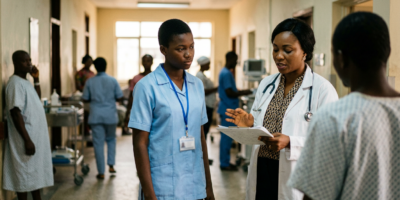
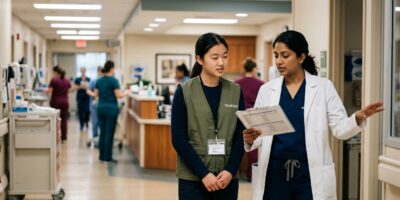
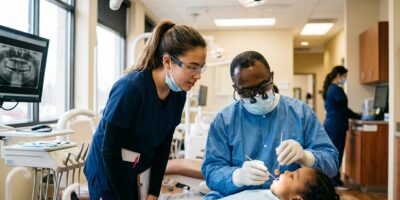
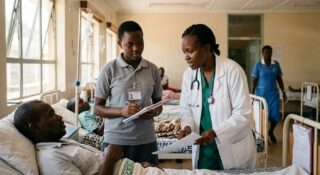
The most important thing to understand is that high school students observe. They do not treat patients, administer medications, assist in procedures, or provide any form of medical advice. This boundary is not a limitation of a particular program; it is a fundamental ethical and legal standard for minors in clinical settings anywhere. IMA’s Kenya and Tanzania programs are designed around this principle, with every clinical placement structured so that students watch, listen, ask questions when appropriate, and reflect on what they have seen.
A typical day begins early. Students travel with IMA staff to an assigned hospital or clinic, where they join morning handover reports or ward rounds alongside supervising physicians and clinical officers. From there, they rotate through departments such as outpatient clinics, inpatient wards, maternity units, pediatric wards, and, where appropriate, operating theatre observation areas. They watch consultations unfold, see how diagnoses are formed with limited imaging or lab access, and observe how treatment decisions are made when resources are scarce. For a student who has only seen medicine in American TV dramas or well-equipped suburban clinics, this is a meaningful shift in understanding.
Afternoons may include continued shadowing in a different department or educational sessions led by local medical professionals. These sessions cover topics like common regional conditions, public health strategies, or the structure of the healthcare system. Evenings are spent at secure IMA accommodations with group meals, cultural activities, and guided reflection. Weekends typically include cultural excursions and community engagement, always supervised by IMA staff.
The Role of Clinical Officers in Kenya and Why It Matters
One of the most distinctive elements of shadowing in Kenya is exposure to Clinical Officers. Clinical Officers are mid-level medical practitioners trained over three to four years to diagnose, treat, and manage a broad range of medical and surgical conditions, including performing minor surgeries. In many parts of Kenya, particularly in rural and underserved areas, Clinical Officers are the first and sometimes the only point of contact for patients. Kenya’s doctor-to-patient ratio sits at roughly 17 doctors per 100,000 people, far below what the WHO identifies as the workforce needed for basic healthcare coverage. Clinical Officers help fill that gap.
For students interested in physician assistant careers, this exposure is especially relevant. The scope of practice for Clinical Officers shares parallels with the PA role in the United States: both require strong clinical reasoning, broad medical knowledge, and the ability to work effectively within a healthcare team while managing significant patient loads. Watching a Clinical Officer conduct a consultation, triage emergencies, or make treatment decisions with limited diagnostic tools gives students a concrete reference point for what that kind of career actually demands.
Even for students focused on medical school, understanding how healthcare systems function with different provider models broadens their sense of what medicine looks like globally. It is the kind of perspective that admissions committees at U.S. medical schools value, not because it is exotic, but because it shows the student has thought seriously about healthcare delivery beyond their own backyard.
What Makes East African Clinical Settings Different from U.S. Hospitals
Students who have only seen American healthcare facilities will notice significant differences almost immediately. Hospitals in Kenya and Tanzania often use large open wards for inpatient care rather than private or semi-private rooms. Diagnostic tools that are standard in the U.S., like MRI machines or specialized lab panels, may be limited or unavailable. Clinicians rely more heavily on clinical history, physical examination skills, and pattern recognition to form diagnoses.
The disease burden is also different. Students will observe conditions that are relatively rare in the United States but common in East Africa: malaria, tuberculosis, HIV/AIDS, typhoid, and complications related to maternal and child health. At the same time, non-communicable diseases like hypertension, diabetes, and cardiovascular disease are increasing rapidly across the region, creating what public health professionals call a double burden of disease. This means students may see a clinician treat a malaria case in one exam room and manage uncontrolled diabetes in the next.
Family involvement in patient care is another difference. In many East African hospitals, family members play a direct role in feeding, bathing, and even purchasing medications for patients. Traditional healing practices and health beliefs may also influence when and how patients seek care. These cultural dynamics are not things a student can fully understand from a textbook, and observing them firsthand builds a kind of cultural awareness that is genuinely useful for any future healthcare professional. As the AAMC outlines in its core competencies for entering medical students, cultural competency and an understanding of diverse patient populations are foundational expectations, not extras.
Safety, Supervision, and What Parents Need to Know
For parents, the most pressing questions are almost always about safety and supervision. These concerns are reasonable, and any program worth considering should answer them directly. IMA’s high school programs include 24/7 in-country supervision by trained staff who manage logistics, safety, and student well-being. Students are never left unsupervised in clinical settings; they are assigned to specific doctors, clinical officers, or healthcare teams who serve as their direct mentors during hospital hours.
Housing is arranged in secure accommodations with group meals provided. Transportation between housing and clinical sites is organized by IMA staff. Students are accompanied by staff for all programmed activities, and clear guidelines govern movement within the host country. Emergency protocols are in place, including access to medical facilities, emergency contact procedures, and evacuation plans. Parents receive direct contact information for IMA’s in-country team.
Health preparation is also structured. Pre-departure vaccinations, including Yellow Fever, Typhoid, Hepatitis A and B, and Tetanus, are mandatory. The CDC’s travel health recommendations for Kenya provide a detailed baseline for what travelers should prepare for, and IMA builds on those recommendations with program-specific hygiene protocols, food and water safety guidelines, and access to clean drinking water.
One concern parents sometimes underestimate is the emotional impact. Observing serious illness, trauma, or patient deaths can be challenging for anyone, and it can be especially intense for a teenager encountering these realities for the first time. IMA staff are trained to support students through these moments, facilitating debriefing sessions and encouraging open discussion. This is not a program that leaves students to process difficult experiences alone. For a more detailed look at how IMA addresses parent concerns around safety and structure, the parent guide to high school medical internships covers this in depth.
Ethical Boundaries Every Student Must Understand Before Going
Clinical ethics are not abstract concepts for students in these programs; they are daily practice. Before arriving at any clinical site, students receive thorough briefings on patient confidentiality, informed consent, professional conduct, and the clear limits of their role as observers. They sign a code of conduct, and IMA staff reinforce these standards throughout the program.
Patient confidentiality is absolute. No patient information, photographs, or identifying details may be shared publicly, including on social media. Observation only occurs with patient or guardian consent, and if a patient declines to be observed, the student steps away without question. Students are expected to dress appropriately, maintain professional demeanor, and avoid interrupting clinical staff during patient interactions. These are not suggestions; they are requirements. For students who want a fuller understanding of what ethical conduct looks like in clinical settings, IMA’s overview of clinical ethics for high school students is a useful starting point.
These boundaries exist to protect patients, to respect the clinical environment, and to ensure that students develop the right habits from the very beginning of their healthcare journey. Students who treat these standards seriously tend to get far more out of the experience, because clinicians are more willing to explain, teach, and include observers who demonstrate professionalism and respect.
How This Experience Fits into College and Professional School Applications
A record 62,443 applicants applied to U.S. medical schools in 2023, according to the AAMC’s applicant data. In that competitive landscape, admissions committees are not just counting hours; they are reading for reflection, genuine curiosity, and evidence that a student understands what medicine actually requires. Shadowing doctors in East Africa as a high school student can contribute meaningfully to that narrative, but only if the student approaches it with the right mindset.
What matters most is not that a student went abroad. It is what they noticed, what surprised them, what challenged their assumptions, and how those observations shaped their understanding of healthcare. A student who can write thoughtfully about watching a Clinical Officer diagnose malaria using clinical signs alone, or about the way a family’s involvement in patient care changed their understanding of the patient-provider relationship, is demonstrating exactly the kind of reflective capacity that strong applications require.
Students should avoid exaggerating their role. Claiming hands-on experience that never happened, or describing the trip as though they personally contributed to patient outcomes, will undermine credibility. Admissions committees read thousands of essays and can spot overstatement quickly. The honest version, “I observed, I asked questions, I reflected, and here is what I understand differently now,” is far more compelling than a manufactured hero story. For students thinking about how shadowing fits alongside other forms of clinical exposure, the guide to shadowing a doctor in high school breaks down practical expectations and how to make the most of observation time.
Deciding Whether This Is the Right Fit
Not every high school student is ready for this experience, and that is completely fine. Readiness involves more than academic interest in medicine. It includes emotional maturity, comfort with ambiguity, willingness to follow rules in unfamiliar settings, and the ability to process difficult observations without shutting down or acting out. Parents and students should have an honest conversation about these factors before applying.
Students who tend to do well in these programs are curious, respectful, and comfortable being in situations where they are not the expert. They understand that they are guests in someone else’s clinical space, someone else’s country, and someone else’s healthcare system. They are there to watch, to think, and to grow, not to perform.
For families weighing this option, the practical questions matter just as much as the aspirational ones. What is the supervision ratio? Who is the on-the-ground contact? What happens if a student gets sick? What does a typical day actually look like? Programs that answer these questions clearly and specifically, rather than hiding behind glossy marketing language, are the ones worth trusting.
Frequently Asked Questions
Will my high school student be allowed to touch patients or assist in procedures?
No. High school students in IMA’s East Africa programs are strictly observers. They do not perform procedures, administer medications, assist in surgeries, or provide any form of direct patient care. This boundary is maintained at all times and is a fundamental ethical and legal standard for minors in clinical settings.
What happens if my child feels overwhelmed by what they observe in the hospital?
IMA staff are trained to support students through emotionally challenging observations, including serious illness, trauma, or patient deaths. Structured debriefing sessions are built into the program, and students are encouraged to discuss their experiences openly. Staff are available around the clock and can provide one-on-one support when needed.
How do admissions committees view international shadowing done in high school?
Admissions committees value the experience when a student can reflect meaningfully on what they observed and how it shaped their understanding of healthcare. They are looking for genuine curiosity, cultural awareness, and ethical maturity, not simply a line item on a resume. Students who can articulate specific observations and personal growth will present the experience most effectively.