High school students considering international health programs face a question that most preparatory checklists skip over: how do you show up in someone else’s community, someone else’s clinic, and someone else’s country without overstepping? That question sits at the center of cultural humility, and it is one of the most important things a young person can work on before, during, and after a global program. For students weighing medical research internships for high school students, particularly those set in East Africa or other regions with healthcare systems very different from what they know at home, cultural humility is not optional. It shapes how students observe, how they reflect, and whether the experience actually builds the kind of perspective that matters for a future in healthcare.
Parents often ask a version of the same question: will my teenager be respectful, safe, and genuinely learning, or will this trip reinforce the wrong instincts? It is a fair concern. Programs that skip the cultural humility conversation risk sending students into clinical settings with assumptions they have never examined. Structured medical summer internships for high school students should treat this topic as foundational, not as an afterthought or a single orientation slide. When a program takes cultural humility seriously, it means students are prepared to listen more than they speak, to ask questions before forming opinions, and to recognize the expertise of the people who work in these settings every day.
What Cultural Humility Actually Means (and How It Differs from Cultural Competency)
Cultural competency is a term most students have encountered in health class or community service discussions. It generally refers to building knowledge and skills around other cultures so you can interact effectively across differences. There is nothing wrong with that goal, but it carries an assumption that can quietly mislead: the idea that you can learn “enough” about another culture to be fully competent. For a high school student spending a few weeks in East Africa, that framing sets unrealistic expectations and, worse, can make students overconfident in what they think they understand.
Cultural humility starts from a different premise. It asks you to stay aware of what you do not know, to keep examining your own assumptions, and to approach every person and situation with genuine openness rather than a checklist of cultural facts. The concept was first articulated by Melanie Tervalon and Jann Murray-Garcia in 1998, and it has since become a core value in medical education. The AAMC’s framework for medical education competencies increasingly emphasizes cultural humility as essential for physicians, not just a bonus.
For high school students, this distinction matters in a very practical sense. You are not expected to become an expert on Kenyan or Tanzanian culture in two or three weeks. You are expected to pay attention, hold your judgments, and treat the local clinicians, patients, and community members as the authorities on their own lives. That posture of respectful curiosity, rather than confident mastery, is what cultural humility looks like in action. IMA has written at length about how cultural competency fits into global medical programs, and understanding the evolution from competency to humility is an important step for any student preparing for this kind of experience.
Why the “Savior” Trap Is Real and How Students Fall Into It
One of the most common pitfalls for students heading into global health settings is the savior narrative. It sounds generous. It feels motivating. But it rests on a set of assumptions that undermine the very respect students should be building. The savior narrative goes something like this: “I am going to help people who cannot help themselves.” The problem is that the people in these communities are not helpless. They have clinicians, systems, traditions, and knowledge that long predate any visiting student’s arrival.
In East Africa, for instance, Clinical Officers in Kenya are trained medical professionals who diagnose, treat, and manage patients across a wide range of conditions, often with far fewer resources than a U.S. physician would have. Their skill, adaptability, and dedication are remarkable. Students who arrive with the assumption that they are there to contribute clinical value, rather than to learn, miss the chance to appreciate this expertise. Worse, they risk treating patients and professionals in a way that is subtly disrespectful, even when the intent is good.
Parents should pay attention to this dynamic as well. If your teenager comes home talking primarily about what they “did for” people rather than what they learned from people, that is worth a conversation. Admissions committees at medical, PA, dental, nursing, and OT programs have become increasingly skilled at spotting savior framing in application essays. The AAMC’s guidance on professional competencies makes clear that self-awareness, humility, and respect for diverse perspectives are qualities schools expect to see. A student who writes about what a local clinician taught them, and how that shifted their own thinking, will always stand out more than a student who writes about “making a difference.”
For students considering what observation in East African clinical settings actually looks like, it helps to read about shadowing doctors in East Africa as a high school student. That context makes it easier to understand why the observer role is not a limitation; it is the foundation for genuine learning.
What Respectful Observation Looks Like in a Clinical Setting Abroad
High school students in global health programs do not provide patient care. That boundary is absolute, and it exists to protect patients, respect local regulations, and ensure students are learning within ethical limits. But observation, done well, is not passive. It requires preparation, attention, and a willingness to sit with discomfort.
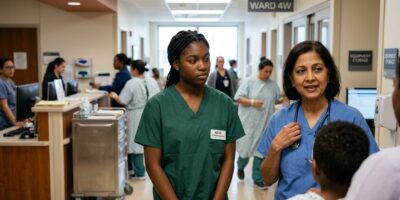
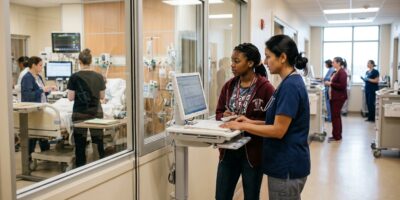
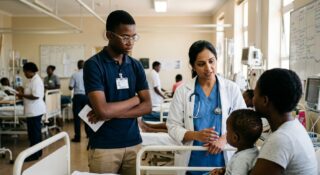
In a clinical setting in Kenya or Tanzania, a typical day might involve watching a clinical officer assess patients in an outpatient clinic, observing ward rounds led by local physicians, or sitting in on discussions about how a facility manages infectious disease cases with limited diagnostic tools. Students may see conditions they have only read about, like malaria, tuberculosis, or complications from delayed prenatal care. They will also see the growing burden of non-communicable diseases, including hypertension and diabetes, which the World Health Organization tracks closely in country-level health profiles.
What makes this observation respectful is a combination of behaviors. Students should dress appropriately, which often means modest and professional attire. They should greet staff and patients according to local customs. They should never photograph patients or share identifying details on social media. They should ask questions of their supervisors at appropriate times, not during a procedure or consultation unless invited. And they should understand that the patients in these settings are not educational props; they are people receiving care, and the student’s presence should never interfere with that.
IMA’s approach to clinical ethics for high school students in medical settings lays out these boundaries clearly. Parents should feel confident asking any program how it trains students on clinical conduct before they arrive on site. If a program cannot explain its ethics protocols and supervision structure, that is a red flag.
How Supervision and Structure Support Cultural Humility
For minors, supervision is not just a safety measure; it is also the mechanism through which cultural humility is taught and reinforced. When a program coordinator debriefs students at the end of each day, that is an opportunity to process what they saw, challenge assumptions that surfaced, and ask the kinds of questions they might not have known to ask before. Group reflection sessions give students a space to hear how their peers interpreted the same experience differently, which itself is a lesson in perspective.
Structured programs also ensure that students have cultural orientation before they enter clinical settings. This includes basic language skills, an overview of the healthcare system, guidance on local customs, and honest conversations about power dynamics. A student who understands that their presence in a clinic is a privilege, not a right, will approach the experience differently than one who has not been given that framing.
Parents should look for programs that build reflection into every day, not just a single pre-departure session. The students who develop real cultural humility are the ones who are asked, repeatedly, to examine their own reactions and biases in a supported environment.
How Cultural Humility Connects to Future Healthcare Careers
Healthcare admissions committees pay close attention to how applicants describe cross-cultural experiences. A student who can articulate what they observed, what surprised them, what challenged their assumptions, and what they still do not understand demonstrates exactly the kind of reflective thinking that medical, PA, dental, nursing, and OT schools value.
The Bureau of Labor Statistics projects healthcare employment to grow significantly through 2032, and the patients future providers will serve are increasingly diverse. Students who develop cultural humility early, before they have even started college, build a foundation that will serve them in every clinical rotation, patient encounter, and professional relationship they have. This is not about checking a box on an application. It is about forming habits of thought that make someone a better clinician.
When students write about these experiences in personal statements or activity descriptions, the strongest essays focus on specific moments. Maybe it was watching a nurse explain a diagnosis to a patient’s entire family, because that is how healthcare decisions are made in many East African communities. Maybe it was realizing that a clinical officer’s resourcefulness under constraints was more impressive than any technology-heavy procedure back home. These are the kinds of insights that show genuine growth, and they only come from students who approached the experience with humility rather than assumptions.
For students thinking about how early clinical exposure fits into their long-term path, IMA’s writing on a parent’s guide to high school medical internships, safety, and support offers practical detail on what to expect and how to evaluate whether a student is ready.
Preparing Before You Go: What Students and Parents Can Do Now
Cultural humility does not start at the airport. Students who get the most from a global health program are the ones who begin reflecting weeks or months before departure. This preparation does not require a reading list of academic papers, though reading about the healthcare system in your destination country is helpful. It starts with simpler questions. What assumptions do I hold about healthcare in other countries? What do I think I already know, and where did that information come from? What am I most nervous about, and why?
Parents play a role here, too. Conversations at home about respect, listening, and the difference between sympathy and solidarity can shape how a teenager approaches the experience. Ask your student what they think they will see, and gently push back if the answer leans toward “helping people who don’t have what we have.” Encourage them to think about what they might learn from people who practice medicine under very different conditions.
Maturity and Readiness Are Real Factors
Not every high school student is ready for this kind of experience, and that is perfectly fine. Cultural humility requires a certain emotional maturity: the ability to feel uncomfortable without withdrawing, to hear feedback without becoming defensive, and to sit with complexity rather than rushing to simple conclusions. Students who tend to process experiences through reflection, who are curious about other people’s perspectives, and who can follow rules even when the reasons are not immediately obvious tend to do well.
If a student is not yet ready, that does not mean they never will be. There are ways to build cultural awareness and clinical understanding closer to home first. The key is honest self-assessment, not pressure to participate in something that does not fit where a student is right now.
What to Look for in a Program’s Approach to Cultural Humility
Parents and students should ask direct questions when evaluating any global health program. Does the program include pre-departure cultural orientation? Is there daily debriefing or reflection built into the schedule? How does the program train students on clinical ethics and patient confidentiality? What is the supervision ratio for minors? How does the program describe the role of local clinicians, and does it center their expertise?
A program that treats cultural humility as a core value will be able to answer these questions clearly and specifically. One that cannot, or that deflects with vague language about “making an impact,” may not be the right fit for a student who wants to build real perspective.
Frequently Asked Questions
Is cultural humility something my teenager can actually practice during a short program abroad?
Yes. Cultural humility is not about reaching a finish line; it is about developing habits of self-reflection, respectful curiosity, and honest awareness of your own limitations. Even a program lasting a few weeks can strengthen these habits if the program includes daily reflection, structured supervision, and honest conversations about assumptions and power dynamics. The key is that the student approaches the experience as a learner, not as someone who already has the answers.
Will my child be safe in a clinical setting in East Africa as a minor?
In a well-structured program, high school students observe clinical activities under direct supervision at all times. They do not provide patient care, handle medications, or perform any procedures. Programs designed for minors should have clear safety protocols, secure housing, supervised transportation, emergency plans, and consistent communication channels with parents. Before enrolling, ask the program to explain its supervision ratios, staff qualifications, and emergency procedures in detail.
How should my student talk about this experience on college or professional school applications?
Admissions committees value self-awareness and specificity. Students should describe what they observed, what challenged their assumptions, and what they learned from local clinicians and patients, rather than framing the experience around what they “did for” others. The strongest application essays focus on concrete moments of learning and honest reflection on what the student did not know. Avoiding savior language and centering the expertise of local professionals signals the kind of maturity and humility that health professional programs look for.