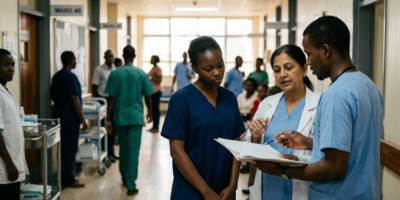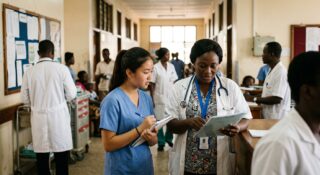
If you are a high school student interested in healthcare, or a parent helping one plan ahead, the question of where to pursue early clinical exposure matters more than most advice columns suggest. The best medical internships for high school students share certain traits: clear structure, professional supervision, ethical boundaries, and genuine educational content. But choosing between a program at a local hospital and a structured international experience involves different trade-offs in access, cost, logistics, and what a student actually sees day to day. This article lays out an honest comparison so families can make a well-informed decision based on what is realistic, not what sounds impressive on paper.
The growing interest in medical internships for high school students reflects a real trend. According to AAMC data on applicant experiences, accepted medical school applicants report extensive clinical exposure, and building that exposure early can help students confirm whether healthcare is the right path. But the type of experience matters far more than the location alone. Both domestic and international internships have genuine strengths and real limitations for minors. Understanding those specifics is the only way to choose well.
What Domestic Medical Internships Actually Look Like for High Schoolers
Domestic programs, typically based in hospitals, clinics, or research offices, are the most accessible starting point for many students. They usually require less planning, no passport, and lower costs. For families who want their teenager close to home, that matters.
In practice, though, the scope of what a high school student can do in a U.S. clinical setting is quite narrow. HIPAA regulations, liability concerns, and the absence of medical certifications mean that most domestic internships for minors involve non-clinical volunteering: greeting patients, organizing supplies, running errands, or doing administrative work. Some programs include brief shadowing sessions where a student follows a physician for a few hours, but direct patient interaction or observation of procedures is uncommon and heavily restricted.
That does not mean these experiences are without value. A student who spends a summer volunteering at a local hospital learns how a healthcare facility operates. They see the pace of clinical work, the teamwork between departments, and the realities of a hospital environment. Those observations are useful. But families should be clear-eyed about the fact that most domestic programs for high schoolers offer limited clinical depth. The educational content is often unstructured, and the experience may feel more administrative than medical.
Finding a domestic program with genuine mentorship and structured learning can require significant effort. Many hospitals limit volunteer hours, cap participation at a few weeks, or assign tasks that rotate without continuity. Students who want sustained observation across multiple departments or exposure to diverse medical conditions may find domestic options more restrictive than expected.
What Structured International Medical Internships Offer
International programs designed specifically for high school students operate differently. In a well-run program, the entire experience is organized around educational observation in active clinical settings, supervised by local medical professionals and dedicated program staff.
Students in these programs typically rotate through departments such as outpatient clinics, maternity wards, pediatric units, and general medicine wards. They observe physicians, nurses, and mid-level providers like Clinical Officers (a role similar to Physician Assistants in the U.S.) as those professionals assess, diagnose, and treat patients. According to WHO data on global health workforce distribution, many countries rely heavily on mid-level providers to deliver primary care, and witnessing that model firsthand gives students a broader understanding of how healthcare systems function beyond the U.S.
The clinical variety tends to be wider, too. In resource-limited settings, students may observe conditions that are rarely seen in U.S. hospitals, including advanced infectious diseases, complications from delayed care, and maternal health challenges. This is not about shock value. It is about understanding what healthcare looks like when resources are scarce and how providers adapt. For a student trying to decide whether they belong in medicine, that kind of exposure builds perspective that is difficult to replicate in a suburban hospital volunteer role.
International programs also build in structured learning outside the clinical setting: group reflection sessions, workshops on local health challenges, cultural engagement, and discussions about medical ethics. These components turn raw observation into something a student can actually articulate and reflect on later, whether in a college essay or a future admissions interview.
Honest Pros and Cons for Each Option
Domestic Internship Strengths
Convenience is the clearest advantage. A student can participate without international travel, vaccinations, or a passport. Costs are typically lower, and the time commitment may be more flexible. Parents have direct access to their child, and the cultural adjustment is minimal. For students who are not yet sure whether healthcare interests them at all, a low-commitment domestic experience can serve as a useful first step.
Domestic programs can also offer exposure to the U.S. healthcare system specifically, which is relevant if a student is certain they want to practice in the United States. Understanding how American hospitals function, how insurance affects care delivery, and how U.S. clinical teams are structured has its own value.
Domestic Internship Limitations
The most significant limitation is scope. High school students in domestic programs rarely observe clinical procedures, rotate through departments, or spend extended time with physicians in active patient care settings. The experience often skews toward administrative support, and structured mentorship is not guaranteed. Additionally, domestic programs for minors vary enormously in quality. Some are well-organized; others amount to little more than volunteer shifts with minimal educational content.
International Internship Strengths
Structured international programs offer broader clinical observation, exposure to different healthcare systems, and built-in educational programming. Students see a wider range of conditions and provider roles. They also develop cultural awareness and adaptability, skills that the BLS description of healthcare occupations increasingly notes as relevant in a diverse patient population. For students who already have some sense of their interest in healthcare, an international program can deepen that understanding substantially.
The structure itself is a strength. Programs designed for high schoolers typically include scheduled rotations, group debriefs, guided journaling, and professional mentorship. This means students are not just watching; they are learning how to process what they see, which is exactly what admissions committees value later on.
International Internship Limitations
Cost is real. International programs require travel, housing, and program fees that add up. Families need to evaluate whether the investment aligns with their financial situation. Logistics are also more complex: passports, vaccinations, travel insurance, and time zone differences all require planning.
There is also the question of readiness. Not every 16-year-old is prepared to spend two or more weeks in a new country, away from family, observing clinical realities that can be emotionally intense. That is not a criticism; it is an honest factor that families should discuss before committing. A student who is not ready will not get the full benefit, and pushing a reluctant teenager into an international program rarely produces a good outcome.
Safety, Supervision, and What Parents Should Ask
For parents, safety is usually the deciding factor, and it should be. Whether a program is domestic or international, families need to ask specific questions about how the organization protects minors.
For domestic programs, ask: Who supervises my child during clinical hours? What training do supervisors have? What happens if my child witnesses something distressing? Is there a structured orientation? Many domestic volunteer programs assume that being inside a hospital is sufficient supervision, but that is not always the case.
For international programs, the questions are similar but more detailed. Ask about housing arrangements, transportation, staff-to-student ratios, emergency protocols, and communication systems. A well-run international program for high schoolers, like those offered through IMA, provides 24/7 supervision by trained program staff, secure housing, private transportation, pre-departure health guidance (including vaccinations and, where applicable, malaria prophylaxis), and regular communication channels for parents. The CDC’s Travelers’ Health guidance is a useful resource for families preparing for international travel, covering destination-specific health recommendations and safety precautions.
IMA’s approach to supervision and safety is detailed in their parent guide to high school medical internships, which covers everything from emergency response plans to how staff support students who are adjusting to a new environment. Parents should read that kind of material carefully and compare it against what domestic programs actually provide. In some cases, the international option is more structured and more transparent about safety than the local one.
One point that bears repeating: in any legitimate program, whether in the U.S. or abroad, high school students observe and support within approved limits. They do not practice medicine. They do not make clinical decisions, handle patient records independently, or perform procedures. Any program that suggests otherwise, domestic or international, is one to avoid.
How Each Type of Experience Shows Up on College Applications
Both domestic and international experiences can strengthen a college or pre-health application, but what matters most is reflection, not location. Admissions committees at medical, PA, dental, nursing, and OT schools want to see that a student understood what they observed, thought critically about it, and connected it to their interest in healthcare.
A student who spent a summer filing charts at a local hospital and came away with a genuine understanding of how the front desk manages patient flow has a story worth telling. A student who observed surgical rounds at an international hospital and reflected on the differences in resource availability has a different but equally valid story. What does not work is an experience, domestic or international, that a student cannot describe with specificity and honesty.
International experiences do offer a distinct angle for personal statements and activity descriptions. Exposure to a different healthcare system, different cultural norms around medicine, and different provider roles gives students material that stands out precisely because it is uncommon. But that advantage only holds if the student can articulate what they actually learned. Writing “I went abroad and it was amazing” will not impress anyone. Writing about watching a Clinical Officer manage a pediatric ward with limited resources, and what that taught you about adaptability in medicine, will.
Students who want to think carefully about what makes a medical internship meaningful for their applications may find it helpful to read about what distinguishes high-quality teen medical internships. The takeaway applies equally to domestic and international options: structure, mentorship, and reflection are what turn an activity into a genuinely useful experience.
How to Decide What Fits Your Situation
The right choice depends on the student, the family, and the specific programs available. Here are the factors worth weighing honestly.
Start with readiness. A student who has never traveled without family, who is anxious about new environments, or who is unsure about healthcare as a career might benefit from a domestic experience first. There is no shame in starting close to home, and a good local program can confirm whether a student wants to go further.
If the student is mature, motivated, and already has some sense of their interest in medicine, an international program may offer a level of exposure and structure that is difficult to find domestically. The key is to evaluate the specific program, not just the destination. Ask about supervision ratios, clinical partnerships, daily schedules, reflection components, and how the organization handles emergencies. A program that cannot answer those questions clearly is not ready for your teenager, regardless of where it is located.
Cost is a legitimate consideration. Families should compare not just the sticker price but the value of what is included. A domestic volunteer shift that costs nothing but offers minimal structure may be less useful than a structured international program, even at a higher price point. Conversely, an expensive international trip with vague programming and limited clinical access is not worth the investment either.
For students interested in understanding what ethical clinical observation looks like for minors, IMA’s guide on clinical ethics for high school students in medical settings is a practical resource that applies to both domestic and international contexts.
Finally, talk as a family. Parents should voice their concerns openly, and students should be honest about their motivations. The best outcomes come when everyone involved understands what the experience is and is not. Neither a domestic nor an international internship will guarantee admission to any school, provide clinical certification, or turn a high schooler into a medical professional. What either can do, if chosen well, is give a young person a clearer, more grounded sense of whether healthcare is where they belong.
Frequently Asked Questions
Will an international medical internship look better on my college application than a domestic one?
Not automatically. Admissions committees care about what you learned and how you reflected on it, not where the program was located. An international experience may give you distinctive material to write about, particularly around global health and cultural awareness, but a well-described domestic experience that shows genuine insight is equally valuable. Quality of reflection matters more than geography.
Are international programs safe enough for a 16- or 17-year-old?
Structured programs designed for high school students can be very safe, sometimes more so than loosely organized domestic volunteer roles. The key is evaluating the specific program’s supervision ratios, housing arrangements, emergency protocols, transportation, and communication systems. Ask for detailed information before committing, and verify that staff are trained to work with minors. Programs that are transparent about their safety infrastructure are generally trustworthy.
Can high school students do hands-on medical work in either type of internship?
No. In both domestic and international settings, high school students observe and learn under supervision. They do not perform medical procedures, make clinical decisions, or handle patient records independently. This is true regardless of the country or program. Any organization that promises hands-on clinical work for minors is misrepresenting what is ethically and legally appropriate.