Dental public health projects for teens offer one of the most practical and age-appropriate ways for high school students to test their interest in a dental career. Unlike clinical rotations designed for graduate students, these projects center on community education, oral health outreach, and observation, all under direct supervision. For a student weighing whether dentistry is the right path, this type of structured experience builds real understanding of how public health and oral care intersect, without requiring any hands-on clinical work. A well-structured medical internship for high school students can include dental public health rotations that pair observation in clinic settings with outreach in the surrounding community, giving teens a grounded view of what oral healthcare looks like beyond a private practice.
Many families begin searching for these opportunities alongside searches for paid medical internships for high school students, hoping to find programs that offer both structure and substance. It is worth noting that most reputable dental public health projects for teens are not paid positions; they are educational experiences designed around learning and service rather than employment. That distinction matters, because the strongest programs prioritize safety, supervision, and age-appropriate responsibilities over flashy promises. When evaluating any program, parents and students should ask specific questions about what the student will actually do each day, who supervises them, and what boundaries are in place. These details separate serious, well-run programs from those that overpromise and underdeliver.
What Dental Public Health Projects Actually Involve for Teens
The phrase “dental public health project” can sound vague, so it helps to break it down. For high school students, these projects typically fall into two categories: observational time in dental clinics and active participation in non-clinical community outreach.
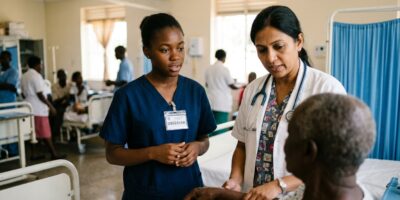
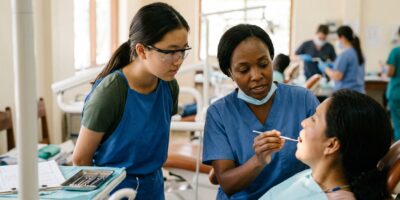
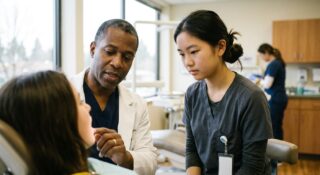
In a clinic setting, teens shadow dentists, dental hygienists, or dental clinical officers. They watch routine procedures like check-ups, cleanings, fillings, and extractions. They observe how patients are assessed, how treatment decisions are made, and how clinics manage patient flow. The student’s role is to watch, listen, and ask questions during appropriate moments. They do not touch instruments, examine patients, or assist with procedures.
Outside the clinic, the educational outreach component is where teens are most actively involved. This can include demonstrating proper tooth brushing and flossing techniques using anatomical models at schools or community centers, helping distribute toothbrushes and toothpaste, supporting nutrition education sessions that focus on foods that promote or damage oral health, and assisting with health fair booths. In some programs, students help collect basic survey data under direct supervision, such as tallying attendance at a health talk or recording responses to simple oral health knowledge questionnaires. None of these tasks involve clinical judgment or patient care.
This combination of observation and outreach gives students a realistic picture of dental public health, not just the technical side of the profession but the community-facing work that is essential in regions where preventive care infrastructure is limited. Students interested in understanding how dental careers connect to broader public health challenges will find this type of experience far more informative than simply reading about it. For context on how early dental exposure fits into a larger plan, our resource on pre-dental experiences available to high school students covers shadowing, internships, and how to evaluate your options.
Why Oral Health Outreach Matters, and Why Teens Can Contribute
Oral diseases affect nearly 3.5 billion people worldwide, according to the WHO oral health fact sheet. Untreated dental caries in permanent teeth remains the single most common health condition globally, and severe gum disease affects roughly 19% of the adult population. These numbers are not abstract; they reflect real gaps in access to preventive care, especially in low- and middle-income communities where dental professionals are scarce and routine check-ups are not part of everyday life.
This is exactly where community dental projects for teens can play a useful supporting role. Teens are not solving systemic access problems during a two-week or four-week program. But supervised outreach activities, like teaching children in a rural school how to brush properly or helping families understand the connection between diet and tooth decay, do contribute to local public health goals when those activities are planned and led by qualified local professionals. The student’s contribution is real but bounded: they support an effort that is already underway, led by people who understand the community’s needs.
For high school students, the value runs in both directions. They contribute to an educational effort, and they gain a grounded understanding of how oral health disparities actually work. That understanding is hard to get from a textbook. Seeing a clinic where one dentist serves thousands of patients, or watching a dental clinical officer perform extractions that would be handled by a specialist in the United States, clarifies things quickly. Students start to understand concepts like task-shifting, resource allocation, and preventive versus reactive care models in a way that sticks.
Supervision, Safety, and What Parents Should Expect
For parents, the safety question comes first, and it should. When your teenager is participating in a dental public health project, especially one abroad, you need to know who is supervising them, where they are staying, and what protocols are in place for emergencies.
Reputable programs maintain constant, direct supervision of high school participants. This means an adult staff member or qualified local professional is present with students at all times, whether they are observing in a clinic or working at a community outreach site. Students are never left alone in clinical environments. Housing is secured in advance, with designated accommodations that have been vetted for safety. Transportation between sites is organized and private, not left to students to arrange on their own.
Communication with families should be clear and consistent. Parents should receive detailed itineraries before the program begins, along with emergency contact information and a clear outline of the program’s safety protocols. If a program cannot or will not provide this level of detail, that is a red flag.
It is also important to understand that the emotional dimension matters. Observing healthcare in settings where resources are limited can be sobering. Seeing advanced tooth decay in a young child, or watching a patient endure a procedure without the comfort measures common in U.S. dental offices, can be difficult for a teenager to process. Good programs build in structured reflection time, usually daily debriefing sessions led by experienced staff, where students can talk through what they observed, ask questions, and process their reactions. This is not optional; it is a core part of responsible programming for minors. For a deeper look at what parents should evaluate, the parent’s guide to teen medical internship safety and support covers these considerations in detail.
Age-Appropriate Boundaries in Clinical and Outreach Settings
The clearest boundary is this: high school students do not provide any form of patient care. They do not diagnose, treat, examine, or perform procedures. They do not make clinical decisions. This applies whether the student is in a clinic observing a dentist or at a community center leading a toothbrushing demonstration. Even in outreach roles, the student is working under the direction of a qualified adult who is responsible for the activity.
This boundary exists for good reasons. Minors lack the training, licensure, and legal standing to provide clinical care in any country. More fundamentally, it protects patients from harm and protects students from being placed in situations they are not equipped to handle. A program that blurs this line, or that markets “hands-on clinical experience” for high school students in dental settings, is one to avoid.
What students can do is substantial without being clinical. They can prepare educational materials, set up demonstration stations, practice explaining oral hygiene concepts to groups, observe clinical workflows, ask questions of professionals during appropriate breaks, and participate in group discussions about public health strategy. These activities build real skills, including communication, cultural awareness, teamwork, and professional conduct, without crossing ethical lines.
How This Experience Connects to Future Dental School Applications
Dental school admissions are competitive. The ADEA admissions data and resources show that for the 2022-2023 cycle, there were over 10,600 applicants for roughly 6,400 first-year enrollment positions. Admissions committees are looking for more than strong grades and DAT scores. They want evidence that applicants understand what the profession involves, have reflected seriously on their motivations, and bring meaningful experiences to their application.
A dental public health project during high school will not guarantee admission anywhere. No single experience does. But it can serve as credible early evidence that a student’s interest in dentistry is grounded in real exposure rather than assumption. When a student writes in their personal statement about observing a dental clinical officer provide primary care in a resource-limited setting, or about helping lead an oral hygiene education session for elementary school students in a rural community, that specificity carries weight. It shows the applicant has seen what oral healthcare looks like beyond a suburban dental office and has begun to think about the profession’s public health dimensions.
The key is how students reflect on and present the experience. Admissions committees are not impressed by a list of activities; they want to see what the student learned, what challenged their assumptions, and how the experience shaped their understanding of dentistry. Students should be prepared to discuss specific observations, ethical questions that arose, and how the experience influenced their thinking about patient care, access, and health equity.
For students still building their understanding of what dental careers involve, including the distinction between clinical practice and public health roles, the dental internships guide for high school students provides a useful overview of what is realistically available at this stage.
Choosing the Right Program: What to Evaluate
Not all dental public health programs for teens are created equal. Some are well-structured educational experiences with proper supervision and clear learning objectives. Others are loosely organized volunteer trips with minimal oversight. The difference matters enormously, both for safety and for the quality of what the student actually takes away.
Here are the questions parents and students should ask before committing to any program. What is the daily schedule, and who plans it? Who supervises students at each site, and what are their qualifications? What is the student-to-supervisor ratio? What are the program’s explicit policies about clinical boundaries for minors? How does the program handle medical emergencies? What kind of housing is provided, and how is it secured? Is there structured reflection or mentorship built into the program, or is the student simply placed somewhere and left to observe? Does the program have a track record, and can it connect you with families of past participants?
The answers to these questions will quickly separate serious programs from surface-level ones. Programs that are transparent about logistics, boundaries, and supervision are almost always the ones worth choosing. Programs that emphasize “once-in-a-lifetime” language over concrete details about structure and safety deserve skepticism.
It also matters whether the program has genuine relationships with local healthcare providers and communities. Dental public health outreach is only effective when it is embedded in existing local efforts, not parachuted in from outside. Students should be joining something already in progress, learning alongside local professionals who know the community’s needs, not arriving with supplies and good intentions but no local context. The Bureau of Labor Statistics occupational profile for dentists offers useful background on the profession’s trajectory for students weighing whether dentistry fits their long-term goals.
Readiness, Maturity, and Honest Self-Assessment
Not every high school student is ready for this kind of experience, and that is completely fine. Participating in a dental public health project, especially one abroad, requires a baseline level of maturity, adaptability, and emotional readiness. Students will be in unfamiliar environments, observing healthcare realities that may be very different from what they have seen before, and working within a structured group setting that demands punctuality, respect, and professionalism.
Parents and students should have an honest conversation about readiness before applying. Can the student follow instructions consistently without being reminded? Are they comfortable being away from home for an extended period? Can they handle seeing patients in discomfort without becoming overwhelmed or shutting down? Are they genuinely curious about dentistry, or are they primarily looking for a resume line? There are no wrong answers to these questions, but the honest ones should guide the decision.
For students who are interested but not yet sure they are ready for an international program, there are domestic options worth considering. Local dental clinics sometimes accept high school observers, and community health organizations often need volunteers for oral health education events. These experiences can build confidence and confirm interest before a student commits to a more intensive program. Our guide on community clinic internships for teens covers some of these closer-to-home options.
The goal is not to rush. A student who waits a year, builds some local experience, and then participates in a structured dental public health project with genuine readiness will get far more out of it than one who jumps in before they are prepared. The best programs will be there when the student is ready.
Frequently Asked Questions
Will my teenager perform any dental procedures during a public health project?
No. High school students do not perform any clinical procedures, examinations, or treatments during dental public health projects. Their role is strictly observational in clinic settings and supportive in non-clinical outreach activities, such as helping with oral hygiene education demonstrations or distributing supplies. All activities are supervised by qualified professionals.
How does a dental public health project differ from dental shadowing?
Shadowing typically involves observing a single dentist or practice to understand daily clinical work. A dental public health project includes observation but also involves participating in community-level oral health education and outreach, which exposes students to the broader public health side of dentistry, including topics like access to care, health disparities, and preventive strategies. Both are valuable, but they develop different types of understanding.
Is this type of experience worth including on a dental school application?
Yes, when presented thoughtfully. Dental school admissions committees value experiences that show genuine engagement, reflection, and an understanding of the profession’s scope. A dental public health project demonstrates early interest in oral health, exposure to underserved populations, and awareness of public health principles. The key is to describe specific observations and lessons learned rather than simply listing participation.