


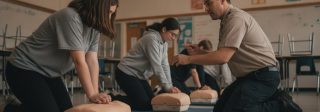

A pre-med club is a high school student group for future doctors and other health professionals. To start one, find a teacher advisor, follow your school’s club approval process, recruit a few founding members and plan events such as speaker visits, CPR training and blood drives. You can run it as an independent club or as a chapter of HOSA-Future Health Professionals.
A club is one of the few pre-med activities you can begin at 14 without anyone’s permission but your school’s. It gives you speakers, skills and service projects, and leading one shows the initiative colleges look for. It also connects members to the larger path described in our guide to how to become a doctor, starting in high school.
What Does a Pre-Med Club Do?
A pre-med club exposes members to health careers and helps them build skills and experience. Typical meetings include a speaker, a hands-on skill such as CPR or suturing practice, planning for a service project or time sharing volunteering, shadowing and summer opportunities. The best clubs also give members leadership roles.
That mix lines up with the AAMC’s advice for high schoolers in four things a high school student can do to prepare for medical school: pursue volunteer and extracurricular activities, learn about health careers and build the skills doctors need. Joining service groups and clubs is one of the ways the AAMC suggests practicing those skills.
HOSA Chapter vs. Independent Pre-Med Club
The first decision is whether to affiliate with HOSA. HOSA-Future Health Professionals is an international student organization recognized by the U.S. Department of Education, with more than 200,000 members in 51 chartered associations. An independent club answers only to your school.
| Feature | HOSA chapter | Independent pre-med club |
|---|---|---|
| Structure | Part of a state association and HOSA’s national and international organization | Set by your school and your members |
| Advisor | Often a health science teacher | Any teacher willing to sponsor |
| Cost | Membership dues, set by HOSA and your state association | Usually none beyond event supplies |
| Competitions | State conferences and the International Leadership Conference, with events in health knowledge and skills | None built in |
| Flexibility | Follows HOSA’s calendar and rules | Plan any activities you like |
| Best for | Schools with a health science program or students who want to compete | Schools without a health program, or students who want a simple start |
Many schools start as an independent club and add a HOSA chapter once membership grows. When members are ready for clinical time, our medical opportunities for high school students, including internships in Kenya and Peru, are open to students who are 15 by the start of the program.
How to Start a Pre-Med Club in High School
Starting a club usually takes four to six weeks from first idea to first meeting. The steps below follow the approval process most public and private high schools use; ask your activities office for your school’s exact forms.
- Check the rules. Ask the activities director or student council how new clubs are approved, how many members you need and when applications are due.
- Find an advisor. A biology, chemistry, anatomy or health teacher is the natural choice. Explain what the club will do and how little of their time it will take.
- Recruit founding members. Three to five committed students can cover president, vice president, secretary, treasurer and events.
- Write a mission and constitution. One sentence on purpose, plus membership rules, officer roles, elections and meeting frequency.
- Choose HOSA or independent. Contact your state HOSA association if you want to affiliate.
- Submit and get approved. Turn in the paperwork, then book a room and a regular meeting time.
- Plan the first semester. Schedule three or four events before your first meeting so new members see what they are joining.
- Promote it. Use the morning announcements, a club fair table, posters and teachers who will mention it in science classes.
Pre-Med Club Ideas: 25 Activities for High School
Mix speaker events, hands-on skills and service so members learn about medicine and also do something useful. These 25 ideas work for a new club with a small budget.
- Health professional speaker series. Invite a doctor, nurse, physician assistant, paramedic or pharmacist each month, in person or online.
- CPR and AED certification day. Bring in an American Heart Association or Red Cross instructor to certify members.
- Stop the Bleed training. The American College of Surgeons’ Stop the Bleed course teaches three techniques to control life-threatening bleeding.
- Blood drive. The Red Cross helps high schools host a blood drive; the school provides the room, volunteers and donors.
- Donor recruitment table. Blood donors must be at least 16 in most states, per Red Cross eligibility rules, so many juniors and seniors can give.
- Suturing practice. Practice simple stitches on bananas or practice pads with a clinician supervising.
- Mystery diagnosis nights. Work through a case in teams, from symptoms to likely causes.
- Medical terminology bee. A quick, competitive way to learn prefixes, roots and suffixes.
- HOSA competitive event prep. Study together for events such as medical terminology or health career knowledge.
- Medical ethics debates. Argue real questions such as organ allocation or informed consent for minors.
- Health news journal club. Each member summarizes one health study or news story in five minutes.
- Anatomy build day. Build organ or body system models from clay or paper.
- Alumni pre-med panel. Ask graduates now in college pre-med tracks what they wish they had done in high school.
- Hospital volunteer information session. Invite a local hospital’s volunteer coordinator to explain age rules and applications.
- Shadowing workshop. Practice writing the email that asks a doctor to let you shadow.
- Health fair for younger students. Teach handwashing, nutrition or sun safety at an elementary school.
- First aid kits for shelters. Assemble and donate kits to a local shelter or food bank.
- Mental health awareness week. Share resources and invite a school counselor to speak.
- Lab or hospital tour. Arrange a visit to a college lab, simulation center or hospital department that hosts student groups.
- Science study groups. Run peer tutoring for AP or IB biology and chemistry.
- Global health night. Compare how health care works in other countries, such as Kenya and Peru.
- Health careers fair. Bring together speakers from nursing, physical therapy, pharmacy, dentistry and public health.
- Fundraiser for a health cause. Pick one nonprofit and run a walk, bake sale or awareness campaign.
- Summer program information night. Share options for summer, from local volunteering to clinical programs abroad.
- Reflection and essay workshop. Practice writing about a health care experience, which later helps with college essays.
For service, the American Red Cross also supports student Red Cross Clubs in K-12 schools, which some pre-med clubs partner with for blood drives and preparedness projects.
How to Keep a Pre-Med Club Going
Clubs fade when the founders graduate. Keep yours going by electing underclassmen as officers, keeping a shared file of contacts and event plans, holding meetings on a predictable schedule and repeating the events members liked best each year. Track members’ volunteer hours and keep a simple record of events; both help later when members write applications.
What Are Good Pre-Med Extracurriculars in High School?
The best pre-med extracurriculars in high school put you around patients and show steady commitment: hospital or nursing home volunteering, shadowing a doctor, HOSA or a pre-med club, CPR and first aid training, research and a supervised summer clinical program. Two or three activities you stay with for years count for more than a long list.
- Clinical exposure: our list of ways high school students can get clinical experience covers volunteering, scribing and more, and our guide to how to shadow a doctor in high school covers the ask.
- Leadership: founding or leading a pre-med club, HOSA chapter or service project.
- Academics: the strongest science and math your school offers; see pre-med classes to take in high school.
- A summer program: in our high school program, interns work under the supervision of licensed providers within their training level and assist with noninvasive tasks; they do not diagnose, prescribe or perform invasive procedures. Our guide to how high school medical internships prepare future doctors explains which skills carry forward.
These activities also build several of the AAMC’s premed competencies, such as teamwork and collaboration, service orientation and oral communication, which medical schools look for later.
Does a Pre-Med Club Help With College Applications?
Yes, if you do more than attend. Colleges look for sustained involvement and initiative, so a leadership role, a blood drive you organized or a speaker series you built says more than membership alone. Describe the club by what it did: how many members, which events and what changed because of your work. It does not replace time around patients, so pair it with volunteering or shadowing, and read the honest pros and cons of being a doctor as you decide how far to go.
Frequently Asked Questions
What is a pre-med club in high school?
A pre-med club is a student organization for high schoolers interested in medicine and other health careers. Members hear from health professionals, train in skills such as CPR, run service projects like blood drives and help each other find volunteering, shadowing and summer programs.
How do you start a pre-med club in high school?
Check your school’s rules for new clubs, find a teacher advisor, gather a few founding members, write a short mission and constitution, submit it for approval and plan a first semester of three or four events. Decide early whether to affiliate with HOSA or stay independent.
Is HOSA the same as a pre-med club?
Not exactly. HOSA-Future Health Professionals is a national and international organization with chapters, dues, competitive events and conferences. An independent pre-med club is local and informal. Many schools run a HOSA chapter as their pre-med club; others keep an independent club.
What are good pre-med extracurriculars in high school?
Good pre-med extracurriculars give you time around patients and show commitment: hospital or nursing home volunteering, shadowing, HOSA or a pre-med club, CPR and first aid training, research and a supervised summer clinical program. Depth in two or three matters more than a long list.
Does a pre-med club look good on college applications?
Yes, especially if you hold a leadership role or create something lasting, such as a blood drive or speaker series. Colleges look for sustained involvement and initiative, and founding or leading a club shows both.











