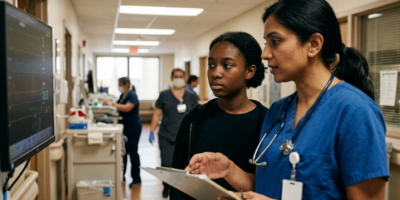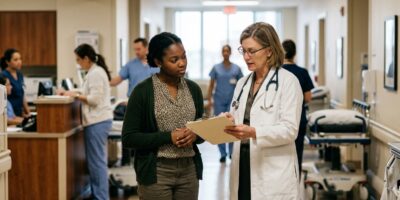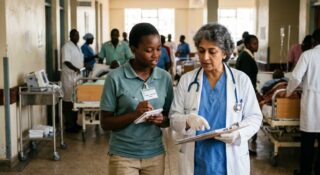
Clinical experience for high school students means supervised time in real health care settings: shadowing, hospital volunteering, certification courses, HOSA, structured summer or international programs, and specialty offices. At this level it builds understanding, not clinical skill. The ten options below are realistic for teens, and each one works best when you reflect on what you saw.
Most high school students interested in medicine know they should start building clinical experience early, but figuring out where to begin can feel overwhelming. The options are not always obvious, and the difference between a meaningful experience and a resume filler is not always clear from a program description. The good news is that there are legitimate, structured ways for high school students to gain real exposure to healthcare settings, patients, and clinical teams, even before college. Some students search for paid medical internships for high school students, while others are drawn to volunteer roles, certification courses, or structured observation programs. What matters most is that the experience is supervised, age-appropriate, and genuinely educational.
Before committing time and money to any program, students and parents should understand what “clinical experience” actually means at the high school level. It does not mean performing procedures, diagnosing patients, or working independently. For minors, clinical experience centers on observation, supervised support within clearly defined limits, and guided learning. Programs that promise more than this should raise a red flag. That said, well-structured clinical exposure at this stage can build a real foundation for future applications, whether you are heading toward medical school, PA school, nursing, dentistry, or occupational therapy. Some students are also drawn to medical research internships for high school students, which pair clinical observation with a closer look at how evidence-based medicine works in practice. The list below covers ten practical, realistic avenues for getting started.
Key Points
- Shadowing and hospital volunteering are the most common starting points, and many hospitals set a minimum age of 16.
- CPR and first aid courses can be finished in a day and are often required for other clinical roles.
- The National Registry of EMTs dropped its own age-18 rule in 2020, so EMT age limits now depend on your state.
- Federal rules require at least 75 clock hours of training for nurse aides, including 16 hours of supervised practical training.
- HOSA reaches more than 200,000 members through 51 chartered associations.
- Reflection turns hours into something you can use later; write within a day of each session.
The 10 Options at a Glance
| Option | Typical minimum age | Time commitment | What you actually do |
|---|---|---|---|
| Shadowing | Often 16 or 18, set by each site | A few hours to a few days | Watch, listen and ask questions |
| Hospital volunteering | Often 16 | Ongoing, with minimum hours | Non-clinical support inside a clinical setting |
| CPR or first aid | Open to teens | Often a single day | Learn emergency response skills |
| HOSA or pre-health club | High school student | School year | Competitions, projects, leadership |
| Pre-med summer program | Varies by program | A few days to several weeks | Lectures, observation, mentorship |
| EMT or CNA course | Set by your state | Weeks to months | Classroom, skills labs, supervised clinicals |
| Community health or free clinic | Varies by site | Ongoing | Support roles with underserved patients |
| Supervised international program | 16 at IMA (15 for HOSA members) | From two weeks | Supervised clinical rotations and outreach |
| Dental, PT or OT office | Varies by office | A few days or ongoing | Observation or volunteer support |
| Reflection journal | Any age | A few minutes per session | Write down what you saw and learned |
1. Shadow a Physician, PA, or Nurse at a Local Hospital or Clinic
Shadowing remains one of the most accessible forms of clinical exposure for high school students. It involves following a licensed healthcare professional during part of their workday, observing patient interactions, rounds, consultations, and the general rhythm of clinical work. Many hospitals and private practices will allow high school students to shadow, though policies vary by institution. Some require a minimum age of 16 or 18, and most will ask for a signed parental consent form, proof of immunizations, and sometimes a background check.
To find shadowing opportunities, start by asking your school counselor, a family physician, or a local hospital’s volunteer services department. Some health systems have formal shadowing programs with set application windows; others handle requests on a case-by-case basis. If you are not sure how to approach a hospital or clinic, IMA has published a useful guide on how high school students can approach hospitals about internship and shadowing options. Be professional in your outreach, and be prepared to follow up.
Shadowing is largely passive. You watch, listen, and ask questions when appropriate. You will not be making decisions or touching patients. But what you gain is an honest look at what healthcare professionals actually do, which is exactly the kind of understanding that matters later in applications and interviews. Before your first day, prepare a short list from our questions to ask while shadowing a doctor.
2. Volunteer in a Hospital or Clinical Setting
Hospital volunteering is one of the most common entry points for high school students. Volunteer roles typically involve non-clinical tasks: greeting patients and families, delivering supplies, assisting with wheelchair transport, organizing waiting areas, or supporting administrative staff. While these duties are not medical in nature, they place you inside a working clinical environment where you can observe how care is delivered, how teams communicate, and how patients experience the system.
Most hospitals run formal volunteer programs with orientations, dress codes, and minimum hour commitments. Some require students to be at least 16. These programs are structured with safety and supervision in mind, which is important for both students and parents. The experience may not feel glamorous, but admissions committees at medical and PA schools consistently value applicants who can reflect meaningfully on what they observed and learned in these roles, not just list the hours.
What Do Hospitals Usually Ask Teen Volunteers For?
Requirements differ by hospital, so read each volunteer office’s page closely. Common items include a minimum age, a parent or guardian signature, an application and interview, proof of immunizations and a recent TB screening, a dress code, an orientation session and a commitment of a set number of hours or months. Many programs also ask for a school reference. Apply early, because summer teen programs often fill months ahead.
3. Earn a CPR or First Aid Certification
Becoming certified in CPR or basic first aid is a concrete, practical step that any high school student can take. The American Red Cross and the American Heart Association both offer courses open to teens, and many are completed in a single day. These certifications teach foundational emergency response skills, and they are often prerequisites for more advanced clinical volunteer or internship positions.
Earning a certification also signals initiative. It tells a future admissions committee that you took a structured step toward understanding patient safety and emergency care. And unlike some activities that are hard to verify, a certification card is a clear, documented credential. Keep a copy of the card and note its expiration date, because certifications must be renewed to stay current.
4. Join a HOSA Chapter or Pre-Health Student Organization
HOSA (Future Health Professionals) is a national student organization with chapters in high schools across the country. According to HOSA, the organization has reached more than 200,000 members and has 51 chartered associations, and it is open to secondary, postsecondary, adult and collegiate students. Membership gives students access to health science competitions, leadership development, community health projects, and networking with peers who share an interest in healthcare careers. HOSA events often include skills-based competitions in areas like medical terminology, epidemiology, and clinical nursing, offering a structured way to deepen your health science knowledge while building teamwork and communication skills.
If your school does not have a HOSA chapter, look into starting one or joining a similar pre-health club. These organizations provide context and community around your clinical interests, and they pair well with hands-on experiences like shadowing or volunteering. IMA is a HOSA partner, and our HOSA Health Literacy Ambassador project guide shows how a chapter project can turn into real community health work.
5. Participate in a Structured Pre-Med Summer Program
Many universities and organizations offer summer programs specifically designed for high school students interested in medicine and health sciences. These programs vary widely in structure, cost, and quality. Some are residential and last several weeks; others run for just a few days. The best ones include clinical observation, lectures from medical faculty, mentorship, and guided reflection.
When evaluating summer programs, look for specifics: Who supervises students in clinical settings? What is the daily schedule? Is there a meaningful educational component, or is it mostly campus tours and general workshops? Parents should ask direct questions about safety protocols, housing arrangements, supervision ratios, and emergency procedures. A program that cannot answer these questions clearly is not one you should trust with your teenager. Our guide to writing a strong high school internship application covers what selective programs ask for.
6. Take an EMT or CNA Training Course
Some states allow students who are 16 or 17 to begin EMT (Emergency Medical Technician) or CNA (Certified Nursing Assistant) training, though certification and employment typically require students to be at least 18. Starting the coursework in high school gives students a head start and, more importantly, exposes them to real clinical content: patient assessment, vital signs, basic patient care, infection control, and medical terminology.
These courses involve classroom instruction, skills labs, and supervised clinical rotations. They are rigorous, and completing one demonstrates to future admissions committees that you have engaged with healthcare at a level beyond observation. If you are considering a PA or nursing career path, CNA experience is particularly relevant because it provides the kind of direct patient contact hours that many programs require. The BLS occupational outlook for physician assistants shows strong projected growth for the profession, which makes early preparation especially worthwhile.
How Old Do You Have to Be for EMT or CNA Training?
Age rules are set mostly by states, and they have changed. A 2025 South Dakota legislative research brief notes that the National Registry of EMTs used to require applicants to be at least 18, but its board eliminated that age requirement in June 2020 and now defers to state rules. Some states now license EMTs younger than 18, while others still require 18. Check your state EMS office before you enroll.
For nurse aides, federal rules for nursing home aide training set a floor rather than an age: a nurse aide training program must include at least 75 clock hours, with at least 16 hours of supervised practical training. Age limits for CNA courses and certification are again set by each state and training provider.
What Can Teens Legally Do in a Health Care Job?
If you are paid rather than volunteering, federal child labor rules apply. The U.S. Department of Labor says 16- and 17-year-olds may work unlimited hours in any job not declared hazardous, and its hazardous list includes operating or assisting with most power-driven hoisting equipment. Employers apply that rule to some patient-handling equipment, and where a state law is stricter, the state rule applies. Ask your employer what tasks are open to workers under 18.
7. Volunteer with a Community Health Organization or Free Clinic
Community health settings offer a different perspective from hospital-based experiences. Free clinics, community health centers, food banks with health screening programs, and public health nonprofits all need volunteers. In these settings, students often interact with underserved populations and see firsthand how social determinants of health, such as poverty, food insecurity, and lack of insurance, shape patient outcomes.
This type of experience is valuable not only because it builds empathy and contextual understanding, but because it gives you something specific and substantive to discuss in future application essays. Admissions committees at medical and PA schools are increasingly interested in applicants who understand health equity and can speak to it from personal experience, not just from textbooks.
8. Pursue a Supervised International Clinical Observation Program
For students ready for a more intensive experience, supervised international programs offer clinical observation in healthcare settings that look and operate very differently from U.S. hospitals. International Medical Aid, for example, runs structured programs for high school students in Mombasa, Kenya. In these programs, students shadow local physicians, nurses, and clinical officers in hospitals and community clinics, observing a wide range of conditions, many of which are rarely seen in U.S. clinical settings. Our overview of global health internships for high school students explains how these programs compare.
It is important to be clear about what this involves. High school students in IMA programs observe and learn; they do not diagnose, treat, or perform procedures. Every clinical placement is supervised by licensed local professionals and IMA in-country staff. The daily schedule is structured, including morning briefings, supervised clinical rotations, afternoon community health activities, and evening debriefing sessions where students reflect on what they observed and discuss ethical questions with mentors.
For parents, the safety and supervision structure is a primary concern, and rightly so. IMA provides secure group housing, vetted transportation, 24/7 in-country staff support, and clear communication channels with families. Students are never left unsupervised in clinical or community settings. The parent’s guide to high school medical internships addresses these concerns in detail. Pre-departure preparation includes health briefings, required vaccinations, and guidance on food and water safety. Students who are considering PA careers will find particular value in observing clinical officers in settings like Kenya and Tanzania, where these mid-level providers manage a broad scope of care. For a broader look at how these experiences connect to the PA pathway, see IMA’s guide to physician assistant exposure opportunities for high school students.
Maturity matters here. International programs require students to be adaptable, respectful of cultural differences, and ready to process emotionally challenging observations. Not every student is ready for this at 16 or 17, and that is perfectly fine. Parents and students should have an honest conversation about readiness before committing.
What Does IMA’s High School Program Include?
On IMA’s medical internships for high school students, interns rotate through hospital departments, community clinics and outreach programs in Mombasa, where they observe patient consultations, take part in health education and assist with basic noninvasive tasks under the supervision of licensed providers. Applicants must be at least 16 by the start of the program, and HOSA members may apply at 15. IMA has maintained a 100% safety record for all high school and pre-health interns. For a step-by-step look at the program, read our early path to medical school guide for high school students.
9. Work or Volunteer in a Dental, PT, or OT Office
Clinical experience does not have to be limited to hospitals and physician offices. Students interested in dentistry, physical therapy, or occupational therapy can seek observation or volunteer opportunities in specialty practices. Many private dental offices, outpatient physical therapy clinics, and OT practices are willing to let motivated high school students observe, especially if the request is professional and the student is flexible about scheduling.
These settings give students a realistic view of what day-to-day practice looks like in allied health and specialty fields. You will see patient interactions, treatment planning, and the business side of running a healthcare practice. For students who are still deciding between different health professions, spending time in more than one type of clinical setting is one of the best ways to figure out what fits. The AAMC’s framework of core competencies for entering medical students outlines the skills and attributes that matter across health professions, not just for MD applicants.
10. Keep a Structured Reflection Journal Throughout Every Experience
This one is not a separate “experience” in the traditional sense, but it is what turns a list of activities into something meaningful for your future applications and your own clarity. Every clinical experience you have, whether it is a single afternoon of shadowing or a multi-week international program, becomes significantly more valuable when you take the time to write about what you observed, what surprised you, what challenged your assumptions, and what questions it raised.
Admissions committees at medical, PA, dental, nursing, and OT schools do not just want to see that you logged hours. They want evidence that you paid attention, thought critically, and grew. A student who shadowed for 40 hours and can articulate three specific moments that shaped their understanding of patient care will stand out over a student who logged 200 hours but cannot describe what they actually learned. PA programs also emphasize the importance of demonstrating meaningful healthcare exposure, and reflection is how you make that demonstration compelling.
Start your journal with the first experience and keep it going. Write within 24 hours of each session, while the details are fresh. Note specific observations, conversations, and your honest reactions. This habit will serve you well for years.
How Should You Log Your Hours?
Keep a simple log alongside the journal. Later applications ask for dates, hours and a contact person, and that information is hard to rebuild years later. Our guide to tracking clinical and volunteer hours explains the habit in more detail.
| Date | Setting | Supervisor and contact | Hours | One thing I learned |
|---|---|---|---|---|
| June 10 | Hospital volunteer desk | Volunteer coordinator | 4 | How families find their way after an admission |
| June 14 | Family practice shadowing | Family physician | 3 | How the doctor explained a new diagnosis in plain words |
| June 20 | CPR course | Course instructor | 5 | Hand position and rate for adult compressions |
What Parents Should Look for Before Saying Yes
Parents play a critical role in evaluating clinical experience opportunities for high school students, and that role goes beyond signing a permission form. Before agreeing to any program, whether it is a local hospital volunteer position or an international observation program, parents should ask several specific questions. Who is supervising my child, and what are their qualifications? What does a typical day look like? What are the emergency protocols? Is there a clear code of conduct, and how is it enforced? What are the boundaries around patient interaction?
For international programs, additional questions are warranted. Where will my child sleep, and who manages the housing? How will we communicate while they are abroad? What health precautions are required? What happens if my child gets sick or needs to come home? Reputable programs will answer these questions directly and in writing. If an organization is vague about supervision, safety, or what students will actually do, that is a reason to look elsewhere.
It is also worth having an honest conversation with your teenager about maturity and readiness. Some students thrive in clinical settings at 16; others benefit from waiting a year or two. There is no single right timeline. What matters is that the student is genuinely interested, not just padding a resume, and that the program is structured to keep them safe while giving them something real to learn from. For a broader perspective on what kinds of hospital-based programs exist and what they actually offer high school students, IMA’s article on hospital internships that offer real experience is a practical starting point.
Building a Foundation That Actually Holds Up
Clinical experience in high school is not about collecting credentials or rushing toward a career decision. It is about building a foundation of understanding that will serve you whether you end up in medical school, PA school, nursing, dentistry, OT, or a field you have not considered yet. The students who get the most out of these experiences are the ones who approach them with curiosity, humility, and a willingness to be honest about what they observe and feel.
Start where you can. Shadow a physician at your local clinic. Volunteer at a hospital on weekends. Earn a CPR certification over a long weekend. If you are ready for something more intensive, look into structured programs that prioritize safety, supervision, and genuine learning. Talk to your parents, your school counselor, and students who have done it before. And whatever you do, write it down. The reflection is where the real learning happens. When you reach college, our list of ways to get clinical experience for med school and PA school picks up where this one ends.
Frequently Asked Questions
Do High School Students Actually Get to Interact With Patients During Clinical Experiences?
In most clinical settings, high school students observe rather than provide direct care. You may greet patients, assist with non-medical tasks like organizing supplies, or, in some structured programs, help with basic supervised activities such as taking vital signs under the direct guidance of a licensed professional. You will not diagnose, treat, or perform procedures. The value comes from watching how professionals work, understanding patient interactions, and learning how clinical teams operate.
Will Clinical Experience in High School Count Toward Medical or PA School Admission Requirements?
Medical and PA schools do not typically set specific clinical hour requirements for high school students. However, early clinical exposure strengthens your application by demonstrating sustained interest, initiative, and a realistic understanding of healthcare. Programs like CASPA and AMCAS allow applicants to list and describe experiences from high school. What matters most is not just the hours but your ability to reflect meaningfully on what you observed and learned.
How Can Parents Verify That an International Clinical Program Is Safe for Their Teenager?
Ask the organization directly about supervision ratios, staff qualifications, housing security, transportation logistics, emergency protocols, and communication procedures with families. A reputable program will provide detailed answers in writing. Look for programs that assign dedicated in-country staff, maintain structured daily schedules, require health preparations like vaccinations, and offer regular check-ins with parents. If an organization cannot clearly explain how it keeps minors safe, that is a significant warning sign.
Can a 16-Year-Old Become an EMT or CNA?
It depends on your state. The National Registry of EMTs removed its own age-18 requirement in 2020 and now defers to state rules, so some states allow EMT licensure before 18 and others do not. CNA course and certification ages are also set by states and training providers. Check your state EMS office or nurse aide registry before you enroll.
How Old Do You Need to Be for IMA’s High School Program?
Applicants must be at least 16 by the start of their program, and HOSA members may apply at 15. The high school program runs in Mombasa, Kenya. See the medical internships for high school students page for current details.
What Is the Best First Step If I Have No Clinical Experience Yet?
Start with something you can do this month: earn a CPR or first aid certification, contact your local hospital’s volunteer office or ask your family doctor about shadowing. Begin a reflection journal and an hours log on day one, so every later experience builds on the first.