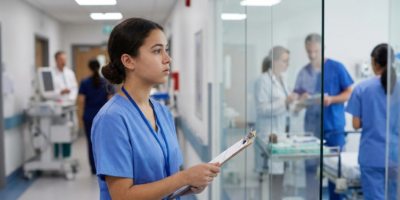
Watching a patient receive a serious diagnosis, sitting in on a family meeting about palliative care, or simply being present in a ward where outcomes are uncertain: these are experiences that stay with a person. For high school students considering internships for high school students medical, the clinical environment offers powerful lessons about medicine, about people, and about themselves. But emotional resilience for teen interns is not something that appears on its own. It has to be understood, prepared for, and actively supported, by the student, by parents, and by the program providing the experience.
This matters more in certain specialties than others. Oncology, in particular, places observers in rooms where hope and grief sit side by side. A medical internship for high school students that includes oncology exposure will likely involve witnessing advanced disease, difficult conversations, and the weight of limited resources, especially in international settings. None of that should discourage a student from pursuing the experience. But it does mean that emotional preparedness deserves as much attention as packing lists and travel logistics. Parents, especially, should know that the right program takes this seriously and builds in real structure to protect and support young participants.
Why Oncology Settings Demand Emotional Readiness
Oncology is not like most clinical rotations. The patients are often dealing with prolonged illness, complex treatment plans, and uncertain outcomes. In international healthcare settings, where resources may be limited and patients frequently present at more advanced stages of disease, the emotional weight can be even greater. The World Health Organization’s data on global cancer burden confirms that low- and middle-income countries face particular challenges in early detection and treatment, meaning that what a teen intern observes abroad may look very different from what they have seen on television or read about in textbooks.
For a high school student, this kind of exposure is significant. The adolescent brain is still developing its capacity for emotional regulation. Research from the American Academy of Pediatrics indicates that the prefrontal cortex, the region responsible for managing complex emotions and making measured responses, continues to mature into the mid-twenties. This does not mean teens cannot handle difficult experiences. It means they benefit from more support, more structure, and more intentional processing than an adult might need. Programs that recognize this and build their schedules accordingly are doing right by their participants.
Students who have been considering oncology internships for high school students should know that emotional preparedness is not a sign of weakness. It is a sign of maturity, and it is exactly what admissions committees at medical schools want to see in future physicians.
What Emotional Resilience Actually Looks Like for a Teen Intern
Emotional resilience is not about suppressing feelings or pushing through discomfort without acknowledging it. For a teen intern, resilience means having the skills to recognize what they are feeling, the language to express it, and the support to process it in a healthy way. It also means understanding, ahead of time, that certain experiences will be hard, and that being affected by them is normal and appropriate.
In practical terms, resilience shows up in a few key ways during a clinical internship. First, the student can sit with discomfort without shutting down or acting impulsively. Second, they can talk about what they saw and felt during structured debriefs. Third, they can separate their own emotional response from the patient’s experience, which is a skill that even seasoned clinicians continue to develop throughout their careers.
Before the Program Starts
Preparation begins well before a student boards a plane. Reading about the conditions they may observe, understanding the role of palliative care, and having honest conversations with parents or mentors about what to expect all help reduce the shock of first exposure. The AAMC’s core competencies for entering medical students list resilience and adaptability as essential qualities, which means that building these skills early is not just personally valuable but professionally relevant.
Students should also think honestly about their own baseline. Do they tend to internalize stress? Do they struggle to ask for help? Have they experienced loss or medical situations in their own families that might be activated by clinical observation? These are not disqualifying factors. They are things to be aware of, discussed with a parent or counselor, and communicated to program staff if appropriate.
During the Experience
Once in the clinical setting, the most important resilience tool is structured reflection. Daily debriefing sessions with program coordinators give students a consistent space to talk about what they observed, ask questions, and hear from peers who may be processing similar reactions. This is not optional enrichment. It is a core part of responsible programming for minors in clinical environments.
Students should also know that it is acceptable to step away. If a situation feels overwhelming, a well-run program will have clear protocols for removing an intern from a distressing scenario without judgment. The goal is sustained learning, not endurance testing.
How Parents Can Support Emotional Preparedness
Parents often worry most about physical safety, and those concerns are legitimate. But emotional safety deserves equal attention. Before agreeing to a program, parents should ask specific questions: What supervision structure exists during clinical hours? Who is available if my child becomes distressed? Are there daily debriefs? Is there access to mental health support, including telemedicine options?
A responsible program will have clear answers to all of these questions. It will also have pre-program screening that assesses a student’s emotional readiness and maturity, not to exclude students, but to ensure the right supports are in place. Housing arrangements, communication protocols with families, and the presence of trained coordinators on-site around the clock are all factors that should be confirmed before enrollment.
Parents should also plan for re-entry. A student returning from a clinical experience in a resource-limited setting may need time and space to process what they saw. They may be quieter than usual, or they may want to talk about it constantly. Both responses are normal. What helps most is a parent who listens without rushing to interpret or fix, and who is willing to connect the student with a counselor if the emotional weight lingers. The National Institute of Mental Health’s resources on adolescent mental health offer practical guidance for families in this situation.
What Teens Actually Do in Oncology-Related Clinical Settings
It is important to be specific about what high school interns do and do not do in these environments. Minors observe. They support within clearly approved limits. They do not practice medicine, make clinical decisions, administer treatments, or access chemotherapy or radiation areas without strict safety protocols in place.
A typical day might include observing patient consultations, sitting in on treatment planning discussions between providers, participating in patient education sessions, or assisting with administrative tasks like data entry or community outreach materials. All of these activities happen under direct clinical supervision. There is no unsupervised patient contact.
This structure is not a limitation. It is what makes the experience safe, ethical, and genuinely educational. Watching how a multidisciplinary team discusses a case, seeing how a clinician communicates a difficult diagnosis, or observing the way families participate in care decisions in a different cultural context: these are the moments that build real understanding of medicine. Students interested in psychology-related aspects of clinical work may also find value in reading about types of psychology internships abroad, where emotional processing and patient interaction are central themes.
Building Coping Skills That Last Beyond the Internship
The emotional resilience a student develops during a clinical internship does not expire when the program ends. The skills of self-awareness, reflective practice, and honest communication about difficult feelings are exactly what medical schools, PA programs, nursing programs, and other health professions expect from applicants and practitioners.
When it comes time to write application essays or discuss experiences in interviews, the students who can articulate what was hard, what they felt, and what they learned from it will stand out. Admissions committees are not looking for students who claim nothing bothered them. They are looking for students who can describe emotional complexity with honesty and show that they sought support when they needed it. Students planning ahead for these applications may find it useful to review guidance on how to write a medical school thank-you note, which addresses the broader skill of thoughtful, professional communication in medical contexts.
There are also daily habits that reinforce resilience long after the internship is over. Journaling, regular physical activity, maintaining social connections, and setting boundaries around emotional labor are all practices that healthcare professionals use throughout their careers. Starting them early, during a structured program with mentorship and support, gives students a strong foundation.
Choosing a Program That Takes Emotional Safety Seriously
Not every clinical experience program is built the same way. When evaluating options, students and parents should look for specific indicators of emotional safety: mandatory debriefing sessions, on-site coordinators trained in youth development, clear protocols for distressing situations, pre-program readiness assessments, and access to mental health support during the program.
Programs that rush students into intense clinical environments without preparation, or that treat emotional difficulty as a personal failing rather than a normal response, are not operating responsibly. Students who are weighing their options may also benefit from understanding how established healthcare roles are structured. Reading about what a physician assistant internship involves can offer useful context on how professional training programs build in support and mentorship.
The CDC’s resources on healthcare worker mental health reinforce the point that emotional well-being is not separate from clinical competence. It is part of it. A student who learns this at sixteen or seventeen is ahead of the curve, not behind it.
What Readiness Really Means
Emotional readiness is not about being unaffected. It is about being prepared, supported, and willing to engage honestly with hard experiences. For a high school student considering a clinical internship in a setting like oncology, readiness means understanding that medicine involves suffering as well as healing, that discomfort is part of growth, and that asking for help is a professional skill, not a sign of failure.
Parents, this also means trusting that your student can handle more than you might expect, while ensuring the program around them is built to catch them if they stumble. The right program does both: it challenges young people intellectually and emotionally, and it wraps that challenge in genuine structure, supervision, and care.
Students who approach these experiences with open eyes, honest self-assessment, and a willingness to reflect will carry the emotional skills they build into every stage of their careers. That is not a guarantee of admission or professional success. It is something more durable: a real understanding of what it means to be present in a room where the stakes are high and another person’s life is at the center.
Frequently Asked Questions
What if my teen feels overwhelmed during a clinical observation in oncology?
A well-structured program will have clear protocols for this. Students can step away from any situation that feels too intense, and on-site coordinators are trained to support them without judgment. Daily debriefing sessions provide a regular space to process what was observed, and access to mental health support, including telemedicine, should be available throughout the program.
How can I tell if my high school student is emotionally ready for a clinical internship?
Readiness looks different for every student, but key indicators include the ability to talk about difficult topics, willingness to ask for help when needed, and a realistic understanding of what the experience involves. Pre-program screening by the organization can also help assess readiness. Having honest family conversations about expectations, potential challenges, and coping strategies is one of the most helpful steps a parent can take.
Will witnessing difficult medical situations cause lasting emotional harm to a teenager?
Exposure to clinical settings, when properly structured and supported, is not inherently harmful. Research supports the idea that structured mentorship and consistent debriefing significantly reduce stress-related symptoms in young people. The risk increases when students are placed in difficult environments without preparation, supervision, or emotional support. That is why program structure, not just the clinical content, is the most important factor to evaluate.