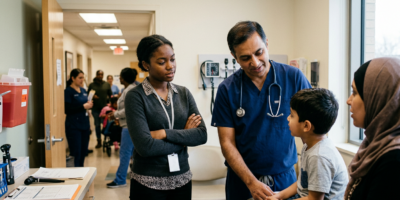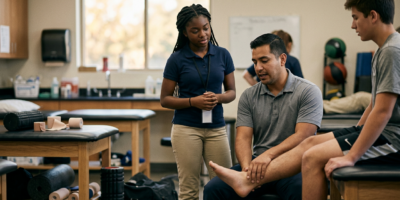
Reflective journaling for medical interns at the high school level serves a purpose that many students underestimate. It is not busywork. It is a structured way to make sense of complex, sometimes uncomfortable observations in real healthcare environments. When students participate in medical summer internships for high school students, they encounter situations that deserve more than a passing thought: a patient waiting hours for care, a language barrier during a consultation, a family navigating a diagnosis with limited resources. Journaling creates a space to slow down, process what happened, and connect those observations to larger questions about medicine, ethics, and personal growth. For both students and parents, understanding how reflective writing works within a structured program can clarify what the experience actually involves and what it produces.
The reason reflective journaling matters so much for this age group is that high school students are still forming their sense of what healthcare really looks like. Many arrive with impressions shaped by television or social media. Even the best medical internships for high school students cannot guarantee that every observation will be easy to understand or emotionally simple. That is exactly why journaling is built into well-designed programs. It gives students a framework for thinking critically, not just reacting. It also creates a written record of growth that becomes genuinely useful later, whether for college essays, personal statements, or simply remembering what a particular moment taught them. Research from the Association of American Medical Colleges supports this: the AAMC identifies self-awareness and reflective practice as core competencies expected of entering medical students, and building those habits early makes a real difference.
What Reflective Journaling Actually Looks Like in a Clinical Internship
Students sometimes picture journaling as writing “Dear Diary” at the end of a long day. In a structured clinical internship, it is something different. Reflective journaling typically involves guided prompts, a set amount of time, and regular review by a supervisor. A student might be asked to describe a specific clinical interaction they observed, explain what surprised them, identify a question it raised, and connect the observation to something they have studied or believe. The writing is usually 300 to 500 words per entry, completed daily.
The prompts matter because they keep the focus appropriate. High school interns are observers. They are not making clinical decisions, handling patient records independently, or performing procedures. Their journal entries should reflect that role. A good prompt might ask: “Describe one moment today when you noticed a gap between what a patient needed and what the clinic could provide. What did you think about that gap?” This kind of question invites critical thinking without asking the student to overstep their role.
For parents, it helps to know that journal entries are reviewed by program supervisors on a regular basis. This review serves two purposes. First, it ensures that students are processing experiences in a healthy way, especially when they observe difficult cases. Second, it helps supervisors spot entries that might include patient-identifying information, which must always be excluded from personal journals. Confidentiality is a real responsibility, and students receive training on it before they enter any clinical setting.
Why Writing About What You See Matters More Than Just Seeing It
There is a well-documented difference between exposure and learning. A student can observe fifty patient consultations and walk away with very little if they never pause to think about what those consultations meant. Reflective writing closes that gap. When a student writes about a maternal health consultation they observed in a community clinic, they are forced to organize their thoughts, notice details they might have overlooked, and articulate why the interaction mattered.
This is especially important for high school students because they are at a stage where their understanding of healthcare systems is still developing. Observing a three-tier healthcare system where community health workers, clinical officers, and physicians each play distinct roles is genuinely new for most American teenagers. Writing about it helps them understand what they saw, rather than just remembering that they were there. The CDC’s global health resources provide useful context on the kinds of health challenges students may encounter in international settings, from infectious diseases to maternal and child health concerns. Journaling after observing these realities helps students connect their personal experience to broader public health patterns.
A study published in Medical Teacher found that the vast majority of medical schools now incorporate reflective writing into their curricula. This is not a coincidence. The skill of reflecting on clinical experience is considered foundational. High school students who begin practicing it early are building a habit that will serve them through college, professional school applications, and clinical training.
Keeping a Journal That Protects Patient Privacy
One of the first things any student in a clinical setting needs to understand is that patient information is private. This applies in the United States under HIPAA, and equivalent principles apply in international clinical environments. For high school interns, this means journal entries must never include patient names, identifying details, or specific information that could allow someone to identify a person who received care.
This is not just a rule to memorize. It is a practice that requires ongoing attention. A student might be tempted to write, “The 14-year-old girl from the village near the clinic had malaria.” A better approach is, “A young patient was being treated for malaria, and I noticed how the clinical officer explained the treatment plan to the patient’s family in their language before proceeding.” The second version captures the observation and the learning moment without compromising anyone’s privacy.
Programs that take this seriously will train students on confidentiality before they enter a clinical environment and will review journal entries to reinforce good habits. For parents, this is a meaningful indicator of program quality. If a program does not mention confidentiality training or journal review, that is worth asking about. Students who learn to write about clinical experiences with appropriate boundaries are developing a professional skill that admissions committees and clinical supervisors will expect later.
Turning Journal Entries into Application Material
One of the most practical reasons to journal well during a high school clinical internship is that the material becomes a resource for future applications. College admissions essays, medical school personal statements, and secondary application prompts frequently ask students to describe a meaningful healthcare experience and what they took from it. A student who has been journaling consistently has a written record to draw from, not just a fading memory.
The key distinction is that raw journal entries are not application essays. They are source material. A journal entry might capture a moment of confusion or frustration. An application essay turns that moment into a reflection on growth, ethical awareness, or professional development. The journaling comes first; the polished writing comes later. Students who want to understand how to document clinical experiences during high school in a way that supports future applications will find that consistent journaling is the single most useful habit they can build.
The AAMC’s guidance on what admissions committees look for reinforces this. Committees are not impressed by a list of clinical hours. They want evidence that a student can reflect on what they observed, process ethical complexity, and articulate what they learned about themselves and about healthcare. A well-kept journal provides exactly that kind of evidence. It shows sustained engagement, not just attendance.
When it comes time to write a personal statement or interview for a program, students with journal entries can recall specific details: the way a supervising physician explained a diagnosis, the challenge of communicating across a language barrier, the feeling of watching a healthcare team work with limited resources. These details make application writing concrete and credible.
Emotional Processing and the Role of Supervision
Parents often ask a reasonable question: what happens if my teenager sees something upsetting? The honest answer is that clinical environments include difficult moments. Students may observe patients in pain, families receiving hard news, or healthcare teams working under serious resource constraints. This is part of what makes the experience real, and it is also why structured support matters so much.
Reflective journaling is one of the primary tools for emotional processing in well-run programs. When a student writes about a difficult observation, they are not just recording it. They are beginning to make sense of it. Supervisors who review journal entries can identify students who are struggling and offer additional support, whether through one-on-one conversations, group processing sessions, or access to counseling resources.
For high school students specifically, supervision during journaling is not optional. These are minors in unfamiliar environments, and they need adults who are paying attention. Group discussions where students share their reflections with peers, guided by an adult facilitator, help normalize the emotional responses that come with healthcare exposure. Feeling unsettled after watching a difficult case is not a sign of weakness. It is a sign that the student is paying attention. The NIH’s bioethics training resources offer a useful framework for understanding the ethical dimensions of clinical observation, and programs that incorporate ethical reflection into their journaling structure help students process what they see with greater maturity.
Parents should feel comfortable asking any program about its emotional support structure. How often do supervisors review journals? Are there mental health resources available? Is there a protocol for students who become overwhelmed? These are not overprotective questions. They are responsible ones. A program that takes journaling and supervision seriously is one that understands what it means to work with young people in clinical settings.
What Good Prompts Look Like and How to Use Them
Not all journaling prompts are equally useful. A prompt like “What did you do today?” invites a summary, not a reflection. Better prompts push students to think about why something mattered, what it challenged, or what it revealed.
Prompts That Build Self-Awareness
Questions like “What assumption did you have coming into today that was challenged by something you observed?” or “Describe a moment when you felt uncertain, and explain what that uncertainty taught you” push students past surface-level reporting. They require honesty, which is uncomfortable but productive.
Prompts That Build Ethical Thinking
Clinical environments raise ethical questions constantly. Prompts like “Describe a situation where you noticed a tension between what seemed ideal and what was possible given the clinic’s resources” help students begin thinking about healthcare systems, equity, and the real constraints that shape patient care. This kind of thinking is exactly what medical school admissions committees want to see in applicants.
Prompts That Build Observation Skills
Paying attention is a skill, and it improves with practice. Prompts like “Describe the communication style of one healthcare professional you observed today, and explain what you think made it effective or ineffective” train students to notice specifics rather than generalities. Over time, this sharpens their ability to observe clinical interactions with real precision.
Students who complete a physiotherapy or clinical internship abroad often note that the journaling prompts were the element that pushed them to think most carefully about what they were seeing. An article on reasons to complete an internship abroad touches on this kind of professional reflection. The quality of the prompt matters just as much as the student’s willingness to engage with it.
Practical Tips for Consistent, Useful Journal Entries
Knowing that journaling is important and actually doing it well every day are two different things. Here are a few practical suggestions that help students get the most from the practice.
Write the same day. Memory fades quickly, especially in busy clinical environments. Even a short entry written the same evening is more valuable than a detailed one written three days later. Specific details, sensory impressions, and emotional responses are freshest within hours of the experience.
Be honest about what you do not understand. A journal is not a performance. If a student observed a procedure and did not understand why the physician made a particular decision, writing “I didn’t understand why they chose that approach, and I want to ask about it tomorrow” is more useful than pretending to have understood everything. Admissions committees and program supervisors alike value intellectual honesty.
Separate facts from feelings. A useful journal entry often includes both, but keeping them distinct helps with clarity. “The clinic saw approximately forty patients in three hours” is a factual observation. “I felt overwhelmed watching the pace and wondered how the staff maintained focus” is an emotional response. Both belong in the entry, and distinguishing between them builds analytical writing skills.
Students interested in healthcare career paths, whether medicine, nursing, or another field, will find that the writing skills built through journaling transfer directly. Even students considering fields like pursuing an MD-MBA will benefit from the habit of structured, honest reflection on professional experiences.
Building a Habit That Lasts Beyond the Internship
The best outcome of reflective journaling during a high school clinical internship is not a single polished essay. It is a habit. Students who learn to reflect on their experiences in structured, thoughtful ways carry that skill into college coursework, volunteer work, future clinical rotations, and eventually professional practice. The WHO’s framework for health workforce development recognizes reflective practice as part of building competent, self-aware healthcare professionals at every level.
For parents, the value of this habit is worth noting. A teenager who returns from a clinical internship with a journal full of honest, specific, well-structured reflections has more than application material. They have evidence of intellectual growth and a tool they can use for years. For students, the advice is simple: take the journaling seriously from day one. Write even when you are tired. Be specific. Be honest. Ask questions in your entries that you can follow up on the next day. The pages you fill now will be some of the most useful writing you have ever done.
Frequently Asked Questions
Can journal entries from a high school medical internship be used in college or medical school applications?
Yes. Journal entries serve as excellent source material for personal statements, supplemental essays, and interview preparation. They are not submitted directly, but the specific observations, reflections, and questions captured in journal entries give students concrete details to draw from when writing polished application essays. The key is to never include patient-identifying information in any application material, just as you would exclude it from the journal itself.
How do programs ensure that high school students journal about clinical experiences appropriately?
Well-structured programs provide guided prompts, daily writing time, and regular supervisor review of entries. Supervisors check for patient confidentiality, appropriate emotional processing, and quality of reflection. Students also receive training on what should and should not be included in journal entries before they begin clinical observations. Group discussion sessions offer additional support for processing difficult or complex experiences.
What if a student finds it difficult to write about emotionally challenging clinical observations?
Difficulty processing difficult observations is normal and expected. Structured programs include emotional support resources such as supervisor check-ins, group processing sessions, and access to counseling if needed. Journaling itself is one of the primary tools for working through these responses. Students should be honest in their entries about what they found challenging, and supervisors are trained to identify students who may need additional support.