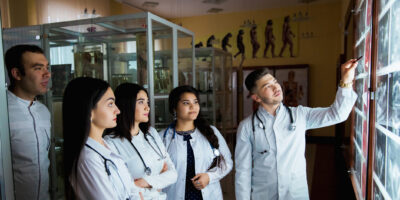
Teenagers who are interested in healthcare but might not always be entirely sure how to move from reading and clubs to spending real time around patients. Parents want clear boundaries and supervised environments, while students seek experiences that feel more substantial than a single brief visit. As families explore options, hospital programs, clinic roles, and community outreach all play distinct roles in providing meaningful exposure through medical internships for high school students.
When students and families begin searching locally, they often encounter volunteer postings, short observation days, and more formal programs that resemble internships. Sorting out which of these experiences actually count as clinical exposure takes careful attention to role descriptions and supervision, especially when looking up “medical internships for high school students near me” and comparing different organizations.
How High School Students Move From Interest To Real Patient Experience
There is rarely a single step from “interested in medicine” to working near patients. Most students move through several stages. They might start with health-related clubs, school-based service projects, or occasional shadowing. Over time, they add more structured roles with regular schedules, clear supervisors, and direct observation of clinical work.
International Medical Aid’s high school track is one example of a program designed around that progression. Students do not jump straight into procedures. Instead, they shadow licensed providers, join supervised community health activities, and practice technical skills in simulation settings, all within defined rules about what minors can and cannot do. Local hospital volunteer offices, community clinics, and school-linked hospital partnerships often follow similar principles for teens.
Types Of Clinical Exposure Teens Can Pursue
High school students can gain clinical exposure in various formats, often combining multiple experiences over a few years. The details vary by region and institution, but most opportunities fall into two broad categories: observation and team support.
Observation
Observation is the most fundamental type of clinical exposure for high school students. In its simplest form, observation resembles traditional shadowing: a student follows a clinician through a typical workday, standing or sitting quietly during patient encounters, provided consent has been obtained.
Observation can happen in several settings:
- Hospital wards where students shadow a physician, nurse, or other clinician during rounds
- Outpatient clinics where students sit in on appointments and watch how histories and exams are conducted
- In emergency departments, where allowed, students can observe triage and care from designated areas
- Specialty clinics such as pediatrics, orthopedics, or obstetrics, where students see focused types of problems
Even when a student cannot speak directly with every patient, simple patterns become clear. They see how patients describe symptoms, how staff ask follow-up questions, and how information is communicated among team members. They also see how busy professionals manage time, stress, and unexpected events.
In structured programs like those offered by International Medical Aid, observation is planned across multiple departments rather than left to chance. Students may spend different days in general medicine, pediatrics, or outpatient clinics, providing them with a broader perspective than a single-preceptor shadowing experience.
Team support
Team support introduces carefully limited tasks that help the unit without crossing into clinical work. These roles still revolve around observation, but students contribute in simple, supervised ways.
Common examples of team support include:
- Escorting patients or families to designated waiting areas when staff request assistance
- Restocking non-sterile supplies such as gloves, wipes, or basic linens
- Organizing patient education materials at front desks or in consultation rooms
- Helping with check-in processes by directing patients to sign-in stations or explaining basic instructions
- Recording simple measurements like height and weight under direct supervision in specific programs
In hospital-linked volunteer roles, teen clinical experience may also involve structured social interactions with patients, such as visiting with long-term care residents or assisting with supervised recreational activities. In community health outreach, support tasks might include registration, explaining hygiene demonstrations, or distributing educational materials prepared by professionals.
These tasks do not replace professional duties. They provide students with a defined place in the daily flow while keeping decision-making and clinical work in the hands of licensed staff. Over time, students come to understand the cumulative impact of numerous small, non-clinical actions on patient comfort and smooth operations.
Barriers And How Students Overcome Them
Even motivated students encounter barriers when they try to gain real patient experience. Common obstacles include age limits, limited local programs, transportation challenges, and schedule conflicts with school or family responsibilities.
Age limits are often the first barrier to overcome. Many hospital programs set a minimum age, frequently 16, for any role that involves entering clinical areas. Younger students may need to start with health-related volunteering in nonclinical parts of a hospital, community service with health themes, or campus-based programs that simulate clinical experiences without direct patient contact. Planning ahead helps students time their applications to coincide with the required age.
Limited local options can also be frustrating. Not every region has a children’s hospital, teaching hospital, or large clinic network. In those cases, students might look at:
- Community health centers that accept teen volunteers in front desk or outreach roles
- Long-term care facilities that allow supervised visits with residents
- Structured international options, such as International Medical Aid’s high school internships, which place students in partner hospitals abroad with defined supervision and housing
Transportation and scheduling are practical barriers. Shifts often occur early in the morning or during work hours when parents are busy. Students can work around this by targeting roles with weekend or afternoon options, coordinating carpools, or pairing clinical time with other activities in the same area to make trips more efficient.
Finally, there is the barrier of uncertainty. Many students feel intimidated by the idea of being in a hospital or worried about saying the wrong thing. Programs that provide orientation, clear scripts for introducing oneself, and designated mentors can lower that barrier. Over time, repeated exposure makes clinical environments feel more familiar and manageable.
Why Early Exposure Matters For Pre-Med Development
Real patient experience for high school students is not about getting a head start on procedures. It is about building a foundation for future pre-med development. Early exposure enables students to assess their comfort in clinical settings, understand the emotional demands of healthcare, and experience the daily realities behind job titles and descriptions.
From an academic and professional perspective, early exposure supports:
- Informed decision-making
Students who have seen hospital wards, clinics, and community outreach firsthand are better equipped to decide whether they truly want to pursue a career in healthcare. They make future course choices and college plans with direct experience, not just secondhand impressions. - Growth in communication and professionalism
Working in patient-facing settings, even in limited roles, requires clear introductions, respectful listening, punctuality, and adherence to rules. These habits are central to health career exploration for high schoolers and carry over to later jobs, internships, and college-level clinical roles. - Stronger future applications
When students can describe specific situations from real clinical environments, their later essays and interviews sound grounded and concrete. Long-term involvement, especially in roles that combine observation and team support, shows that they have sustained their interest rather than sampling a single experience.
Programs like International Medical Aid’s high school internships are built with these goals in mind. They combine hospital-based shadowing, supervised community work, and guided reflection so that students not only log hours but also think critically about what they see.
Next Steps
Students who want more real-time around patients can begin by mapping out what is realistically available in their area and what age-based options they qualify for now. A simple plan might include:
- One or two short-term observation experiences arranged through a local clinician or clinic
- A longer-term volunteer role in a hospital, clinic, or long-term care facility with regular shifts
- Participation in a structured program, such as an International Medical Aid high school placement, once age and logistics allow
As each experience begins, students can set simple goals, such as learning how staff introduce themselves, noticing how teams handle busy periods, or paying attention to how patients respond to different communication styles. Keeping a brief log after each shift preserves those observations for later use.
Families should continue to ask practical questions about supervision, boundaries, and documentation. A pathway that gradually combines observation, team support, and structured reflection will usually provide stronger preparation than a single short role, even if that role has a more impressive name. Over several high school years, a layered set of experiences can provide students with both direct contact with patients and a clearer sense of whether a long-term career in healthcare aligns with their interests and strengths.
Finding Programs That Count As Real Clinical Exposure
Not every role that takes place in a hospital or clinic qualifies as real clinical exposure for high school students. Families need to look closely at what the student will actually be doing day to day. Roles that focus entirely on back-room filing, cafeteria service, or gift shop work may still be valuable service, but they have limited contact with the clinical side of care.
Programs that count as meaningful teen clinical experience usually have three features:
- Regular contact with patients or families, even if brief
- Clear observation of clinicians at work
- Defined supervision by licensed staff or trained coordinators
When reviewing opportunities, consider questions such as:
- Will the student be in areas where patients are present, or only in separate offices
- Is the student allowed to sit in on patient encounters when consent is given
- Does the description mention shadowing physicians, nurses, or other clinicians
- Is there an orientation focused on privacy and safety
Hospitals sometimes have separate tracks for adults and teens. Teen roles may be more limited, but if they keep students near the patient flow and within sight of clinicians, they still build important exposure. Community clinics and nonprofit organizations may offer similar opportunities on a smaller scale.
Families can also look at summer medical programs for high school students that include supervised clinical components. Some combine campus-based coursework with short hospital or clinic visits, while others embed students directly in clinical settings for several weeks. The best of these programs are explicit about boundaries, supervision, and expected activities.
Documenting Your Experience For Future Applications
Once a student begins gaining real experience around patients, good documentation becomes essential. Colleges, advisors, and later application systems often ask for dates, approximate hours, settings, and supervising contacts. Waiting several years to reconstruct that information from memory can be difficult.
A simple log can make a big difference. After each shift, students can note:
- Date and location
- Start and end time
- Type of setting, such as hospital unit, clinic, or community site
- A short description of what they observed or did, without including any identifying patient information
Over time, this log shows patterns of sustained involvement. It also provides a pool of specific examples students can reference when writing about health career exploration for high schoolers in essays or speaking with advisors.
Students should also keep copies of acceptance letters, volunteer agreements, and completion certificates. When a program provides an official summary of participation, that document should be stored in an organized way. Later, it can be shared with school counselors or included in application materials when appropriate.
When possible, students can ask supervisors whether they would be comfortable verifying hours or writing recommendations in the future. The best time to discuss this is near the end of the experience, after the student has demonstrated reliability and professionalism. Even a short note confirming participation can help distinguish genuine, supervised clinical exposure from informal, unverified experiences.
When Non-Clinical Roles Still Help Your Career Story
Not every meaningful experience around patients involves direct observation of exams or procedures. Some teenagers begin in roles that are mostly non-clinical but still take place inside healthcare settings. These positions can be valuable stepping stones when approached thoughtfully.
Examples include:
- Volunteering at a hospital information desk
- Assisting with logistics at blood drives or vaccination events
- Supporting recreational activities in long-term care facilities
- Helping with translation or interpretation in approved programs when students are fluent in another language
In these roles, teens may not hear detailed case discussions, but they observe how patients navigate the system, how staff respond to questions, and how small acts of support can alleviate stress. When combined with later, more clinically focused experiences, these early roles help tell a story of steady involvement and growth.
Students can strengthen non-clinical roles by asking for concrete ways to contribute while staying within safety rules. For example, a volunteer at a clinic front desk might take responsibility for organizing patient education brochures so staff can find them quickly. A student working in a long-term care facility might develop a simple activity schedule for residents in coordination with staff.
When it comes time to describe experiences, the key is to be honest and specific. Instead of stretching a non-clinical role to sound like direct patient care, students can focus on what they actually learned about communication, reliability, and working in a professional environment. Combined with later clinical exposure for high school students, these experiences foster a credible and well-grounded interest in healthcare.
Throughout high school, many students discover that a combination of patient-facing observation, supportive roles, and community health projects provides a well-rounded foundation for their future endeavors. Each type of experience adds a different layer: comfort in clinical spaces, familiarity with patient needs, and an understanding of how teams work behind the scenes. With careful selection and thorough documentation, those experiences can support future applications and help students determine whether a long-term path in healthcare is the right fit for them.