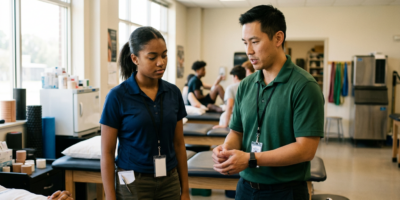

A high school medical internship is worth considering when three things line up: the student meets the program’s age rule, the supervision is clear and the learning goals are specific. At IMA, applicants must be at least 16 by the program start, and high school participants observe and shadow rather than provide patient care.
This guide is written for students and parents deciding together. It covers age, supervision, daily structure, program content and the application, and it ends with a checklist you can use for any program, including ours. If age is your first question, our guide to age limits for teen hospital internships explains why hospitals set them.
Why Families Consider Medical Experience in High School
Early exposure helps a student test an interest in medicine before committing to years of coursework. Seeing a hospital day from the inside shows the pace, the teamwork and the hard moments that a classroom cannot.
It can also shape later choices. Students weighing direct medical programs (BS/MD or BS/DO) or a pre-health major gain a clearer basis for that decision. Skills such as careful listening, asking good questions and reflecting honestly carry into college, whatever career the student chooses.
Exposure is not the same as qualification, though. A high school internship gives a student something real to reflect on. It does not make them a clinician, and it does not guarantee a college or medical school admission.
How Can Early Exposure Help a Student Decide?
Choosing medicine is a long commitment, and early experience gives a student better information before making it. A well-run program helps in four ways:
- Exploring different fields. Rotating through departments shows how different emergency care feels from pediatrics or surgery, and students often discover an interest they had not considered.
- Seeing the real day. Watching clinicians through a full shift shows the demands and the rewards of the work, not only the dramatic moments.
- Setting realistic expectations. Students see limited resources, difficult conversations and the teamwork that care depends on. Some come home more certain; others redirect toward a related field, which is also a good outcome.
- Meeting mentors. Conversations with physicians, nurses and coordinators give a student people to ask for advice as their plans develop.
A student who has watched a hospital day closely can explain their interest in medicine with specific examples instead of general enthusiasm. That clarity helps whether they apply to a BS/MD program, a pre-health major or something else entirely.
What a High School Medical Internship Can and Cannot Include
Can a High School Intern Provide Patient Care?
No. IMA’s medical internships for high school students are built around observation. The program’s FAQ states that high school participants observe, shadow and assist with non-clinical tasks, and that direct medical procedures are reserved for licensed professionals.
That limit protects patients, and it protects the student’s application. In a survey by the AAMC Group on Student Affairs Committee on Admissions, 45 to 50% of responding medical schools described applicant involvement in invasive procedures abroad as harmful to, or of no value to, an application. A good program says plainly what students will not do.
What Do Students Actually Do?
On IMA’s high school programs, students rotate through hospital departments such as general medicine, pediatrics, emergency care, surgery and women’s health. Programs last two to 12 weeks, and IMA’s high school page notes that most participants stay at least four weeks. Here is how the main parts of the program fit together.
Patient-facing shadowing. Most of the day is spent observing clinicians in hospitals and health centers. Students see how a team moves through rounds, how a clinician explains a plan and how decisions get made when resources are limited. The learning comes from watching closely and asking good questions at the right moments.
Simulation clinics. IMA’s page lists simulation clinics alongside daily rotations. Simulation lets students practice in a setting where mistakes harm no one and feedback is immediate, which is the appropriate place for a high school student to try clinical tasks.
Global health lectures and seminars. Students join IMA’s Global Health Lecture Series, led by U.S. and internationally trained medical professionals, plus weekly seminars and workshops. Topics include infectious diseases and public health, healthcare infrastructure, maternal and child health, chronic disease, climate change and health policy.
Community outreach. In Kenya, students often join outreach teams running malaria prevention, nutrition education and maternal care campaigns. These sessions show how much of health happens outside the hospital, and they connect clinical observation to the social conditions behind it.
Language and culture. Students receive daily language instruction, Spanish in Peru and Swahili in Kenya, focused on basic clinical conversation and medical terminology. Home visits, peer exchange events and guided reflection sessions build cultural awareness, which shapes how patients understand illness and make decisions.
Age and Eligibility
How Old Does a Student Need to Be?
IMA’s high school page sets the rule: applicants must be at least 16 by the start of their program, and they may apply before turning 16 as long as they meet the age requirement when the program begins. The FAQ adds that some international sites may require students to be 17 because of hospital partner rules.
IMA’s HOSA partnership announcement describes an earlier starting age for HOSA members. Because hospital rules vary by site, confirm the current age requirement for your chosen destination with IMA admissions before you plan around it.
Supervision and Safety: What to Ask
Parents usually ask about safety first, and that is the right instinct. Ask any program to describe supervision in concrete terms: who is with the student in the hospital, who is with them after hours and who the family calls.
IMA’s high school page lists the arrangements families can check:
- Gated residential housing with 24/7 on-site security staff
- On-site program coordinators trained in emergency response
- Real-time parent communication through U.S.-based support staff
- Safety briefings and cultural orientation sessions
- A mentor assigned to each student for clinical insight and reflection
Families can read the full parent’s guide for housing, communication and emergency protocols. Our overview of safety standards in international clinical programs lists questions that apply to any provider.
What a Typical Day Looks Like
A clear daily schedule tells you a lot about a program. IMA publishes a sample weekday:
| Time | Activity |
|---|---|
| 7:00 AM | Breakfast |
| 8:00 AM | Clinical shadowing begins at designated hospitals |
| 12:30 PM | Lunch and midday break |
| 1:30 PM | Medical Spanish or Swahili instruction |
| 3:00 PM | Global health seminars or community outreach |
| 5:00 PM | Structured reflection or mentorship time |
| 6:30 PM | Dinner and optional group discussions |
Weekends are for cultural excursions, workshops and rest. If a program cannot show you a schedule like this, ask why.
Learning Goals Worth Setting
A student gets more from a program when they arrive with two or three questions. Good starting goals include:
- Watch how a team hands off information between shifts or departments.
- Notice how clinicians explain a plan to a patient whose first language differs from theirs.
- Compare how a hospital and a community clinic handle the same health problem.
Beyond the program itself, students can build habits that serve any health career:
- Take the hardest science courses you can handle well. Biology, chemistry and math build the base for college prerequisites.
- Read about health systems. A little background on the host country’s health system makes the hospital days far more meaningful.
- Practice communication. Volunteering, tutoring or any role that involves listening to people develops the skills clinicians use every day.
- Keep a simple journal. Notes written the same day become the raw material for college essays later.
IMA’s program page says its high school curriculum aligns with the AAMC’s core competencies for entering medical students. Our guide to the AAMC core competencies explains those qualities in plain terms, and students can start building them long before college.
Students in HOSA can connect this work to recognized events. Our guide to the HOSA Health Literacy Ambassador project shows one way to turn observation into a community project at home.
What the Program Provides on Site
Families should know exactly what support a student has each day. IMA’s high school page lists shared housing in gated communities, three daily meals with filtered water, ground transportation for official activities, airport pickup and drop-off, mentorship, daily language instruction, weekend excursions and travel medical insurance. Students arrange their own flights, and IMA recommends arrival windows.
Session timing matters too. IMA runs high school programs during summer and gap year periods, and summer cohorts have limited space. Check the program dates page early so the session fits school calendars, exams and family plans.
The Application Process
IMA accepts applications year-round, with limited space for summer and gap year cohorts. The steps are:
- An online application with personal details, a resume, unofficial transcripts and written responses
- A one-hour Zoom interview with IMA admissions staff
- A parent or guardian co-signature form
- A decision within about two weeks
When you are ready, you can start an IMA application. Competitive applicants show a demonstrated interest in healthcare and a commitment to personal growth, according to the program page.
A Family Decision Checklist
Use these questions for any program you are considering.
| Question | Why it matters | Where to check |
|---|---|---|
| What is the minimum age at each site? | Hospital partners set their own rules | Program page and admissions |
| What will the student not be allowed to do? | Clear limits protect patients and applications | FAQ or written policy |
| Who supervises in the hospital and after hours? | Supervision is the core of safety | Safety page, parent guide |
| How do parents reach staff in an emergency? | A single contact saves time | Parent guide |
| What support is provided on site each day? | Housing, meals and transport shape the experience | Program page and parent guide |
| What documentation does the student receive? | Needed for college and service-hour records | Program page and FAQ |
Preparing Before Departure
Once a student is accepted, the preparation becomes practical. IMA’s FAQ notes that a valid passport is required for every international program and that visa needs vary by country, with IMA helping families confirm whether one is needed. Vaccination requirements also vary by destination, and the admissions advisor provides guidance based on CDC recommendations and partner hospital policies.
Families can use the weeks before departure for more than paperwork. A student who has read about the host country’s health system, practiced a few basic phrases and written down their learning goals tends to settle in faster. Agree as a family on how often you will check in and which contact to use first, so everyone knows the plan before the flight.
Comparing Programs Near Home and Abroad
Families often ask whether there are options closer to home. There are, and they are worth comparing. High school medical shadowing programs near home can be shorter and easier to fit around a school year. Our comparison of shadowing vs internships in high school explains the difference.
A program abroad adds exposure to a different health system, a new language and a different set of resource limits. That can be valuable when the program is structured and supervised. It is not automatically better, and the right choice depends on the student’s goals, maturity and readiness to be far from home.
A useful way to frame the decision is to change the question. Instead of asking only whether there are medical internships for high school students nearby, ask which experience will teach the student the most about how healthcare actually works. For some students that is a local hospital volunteer program they can continue for a full school year. For others it is a structured few weeks abroad, where a different health system makes everyday assumptions visible.
After the Program
IMA’s high school page lists a completion certificate and a personalized physician-authored recommendation letter. The FAQ says IMA can sign documentation for service-learning or volunteer hour requirements in most cases, and that academic credit is not automatic.
Alumni support listed on the page includes personal statement editing, mock admissions interviews and advising on course selection and gap year planning. High school students who excel may be invited to continue with IMA’s pre-med internships abroad in college. IMA also runs community and clinical outreach through its global initiatives.
How Should a Student Write About the Experience?
A high school internship is most useful in applications when the student describes it accurately. Name the role honestly: observation and shadowing, not patient care. Then go specific. One patient interaction the student thought about for days, one question a clinician answered or one assumption that changed says far more than a list of departments.
Students should also keep a record of dates, sites and hours while the program is fresh, along with the names of supervisors who can confirm the experience. Those details matter when a college application, scholarship or service-hour form asks for them months later. Mentors and connections made during the program can stay useful for years, and IMA notes that many of its mentors keep working with students after the program ends.
To learn more about the organization behind the program, visit International Medical Aid.
Frequently Asked Questions
What Is the Minimum Age for an IMA High School Medical Internship?
Applicants must be at least 16 by the start of their program and may apply earlier if they will meet that age by the start date. Some sites may require students to be 17 because of hospital partner rules.
Will a High School Intern Do Hands-On Patient Care?
No. High school participants observe, shadow and assist with non-clinical tasks. Direct medical procedures are reserved for licensed professionals.
Does a Student Need to Speak Spanish or Swahili?
No. IMA’s FAQ says language skills are not required. Students receive daily language instruction on site, and IMA’s teams, mentors and hospital staff speak English.
How Long Are IMA’s High School Programs?
Programs last two to 12 weeks, and most participants stay at least four weeks. They run during summer and gap year periods, and summer cohorts have limited space.
Can the Internship Count as Volunteer Hours or Academic Credit?
IMA can sign documentation for service-learning or volunteer hour requirements in most cases. Academic credit is not automatic; some schools accept it and others require pre-approval.
How Long Does the Application Take?
The process has an online application, a one-hour Zoom interview and a parent or guardian co-signature form. IMA’s high school page says students receive a decision within about two weeks.