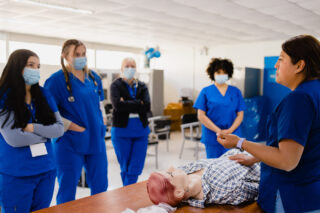
To shadow a doctor in high school, find a hospital shadowing program or a physician willing to host you, get a parent’s permission and apply several weeks ahead. At most hospitals you need to be at least 16. Ochsner Health, Mercy, Prisma Health and the University of Kansas Health System all set 16 as the minimum age. A few systems take 14-year-olds in outpatient clinics, and some keep operating rooms for students 18 and older (Prisma Health, 2026).
If you’re a high school student hoping to get into pre-med, shadowing a doctor can help you learn about the medical field and get valuable insight that you can use for your future career choices.
Shadowing gives you a unique perspective into the daily realities of a medical professional. It’s also a great addition to your pre-med college application as it demonstrates your commitment, passion, and practical experience outside the classroom.
Expect to need a parent’s permission, paperwork submitted weeks in advance and, at many hospitals, immunization records. Once you are there, you watch and learn rather than take part in patient care.
How Old Do You Have to Be to Shadow a Doctor?
Most hospital shadowing programs set the minimum age at 16. Some open outpatient clinics to younger students, and many keep operating rooms, emergency departments and pediatric units for older students. The table shows what several health systems publish on their own pages.
| Health system or program | Minimum age | Limits and notes | Source |
|---|---|---|---|
| Nationwide Children’s Hospital (Columbus, Ohio) | 14 for outpatient clinics and offices; 16 for some inpatient areas | High school requests must come from the school, not the student; submit at least four weeks ahead | Nationwide Children’s |
| Premier Health (Ohio) | 14 for general shadowing; 16 for the emergency department or surgery | Apply at least 8 weeks ahead; immunization records or proof of exemption required | Premier Health |
| Ochsner Health (Louisiana) | 16 | Parent or guardian permission required; up to five days a year, no more than eight hours a day | Ochsner |
| Mercy | 16 | Observation only; 40 hours or less within one year; host may not be a family member | Mercy |
| Prisma Health (South Carolina) | 16 | Under 18 may not observe in the operating room, pediatrics or emergency medicine without department approval | Prisma Health |
| The University of Kansas Health System | 16 | Parent or guardian permission for minors; one day, 12 hours maximum; 30-day lead time | UKHS |
| Hunterdon Health (New Jersey) | 16 | No more than eight hours in each setting; no hands-on care or isolation rooms | Hunterdon Health |
| Cincinnati Children’s Job Shadow Program | 16 for juniors; seniors also eligible | Four-hour monthly sessions, up to 20 students per date | Cincinnati Children’s |
Can You Shadow a Doctor at 15?
You can at some hospitals, but your options are narrower. Nationwide Children’s accepts high school students 14 and older in outpatient clinics and office settings, and Premier Health accepts anyone 14 and older for general job shadowing. Most other programs in the table start at 16. At 15, ask about outpatient clinics and private practices, which set their own rules, and ask whether your school has an agreement with a local hospital.
Can You Shadow a Doctor at 16?
Yes. Sixteen is the most common minimum age, so most hospital programs open up once you turn 16. You will usually still need a parent’s permission and an application filed weeks ahead: four weeks at Nationwide Children’s, 30 days at the University of Kansas Health System and 8 weeks at Premier Health.
Can You Shadow a Surgeon in High School?
Sometimes, but operating rooms carry the strictest age rules. Premier Health requires shadows in surgery and the emergency department to be 16, and Prisma Health does not allow anyone under 18 in the operating room without department approval. If you hope to watch surgery, our guide to shadowing surgery in high school covers what to expect and how to ask.
Finding Shadowing Opportunities
Searching for shadowing opportunities in high school can be a bit challenging, but there are plenty of opportunities out there. Start by researching your options and networking early on.
Contact local hospitals, medical offices, universities, and other healthcare facilities for available positions or ask friends and family if they know any potential mentors. You can also check out the medical internship programs of organizations like International Medical Aid (IMA).
Once you’ve compiled your list of potential opportunities, contact the institutions directly through email or phone. Inquire about their program requirements and expectations. After narrowing down your options based on what works best for you, take the next step and apply.
The AAMC suggests starting with your own doctors or doctors you know, then asking teachers and advisors, and reaching out at least a few weeks before you would like to begin (AAMC Aspiring Docs). A doctor who already agrees to host you makes hospital programs easier: Ochsner says it cannot guarantee a placement without a pre-approved mentor, and Prisma Health asks the hosting team member to submit the request. Some hospitals, such as Nationwide Children’s, accept high school requests only through your school, so ask your school counselor or health science teacher too.
When you write to a doctor’s office, keep the message short, say what you hope to learn and give your availability. Our guide on how to ask to shadow a doctor includes a sample letter, and our advice on how high school students should approach hospitals covers calls and follow-ups.
Prerequisites for Shadowing a Doctor
Before you start shadowing a doctor, you must meet all the necessary prerequisites. To do this, you’ll need to determine what requirements the particular hospital or clinic has for high school students who want to shadow a physician. This information is usually found on their website.
You may also have to get permission from your parents or guardian before doing any actual shadowing. In some cases, the medical facility may provide a consent form that your parents need to sign.
Moreover, depending on where and how long you plan to shadow a doctor, safety training might be required as well, especially if there is a chance you could come into contact with patients or hazardous materials while you’re observing. Once these prerequisites are met and everything is in order, then you’re ready to begin.
Expect some or all of the following, based on what hospitals publish:
- Immunization records: Premier Health asks for MMR, hepatitis B, varicella, Tdap, a yearly flu shot during flu season and a negative TB test. Mercy asks for a signed vaccination verification form.
- Privacy paperwork: Hunterdon Health requires a signed confidentiality and HIPAA privacy acknowledgment, and the AAMC notes you may be asked to sign a HIPAA compliance document.
- An application or short essay: Hunterdon Health asks for a short essay on your interest and what you hope to gain.
- Lead time: three weeks at Mercy, four at Nationwide Children’s, 30 days at the University of Kansas Health System and 8 weeks at Premier Health.
What You Can and Cannot Do While Shadowing
Hospital shadowing is observation. Mercy says participants observe without any hands-on interaction with a patient, Hunterdon Health says shadows cannot provide hands-on care or enter isolation rooms, and Cincinnati Children’s says participants will not take part in hands-on patient care. Patients also decide whether you stay: the AAMC notes that a patient may be uncomfortable with a student present and you may be asked to step out.
Dress professionally and comfortably, with closed-toe shoes for a long day, as the AAMC advises. Nationwide Children’s asks for business casual with no jeans, hats, T-shirts or open-toe shoes, and it bans photography and social media. Keep everything you see private. If you want supervised, hands-on tasks, look at programs built for that, and see our comparison of shadowing vs internships in high school.
Making the Most of Your Shadowing Experience
When shadowing a doctor, make the most of your experience. Pay attention and take notes while you’re witnessing any procedure or diagnosis. This will help build your knowledge base and give you a better understanding of medical concepts.
Engage with staff members, ask for their feedback on how you’re doing, and find out if there’s anything else that you can learn from them. Respect their time by arriving early and being prepared with appropriate clothing and supplies.
Most importantly, be curious. Observe everything around you, including the interactions between patients and doctors. Be open-minded when encountering new situations and don’t be afraid to ask questions. Asking thoughtful questions shows enthusiasm and dedication, which could lead to future opportunities.
Save your questions for moments between patients, and bring two or three prepared ones from our list of questions to ask a doctor while shadowing. On your last day, write a thank-you note. The AAMC also suggests writing down what you learned and, if the experience went well, asking for a letter of recommendation promptly, before the doctor forgets the details.
Benefits of Shadowing a Doctor in High School
Here are some of the key benefits of shadowing a doctor while you’re in high school:
- Learning About Proper Bedside Manner: Shadowing a doctor allows you to expand your knowledge beyond what you’re taught in class. For instance, you’ll learn about proper bedside manner, which refers to how a doctor approaches their patients.
- Understanding the Realities of Medicine: Aside from bedside manners, you’ll develop a better understanding of the realities of medicine. A lot of patients expect miracles from their doctors. But, of course, there are things beyond a doctor’s abilities. As you observe how they work, you’ll learn how they present facts to their patients and how they help their patients understand diagnoses so as not to raise any false hopes.
- Receiving Guidance and Advice: While watching experienced professionals at work, you’ll pick up valuable advice. Doctors often share tips on how to succeed in the medical field and even mentor those who are interested in pursuing a career in medicine. On top of that, they offer guidance about which classes or activities would benefit aspiring pre-med students or those considering careers related to healthcare.
- Strengthening Your College Application: Shadowing a doctor gives you a concrete experience to describe in college applications and essays, and it shows that your interest in medicine is based on what you have seen in practice.
- Forging Meaningful Connections: You’ll make meaningful connections with people already established in your desired profession.
All in all, these experiences and relationships will prove helpful later down the line if you decide to pursue a medical career.
How Many Hours Should a High School Student Shadow?
Colleges do not set a shadowing-hour requirement for high school applicants, and hospital caps keep most high school shadowing short. Ochsner allows up to five days a year, the University of Kansas Health System one day of up to 12 hours, Hunterdon Health eight hours in each setting and Mercy 40 hours or less a year. A day or two with a few different doctors is a realistic goal, and seeing more than one specialty tells you more than many hours with one.
Medical schools set their own expectations later, and the numbers they publish apply to college-age applicants. For those figures, including the schools that state a minimum and what advising offices suggest, see our guide to how many shadowing hours you need for med school. Start a simple log now with the date, doctor, specialty, hours and one thing you learned; our guide to tracking clinical hours in high school shows a format that carries into college.
Supervised Clinical Programs for High School Students
If local hospitals cannot host you, or you want more than observation, structured programs are another route. Our global healthcare internships for high school students accept students 15 and older. Under the supervision of licensed providers, high school interns observe patient consultations, join health education and community outreach and assist with basic noninvasive tasks, alongside lectures and a global health curriculum. They do not diagnose, prescribe or perform invasive procedures. For other ways to build experience close to home, see our list of ways high school students can get clinical experience.
More Guides on Shadowing
Once you have a host lined up, these guides cover the details:
- What to wear when shadowing a doctor
- The dos and don’ts of shadowing a doctor
- Operating room observation for high school students
- Does shadowing count as clinical experience?
- Pre-med shadowing programs
- Shadowing physician assistants as a minor
- Virtual shadowing: is it worth it?
- Shadowing doctors abroad in East Africa
Final Thoughts
Shadowing a doctor in high school is an incredible opportunity that can help you figure out whether a medical career is right for you. Even though the process may seem intimidating, grabbing this opportunity will lead to great rewards down the road. Plus, you’ll have real experiences to draw on when you apply to college and, later, to medical school.
Frequently Asked Questions
Can you shadow a doctor in high school?
Yes. Many hospitals run shadowing programs for high school students, and most set the minimum age at 16, including Ochsner Health, Mercy, Prisma Health and the University of Kansas Health System. Expect to need a parent’s permission, an application and sometimes immunization records.
Can I shadow a doctor at 15?
At some hospitals. Nationwide Children’s accepts high school students 14 and older in outpatient clinics, and Premier Health accepts anyone 14 and older for general job shadowing. Most other hospital programs start at 16, so at 15 your best options are outpatient clinics, private practices and programs arranged through your school.
Can high school students shadow surgeons?
Sometimes. Premier Health requires surgery shadows to be at least 16, and Prisma Health does not allow students under 18 in the operating room without department approval. Ask the hospital about its operating room age rule before you request a surgical shadow.
How do I ask a doctor if I can shadow them?
Start with doctors you or your family already know, then teachers and advisors, as the AAMC suggests. Send a short, polite email or letter that says who you are, why you want to shadow and when you are available, and contact them at least a few weeks before you hope to start.
What paperwork do you need to shadow a doctor?
It depends on the hospital. Common requirements are a parent or guardian permission form, an application, a HIPAA or confidentiality agreement and immunization records. Premier Health, for example, asks for MMR, hepatitis B, varicella, Tdap, a yearly flu shot in season and a negative TB test.
How many hours should a high school student shadow?
There is no requirement for college applications. Hospital limits keep most high school shadowing to a day or a few days, such as five days a year at Ochsner and 40 hours or less a year at Mercy. Aim to see two or three different doctors and keep a simple log of each visit.
Can you shadow a family member who is a doctor?
It depends on the setting. Some hospital programs do not allow it: Mercy says a preceptor may not be a family member by blood or marriage. The AAMC suggests starting with doctors you already know, so a relative who is a physician can still help you find a host outside their own practice.